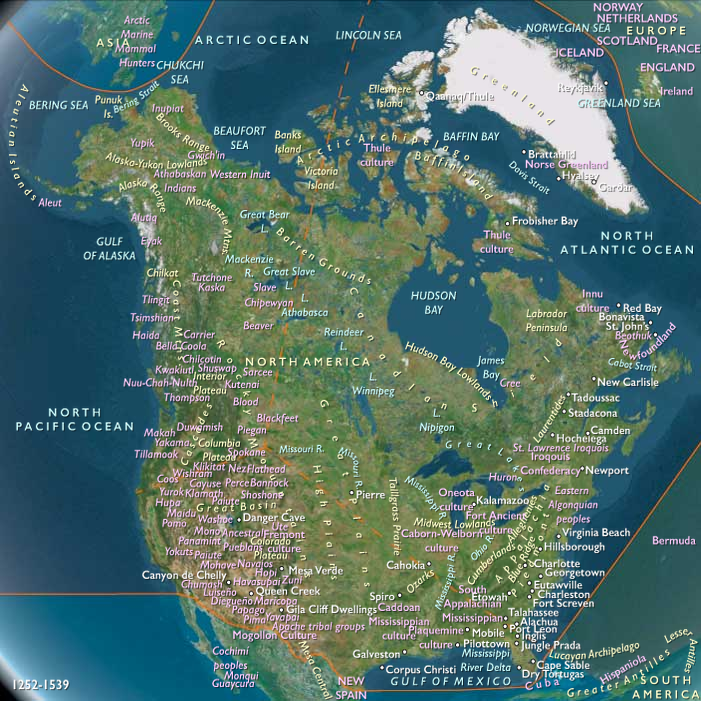
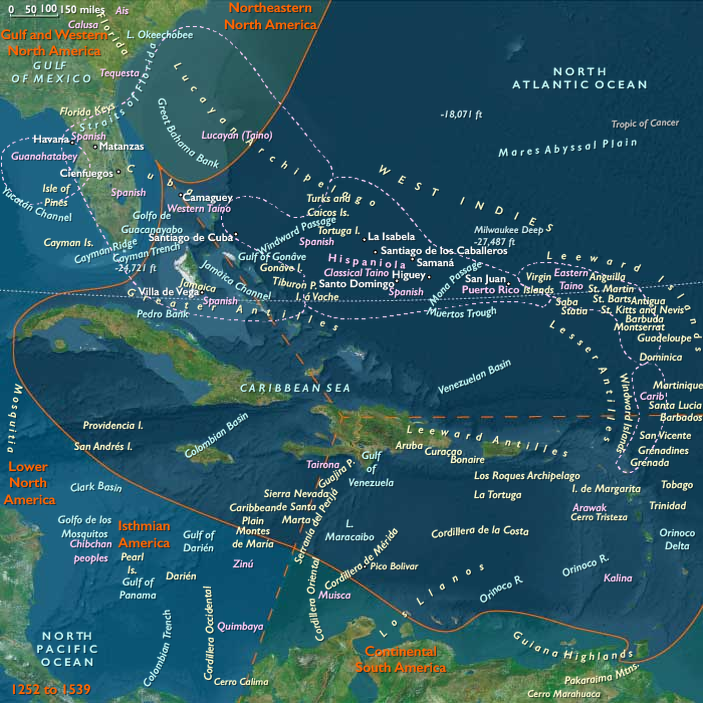
…Columbus arrives at the island of Guadeloupe, which he names Santa María de Guadalupe de Extremadura, after the image of the Virgin Mary venerated at the Spanish monastery of Villuercas, in Guadalupe, Cáceres, Spain.
He explores this island from November 4 to 10.
The earliest settlers on Guadeloupe, who had arrived around 300 BCE and developed agriculture on the island, had been removed by the more warlike Caribs, who called the island "Karukera," which is roughly translated as "island with beautiful waters."
They are also the tribe to meet all of the later settlers to the island.
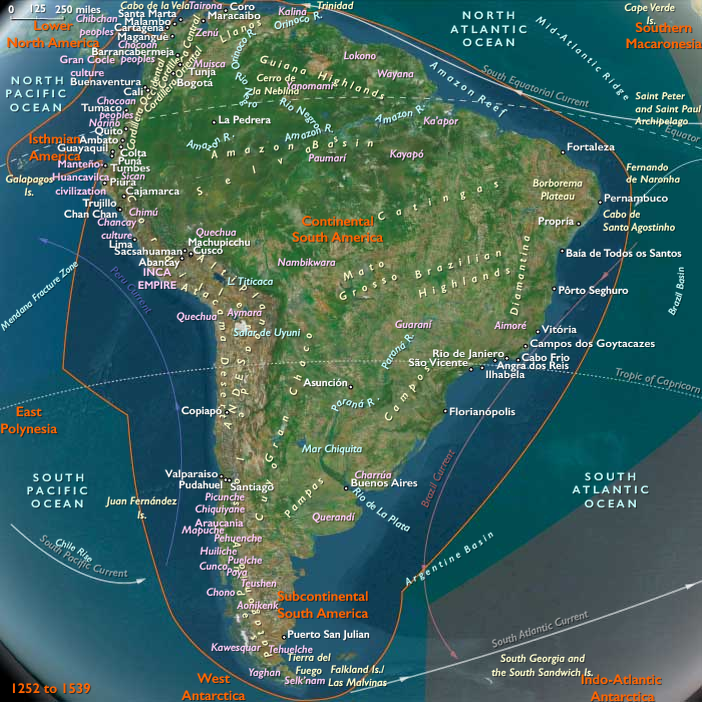
On Guadeloupe, Columbus is offered pineapple, which originated in South America, perhaps in the Parana-Paraguay basin, spread through much of the continent's lowlands and other tropical areas, and had probably been introduced to the Antilles by the Caribs.
Michele da Cuneo, Columbus' childhood friend from Savona, sailed with Columbus during the second voyage and wrote: "In my opinion, since Genoa was Genoa, there was never born a man so well equipped and expert in the art of navigation as the said lord Admiral."
Columbus named the small island of "Saona ... to honor Michele da Cuneo, his friend from Savona."
The same childhood friend reported in a letter that Columbus had provided one of the captured indigenous women to him.
He wrote, "While I was in the boat, I captured a very beautiful Carib woman, whom the said Lord Admiral gave to me.
When I had taken her to my cabin she was naked—as was their custom.
I was filled with a desire to take my pleasure with her and attempted to satisfy my desire.
She was unwilling, and so treated me with her nails that I wished I had never begun.
But—to cut a long story short—I then took a piece of rope and whipped her soundly, and she let forth such incredible screams that you would not have believed your ears.
Eventually we came to such terms, I assure you, that you would have thought that she had been brought up in a school for whores." (Cohen, J.M. (1969). The Four Voyages of Christopher Columbus. NY: Penguin. p. 139)