Józef Piłsudski
Polish statesman who serves as the Chief of State and First Marshal of Poland
Years: 1867 - 1935
Józef Klemens Piłsudski (December 5, 1867 – May 12, 1935) is a Polish statesman who serves as the Chief of State (1918–22) and First Marshal of Poland (from 1920).
He is considered the de facto leader (1926–35) of the Second Polish Republic as the Minister of Military Affairs.
After the First World War he holds great power in Polish politics and is a distinguished figure on the international scene.
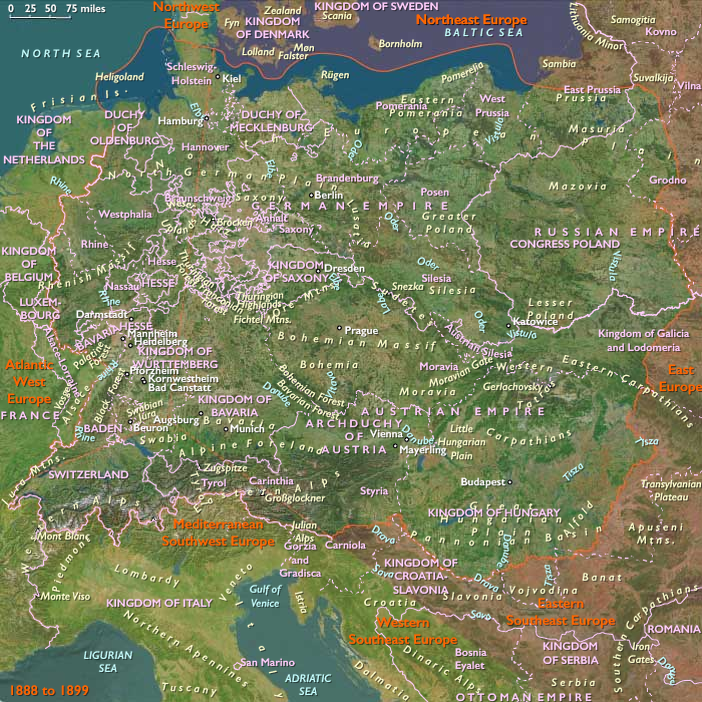
He is viewed as a father of the Second Polish Republic re-established in 1918, one hundred and twenty-three years after the final Partition of Poland by Austria, Prussia and Russia in 1795.
Deeming himself a descendant of the culture and traditions of the Polish–Lithuanian Commonwealth, Piłsudski believes in a multi-ethnic Poland—"a home of nations" including indigenous ethnic and religious minorities that he hopes will establish a robust union with the independent states of Lithuania and Ukraine.
His principal political antagonist, Roman Dmowski, leader of the National Democrat party, by contrast, calls for a Poland limited to the pre-Partitions Polish Crown and based mainly on a homogeneous ethnically Polish population and Roman Catholic identity.
Early in his political career, Piłsudski becomes a leader of the Polish Socialist Party.
Concluding that Poland's independence will have to be won militarily, he forms the Polish Legions.
In 1914 he correctly predicts that a new major war will defeat the Russian Empire and the Central Powers.
When the Great War begins in 1914, Piłsudski's Legions fight alongside Austria-Hungary against Russia.
In 1917, with Imperialist Russia faring poorly in the war, he withdraws his support for the Central Powers and is imprisoned in Magdeburg by the Germans.
From November 1918, when Poland regains its independence, until 1922, Piłsudski is Poland's Chief of State
In 1919–21 he commands Polish forces in six border wars that re-define the country's borders.
On the verge of defeat in the Polish–Soviet War, his forces, in the August 1920 Battle of Warsaw, throw back the invading Soviet Russians.
In 1923, with the government dominated by his opponents, in particular the National Democrats, Piłsudski retires from active politics.
Three years later he returs to power in the May 1926 coup d'état and becomes Poland's strongman.
From this point on until his death in 1935, he concerns himself primarily with military and foreign affairs.
It is during this period that he develops a cult of personality that will survive into the twenty-first century.
In international affairs, Piłsudski pursues two complementary strategies meant to secure Poland's independence and to enhance national security: "Prometheism", aimed at achieving the disintegration of Imperial Russia and later the Soviet Union into their constituent nations; and the creation of an Intermarium federation of Central and Eastern European states lying between the Baltic and Black Seas, to secure its peoples against Western and Eastern European imperialisms.
Some aspects of Piłsudski's administration, such as establishing Bereza Kartuska prison, described by many as a concentration camp, remain controversial. yet he is highly esteemed in Polish memory and is regarded, together with his chief antagonist Roman Dmowski, as a founder of the modern independent Poland.