Joseph-Louis Lagrange
Italian mathematician and astronomer of Prussia and of France
Years: 1736 - 1813
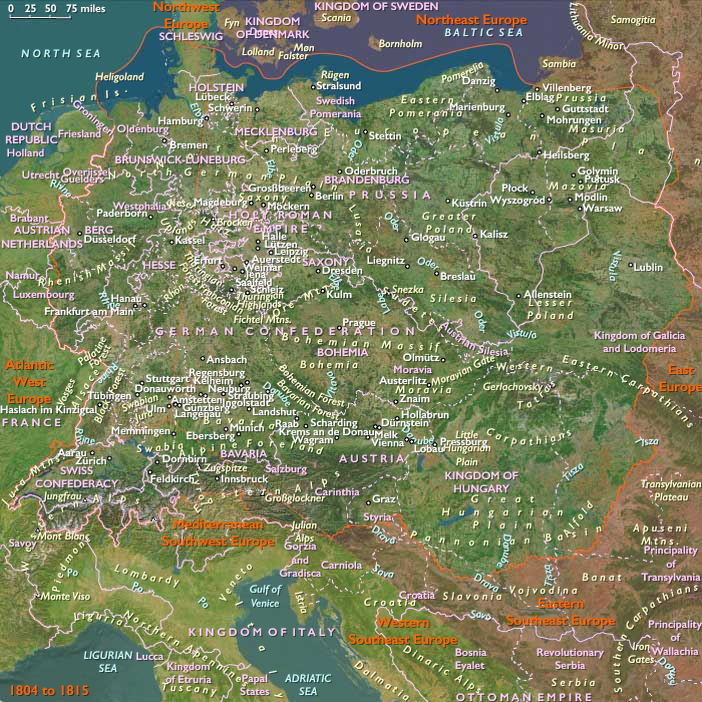
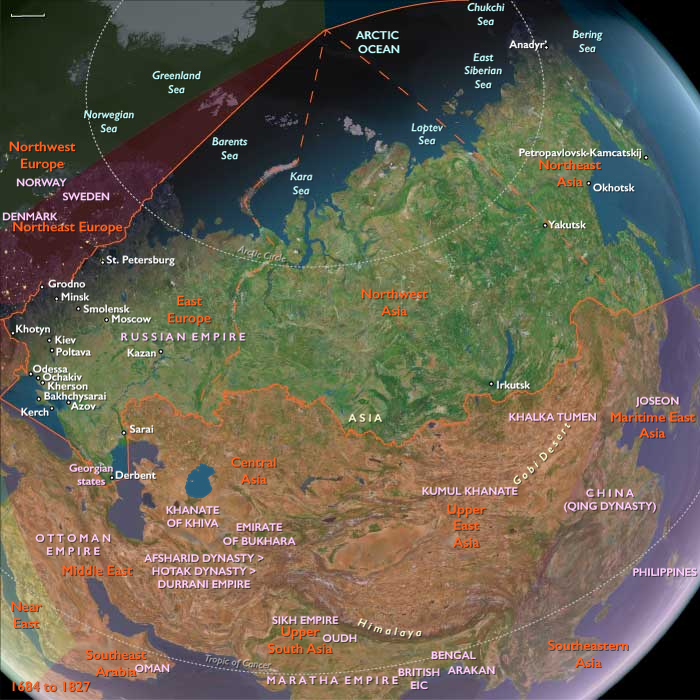
Joseph-Louis Lagrange (25 January 1736 – 10 April 1813), born Giuseppe Lodovico (Luigi) Lagrangia, is a mathematician and astronomer born in Turin, Piedmont, who lives part of his life in Prussia and part in France.
He makes significant contributions to all fields of analysis, number theory, and classical and celestial mechanics.
On the recommendation of Euler and d'Alembert, in 1766 Lagrange succeeds Euler as the director of mathematics at the Prussian Academy of Sciences in Berlin, where he stays for over twenty years, producing a large body of work and winning several prizes of the French Academy of Sciences.
Lagrange's treatise on analytical mechanics (Mécanique Analytique, 4.
ed., 2 vols.
Paris: Gauthier-Villars et fils, 1888–89), written in Berlin and first published in 1788, offers the most comprehensive treatment of classical mechanics since Newton and forms a basis for the development of mathematical physics in the nineteenth century.
Lagrange's parents are Italian, although he also has French ancestors on his father's side.
In 1787, at age 51, he moves from Berlin to France and becomes a member of the French Academy.
He remains in France until the end of his life.
Therefore, Lagrange is alternatively considered a French and an Italian scientist.
Lagrange survives the French Revolution and becomes the first professor of analysis at the École Polytechnique upon its opening in 1794.
Napoleon names Lagrange to the Legion of Honor and makes him a Count of the Empire in 1808.
He is buried in the Panthéon and his name appears as one of the 72 names inscribed on the Eiffel Tower.