Joseph Chamberlain
British statesman
Years: 1836 - 1914
Joseph Chamberlain (July 8, 1836 – July 2, 1914) is a British statesman who is first a radical Liberal, then, after opposing home rule for Ireland, a Liberal Unionist, and eventually serves as a leading imperialist in coalition with the Conservatives.
He splits both major British parties in the course of his career.
Chamberlain makes his career in Birmingham, first as a manufacturer of screws and then as a notable mayor of the city.
He is a radical Liberal Party member and an opponent of the Elementary Education Act 1870 on the basis that it could result in subsidizng Church of England schools with local ratepayers' money.
As a self-made businessman, he had never attended university and has contempt for the aristocracy.
He enters the House of Commons at thirty-nine years of age, relatively late in life compared to politicians from more privileged backgrounds.
Rising to power through his influence with the Liberal grassroots organization, he serves as President of the Board of Trade in Gladstone's Second Government (1880–85).
At the time, Chamberlain is notable for his attacks on the Conservative leader Lord Salisbury, and in the 1885 general election he proposes the "Unauthorised Programme", which is not enacted, of benefits for newly enfranchised agricultural laborers,'' including the slogan promising "three acres and a cow".
Chamberlain resigns from Gladstone's Third Government in 1886 in opposition to Irish Home Rule.
He helps to engineer a Liberal Party split and becomes a Liberal Unionist, a party that includes a bloc of MPs based in and around Birmingham.
From the 1895 general election the Liberal Unionists are in coalition with the Conservative Party, under Chamberlain's former opponent Lord Salisbury.
In this government Chamberlain promotes the Workmen's Compensation Act 1897.
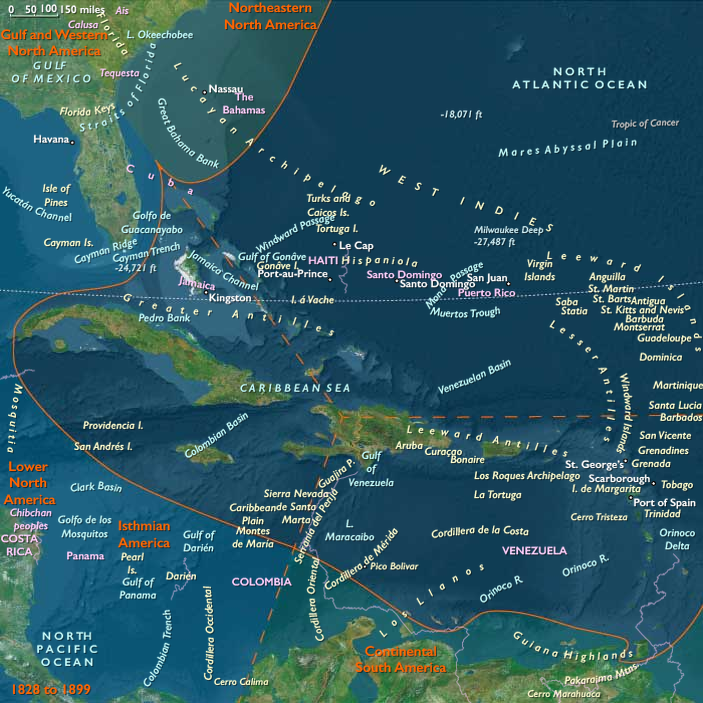
He serves as Secretary of State for the Colonies, promoting a variety of schemes to build up the Empire in Asia, Africa, and the West Indies.
He has major responsibility for causing the Second Boer War (1899–1902) in South Africa and is the government minister most responsible for the war effort.
He becomes a dominant figure in the Unionist Government's re-election at the "Khaki Election" in 1900.
In 1903, he resigns from the Cabinet to campaign for tariff reform (i.e., taxes on imports as opposed to the existing policy of free trade with no tariffs).
He obtains the support of most Unionist MPs for this stance, but the Unionists suffer a landslide defeat at the 1906 general election.
Shortly after public celebrations of his seventieth birthday in Birmingham, he is disabled by a stroke, ending his public career.
Despite never becoming Prime Minister, he is one of the most important British politicians of his day, as well as a renowned orator and municipal reformer.
Historian David Nicholls notes that his personality was not attractive: he was arrogant and ruthless and much hated.
He never succeeded in his grand ambitions.
However, he was a highly proficient grassroots organizer of democratic instincts, and played the central role in winning the Second Boer War.
He is most famous for setting the agenda of British colonial, foreign, tariff and municipal policies, and for deeply splitting both major political parties.