José Gaspar Rodríguez de Francia
Consul of Paraguay
Years: 1766 - 1840
Dr. José Gaspar Rodríguez de Francia y Velasco (January 6, 1766 – September 20, 1840) is one of the first leaders of Paraguay following its independence from Spain.
Both, Francia and Fulgencio Yegros are the first Consuls of the Republic.
He runs the country with little outside influence from 1814 to 1840.
Related Events
Filter results
Showing 10 events out of 41 total
South America (1684–1827 CE)
Imperial Reforms, Indigenous Resistance, and the Wars of Independence
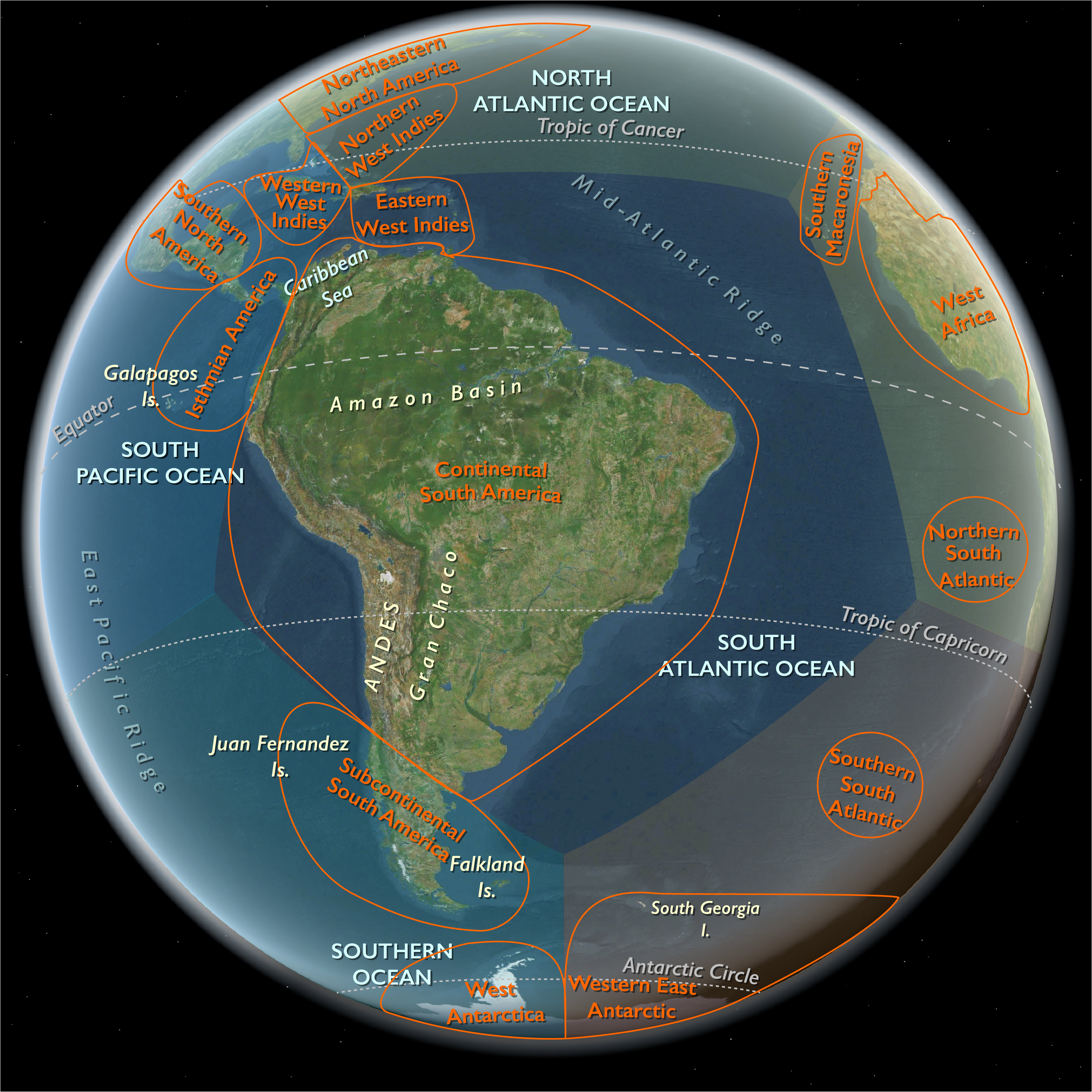
Geographic Definition of South America
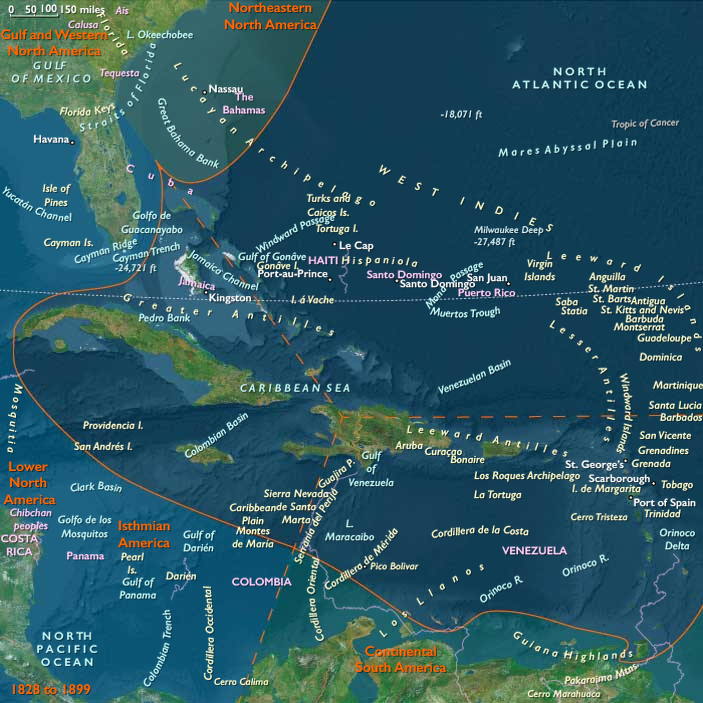
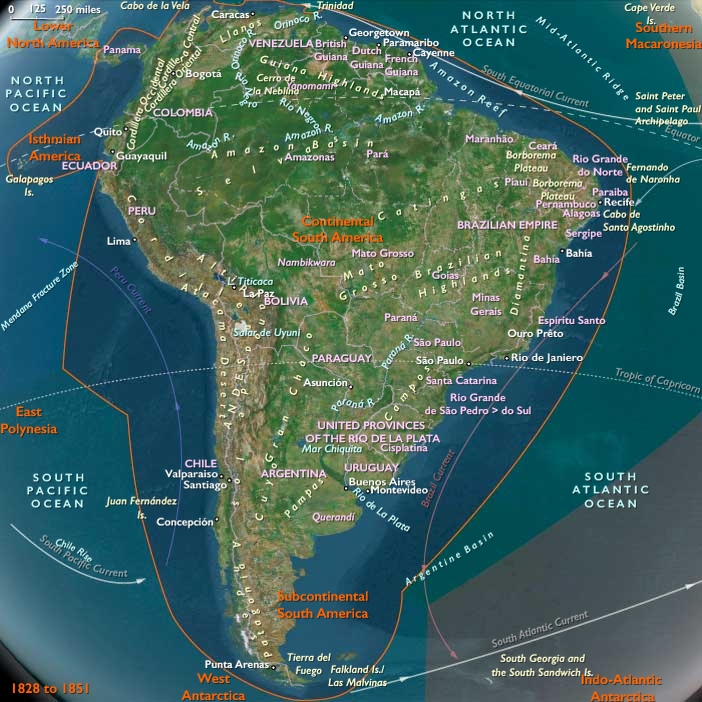
The region of South America encompasses all lands south of the Isthmus of Panama, including South America Major—stretching from Colombia and Venezuela through Brazil, Peru, Bolivia, Paraguay, Uruguay, northern Argentina, and northern Chile—and Peninsular South America, embracing southern Chile and Argentina, Patagonia, Tierra del Fuego, the Falkland Islands (Islas Malvinas), and the Juan Fernández Islands.
Anchors include the Andes cordillera and Altiplano, the Amazon, Orinoco, and Magdalena river systems, the Venezuelan Llanos, Gran Chaco, Pampas, and Patagonian steppe, extending southward to the Strait of Magellan and the storm-lashed sub-Antarctic islands.
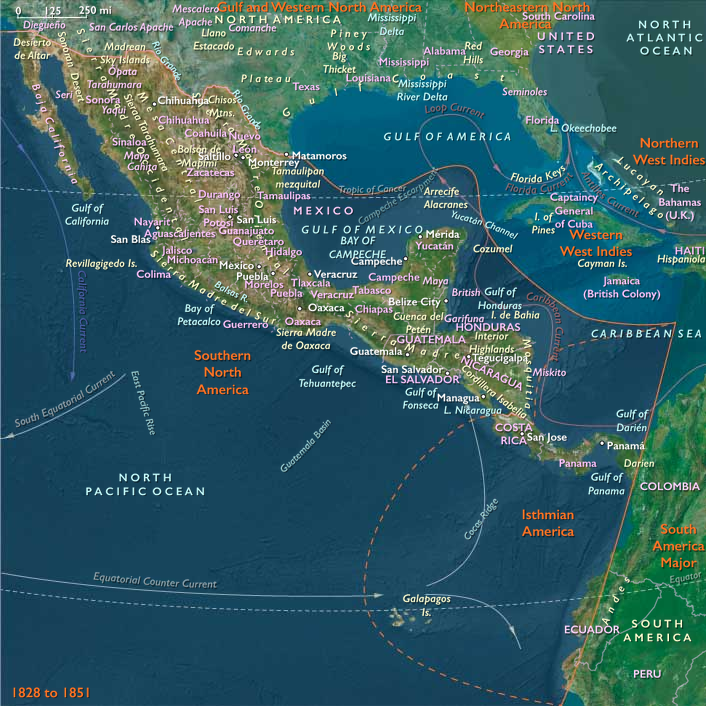
Bounded by Isthmian America to the north and Subcontinental South America beyond the Río Negro, this region entered the modern age as a vast, fragmented world of empires, Indigenous sovereignties, and the first stirrings of republican independence.
Geography and Imperial Frontiers
Between 1684 and 1827, South America stood at the hinge of early modern empire and emerging nationhood. The Andes anchored Spanish dominion, while the Amazon, Guianas, and southern plains remained zones of relative autonomy.
Spain’s empire centered on Lima, Potosí, and Bogotá, but new routes and rival powers eroded its control. Portuguese settlers pushed westward beyond the Treaty of Tordesillas, carving the future Brazil from mining frontiers and sugar coasts. The Guianas hosted Dutch, French, and British enclaves; the Llanos, Chaco, and Patagonia remained largely Indigenous.
From the Bio-Bío frontier in Chile to the Missions of Paraguay and the Upper Amazon, Indigenous confederations, Jesuit enclaves, and frontier forts coexisted in uneasy equilibrium until the revolutions of the early nineteenth century broke the imperial map apart.
Climate and Environmental Shifts
The late Little Ice Age lingered into the eighteenth century:
-
Andean highlands: Frosts shortened growing seasons; glacial advance cut water supply to terraces.
-
Amazon basin: Rainfall fluctuated with El Niño and La Niña, alternately flooding and parching river villages.
-
Coastal Peru and Chile: El Niño upsets brought famine and fishery collapse.
-
Southern pampas and Patagonia: Droughts and winds intensified; cold decades preserved glaciers in Tierra del Fuego.
Despite these oscillations, Indigenous and colonial agrarian systems—terraces, irrigation, and mixed cropping—sustained resilience across climates.
Subsistence and Settlement
Colonial economies deepened even as empires strained to contain their frontiers:
-
Andean viceroyalties (Peru, Bolivia, Ecuador): Silver and mercury mining at Potosí, Oruro, and Huancavelica remained imperial lifelines; Indigenous mita labor persisted under new guises. Highland farmers supplied maize, potatoes, and quinoa to mining centers.
-
Brazil: Gold and diamond booms in Minas Gerais and Goiás (1690s onward) drew settlers inland. Sugar, cattle, and later coffee expanded in Bahia, Pernambuco, and the Recôncavo.
-
Paraguay and Uruguay: Yerba mate, hides, and cattle exports linked Jesuit missions and ranches to Atlantic trade.
-
Venezuela and Colombia: The Llanos produced cattle and cocoa; Caracas, Cartagena, and Bogotá tied the interior to Europe via Caribbean ports.
-
Chile and the Río de la Plata: Wheat and wine sustained the Pacific colonies; Buenos Aires rose as a smuggling and trade hub after its 1776 elevation to viceroyal capital.
-
Southern frontiers: Beyond the Bio-Bío, the Mapuche retained independence; Tehuelche horsemen roamed Patagonia; Fuegian canoe peoples survived at the edge of the sub-Antarctic seas.
Urban centers—Lima, Quito, La Paz, Buenos Aires, Rio de Janeiro, Salvador, Caracas, Bogotá, and Santiago—flourished as administrative, mercantile, and religious capitals binding the continent’s diverse ecologies into imperial networks.
Technology and Material Culture
Colonial material life fused Indigenous skill and European design.
Roads and mule trails replaced Inca highways; stone and adobe churches rose over older shrines. Mining technologies—waterwheels, furnaces, mercury amalgamation—refined Andean ores. Jesuit reductions in Paraguay and Boliviaproduced Baroque churches, carved imagery, and polyphonic music blending European instruments with Guaraní voices.
In southern Chile and Patagonia, horse and iron tools transformed Indigenous mobility and warfare, while Spanish ports outfitted galleons and whalers bound for the Strait of Magellan.
Movement and Interaction Corridors
The continent’s arteries of exchange intertwined:
-
Silver highways: Carried bullion from Potosí to Lima and Buenos Aires, then to Seville.
-
Amazonian rivers: Sustained mission networks and trade in cacao, dyes, and forest goods.
-
Jesuit routes: Linked the Guaraní reductions to coastal Brazil and Peru until their 1767 suppression.
-
Slave routes: Africans entered through Cartagena, Bahia, and Rio de Janeiro, infusing the Atlantic littoral with Afro-American cultures.
-
Frontier circuits: Horses, cattle, and textiles moved between the Llanos, Chaco, Araucanía, and Pampas, blurring boundaries between empire and autonomy.
-
Southern seas: The Falklands and Juan Fernández Islands became whaling and provisioning hubs; the Strait of Magellan gained strategic significance for global shipping.
Cultural and Symbolic Expressions
Baroque Catholicism shaped public life—cathedrals, processions, and festivals dominated cities—yet beneath its veneer Indigenous and African traditions thrived.
In the Andes, saints merged with huacas and mountain spirits; in Brazil, candomblé and capoeira fused faith and resistance; in the missions, music and sculpture translated theology into local idioms.
Creole intellectuals absorbed Enlightenment ideas: scholars such as Juan Pablo Viscardo y Guzmán, Francisco de Miranda, and Simón Rodríguez envisioned liberty and reform. Across the south, Mapuche ngillatun and Tehuelche rituals reaffirmed identity against colonial advance, while sailors and exiles endowed remote islands with myths of endurance—from the Jesuit martyrdoms of Chiloé to Selkirk’s solitude on Juan Fernández.
Environmental Adaptation and Resilience
Agricultural and ecological ingenuity persisted:
terraced farming, irrigation canals, and crop diversity buffered Andean villages; shifting cultivation and forest gardens stabilized Amazonian societies.
Pastoralism spread—cattle on the Pampas, sheep on Patagonian plains—reshaping grasslands and displacing wildlife.
Indigenous nations south of the Andes adapted the horse, expanding mobility and defense. Coastal communities recovered from earthquakes and volcanic eruptions, rebuilding cities with brick, tile, and lime.
Technology and Power Shifts (Conflict Dynamics)
By the eighteenth century, reform and resistance accelerated collapse of the old order:
-
Bourbon Reforms (Spain) and Pombaline Reforms (Portugal) sought efficiency and revenue, tightening imperial control but provoking resentment.
-
Jesuit Expulsion (1759–1767): Dismantled mission economies and destabilized Indigenous frontiers.
-
Indigenous revolts: The Comunero uprisings (New Granada, 1781) and Túpac Amaru II’s Rebellion (Peru, 1780–81) fused anti-tax protest with ancestral revival.
-
Slave and maroon resistance: Palmares in Brazil and quilombos across the Guianas and Venezuela embodied enduring defiance.
-
Wars of Independence (1810–1824): From the Caracas junta to the crossing of the Andes, revolution swept the continent. Leaders—Simón Bolívar, José de San Martín, Bernardo O’Higgins, and José Artigas—toppled viceroyalties and declared new republics.
In the south, Chile’s patriots triumphed after Chacabuco (1817) and Maipú (1818); Argentina secured independence under the United Provinces; Brazil separated peacefully from Portugal in 1822 under Dom Pedro I. Yet Indigenous nations in Patagonia and Araucanía, though weakened, remained outside firm national control until late in the following century.
Transition (to 1827 CE)
By 1827 CE, the map of South America was redrawn. The viceroyalties of Spain and the captaincy of Portugal had dissolved into a dozen republics and one empire.
Lima, Buenos Aires, Bogotá, Caracas, and Rio de Janeiro emerged as capitals of sovereign states.
The Mapuche, Tehuelche, and Fuegians still held the far south; the Falklands and Juan Fernández Islands became contested imperial outposts.
Mining and plantation economies endured but shifted under new flags, while slavery, tribute, and caste hierarchies began to crumble.
The colonial age had ended: South America entered the modern era forged in rebellion, grounded in geography, and alive with the intertwined legacies of empire, Indigenous endurance, and creole revolution.
South America Major (1684–1827 CE)
Revolts, Reforms, and the Birth of Independence
Geographic Definition of South America Major
The subregion of South America Major encompasses all lands north of the Río Negro, extending across the full continental span of Brazil, Uruguay, Paraguay, northern Argentina and northern Chile, Bolivia, Peru, Ecuador(excluding the Cape lands at the Isthmian boundary), Colombia (excluding the Darién region, which belongs to Isthmian America), Venezuela, Guyana, Suriname, and French Guiana.
Anchors include the Andes cordillera and Altiplano, the Amazon basin, the Orinoco and Magdalena river systems, the Venezuelan Llanos, the Gran Chaco, the Uruguayan Pampas, and the Guiana Shield.
Bounded by Isthmian America to the north and Subcontinental South America to the south, this subregion forms the continental heartland of South America—linking the Pacific and Atlantic worlds through its intertwined highlands, forests, plains, and river systems.
Geography and Imperial Frontiers
Between 1684 and 1827, South America Major transformed from a colonial realm into a constellation of independent nations. The Andes still anchored Spanish power, while the Amazon basin, the Guiana forests, and the southern plains remained vast, contested frontiers. The Portuguese advanced deep into Brazil’s interior, expanding beyond the Tordesillas meridian through mining and ranching; Spain struggled to govern its mountainous viceroyalties from distant Lima and Bogotá. The region’s geography—its cordilleras, rivers, and forests—both connected and divided peoples, shaping the uneven course of empire and revolution.
Climate and Environmental Shifts
The late Little Ice Age brought alternating droughts and floods, influencing agriculture and settlement.
In the Andes, glaciers advanced slightly, shortening growing seasons and threatening terraced crops.
Across Brazil’s cerrado and the Guiana forests, rainfall swings altered river regimes and harvests, while El Niño events disrupted Pacific fisheries and Peruvian coastal farming.
The Llanos and Pampas alternated between lush pastures and parched plains.
Environmental volatility spurred adaptation—new crops, irrigation, and migration—within both colonial estates and Indigenous territories.
Subsistence and Settlement
By the 18th century, the subregion was a patchwork of imperial economies and Indigenous persistence:
-
Andean highlands: Mining towns like Potosí, Oruro, and Huancavelica remained economic cores. Encomienda and mita labor systems evolved into wage and debt peonage, sustaining silver and mercury production. Highland farmers grew maize, potatoes, and quinoa; imported wheat spread in valleys.
-
Coastal Peru and Ecuador: Plantation agriculture expanded around sugar, cotton, and vineyards; coastal ports like Lima, Guayaquil, and Callao handled global trade.
-
Brazilian interior: Gold and diamond booms in Minas Gerais (1690s onward) transformed Brazil’s economy, drawing settlers inland. Cattle ranching and sugar plantations flourished in Bahia, Pernambuco, and the Recôncavo, while the Amazon sustained missions and extractive trade in cacao, dyes, and forest goods.
-
Paraguay and Uruguay: Yerba mate, hides, and cattle became major exports; Jesuit reductions integrated Guaraní communities into mission economies until their expulsion in 1767.
-
Venezuela and Colombia: The Llanos supported cattle ranching and cocoa cultivation; the Magdalena and Orinoco rivers formed transport arteries between highlands and coasts.
-
Guianas: French, Dutch, and British outposts extracted sugar and timber, relying heavily on enslaved African labor.
Despite growing European control, Indigenous and Afro-descended communities remained central to labor, knowledge, and resistance across every ecological zone.
Technology and Material Culture
Mining innovations—mercury amalgamation and mule-driven mills—deepened dependence on Indigenous and enslaved workers.
In Brazil, smelting, waterwheels, and canalized sluices spread through mining districts; in Andean Peru, silver-processing patios reshaped entire valleys.
Agricultural technologies mixed Iberian plows and presses with Indigenous irrigation and terracing.
Architecture fused baroque cathedrals and mission churches with local materials—adobe, stone, and timber.
Textiles, pottery, and metalwork blended European and Indigenous forms: the Cusco School of painting, Jesuit mission music, and Afro-Brazilian festivals reflected a growing creole aesthetic.
Movement and Interaction Corridors
Continental networks intensified:
-
Silver highways: From Potosí to Lima, mule trains and caravans linked mines, ports, and European markets.
-
Brazilian gold routes: Trails from Minas Gerais and Goiás led to Salvador and Rio de Janeiro, shifting Brazil’s economic center southward.
-
Amazon and Orinoco rivers: Served both Indigenous canoe trade and Portuguese mission expansion.
-
Atlantic slave routes: Enslaved Africans arrived at Bahia, Cartagena, and the Guianas, embedding African culture into creole societies.
-
Mission networks: Jesuit and Franciscan roads connected Paraguay’s reductions, Amazon missions, and Andean highlands.
-
Trade corridors: Buenos Aires rose as a smuggling hub, connecting the Rio de la Plata with Potosí’s silver traffic, despite royal prohibitions.
By the 18th century, contraband trade and overland communication tied the continent together as never before.
Cultural and Symbolic Expressions
Baroque Catholicism dominated urban and rural life. Churches, processions, and festivals blended European theology with Indigenous ritual and African devotion. Saints’ cults and pilgrimages mapped sacred geography across the Andes and coasts.
In the Amazon and Paraguay, missions combined Gregorian chant and local music.
Creole intellectuals and clergy began articulating local pride—Garcilaso de la Vega, Sor Juana Inés de la Cruz, and Jesuit scholars in Lima and Quito bridged colonial scholasticism and early Enlightenment.
Indigenous and Afro-descended populations kept older spiritual systems alive beneath Catholic veneers: Andean huaca worship, Guaraní dances, and Afro-Brazilian congado and candomblé merged cosmologies into living syncretism.
Environmental Adaptation and Resilience
Agricultural and ecological ingenuity persisted across regions:
-
Terracing and crop rotation sustained Andean villages under frost and drought.
-
Irrigation canals and sugar mills stabilized coastal economies.
-
Amazonian peoples used shifting cultivation and forest-garden mosaics to preserve fertility.
-
Cattle and sheep grazing expanded across the Llanos, Chaco, and Pampas, reshaping ecosystems into ranching frontiers.
-
Urban centers managed periodic famine with granaries, trade, and church relief.
Even under imperial extraction, local adaptation ensured survival and continuity.
Technology and Power Shifts (Conflict Dynamics)
By the 18th century, reform and resistance redefined empire:
-
Spanish Bourbon Reforms (from 1700): Centralized administration, curbed local autonomy, and taxed trade and mining; these policies fueled unrest among criollo elites.
-
Brazil under Pombal (1750s–1770s): The Marquis of Pombal reorganized administration, expelled Jesuits (1759), and encouraged secular colonization in Amazon and frontier zones.
-
Indigenous and popular uprisings: The Comunero Revolts in New Granada (1781) and Túpac Amaru II’s Rebellion in Peru (1780–81) blended anti-tax grievances with calls for justice and autonomy.
-
Slave resistance: Palmares in Brazil’s northeast and smaller maroon communities across Suriname, the Guianas, and Venezuela embodied defiance and survival.
-
Foreign wars: Spain’s and Portugal’s European conflicts—War of the Spanish Succession (1701–1714) and Napoleonic invasions (1807–1808)—weakened colonial control.
Transition (to 1827 CE)
By 1827, South America Major was no longer colonial. Revolutions ignited by Simón Bolívar, José de San Martín, José Artigas, and others swept through Andes and plains.
From Caracas to Buenos Aires, new republics—Colombia, Venezuela, Peru, Chile, Argentina, Paraguay, Uruguay, and Brazil’s empire—emerged from the ruins of Iberian dominion.
Mines and missions, ranches and plantations, cities and forests—each bore the marks of both conquest and continuity.
The subregion entered the modern age through conflict and transformation: Indigenous persistence, African cultural legacies, and creole aspirations forged a South America no longer imperial, but still profoundly shaped by its colonial past.
The junta panics when it learns that a porteño diplomat is on his way to Asunción because it realizes it is not competent to negotiate without José Gaspar Rodríguez de Francia.
In November 1812, the junta members invite Francia to take charge of foreign policy, an offer Francia accepts.
In return, the junta agrees to place one-half of the army and half the available munitions under Francia's command.
In the absence of anyone equal to him on the junta, Francia now controls the government.
When the Argentine envoy, Nicolas de Herrera, arrives in May 1813, he learns to his dismay that all decisions have to await the meeting of a Paraguayan congress in late September.
Meanwhile, Paraguay again declares itself independent of Argentina and expels two junta members known to be sympathetic to union with Argentina.
Under virtual house arrest, Herrera has little scope to build support for unification, even though he resorts to bribery.
Francia has consolidated his power by persuading the insecure Paraguayan elite that he is indispensable, but at the end of 1811, dissatisfied with the political role that military officers are beginning to play, he resigns from the junta.
From his retirement in his modest chacra (cottage or hut) at Ibaray, near Asuncion, he tells countless ordinary citizens who come to visit him that their revolution hass been betrayed, that the change in government has only traded a Spanish-born elite for a criollo one, and that the present government is incompetent and mismanaged.
In fact, the country is rapidly heading for a crisis.
Not only are the Portuguese threatening to overrun the northern frontiers, but Argentina has also practically closed the Rio de la Plata to Paraguayan commerce by levying taxes and seizing ships.
To make matters worse, the porteño government has agitated for Paraguayan military assistance against the Spanish in Uruguay and, disregarding the Treaty of October 11, for unification of Paraguay with Argentina.
The porteño government also informs the junta it wants to reopen talks.
Francia becomes a member of Paraguay's ruling junta after the cuartelazo (coup d'etat) of May 14-15, which brings independence.
Although real power rests with the military, Francia's many talents attract support from the nation's farmers.
Probably the only man in Paraguay with diplomatic, financial, and administrative skills, Francia builds his power base on his organizational abilities and his forceful personality.
By outwitting porteño diplomats in the negotiations that produce the Treaty of October 11, 1811 (in which Argentina implicitly recognizes Paraguayan independence in return for vague promises of a military alliance), Francia proves that he possesses skills crucial to the future of the country.
Francia had demonstrated an early interest in politics and attained with difficulty the position of alcalde del primer voto, or head of the Asuncion cabildo, by 1809, the highest position to which he could aspire to as a criollo.
Born in 1766, he had spent his student days studying theology at the College of Monserrat at the University of Cordoba.
Although he was dogged by suggestions that his father—a Brazilian tobacco expert—was a mulatto, Francia had been awarded a coveted chair of theology at the Seminary of San Carlos in Asuncion in 1790.
His radical views made his position as a teacher there untenable, and he soon gave up theology to study law.
A devotee of the Enlightenment and the French Revolution, a keen reader of Voltaire, Jean-Jacques Rousseau, and the French Encyclopedists, Francia has the largest library in Asuncion.
His interest in astronomy, combined with his knowledge of French and other subjects considered arcane in Asuncion, has caused some superstitious Paraguayans to regard him as a wizard capable of predicting the future.
As a lawyer, he became a social activist and defended the less fortunate against the affluent.
Paraguay at independence is a relatively undeveloped area.
Most residents of Asuncion and virtually all rural settlers are illiterate.
Urban elites do have access to private schools and tutoring.
University education is, however, restricted to the few who can afford studies at the University of Cordoba, in present-day Argentina.
Practically no one has any experience in government, finance, or administration.
The settlers treat the natives as little better than slaves, and the paternalistic clergy treats them like children.
The country is surrounded by hostile neighbors, including the warlike Chaco tribes.
Strong measures are needed to save the country from disintegration.
José Gaspar Rodriguez de Francia is one of the greatest figures in Paraguayan history.
Ruling from 1814 until his death in 1840, Francia succeeds almost single-handedly in building a strong, prosperous, secure, and independent nation at a time when Paraguay's continued existence as a distinct country seems unlikely.
He leaves Paraguay at peace, with government coffers full and many infant industries flourishing.
Frugal, honest, competent, and diligent, Francia is tremendously popular with the lower classes, but despite his popularity, Francia tramples on human rights, imposing an authoritarian police state based on espionage and coercion.
Under Francia, Paraguay undergoes a social upheaval that destroys the old elites.
Paraguay's congress, which meets on September 30, 1813, is certainly the first of its kind in Latin America.
There are more than eleven hundred delegates chosen by universal male suffrage, and many of these delegates represent the poor, rural Paraguayan majority.
Ironically, the decisions of this democratically elected body will set the stage for a long dictatorship.
Herrera is neither allowed to attend the sessions, nor to present his declaration; instead the congress gives overwhelming support to Francia' s anti-imperialist foreign policy.
The delegates reject a proposal for Paraguayan attendance at a constitutional congress at Buenos Aires and establish a Paraguayan republic—the first in Spanish America—with Francia as first consul.
Francia is supposed to trade places every four months with the second consul, Fulgencio Yegros, but Francia's consulship marks the beginning of his direct rule because Yegros is little more than a figurehead.
Yegros, a man without political ambitions, represents the nationalist criollo military elite, but Francia is the more powerful because he derives his strength from the nationalist masses.
A first battle was fought on December 19, 1810, at Campichuelo, where the Patriots claim victory.
However, they had been completely overwhelmed at the subsequent battles of Paraguarí on January 19 and Tacuarí on March 9.
Thus, this campaign ends in failure as well from a military point of view; however, just two months later, Paraguay, inspired by the Argentine example, will break its links with the Spanish crown by declaring itself an independent nation.