John VI of Portugal
King of the United Kingdom of Portugal, Brazil, and the Algarves; later King of Portugal and the Algarves
Years: 1767 - 1826
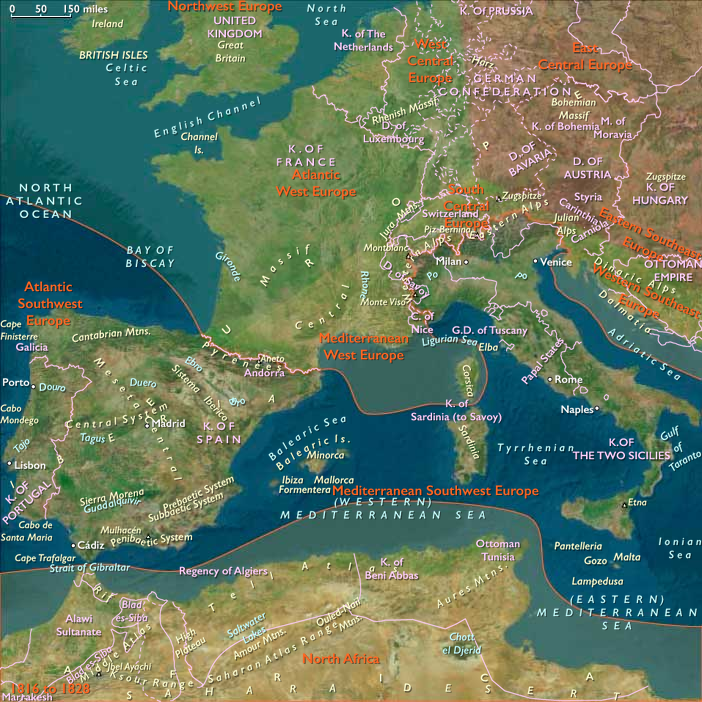
John VI (Portuguese: Dom João VI; 13 May 1767 – 10 March 1826) is King of the United Kingdom of Portugal, Brazil and the Algarves from 1816 to 1822, and, although de facto the United Kingdom over which he rules ceases to exist, he remains so de jure from 1822 to 1825; after the recognition of Brazilian independence under the 1825 Treaty of Rio de Janeiro, he continueds as King of Portugal and the Algarves until his death in 1826.
Under the said Treaty he also remains Titular Emperor of Brazil, while his son, Emperor Pedro I, is both de facto and de jure the monarch of the newly independent country.
Born in Lisbon in 1767, the son of Peter III of Portugal, and Queen Maria I, his full name is João Maria José Francisco Xavier de Paula Luís António Domingos Rafael.
Originally an infante (prince not heir to the throne) of Portugal, he becomes heir to the throne only when his older brother José, Prince of Brazil dies in 1788 of smallpox at the age of 27.
Before his accession to the Portuguese throne, John VI bears the titles of Duke of Braganza and Duke of Beja, as well as the title of Prince of Brazil.
He serves, from 1799, as Prince Regent of Portugal (and later, from 1815, as Prince Regent of the United Kingdom of Portugal, Brazil and the Algarves), due to the mental illness of his mother, the Queen.
Eventually, he succeeds his mother as monarch of the Portuguese Empire, with no real change in his authority, since, as Regent, he already possesses absolute powers.
One of the last representatives of absolutism, he lives during a turbulent period; his reign never sees a lasting peace.
Throughout his period as regent and later king, such major powers as Spain, France and Great Britain (from 1801, the United Kingdom) continually intervene in Portuguese affairs.
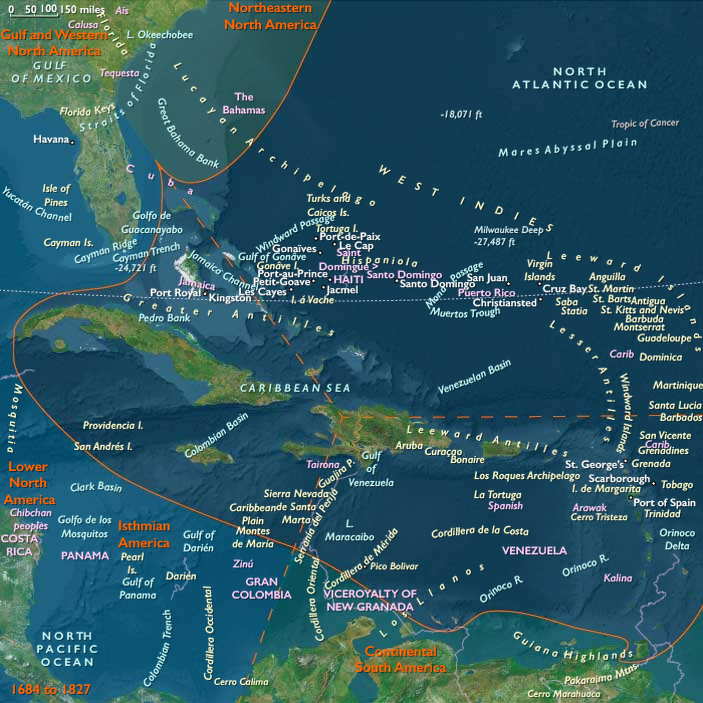
Forced to flee to Brazil when Napoleon's troops invade Portugal, he finds himself faced there with liberal revolts that reflect similar events in the metropolis; he is compelled to return to Europe amid new conflicts.
His marriage is no less conflict-ridden, as his wife, Carlota Joaquina of Spain, repeatedly conspires against her husband in favor of personal interests or those of her native Spain.
He loses Brazil when his son Pedro declares independence, and his other son Miguel (later Miguel I of Portugal) leads a rebellion that seeks to depose him.
According to recent research, his death may have been caused by arsenic poisoning.
Notwithstanding these tribulations, he leaves a lasting mark, especially in Brazil, creating numerous institutions and services that lay a foundation for national autonomy, and is considered by many researchers the true mastermind of the modern Brazilian state.
Still, he has been widely (if unjustly) viewed as a cartoonish figure in Luso-Brazilian history, being accused of laziness, lack of political acumen and constant indecision, and often portrayed as physically grotesque.