John of England
King of England
Years: 1166 - 1216
John (24 December 1166 – 18/19 October 1216), also known as John Lackland (Norman French: Johan sanz Terre), is King of England from 6 April 1199 until his death.
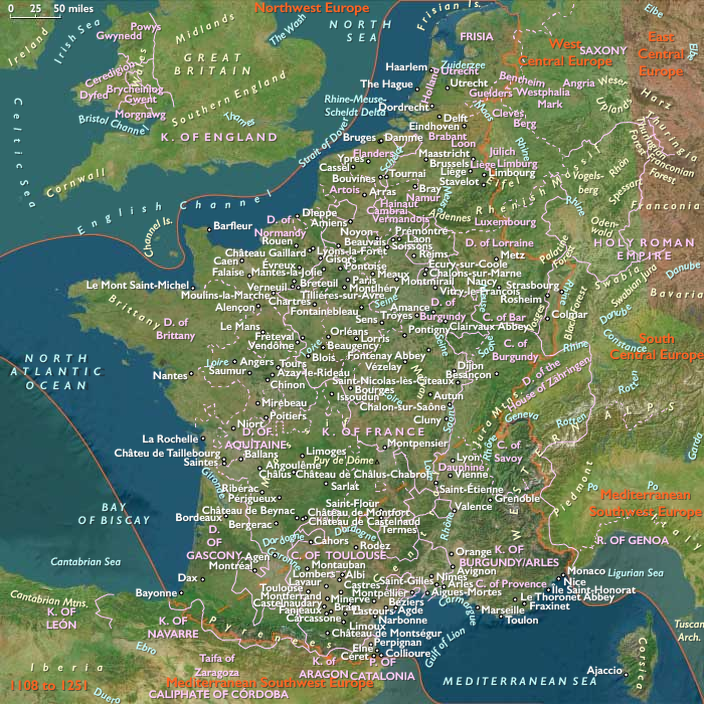
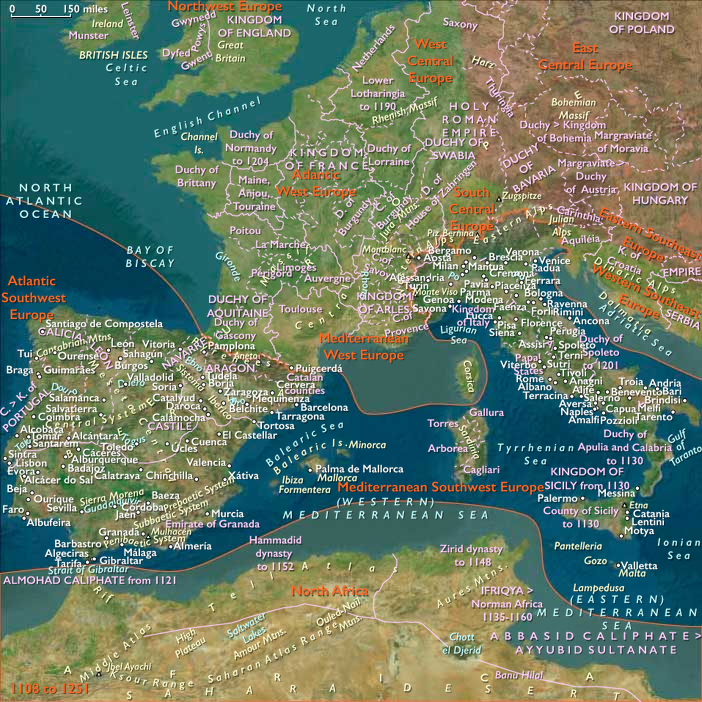
During John's reign, England loses the duchy of Normandy to King Philip II of France, which results in the collapse of most of the Angevin Empire and contributes to the subsequent growth in power of the Capetian dynasty during the 13th century.
The baronial revolt at the end of John's reign leads to the sealing of the Magna Carta, a document sometimes considered to be an early step in the evolution of the constitution of the United Kingdom.
John, the youngest of five sons of King Henry II of England and Eleanor of Aquitaine, is at first not expected to inherit significant lands.
Following the failed rebellion of his elder brothers between 1173 and 1174, however, John becomes Henry's favorite child.
He is appointed the Lord of Ireland in 1177 and given lands in England and on the continent.
John's elder brothers William, Henry and Geoffrey die young; by the time Richard I becomes king in 1189, John is a potential heir to the throne.
John unsuccessfully attempts a rebellion against Richard's royal administrators while his brother is participating in the Third Crusade.
Despite this, after Richard dies in 1199, John is proclaimed king of England, and comes to an agreement with Philip II of France to recognize John's possession of the continental Angevin lands at the peace treaty of Le Goulet in 1200.
When war with France breaks out again in 1202, John achieves early victories, but shortages of military resources and his treatment of Norman, Breton and Anjou nobles result in the collapse of his empire in northern France in 1204.
John spends much of the next decade attempting to regain these lands, raising huge revenues, reforming his armed forces and rebuilding continental alliances.
John's judicial reforms have a lasting, positive impact on the English common law system, as well as providing an additional source of revenue.
An argument with Pope Innocent III leadsto John's excommunication in 1209, a dispute finally settled by the king in 1213.
John's attempt to defeat Philip in 1214 fails due to the French victory over John's allies at the battle of Bouvines.
When he returns to England, John faces a rebellion by many of his barons, who are unhappy with his fiscal policies and his treatment of many of England's most powerful nobles.
Although both John and the barons agree to the Magna Carta peace treaty in 1215, neither side complies with its conditions.
Civil war breaks out shortly afterwards, with the barons aided by Louis of France.
It soon descends into a stalemate.
John dies of dysentery contracted while on campaign in eastern England during late 1216; supporters of his son Henry III goon to achieve victory over Louis and the rebel barons the following year.
Contemporary chroniclers were mostly critical of John's performance as king, and his reign has since been the subject of significant debate and periodic revision by historians from the 16th century onwards.
These negative qualities provided extensive material for fiction writers in the Victorian era, and John remains a recurring character within Western popular culture, primarily as a villain in films and stories depicting the Robin Hood legends.