Atlantic West Europe (1252–1263): Consolidation, Expansion, and Cultural Vitality
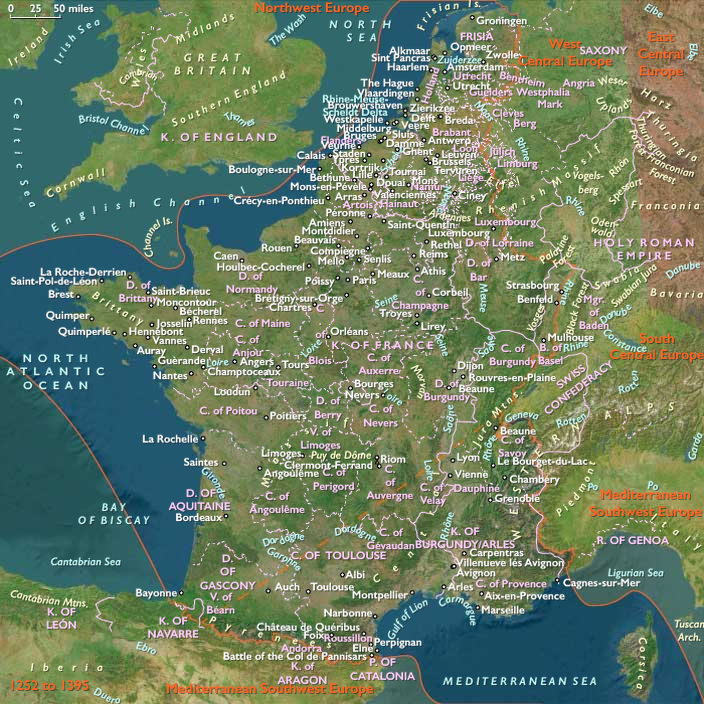
Between 1252 and 1263, Atlantic West Europe—encompassing the Low Countries and all of France north of an imaginary line from Mount Orhy in the Pyrenees to Bois-d'Amont near the Swiss border, including Aquitaine, Brittany, Normandy, Burgundy, central France, Alsace, and Franche-Comté—experienced significant consolidation of royal authority, economic expansion, and notable cultural developments. This era was marked by the strengthening of central monarchical power, flourishing trade networks, and advancements in urban and cultural life.
Political and Military Developments
-
France: Consolidation Under Louis IX
-
Louis IX (Saint Louis, r. 1226–1270) strengthened royal authority by codifying laws (e.g., Ordinances of Melun, 1254), enhancing justice systems, and extending royal influence into southern territories, notably in Aquitaine.
-
Continued conflicts with England in Aquitaine led to diplomatic efforts culminating in the Treaty of Paris (1259), stabilizing the French-English border and clarifying territorial sovereignty.
-
Low Countries: Strengthening of Urban Autonomy
-
Cities such as Bruges, Ghent, and Ypres secured greater autonomy and privileges through charters granted by local counts, enhancing their commercial and political influence.
-
Flanders and Brabant saw increased stability and growth through effective governance and strategic dynastic alliances.
-
Burgundy, Alsace, and Franche-Comté: Autonomy and Diplomacy
-
Burgundy navigated its role between French royal authority and local ducal power, maintaining significant independence.
-
Alsace and Franche-Comté balanced loyalties between the Holy Roman Empire and France, preserving regional autonomy and fortifying local governance.
-
Brittany and Normandy: Maintaining Regional Identity
-
Brittany, under Duke John I (r. 1237–1286), maintained substantial autonomy, fostering strong regional identity while negotiating relations with France and England.
-
Normandy, fully integrated into the French crown since 1204, saw administrative consolidation and enhanced economic integration with greater France.
Economic and Social Developments
Cultural and Intellectual Developments
Religious Developments
Legacy and Significance
The era 1252–1263 marked significant progress in centralizing political authority, expanding economic prosperity, and advancing cultural life across Atlantic West Europe. The consolidation of royal power, growth of influential urban centers, and enduring regional identities laid important foundations for the region's subsequent historical trajectory, setting the stage for continued stability, economic expansion, and cultural achievements.