John Hunt Morgan
Confederate general and cavalry officer
Years: 1825 - 1864
John Hunt Morgan (June 1, 1825 – September 4, 1864) is a Confederate general and cavalry officer in the American Civil War.
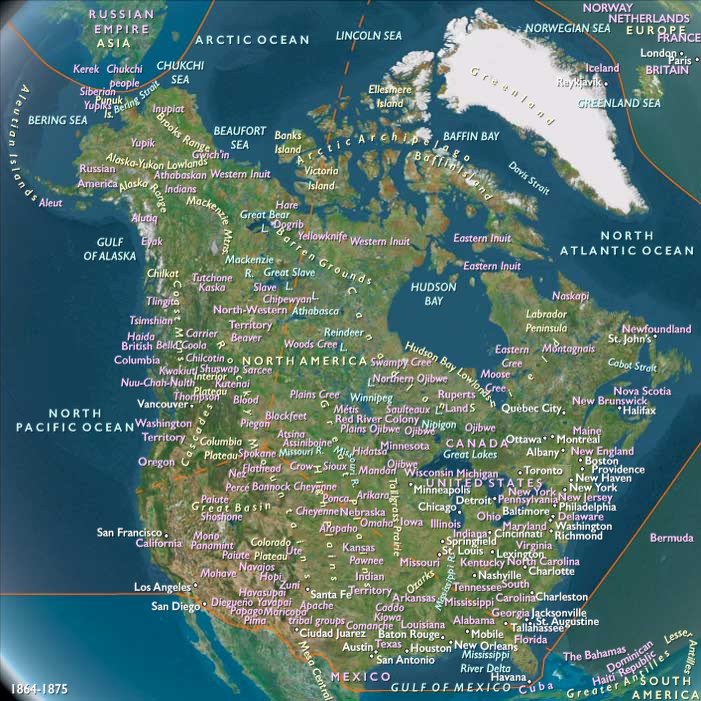
Morgan is best known for Morgan's Raid when, in 1863, he and his men ride over 1,000 miles covering a region from Tennessee, up through Kentucky, into Indiana and on to southern Ohio.
This is the farthest north any uniformed Confederate troops penetrates during the war.
Related Events
Filter results
Showing 10 events out of 30 total
Starting from La Grange, Tennessee, the raid ends in Baton Rouge, Louisiana.
Early in 1863, Major General Charles Hamilton, the commander of the Corinth section of Grant's division, had suggested what would eventually become Grierson's Raid.
Subsequently, due to Hamilton's insistence on procuring a command that would garner him more glory, Hamilton had offered his resignation.
Grant had quickly accepted.
Until this time in the war, Confederate cavalry commanders such as Nathan Bedford Forrest, John Hunt Morgan, and J.E.B. Stuart had ridden circles around the Union (literally, in Stuart's case, in the Peninsula Campaign), and it is time to out-do the Confederates in cavalry expeditions.
The task had fallen to Colonel Benjamin Grierson, a former music teacher who, oddly, hates horses after having been kicked in the head by one as a child.
Grierson's cavalry brigade consists of the 6th and 7th Illinois and 2nd Iowa Cavalry regiments.
The Federal army of the Cumberland begins its operations against General Braxton Bragg's Confederate Army of Tenneesee in what will become known as the Tullahoma campaign on June 23, and Confederate cavalry leader John Hunt Morgan decides it is time to move northward into Kentucky.
Morgan and his twenty-four hundred and sixty handpicked Confederate cavalrymen, along with four artillery pieces, had departed from Sparta, Tennessee, on June 11, 1863, intending to divert the attention of the Union Army of the Ohio from Southern forces in the stat eand possibly stir up pro-southern sentiments in the North.
Bragg, the regional Confederate commander, intends for Morgan's cavalrymen to provide a distraction by entering Kentucky.
Morgan, however, has confided to some of his officers that he has long desired to invade Indiana and Ohio to bring the terror of war to the North.
Bragg has given him carte blanche to ride throughout Tennessee and Kentucky, but has ordered him to under no circumstances cross the Ohio River.
Crossing the rain-swollen Cumberland River at Burkesville, Morgan's division had advanced to the Green River, where it is deflected by half of a Union regiment (the 25th Michigan Infantry) at the Battle of Tebbs Bend on July 4.
He traps four hundred men from the 20th Kentucky in the town's railroad depot, but the well-fortified building provides considerable protection.
In a sharp six-hour fight on July 5, Federal troops kill Morgan's youngest brother Thomas during the final charge.
Morgan finally captures and paroles the Federal troops.
Along the way, the Confederates had endured several more small skirmishes with Federals and Kentucky home guard units.
Just south of the city, however, he turns his remaining men to the northwest and heads for the Ohio River.
This detachment had crossed the Ohio River at Twelve Mile Island, but they are captured near New Pekin, Indiana, before they can rejoin Morgan.
To further mislead the Federals on his objectives, Morgan has his telegrapher, "Lightning" Ellsworth, tap telegraph lines and, pretending to be a Union telegrapher, send several messages giving different headings for the raiders and false reports of the size of Morgan's force—sometimes reporting it as high as seven thousand men.
Ellsworth will do this throughout the journey, especially in Indiana.
After visiting the local Copperhead leader, Dr. William A. Bowles, Hines had learned that no desired support would be forthcoming.
He and his scouts had soon been identified as actually being Confederates, and, in a small skirmish near Leavenworth, Indiana, Hines had had to abandon his men as he swims across the Ohio River under gunfire.
He has wandered around Kentucky for a week seeking information on Morgan's whereabouts.
Here, the raiders had seized two steamboats, the John B. McCombs and the Alice Dean.
Morgan, against Bragg's strict orders, transports his command across the river to Indiana, landing just east of Mauckport.
A small company of Indiana home guards contests the crossing with an artillery piece, as does a riverboat carrying a six-pounder.
Morgan chases off the local defenders, capturing a sizeable portion as well as their guns.
After burning the Alice Dean and sending the John B. McCombs downriver with instructions not to pursue him, Morgan heads away from the river.
Morgan heads northward on Mauckport Road, with another brother, Colonel Richard Morgan, leading the forward elements.
On July 9, one mile south of Corydon, Indiana, the county seat of Harrison County, his advance guard encounters Jordan's small force, drawn in a battle line behind a hastily thrown up barricade of logs.
The colonel attacks, and in a short but spirited battle of less than an hour, he simultaneously outflanks both Union wings, completely routing the hapless militia.
Accounts vary as to the number of casualties of the Battle of Corydon, but the most reliable evidence suggests that four of Jordan's men were killed, ten to twelve were wounded, and three hundred and fifty-five were captured
Morgan counts eleven dead and forty wounded raiders.
Among the dead Federals is the civilian toll keeper who had perished near his tollgate.
Raiders kill a Lutheran minister, Reverend Peter Glenn, on his farm, four miles (six kilometers) from the battlefield, and steal horses from several other farmers.
Thousands respond and organize themselves into companies and regiments.
Colonel Lewis Jordan takes command of the four hundred and fifty members of the Harrison County Home Guard (Sixth Regiment, Indiana Legion), consisting of poorly trained civilians with a motley collection of arms.
His goal is to delay Morgan long enough for Union reinforcements to arrive.