Northwest Europe (1564–1575 CE): Religious Settlements, Dynastic Intrigue, and Cultural Flourishing
England: Elizabethan Religious Settlement and Stability
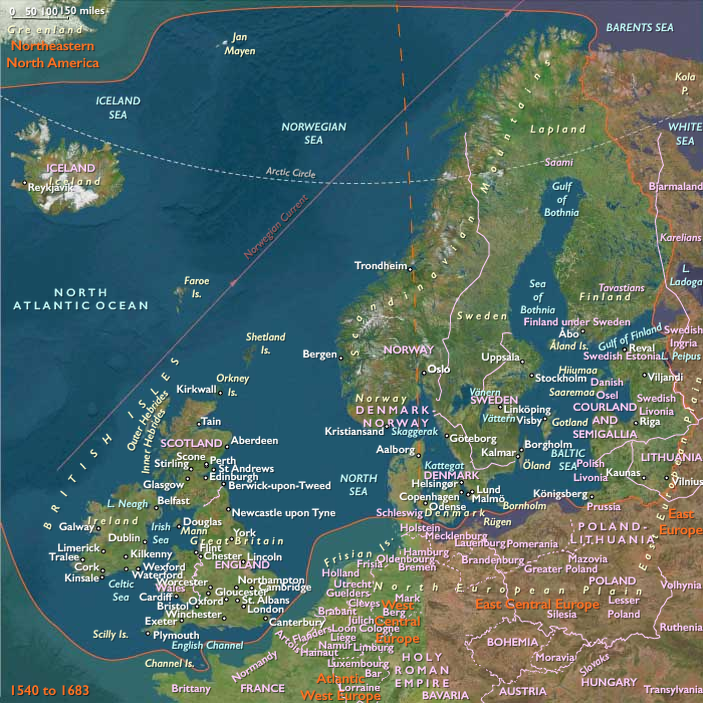
The reign of Elizabeth I, beginning in 1558, ushered in relative stability through the Elizabethan Religious Settlement (1559), which established a moderate Protestant Anglican Church. This settlement navigated a careful middle path between radical Protestantism and Catholicism, yet tensions persisted with Catholic recusants and Puritan dissenters. Elizabeth’s excommunication by Pope Pius V in 1570 via the papal bull Regnans in Excelsis further heightened anti-Catholic sentiment and solidified her Protestant governance.
Scotland: Consolidation of Protestantism and Abdication Crisis
Scotland faced profound religious and political changes. John Knox continued to consolidate Protestantism through the Kirk, establishing Calvinist doctrine. The return of Mary, Queen of Scots from France in 1561, however, introduced political instability, culminating in her forced abdication in 1567 following the murder of her second husband, Lord Darnley, and her controversial marriage to the Earl of Bothwell. Her infant son, James VI, succeeded her, leading to a prolonged regency period dominated by Protestant nobility.
Ireland: Elizabethan Expansion and Resistance
Under Elizabethan rule, English administrators intensified efforts to extend control across Ireland, promoting Protestantism and English law through plantation policies. These actions provoked continuous resistance and rebellions from Gaelic Irish chieftains, such as Shane O’Neill, whose revolt challenged English authority significantly before being suppressed in 1567. The resultant instability highlighted the complexities of English governance in Ireland.
Scandinavia: Lutheran Consolidation and Monarchical Authority
In Denmark-Norway, King Frederick II consolidated Lutheran ecclesiastical and secular authority, strengthening the centralized monarchy. His reign was marked by peace and prosperity, fostering trade and cultural development. In Iceland, Lutheranism remained rigorously enforced, embedding the island deeper into Danish administrative and religious spheres.
Cultural Renaissance and Literary Flourishing
The Elizabethan era saw vibrant intellectual and cultural advancement across Northwest Europe, particularly in England. Renaissance humanism profoundly influenced literature, art, and education. Figures such as the poet and courtier Sir Philip Sidney emerged, contributing significantly to literary and cultural discourse. Theatre and drama flourished, laying foundations for England’s golden age of literature. Architectural trends continued to evolve, characterized by symmetrical forms and elaborate ornamentation reflective of Renaissance aesthetics.
Maritime Exploration and Commercial Expansion
Maritime activity and exploration expanded notably during this period. English maritime ventures, spearheaded by figures like Sir Francis Drake and John Hawkins, intensified, leading to increased competition with Spain and Portugal. These voyages were marked by trade expansion and occasional conflict, significantly enhancing England's naval and commercial capabilities and setting the stage for future colonial endeavors.
Legacy of the Era
By 1575 CE, Northwest Europe had experienced critical shifts toward religious stability under Elizabeth I, significant dynastic upheaval in Scotland, and increased English administrative ambitions in Ireland. Cultural and intellectual life thrived, furthered by humanist ideas and growing maritime commerce. These developments collectively shaped a distinctly dynamic period, laying robust foundations for the transformative decades ahead