John Denton Pinkstone French
senior British Army officer
Years: 1852 - 1925
Field Marshal John Denton Pinkstone French, 1st Earl of Ypres, KP, GCB, OM, GCVO, KCMG, ADC, PC (September 28, 1852 – May 22, 1925), known as Sir John French from 1901 to 1916, and as The Viscount French between 1916 and 1922, is a senior British Army officer.
Born in Kent to an Anglo-Irish family, he saw brief service as a midshipman in the Royal Navy, before becoming a cavalry officer.
He achieves rapid promotion and distinguishes himself on the Gordon Relief Expedition.
French has a considerable reputation as a womanizer throughout his life, and his career nearly ends when he is cited in the divorce of a brother officer while in India in the early 1890s.
French becomes a national hero during the Second Boer War.
He wins the Battle of Elandslaagte near Ladysmith, escaping under fire on the last train as the siege begins.
He then commands the Cavalry Division, winning the Battle of Klip Drift during a march to relieve Kimberley.
He later conducts counter-insurgency operations in Cape Colony.
During the Edwardian period he commands I Corps at Aldershot, then serves as Inspector-General of the Army, before becoming Chief of the Imperial General Staff (CIGS, the professional head of the British Army) in 1912.
During this time he helps to prepare the British Army for a possible European war, and is also one of those who insists, in the so-called "cavalry controversy", that cavalry still be trained to charge with saber and lance rather than only fighting dismounted with firearms.
During the Curragh incident he has to resign as CIGS after promising Hubert Gough in writing that the Army will not be used to coerce Ulster Protestants into a Home Rule Ireland.
French's most important role is as Commander-in-Chief (C-in-C) of the British Expeditionary Force (BEF) for the first year and a half of the First World War.
He has an immediate personality clash with the French General Charles Lanrezac.
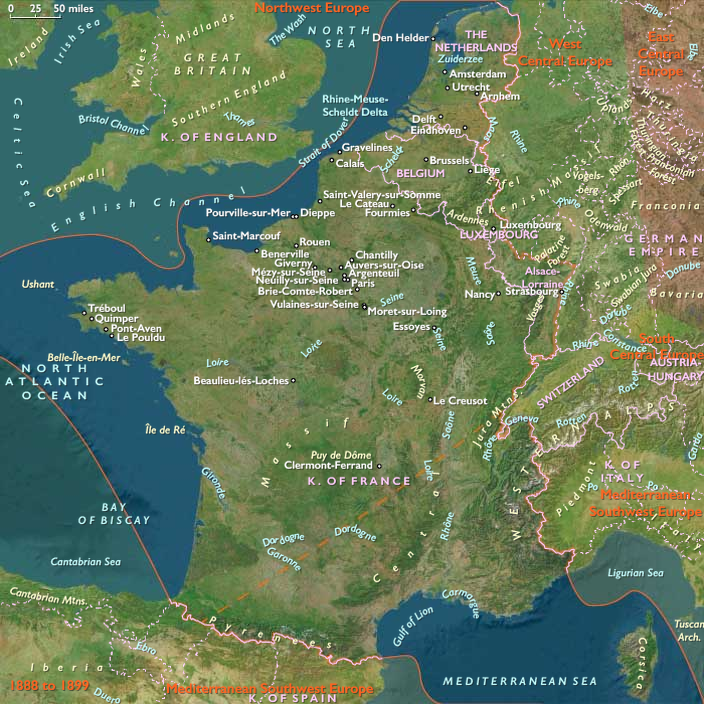
After the British suffer heavy casualties at the battles of Mons and Le Cateau (where Smith-Dorrien makes a stand contrary to French's wishes), French wants to withdraw the BEF from the Allied line to refit and only agrees to take part in the First Battle of the Marne after a private meeting with the Secretary of State for War, Lord Kitchener, against whom he bears a grudge hereafter.
In May 1915 he leaks information about shell shortages to the press in the hope of engineering Kitchener's removal.
By summer 1915 French's command is being increasingly criticized in London by Kitchener and other members of the government, and by Haig, Robertson and other senior generals in France.
After the Battle of Loos, at which French's slow release of XI Corps from reserve is blamed for the failure to achieve a decisive breakthrough on the first day, H. H. Asquith, the British Prime Minister, demands his resignation.
Haig, who was formerly French's trusted subordinate and who had saved him from bankruptcy by lending him a large sum of money in 1899, replaces him.
French is then appointed Commander-in-Chief, Home Forces for 1916–1918.
This period sees the country running increasingly short of manpower for the Army.
While the Third Battle of Ypres is in progress, French, as part of Lloyd George's maneuvers to reduce the power of Haig and Robertson, submits a paper that is critical of Haig's command record and which recommends that there be no further major offensives until the American Expeditionary Force (AEF) is present in strength.
He then becomes Lord Lieutenant of Ireland in 1918, a position he holds throughout much of the Irish War of Independence (1919–1922), in which his own sister is involved on the republican side.
During this time he publishes 1914, an inaccurate and much criticized volume of memoirs.