Louis XI and the Forced Marriage of Louis of Orléans (1476)
In 1476, King Louis XI of France strategically arranged a politically motivated marriage between his own daughter, Joan of France (Jeanne de France), and his sixteen-year-old nephew Louis of Orléans, son and improbable heir of the recently deceased poet and duke, Charles of Orléans (1394–1465). This marriage, imposed upon the young Louis against his wishes, formed a critical part of Louis XI’s broader plan to neutralize the House of Orléans, a rival cadet branch of the royal House of Valois, which Louis XI deeply distrusted due to its historically close ties to Burgundy.
Political and Dynastic Context
Following the unlikely birth of Louis of Orléans in 1462, when Charles of Orléans was seventy, Louis XI grew increasingly wary of the Orléanist faction, recognizing in them a potential threat to royal authority. The Orléans family had historically enjoyed close political connections with the powerful Dukes of Burgundy, notably Charles the Bold, heightening Louis XI’s fears of potential Burgundian-Orléanist alliances against his centralized royal authority.
To preclude any possibility of the Orléans family ascending the throne or forming powerful external alliances, Louis XI sought to effectively extinguish the Orléans lineage by marrying young Louis of Orléans to his own daughter, Joan—widely regarded as physically impaired and, importantly for Louis’s strategy, thought to be sterile.
Marriage and Personal Unhappiness
Young Louis of Orléans was deeply displeased by the arrangement, viewing the forced marriage as a deliberate affront to his independence and future dynastic potential. His resentment toward Joan, reflected in his indifferent or openly negative treatment of her, profoundly impacted the couple’s private life, fostering personal misery for Joan and deepening familial animosity. Louis XI’s calculated political move thus came at significant personal cost, contributing to bitterness and unhappiness within the royal household.
Strategic and Dynastic Consequences
Despite Louis XI’s intentions, the forced marriage did not succeed in permanently extinguishing the Orléans line. Louis of Orléans ultimately sought and gained an annulment of this marriage after becoming king in 1498 as Louis XII, following the unexpected demise of Charles VIII, Joan’s brother. His subsequent remarriage to Anne of Brittanyrevitalized his dynastic prospects and significantly altered the French royal lineage, marking the ultimate failure of Louis XI’s carefully crafted plan.
Cultural and Historical Significance
The forced marriage between Louis of Orléans and Joan of France highlights the ruthless political pragmatism of Louis XI, a king renowned for prioritizing dynastic control and centralized monarchy above personal happiness and familial bonds. It vividly illustrates how late medieval rulers used marriage as a calculated political tool, sacrificing individual wellbeing for strategic advantage.
Long-Term Historical Legacy
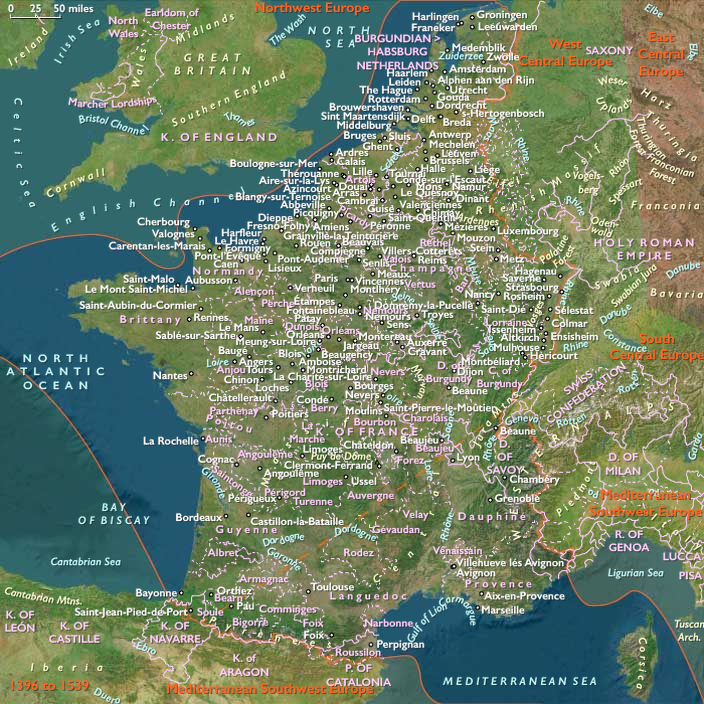
Ultimately, the forced marriage had precisely the opposite effect from that intended by Louis XI. Rather than suppressing the Orléans branch, it inadvertently strengthened Louis of Orléans’s resolve and reinforced his political ambition, eventually positioning him as a central figure in the political turmoil following Louis XI’s death. Upon Louis XII’s accession, the annulment and remarriage reshaped the French monarchy and underscored the resilience of dynastic politics, profoundly influencing France’s royal lineage and political trajectory into the early modern era in Atlantic West Europe.