Near East (609–598 BCE): Shifts in Power and Regional Turmoil
Miletus and Ionian Prosperity
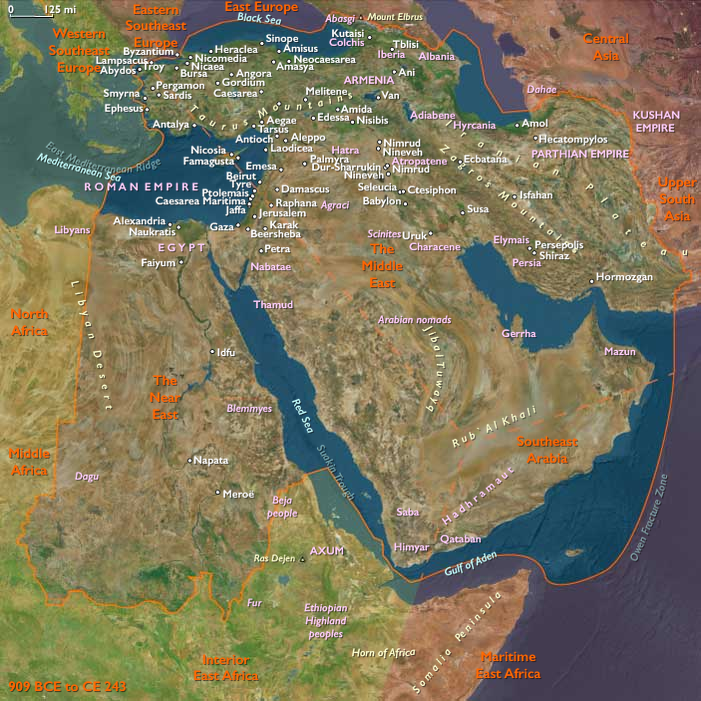
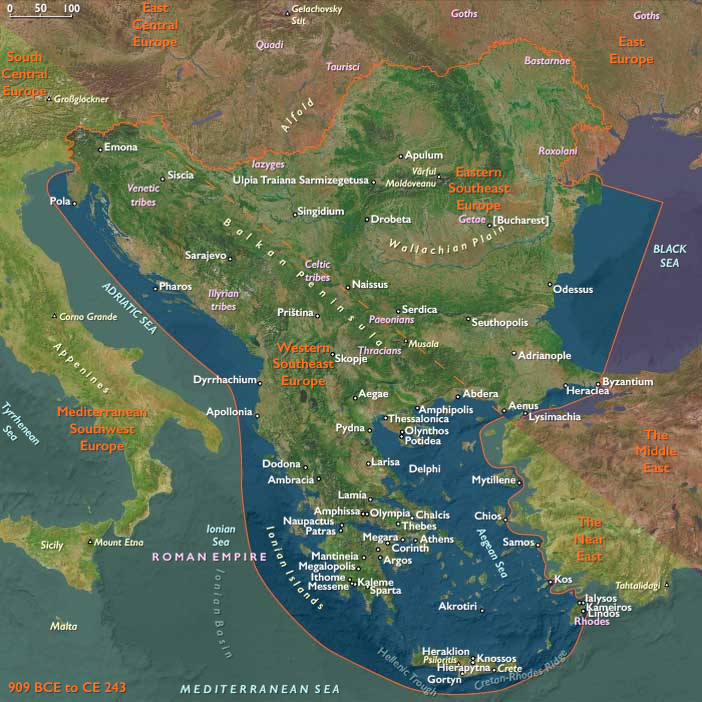
The city-state of Miletus, prominent among Ionian Greek settlements, reaches new heights of commercial prosperity and cultural influence. Located strategically on Anatolia’s western coast, Miletus thrives through extensive trade, notably in wool, particularly with Sybaris in southern Italy. Miletus significantly contributes to founding Greek colonies, including Naukratis in Egypt and more than sixty settlements along the shores of the Black Sea, notably Abydos, Cyzicus, Sinope (Sinop), Olbia, and Panticapaeum. The Ionian dialect, spoken by Miletians and inhabitants of neighboring cities Myus and Priene, becomes influential in literature and scholarship, while Ionic art and architecture spread widely.
Lydian Pressure and Ionian Expansion
Milesian prosperity and territorial ambitions inland provoke repeated confrontations with the rising Lydian power under the Mermnad dynasty. Following the death of King Sadyattes around 610 BCE, his successor Alyattes (610–560 BCE) sustains aggressive campaigns against Miletus, pressuring Ionian cities and prompting them to seek new territories overseas. The vigorous colonization initiatives and expansionist maritime ventures of Ionia reflect both the region's commercial ambitions and its response to these external pressures.
Egypt's Ambitions Under Necho II
Pharaoh Necho II, ascending Egypt’s throne following his father Psamtik I in 610 BCE, aims to reinforce Egypt’s dominance amid regional instability. He attempts to support the remnants of the failing Assyrian Empire against Babylonian advances, dispatching troops to aid Assyrian General Ashur-uballit II at Harran in 609 BCE. Necho’s forces, however, are insufficient, resulting in a retreat westward beyond the Euphrates.
Necho’s march into Syria, accompanied by his Mediterranean fleet, meets fierce resistance at Megiddo from the Judaean army led by King Josiah, who views Assyria and Egypt as vulnerable. In the ensuing battle, Josiah is killed, thwarting his vision of restoring a unified Davidic kingdom. Necho subsequently installs Jehoiakim as Judah's king, removing Josiah’s chosen successor Jehoahaz, whom he imprisons in Egypt.
Babylonian Rise and Egyptian Setbacks
The Babylonian king Nabopolassar, challenged by poor health, hands command of his forces to his son Nebuchadrezzar II in 605 BCE. Nebuchadrezzar decisively defeats Necho at the critical Battle of Carchemish, shattering Egypt’s ambitions of reasserting itself in the Levant. Egyptian territories extending from the Euphrates down to Judah come under Babylonian control, severely curtailing Egyptian influence.
Necho focuses thereafter on strengthening Egypt internally and externally, reinforcing the navy, notably by recruiting Ionian Greeks. He initiates ambitious projects, including the earliest known attempt to construct a navigable canal connecting the Nile and the Red Sea, a precursor to the Suez Canal.
Judaean Instability and Babylonian Domination
King Jehoiakim, initially loyal to Egypt, quickly switches allegiance to Nebuchadrezzar following the Babylonian victory at Carchemish. Jehoiakim rebels again around 601 BCE, prompting Babylonian retaliation. Nebuchadrezzar's punitive campaigns culminate in the siege of Jerusalem following Jehoiakim's death in 598 BCE, leading to the city’s capture. Nebuchadrezzar installs Zedekiah as a puppet ruler, marking Judah's definitive submission to Babylonian authority.
Legacy of the Era
This era is marked by significant geopolitical transformations in the Near East, characterized by the waning of Egyptian and Assyrian powers, the ascendance of Babylonian dominance, and the continuing expansion of Greek cultural and commercial influence through Ionian colonies. The fall of Jerusalem to Babylonian forces profoundly impacts Judaean history, laying foundations for future regional dynamics and cultural shifts.