Jean Sibelius
Finnish composer and violinist
Years: 1865 - 1957
Jean Sibelius (born Johan Julius Christian Sibelius, December 8, 1865 – September 20, 1957) is a Finnish composer and violinist of the late Romantic and early-modern periods.
He is widely recognized as his country's greatest composer, and his music is often credited with having helped Finland develop a national identity during its struggle for independence from Russia.
The core of his oeuvre is his set of seven symphonies, which, like his other major works, are regularly performed and recorded in Finland and very many other countries.
His other best-known compositions are Finlandia, the Karelia Suite, Valse triste, the Violin Concerto, the choral symphony Kullervo, and The Swan of Tuonela (from the Lemminkäinen Suite).
Other well known works include pieces inspired by nature, Nordic mythology, and the Finnish national epic, the Kalevala, over a hundred songs for voice and piano, incidental music for numerous plays, the opera Jungfrun i tornet (The Maiden in the Tower), chamber music, piano music, Masonic ritual music, and 21 publications of choral music.
Sibelius composes prolifically until the mid-1920s, but after completing his Seventh Symphony (1924), the incidental music for The Tempest (1926) and the tone poem Tapiola (1926), he stops producing major works in his last thirty years, a stunning and perplexing decline commonly referred to as the "silence of Järvenpää", the location of his home.
Although he is reputed to have stopped composing, he attempts to continue writing, including abortive efforts on an eighth symphony.
In later life, he writes Masonic music and re-edits some earlier works, while retaining an active but not always favourable interest in new developments in music.
The Finnish 100 mark note will feature his image until 2002, when the euro is adopted. From 2011, Finland will celebrate a flag flying day on December 8, the composer's birthday, also known as the "Day of Finnish Music".
In 2015, in celebration of the 150th anniversary of the composer's birth, a number of special concerts and events will be held, especially in Helsinki, the Finnish capital.
Related Events
Filter results
Showing 6 events out of 6 total
North Europe (1828–1971 CE)
Industrial Transformation, Welfare States, and the Balance Between Tradition and Modernity
Geography & Environmental Context
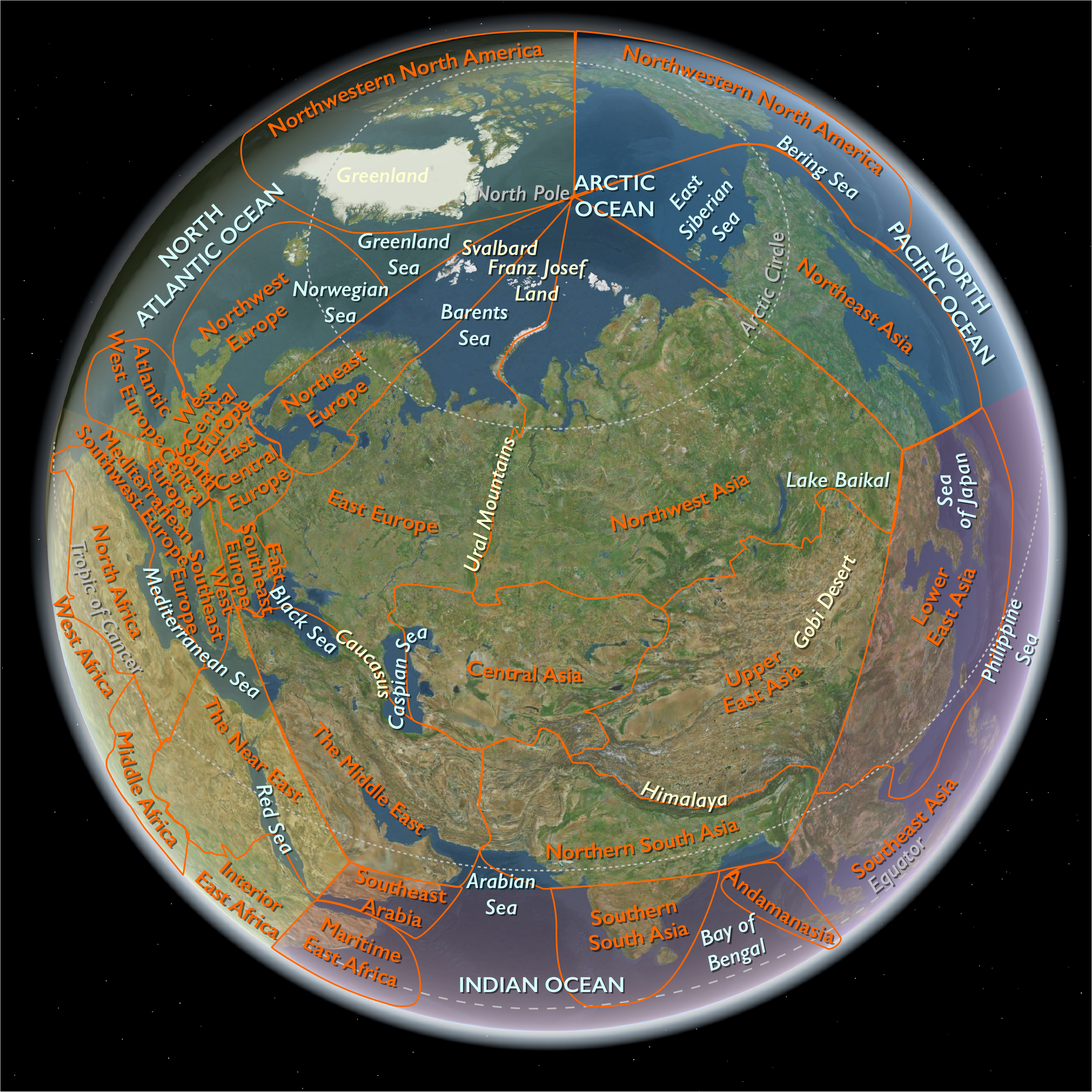
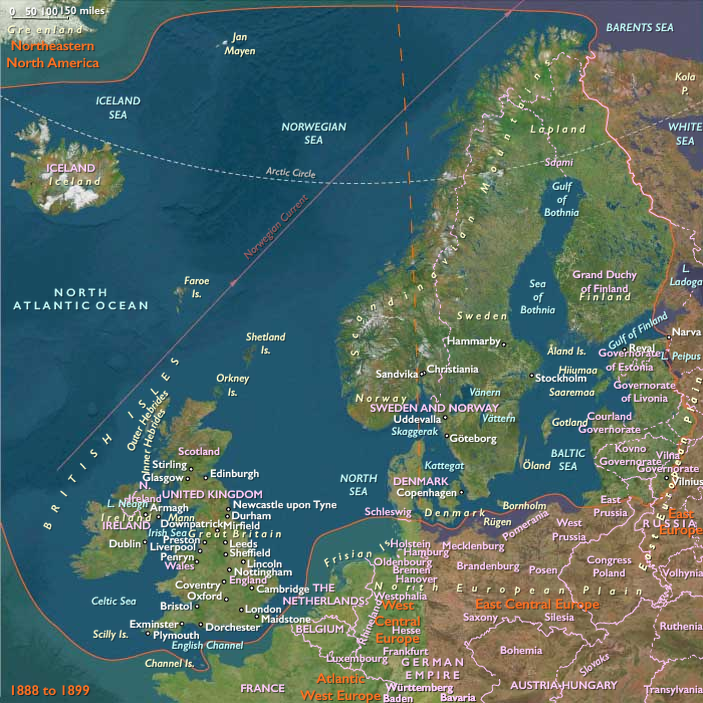
North Europe includes two fixed subregions:
-
Northeast Europe — Sweden, Finland, Lithuania, Latvia, Estonia, eastern Denmark, eastern Norway, and the Russian enclave of Kaliningrad.
-
Northwest Europe — Iceland, Ireland, the United Kingdom, western Norway, and western Denmark.
Anchors include the Baltic Sea, North Sea, and Norwegian Sea, the Scandinavian Mountains, and the North Atlantic islands. Major urban and cultural centers included Stockholm, Helsinki, Copenhagen, Oslo, Reykjavík, Dublin, Belfast, Edinburgh, Glasgow, and London. The subregion’s mix of fjords, forests, and fertile lowlands underpinned both agrarian heritage and maritime expansion.
Climate & Environmental Shifts
A temperate to subarctic climate defined the region. The 19th century brought short agricultural seasons and heavy reliance on fisheries and forestry. Industrial coal use caused early urban pollution in British and Scandinavian cities. The 20th century’s warming trend moderated winters, improving crop yields and extending growing zones in Scandinavia. Hydroelectric dams in Norway, Sweden, and Finland harnessed mountain rivers, while coastal engineering in the Netherlands and Denmark mitigated storm surges.
Subsistence & Settlement
-
Agrarian modernization: Land reforms and cooperative movements in Denmark, Sweden, and Finland raised productivity; dairy and timber industries grew.
-
Industrialization: Britain’s early Industrial Revolution spread to Scandinavia and the Baltics, with shipbuilding, textiles, steel, and engineering as core sectors.
-
Urbanization: By the early 20th century, London, Manchester, and Glasgow ranked among the world’s largest industrial cities; Stockholm, Copenhagen, and Oslo modernized with public housing and electrified transport.
-
Postwar economies: Reconstruction and social-democratic planning in the Nordic countries created prosperous welfare states; Britain transitioned from empire to post-industrial society.
-
Migration: Rural exodus to cities accelerated; Irish emigration to North America and Britain persisted; Baltic populations endured wartime deportations and Soviet resettlements.
Technology & Material Culture
Coal-fired industry, railways, and steam navigation defined the 19th century. British engineers exported rail technology worldwide. The 20th century saw electrification, radio, aviation, and shipbuilding innovation. Architecture evolved from Gothic revival and neoclassicism to functionalism and modernism—exemplified by Stockholm City Hall (1923)and London’s postwar reconstruction. Nordic design—Alvar Aalto, Arne Jacobsen—became globally influential for its simplicity and craftsmanship.
Movement & Interaction Corridors
-
Maritime trade: The North Sea and Baltic remained major arteries linking Britain, Scandinavia, and continental Europe. Liverpool, London, Bergen, and Copenhagen were vital Atlantic ports.
-
Rail and telegraph networks: Integrated interior trade by the 1870s; air corridors in the 20th century linked northern capitals to the world.
-
Colonial and global circuits: Britain’s imperial shipping routes spanned all oceans; Norwegian and Icelandic seafarers joined global fleets.
-
Wartime and Cold War lines: The region formed the northern flank of both world wars and later the NATO–Warsaw Pact divide.
Cultural & Symbolic Expressions
-
Romantic nationalism: Writers and artists—Hans Christian Andersen, Henrik Ibsen, Edvard Grieg, Akseli Gallen-Kallela—revived folklore and national epics.
-
Industrial and imperial culture: Britain’s Victorian Age merged empire, science, and literature—Charles Dickens, George Eliot, Alfred Tennyson, Charles Darwin reflected industrial modernity.
-
20th-century innovation: Modernist movements in design, architecture, and literature flourished in the Nordic world; British and Irish literature—from W. B. Yeats, James Joyce, and Virginia Woolf to Samuel Beckett—reshaped global modernism.
-
Religion and society: Protestantism remained dominant in Scandinavia and Britain; secularism and ecumenism grew by mid-century. Music—from Edward Elgar to Jean Sibelius—bridged nationalism and cosmopolitanism.
Environmental Adaptation & Resilience
Nordic societies pioneered cooperative forestry and sustainable fisheries. Hydroelectric and geothermal power (Iceland) reduced reliance on imported fuel. Welfare-state planning integrated housing, health, and environmental standards. Coastal flood control (e.g., the Delta Plan, Netherlands; Thyborøn Barrier, Denmark) and Arctic research expanded environmental awareness by the 1960s.
Political & Military Shocks
-
Reform and union changes: The Reform Acts in Britain broadened suffrage; Norway’s independence from Sweden (1905) redefined Nordic diplomacy.
-
World War I: Britain, Ireland, and the Nordic countries were affected by blockade and neutrality tensions; Ireland’s Easter Rising (1916) marked the drive for independence.
-
Interwar transformations: Ireland became a Free State (1922); Finland and the Baltics gained independence after the Russian Revolution.
-
World War II: Britain endured the Blitz; Norway and Denmark were occupied by Germany; Finland fought the USSR; Sweden remained neutral; Iceland hosted Allied bases.
-
Postwar reconstruction: Britain dismantled its empire; Scandinavia developed social democracy; Finland balanced between East and West.
-
Cold War alignments: Norway, Denmark, and Britain joined NATO (1949); Sweden and Finland remained neutral; the Baltics were annexed by the USSR.
Transition
Between 1828 and 1971, North Europe evolved from an industrial and maritime heartland of empire into a zone of social democracy, neutrality, and cultural innovation. Britain’s industrial dominance yielded to Nordic welfare models; Ireland and Finland secured independence; the Baltics lost theirs under Soviet rule. War, reconstruction, and integration produced some of the world’s highest living standards. By 1971, North Europe stood as both a bastion of stability and a frontier of modern design, environmental consciousness, and egalitarian governance—its fjords, harbors, and forests emblematic of resilience in a turbulent century.
Northeast Europe (1828–1971 CE): Nordic Neutralities, Baltic Nationhood, and a Sea of Corridors
Geography & Environmental Context
Northeast Europe includes Sweden, Finland, Lithuania, Latvia, Estonia, the Russian enclave of Kaliningrad, and eastern Denmark and eastern Norway (including Copenhagen and Oslo). Anchors span the Baltic Sea littoral—Stockholm’s skerries, the Åland and Estonian archipelagos, the Gulf of Finland and Bothnia, and the Vistula Lagoon/Kaliningrad—together with lake-and-forest interiors (Sweden’s Småland–Norrland, Finland’s Lakeland). Capitals Stockholm, Helsinki, Tallinn, Riga, Vilnius, Copenhagen, and Oslo formed a dense ring of maritime nodes.
Climate & Environmental Shifts
A cool temperate regime brought long winters and short, capricious summers. Crop crises struck periodically—the Finnish Great Famine (1866–68) was the worst—while forest and storm-fell events shaped upland livelihoods. Hydropowerable rivers in Sweden, Finland, and Norway enabled 20th-century electrification. By the late 1960s, Baltic eutrophication and industrial pollution emerged as regional stresses, even as afforestation and wildlife protections expanded.
Subsistence & Settlement
-
19th century countryside: Mixed farms (rye, oats, barley, potatoes) with dairy and forestry incomes; fishing (herring, Baltic cod) fed coasts.
-
Timber & tar to pulp & paper: Sweden and Finland shifted from sawn timber and tar exports to pulp, paper, and engineered wood, spawning mill towns along rivers.
-
Urbanization: Ports and capitals boomed—Stockholm, Helsinki, Copenhagen, Oslo—alongside Baltic hubs Tallinn, Riga, Vilnius; interwar conurbations spread around shipyards and rail junctions. Post-1945, new suburbs and modernist estates housed industrial workforces.
Technology & Material Culture
Railways bound forests to ports; icebreakers kept winter trade moving. Engineering clusters emerged: shipyards in Turku and Helsinki, Swedish steel and machine tools, optics and telecoms, and later vehicle and aircraft industries. Hydropower stations, district heating, and cooperative dairies transformed everyday life; by the 1960s, cars, radios, and televisions were commonplace from Stockholm to Tallinn.
Movement & Interaction Corridors
-
Baltic Sea highways: Ferries and freighters knit Stockholm–Turku–Helsinki, Tallinn–Riga–Klaipėda, and Copenhagen–Malmö; the Øresund remained the gate to the North Sea.
-
Resource flows: Ore and timber moved to Baltic smelters and mills; dairy and fish to urban markets.
-
War and peace lines: In WWII, sea lanes became battle zones; after 1945, NATO (Denmark, Norway), neutral Sweden, and Finland’s treaty constraints created tightly managed but busy frontiers with the Soviet sphere including the annexed Baltic republics.
Cultural & Symbolic Expressions
-
National awakenings: Kalevala publication (1835) in Finland; Song Festivals in Estonia and Latvia; Lithuania’s clandestine press during the press ban (1864–1904) and the knygnešiai (book-smugglers) forged modern identities.
-
Golden ages & modernisms: Sibelius and Nielsen in music; Strindberg, Hamsun, and Sillanpää in letters; Munch (Oslo) and Nordic functionalist architecture; Baltic avant-gardes in interwar Riga, Tallinn, and Kaunas.
-
Welfare imaginaries: Lutheran people’s movements and cooperative traditions fed into 20th-century Nordic welfare models, shaping education, health, and housing.
Environmental Adaptation & Resilience
-
Forestry regimes: Scientific silviculture, replanting, and state forests balanced sawmill demand; log-driving gave way to rail and truck transport.
-
Agrarian modernization: Land consolidation, dairying co-ops, and sugar-beet belts stabilized farm incomes; state grain stores buffered lean years.
-
Cold adaptation: Ice roads, heated district systems, and winterized housing normalized life at high latitudes.
Political & Military Shocks
-
1848–1905 reform wave: Constitutional and social reforms expanded suffrage (notably early in the Nordics) and strengthened parliaments.
-
Independence of the Baltic states (1918): Estonia, Latvia, Lithuania emerged from WWI; interwar authoritarian turns (Ulmanis, Smetona) followed economic shocks.
-
Winter War & Continuation War (1939–44): Finland fought the USSR, ceded Karelia, and resettled evacuees while retaining sovereignty.
-
Baltic occupations (1940, 1944): The three Baltic states were annexed by the USSR; deportations (1941, 1949)and Sovietization transformed society.
-
Denmark & Norway (1940–45): German occupation; resistance, sabotage, and postwar NATO alignment (1949). Sweden remained neutral, a humanitarian and industrial hub.
-
Cold War settlement: Finland’s YYA Treaty (1948) balanced Western trade with Soviet security demands; Nordic Council (1952) deepened regional cooperation; North Sea oil discovery (1969) began to reorient Norway’s economy.
Transition
Between 1828 and 1971, Northeast Europe traveled from rural timber and tar economies through industrialization, welfare-state construction, and Cold War partition. Sweden and the Nordic capitals built neutral or Western-aligned prosperity on forestry, hydropower, and engineering; Finland navigated survival between blocs; the Baltic states experienced independence, then Soviet annexation and profound coercion. By 1971, ferries, cables, and welfare institutions ringed the Baltic, even as an ideological frontier cut across its waters—setting the stage for détente, environmental cleanup, and, decades later, renewed Baltic sovereignty.
Jean Sibelius's tone poem Finlandia receives its première with the Helsinki Philharmonic Orchestra on July 2, 1900.
Northeast Europe (1924–1935 CE): Consolidation of Independence, Democratic Challenges, and Economic Transformation
Between 1924 and 1935 CE, Northeast Europe experienced significant developments marked by the consolidation of national independence, robust cultural and educational progress, evolving democratic practices, and economic modernization. Finland, Estonia, Latvia, and Lithuania navigated complexities of sovereignty and democratic governance amid global economic turmoil. Denmark, Sweden, and Norway advanced further toward stable democracy, welfare reforms, and economic resilience, while Germany's shifting politics under the emerging Nazi regime began influencing regional geopolitical realities.
Finland: Democratic Stability, Economic Modernization, and Nordic Orientation
After recovering from the divisive Civil War of 1918, Finland continued its democratic consolidation, stabilizing politically under a parliamentary republic established by the Constitution of 1919. The presidency of Lauri Kristian Relander (1925–1931) and subsequently Pehr Evind Svinhufvud (1931–1937) exemplified stability, reinforcing Finland’s democratic institutions. Despite lingering political divisions between conservatives, social democrats, and the rural-based Agrarian League, Finland maintained a functioning democracy.
Economically, Finland modernized steadily, with industrialization driven by its robust timber, paper, and pulp industries. Infrastructure improvements—including transportation networks, railway expansions, and port enhancements—facilitated trade and commerce. Finland increasingly oriented economically and culturally toward Scandinavia, laying the foundations for future cooperation.
Estonia and Latvia: Parliamentary Democracy, Economic Reform, and Cultural Flourishing
Estonia and Latvia experienced dynamic parliamentary democracies in the early interwar years. In Estonia, parliamentary politics flourished initially under a constitution fostering democratic participation. Economic reforms, particularly land reform, stimulated agriculture, promoted industrial development, and reinforced urban growth in cities like Tallinn and Tartu. However, the global economic crisis after 1929 triggered political instability and led to the authoritarian regime under Konstantin Päts following a bloodless coup in 1934, intended to stabilize governance.
Latvia similarly experienced dynamic democratic participation initially, with active parliamentary debates shaping national policies. Under President Jānis Čakste (1922–1927) and later Alberts Kviesis (1930–1936), Latvia promoted economic modernization, agrarian reform, and educational expansion. However, as in Estonia, economic pressures and rising nationalist sentiments resulted in democratic backsliding. In 1934, Prime Minister Kārlis Ulmanis established an authoritarian regime, suspending parliament to ensure stability amid economic distress and political fragmentation.
Lithuania: Democratic Challenges and Authoritarian Consolidation
Lithuania navigated difficult democratic processes during this period. Initially a parliamentary republic, Lithuania faced internal political tensions exacerbated by the ongoing territorial dispute with Poland over Vilnius. These pressures culminated in a decisive political shift in 1926 when nationalist forces led by Antanas Smetona established an authoritarian government after a bloodless coup, suspending parliamentary democracy. Under Smetona’s presidency, Lithuania pursued centralized political control, economic development, and extensive cultural and educational initiatives to bolster Lithuanian national identity.
Denmark, Sweden, and Norway: Democratic Stability and Welfare State Foundations
Denmark, Sweden, and Norway continued to demonstrate democratic resilience, expanding their welfare states significantly.
-
Denmark maintained a stable democratic system characterized by coalition governments and robust social welfare policies, particularly during economic hardships following the Great Depression. Major social and educational reforms reinforced national cohesion and stability.
-
Sweden solidified its parliamentary democracy, notably under the governance of the Social Democratic Party led by Per Albin Hansson, who served as Prime Minister from 1932 onwards. The Swedish government implemented comprehensive welfare state reforms, addressing unemployment, education, housing, and public healthcare.
-
Norway similarly reinforced its democratic institutions, continuing to advance social welfare policies and education. Prime Minister Johan Ludwig Mowinckel and his successors oversaw critical economic and social initiatives, further embedding democratic norms and expanding citizens' rights.
These nations’ political and economic stability became a regional hallmark, fostering prosperity and democratic governance.
Economic Transformations and Global Economic Crisis
Throughout Northeast Europe, economic modernization significantly advanced in the 1920s, with industrial growth in timber, shipbuilding, textiles, agriculture, and manufacturing. Infrastructure developments enhanced regional economic integration and facilitated international trade.
The onset of the Great Depression (1929–1933), however, dramatically impacted all nations. Finland, Estonia, Latvia, and Lithuania experienced severe economic downturns, widespread unemployment, and declining exports. These hardships strained democratic governance and catalyzed authoritarian responses, notably in Estonia (Päts), Latvia (Ulmanis), and Lithuania (Smetona). Conversely, Denmark, Sweden, and Norway managed economic distress through comprehensive welfare measures, labor reforms, and social policies, thereby stabilizing their democracies.
Urbanization and Social Developments
Urbanization continued intensively, reshaping demographic and social landscapes. Cities including Helsinki, Tallinn, Riga, Kaunas, Vilnius, Copenhagen, Oslo, and Stockholm experienced rapid growth, fostering middle-class expansion, cultural innovation, and improved standards of living. Urban centers became hubs for modernist architecture, vibrant artistic movements, and progressive social policies, influencing broader national identities.
Rise of Nationalist Movements and Authoritarian Trends
Economic hardships and national insecurities after the Great Depression intensified nationalist movements, particularly in Estonia, Latvia, and Lithuania, contributing directly to authoritarian shifts. Leaders like Päts, Ulmanis, and Smetona justified authoritarian governance as stabilizing responses to economic instability and political fragmentation. This trend reflected broader European movements towards authoritarianism during economic crisis periods.
Germany's Regional Influence under Nazism
The rise of the Nazi Party and Adolf Hitler’s ascension to power in Germany (1933) significantly impacted Northeast Europe. Germany’s economic recovery and assertive foreign policy under Nazism affected trade relations, regional diplomacy, and security considerations. Baltic states increasingly felt pressure from Germany's expansive geopolitical ambitions. Simultaneously, Finland cautiously navigated relations, mindful of potential German economic opportunities and Soviet threats.
Cultural and Educational Flourishing
Despite political challenges, Northeast Europe's cultural and intellectual life flourished remarkably. Finland reinforced its cultural identity through music, literature, and educational advancements, symbolized by composer Jean Sibelius, whose symphonic compositions became national treasures. Estonia, Latvia, and Lithuania expanded national education systems, promoting native languages, history, and culture, further embedding distinct national identities.
Scandinavian countries, especially Sweden and Denmark, contributed significantly to European cultural trends, particularly modernist literature, art, design, and social thought, bolstered by flourishing educational and cultural institutions.
Diplomatic Alignments and Regional Cooperation
During this era, diplomatic alignments intensified as geopolitical tensions rose. Finland, Estonia, Latvia, and Lithuania sought security through diplomatic initiatives, cautiously balancing relations with Germany and the Soviet Union. Simultaneously, inter-Scandinavian cooperation strengthened significantly, marked by increased diplomatic collaboration, cultural exchanges, and economic agreements among Denmark, Sweden, and Norway.
Legacy of the Era
The period 1924–1935 CE critically shaped Northeast Europe’s historical trajectory, characterized by national consolidations, democratic challenges, and economic transformations. Finland maintained democratic institutions despite global economic pressures. Estonia, Latvia, and Lithuania transitioned from vibrant parliamentary democracies to authoritarian regimes amid intense economic and political instability. Denmark, Sweden, and Norway emerged as exemplary stable democracies, laying robust foundations for future welfare states.
Collectively, these developments significantly influenced Northeast Europe’s political landscapes, social structures, cultural identities, and diplomatic relations, setting the stage for future challenges in the volatile decade leading toward the Second World War.
Northeast Europe (1948–1959 CE): Cold War Division, Reconstruction, and Paths to Welfare and Stability
Between 1948 and 1959 CE, Northeast Europe entered the Cold War era profoundly divided. Finland navigated cautious neutrality under Soviet oversight; Estonia, Latvia, and Lithuania endured harsh Soviet occupation and forced integration into the USSR; and Denmark, Sweden, and Norway experienced robust democratic stability, economic recovery, and welfare-state development under a Western orientation. This era solidified the ideological, political, and economic divisions across the region, shaping its trajectory deeply into the latter half of the twentieth century.
Finland: Neutrality, Reconstruction, and the "Paasikivi–Kekkonen" Doctrine
Finland, though maintaining independence, occupied a precarious geopolitical position adjacent to the Soviet Union. The Finnish government carefully navigated its sovereignty through the influential Paasikivi–Kekkonen Doctrine, formulated by presidents Juho Kusti Paasikivi (1946–1956) and his successor Urho Kekkonen (1956–1982). This doctrine prioritized neutrality, cooperation, and pragmatic accommodation of Soviet interests to preserve national independence.
In 1948, Finland signed the Treaty of Friendship, Cooperation, and Mutual Assistance with the Soviet Union, institutionalizing Finnish neutrality and limiting its foreign policy autonomy. Despite restrictions, Finland engaged in extensive postwar reconstruction and economic recovery. Finnish industries—particularly forestry, paper, metal, and shipbuilding—rebounded impressively, bolstered by extensive trade with the Soviet Union, Western Europe, and the United States. Finnish society also began laying foundations for what would become its highly admired welfare state.
Baltic States: Soviet Occupation, Resistance, and Russification
Estonia, Latvia, and Lithuania endured continued Soviet occupation as forcibly integrated republics within the Soviet Union. The late 1940s and 1950s saw intensified Sovietization policies: mass deportations, imprisonment, collectivization of agriculture, and suppression of national cultures and languages. These actions aimed at erasing national identities and enforcing Soviet conformity.
Yet, resistance persisted. Forest Brothers, Baltic partisans fighting Soviet rule, maintained guerrilla warfare into the early 1950s, symbolizing Baltic resilience. Secret educational networks, underground literature, and clandestine cultural activities sustained national identities despite oppressive Soviet rule. Nevertheless, economic hardship, demographic changes due to Russian immigration, and harsh Russification policies defined Baltic experiences throughout this era.
Denmark: Democratic Stability, NATO Membership, and Welfare State Development
Denmark, experiencing rapid recovery from wartime occupation, fully embraced Western integration. In 1949, Denmark became a founding member of NATO, significantly shaping its security and diplomatic orientation during the Cold War.
Denmark enjoyed stable democratic governance under successive Social Democratic governments led prominently by Prime Minister Hans Hedtoft (1947–1950, 1953–1955) and subsequently H.C. Hansen (1955–1960). Economic recovery was rapid, driven by agriculture modernization, industrial expansion, and extensive public infrastructure projects. Denmark implemented progressive social reforms, greatly expanding its welfare state, improving healthcare, education, housing, and social security, setting a high standard of living and economic equality.
Norway: Postwar Reconstruction, NATO Membership, and Social Welfare Expansion
Norway’s postwar recovery under Prime Minister Einar Gerhardsen (1945–1951, 1955–1965) was similarly robust. Norway also joined NATO in 1949, aligning its security interests with Western democracies against potential Soviet threats.
Economic recovery and modernization in Norway were supported by the U.S.-led Marshall Plan and domestic investments in industry, infrastructure, and education. Norway’s welfare state expanded substantially, focusing on comprehensive healthcare, education, social services, and workers' rights. Politically stable and socially cohesive, Norway solidified its democratic traditions and emerged as a prosperous, welfare-oriented society.
Sweden: Neutrality, Prosperity, and Welfare State Excellence
Sweden, maintaining its policy of armed neutrality established during World War II, became a model of economic prosperity and social welfare. Swedish neutrality facilitated extensive international diplomatic influence, promoting human rights, peace initiatives, and global cooperation through the United Nations.
Under the long tenure of Prime Minister Tage Erlander (1946–1969), Sweden enjoyed remarkable economic expansion, technological innovation, and comprehensive welfare state development. Major reforms provided universal healthcare, improved pensions, expanded educational opportunities, and advanced labor rights, creating one of the world's most admired welfare systems. Sweden’s prosperous economy, bolstered by manufacturing and technology sectors, positioned the nation as an exemplar of stable democracy and social equity.
Economic Divergence: Prosperity vs. Stagnation
The economic divide between the Nordic states (Denmark, Norway, and Sweden) and the Baltic region under Soviet rule became pronounced during this period. Nordic economies rapidly industrialized, modernized, and expanded their welfare programs, greatly improving citizens' quality of life. In contrast, Estonia, Latvia, and Lithuania, burdened by forced collectivization and inefficient Soviet central planning, faced economic stagnation, shortages, and hardship.
Finland occupied a unique economic middle ground. Though politically constrained by Soviet influence, Finland effectively balanced Eastern trade with Western economic engagement, fostering steady growth and robust industrial expansion, setting the foundation for future prosperity.
Cultural Development and Identity Preservation
Despite political division, all nations preserved and enhanced their cultural identities. Finland, under neutrality and careful diplomacy, cultivated thriving national literature, education, and arts, exemplified by cultural icons like composer Jean Sibelius, whose legacy continued into this era.
In the Baltic states, culture became a means of resistance against Soviet suppression. Secret cultural societies, clandestine publication of banned literature, and preservation of languages sustained national identities despite harsh Sovietization attempts.
Scandinavian cultural life flourished openly. Denmark, Sweden, and Norway invested heavily in arts, education, and media, fostering vibrant cultural scenes with notable contributions in literature, film, and design. Cultural openness, innovation, and educational excellence became hallmarks of the Nordic region.
Diplomatic Alignment and Regional Cooperation
This period solidified the geopolitical division of Northeast Europe. Finland’s neutrality policy was meticulously balanced between Soviet pressures and Western opportunities. Estonia, Latvia, and Lithuania remained isolated behind the Iron Curtain, under Soviet control and integrated within the Eastern Bloc.
Denmark and Norway’s NATO membership and Sweden’s active neutrality and international diplomacy strengthened their collective Western orientation. Increasingly, Nordic cooperation—culturally, economically, and diplomatically—became significant, laying groundwork for deeper regional integration in subsequent decades.
Technological and Educational Progress
Throughout the region, educational and technological advancements progressed significantly. Finland, Denmark, Norway, and Sweden achieved major strides in science, industry, engineering, and education, producing highly educated populations and innovative economies. These nations rapidly embraced technological innovations, improved infrastructure, transportation, and communications, facilitating economic growth and societal improvements.
In contrast, Soviet-controlled Baltic states suffered from isolation and restrictive policies, limiting genuine educational advancement and innovation despite high literacy rates.
Legacy of the Era
The period 1948–1959 CE defined Northeast Europe's historical path through pronounced Cold War divisions. Finland preserved its independence through strategic neutrality and prudent diplomacy. Estonia, Latvia, and Lithuania endured severe hardships under Soviet occupation, yet maintained resilient national identities. Denmark, Sweden, and Norway achieved political stability, democratic vitality, economic prosperity, and social welfare excellence, becoming models of democratic governance.
These formative Cold War years profoundly influenced regional identities, societal structures, geopolitical alignments, and cultural trajectories, setting the stage for evolving political developments, eventual liberation movements, and deeper regional cooperation in subsequent decades.
Northeast Europe (1960–1971 CE): Stability, Welfare Expansion, Cold War Realignment, and Cultural Awakening
Between 1960 and 1971 CE, Northeast Europe experienced significant socioeconomic transformation, deepened geopolitical divisions from the Cold War, and sustained cultural flourishing. The Nordic countries—Denmark, Norway, Sweden, and Finland—reinforced their global reputations as stable, prosperous welfare states with democratic governance. Meanwhile, the Soviet-controlled Baltic republics—Estonia, Latvia, and Lithuania—continued their struggles with Sovietization, economic stagnation, cultural suppression, and resilient nationalism beneath oppressive conditions.
Finland: Neutrality, Prosperity, and International Diplomacy
Under President Urho Kekkonen (1956–1982), Finland deepened its policy of pragmatic neutrality, famously known as the Paasikivi–Kekkonen Doctrine. This careful balance maintained Finnish sovereignty and enabled economic growth, despite Soviet oversight. Finland skillfully navigated between East and West, engaging actively in international diplomacy, exemplified by its role as host for the landmark Conference on Security and Cooperation in Europe (CSCE) discussions, later leading to the 1975 Helsinki Accords.
The Finnish economy thrived, driven by robust forestry, metal, electronics, and shipbuilding sectors. Increased trade with both Eastern Bloc nations and Western markets secured steady growth. Finland significantly expanded its welfare state during this era, establishing comprehensive healthcare, advanced education systems, robust social security programs, and labor rights protection.
Soviet-Controlled Baltic States: Stagnation, Russification, and Cultural Resilience
Throughout the 1960s, Estonia, Latvia, and Lithuania remained deeply affected by Soviet rule. Economic hardship persisted due to inefficient central planning, forced collectivization, and restrictive policies, contrasting starkly with their prospering Nordic neighbors. Industrialization remained narrowly focused, and chronic shortages were common, undermining living standards.
The Soviets intensified Russification efforts, promoting Russian language, culture, and political ideologies at the expense of native Baltic identities. However, beneath the surface, the Baltic republics sustained resilient national identities through underground cultural networks, secret literary circles, and clandestine educational initiatives. Despite severe repression, Baltic cultural heritage—traditional music, folklore, literature, and religious practices—served as quiet but potent forms of resistance.
Denmark: Welfare-State Expansion, Prosperity, and European Integration
Denmark thrived economically and politically under stable democratic governance, primarily led by Prime Minister Jens Otto Krag (1962–1968, 1971–1972). The Danish welfare state expanded significantly, introducing advanced social policies in education, healthcare, social security, workers' rights, and gender equality. Economic prosperity was driven by industrial modernization, agricultural productivity, and growth in trade and services.
In 1960, Denmark joined the European Free Trade Association (EFTA), reflecting its commitment to European economic integration. Denmark also intensified its role in international diplomacy, contributing actively to global peacekeeping and humanitarian missions.
Norway: Oil Discovery, Economic Boom, and Welfare State Growth
Norway’s significant event of this era was the 1969 discovery of substantial offshore oil reserves in the North Sea, forever altering its economic landscape. Managed prudently, these discoveries rapidly transformed Norway from a modest economy into one of Europe's wealthiest nations. This economic shift funded extensive welfare-state expansion under continued leadership from Prime Minister Einar Gerhardsen (1945–1951, 1955–1965) and later Per Borten (1965–1971).
Norway reinforced social policies, improving healthcare, education, pensions, gender equality, and environmental protections. Simultaneously, Norway actively contributed to international cooperation and diplomacy, reaffirming its NATO commitments and internationalist orientation during the Cold War.
Sweden: Welfare-State Excellence and International Influence
Under Prime Minister Tage Erlander (1946–1969), Sweden solidified its position as a model welfare state, reaching unprecedented economic prosperity, social equality, and political stability. Extensive welfare reforms provided comprehensive healthcare, high-quality education, advanced labor protections, and gender equality, establishing Sweden as a global exemplar of social democracy.
Sweden maintained its influential international diplomatic role, actively advocating global peace, humanitarianism, and environmental concerns, exemplified by its leadership in the early global environmental movement, notably the 1972 Stockholm Conference on the Human Environment preparations.
Baltic Nationalism and Silent Resistance
Throughout the 1960s, cultural resistance persisted in Estonia, Latvia, and Lithuania despite Soviet repression. Small-scale acts of defiance—secret commemorations of national holidays, publication of banned literature (samizdat), and covert educational groups—kept nationalist aspirations alive. Increasing contacts with émigré communities in Western countries further strengthened Baltic cultural consciousness and political awareness, quietly setting foundations for future independence movements.
Technological Advancement, Education, and Social Progress
In the Nordic countries, technological innovation and educational investment characterized this period. Extensive reforms in education led to high literacy rates, advanced technical expertise, and strong research infrastructure. Denmark, Norway, Finland, and Sweden rapidly embraced technological modernization—particularly in telecommunications, manufacturing, transportation, and energy sectors—propelling their economies forward and significantly improving citizens' quality of life.
Baltic states, though lagging due to Soviet limitations, nevertheless maintained high basic educational standards, contributing to an informed, culturally conscious population despite oppressive conditions.
Geopolitical Realignment and European Cooperation
The 1960s witnessed deeper regional integration among the Nordic countries. Denmark, Norway, Sweden, Finland, and Iceland established the Nordic Council of Ministers (1971), institutionalizing cooperation in economics, culture, education, environment, and diplomacy, showcasing regional unity despite differing Cold War alignments.
Simultaneously, the geopolitical division between Soviet-occupied Baltic republics and Western-oriented Nordic nations solidified. The Iron Curtain sharply demarcated contrasting economic, social, and political trajectories, reflecting stark Cold War realities.
Social Movements, Cultural Awakening, and Environmental Awareness
The 1960s saw significant social and cultural shifts throughout the Nordic region, echoing global youth movements, social activism, and cultural liberalization. Influenced by global student protests and feminist movements, Scandinavian societies became increasingly progressive, advocating gender equality, environmentalism, human rights, and pacifism.
This cultural awakening produced influential literature, cinema, and arts, notably Ingmar Bergman’s films (Sweden), Tove Jansson’s literature (Finland), and an emerging environmental consciousness anticipating subsequent decades of robust environmental activism.
Legacy of the Era
The period 1960–1971 CE firmly established Northeast Europe’s contrasting Cold War experiences. Finland consolidated neutrality and economic prosperity, balancing Soviet and Western interests effectively. Estonia, Latvia, and Lithuania remained suppressed yet culturally resilient beneath Soviet control. Denmark, Norway, and Sweden emerged as global models of democratic stability, welfare-state excellence, and progressive social values.
These critical years significantly shaped Northeast Europe’s economic structures, social frameworks, cultural identities, and political alignments, laying foundations for later democratic transformations, eventual Baltic independence movements, enhanced regional integration, and broader European cooperation into the late twentieth century.