Jawaharlal Nehru
Prime Minister of India
Years: 1889 - 1964
Jawaharlal Nehru (November 14, 1889 – 27 May 1964) is the first Prime Minister of India and a central figure in Indian politics before and after independence.
He emerges as the paramount leader of the Indian independence movement under the tutelage of Mahatma Gandhi and rules India from its establishment as an independent nation in 1947 until his death in 1964.
He is considered to be the architect of the modern Indian nation-state: a sovereign, socialist, secular, and democratic republic.
He is also known as Pandit Nehru due to his roots with the Kashmiri Pandit community while many Indian children know him as "Uncle Nehru" (Chacha Nehru).
The son of Motilal Nehru, a prominent lawyer and nationalist statesman and Swaroop Rani, Nehru is a graduate of Trinity College, Cambridge and the Inner Temple, where he trains to be a barrister.
Upon his return to India, he enrolls at the Allahabad High Court, and takes an interest in national politics, which eventually replaced his legal practice.
A committed nationalist since his teenage years, he becomes a rising figure in Indian politics during the upheavals of the 1910s.
He becomes the prominent leader of the left-wing factions of the Indian National Congress during the 1920s, and eventually of the entire Congress, with the tacit approval of his mentor, Gandhi.
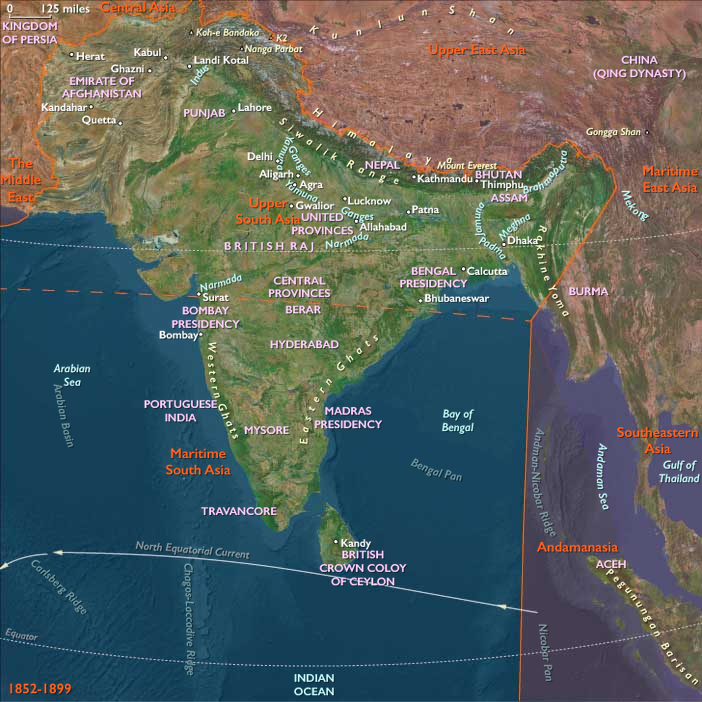
As Congress President in 1929, Nehru calls for complete independence from the British Raj and instigates the Congress's decisive shift towards the left.
Nehru and the Congress dominate Indian politics during the 1930s as the country moves towards independence.
His idea of a secular nation-state is seemingly validated when the Congress, under his leadership, sweeps the 1937 provincial elections and forms the government in several provinces; on the other hand, the separatist Muslim League fares much poorer, but these achievements are seriously compromised in the aftermath of the Quit India Movement in 1942, which sees the British effectively crush the Congress as a political organization.
Nehru, who had reluctantly heeded Gandhi's call for immediate independence, for he had desired to support the Allied war effort during the Second World War, comes out of a lengthy prison term to a much altered political landscape.
The Muslim League under his old Congress colleague and now bête noire, Muhammad Ali Jinnah, has come to dominate Muslim politics in India.
Negotiations between Nehru and Jinnah for power sharing fail in 1947 and give way to the independence and bloody partition of India.
Nehru is elected by the Congress to assume office as independent India's first Prime Minister, although the question of leadership had been settled as far back as 1941, when Gandhi acknowledged Nehru as his political heir and successor. As Prime Minister, he set out to realise his vision of India.
The Constitution of India is enacted in 1950, after which he embarks on an ambitious program of economic, social and political reforms.
Chiefly, he oversees India's transition from a colony to a republic, while nurturing a plural, multi-party democracy.
In foreign policy, he takes a leading role in Non-Alignment while projecting India as a regional hegemon in South Asia.
Under Nehru's leadership, the Congress emerges as a catch-all party, dominating national and state-level politics and winning consecutive elections in 1951, 1957, and 1962.
He remains popular with the people of India in spite of political troubles in his final years and failure of leadership during the 1962 Sino-Indian War.
In India, his birthday is celebrated as Children's Day.