James Monroe
5th President of the United States
Years: 1758 - 1831
James Monroe (April 28, 1758 – July 4, 1831) is the fifth President of the United States (1817–1825).
Monroe is the last president who was a Founding Father of the United States, and the last president from the Virginia dynasty and the Republican Generation.
His presidency is marked both by an "Era of Good Feelings" – a period of relatively little partisan strife – and later by the Panic of 1819 and a fierce national debate over the admission of the Missouri Territory.
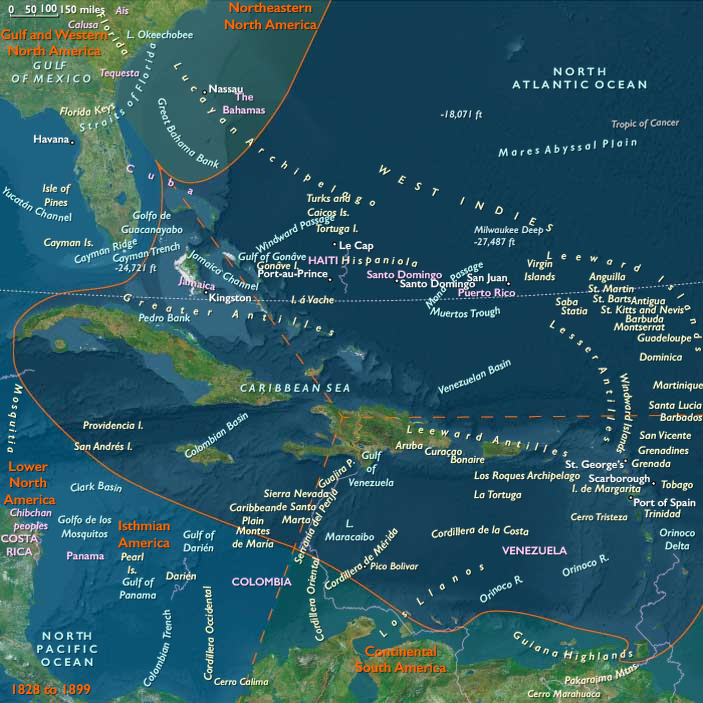
Monroe is most noted for his proclamation of the Monroe Doctrine in 1823, which states that the United States will not tolerate further European intervention in the Americas.
Born in Westmoreland County, Virginia, Monroe fights in the American Revolutionary War.
He is injured in the Battle of Trenton with a musket ball to his shoulder.
After studying law under Thomas Jefferson from 1780 to 1783, he serves as a delegate in the Continental Congress.
As an anti-federalist delegate to the Virginia convention that considers ratification of the United States Constitution, Monroe opposes ratification, claiming it gives too much power to the central government.
Nonetheless, Monroe takes an active part in the new government and in 1790 he is elected to the Senate of the first United States Congress, where he joins the Jeffersonians.
He gains experience as an executive as the Governor of Virginia and rises to national prominence when as a diplomat in France he helps negotiate the Louisiana Purchase in 1803.
Monroe is of French and Scottish descent.
During the War of 1812, Monroe holds the critical roles of Secretary of State and the Secretary of War under President James Madison.
Facing little opposition from the fractured Federalist Party, Monroe is easily elected president in 1816, winning over 80 percent of the electoral vote and becoming the last president during the First Party System era of American politics.
As president, he seeks to ease partisan tensions and embarks on a tour of the country.
As nationalism surges, partisan fury subsides and the "Era of Good Feelings" ensues until the Panic of 1819 strikes and dispute over the admission of Missouri embroils the country in 1820.
Nonetheless, Monroe wins near-unanimous reelection.
In 1823, he announces the Monroe Doctrine, which becomes a landmark in American foreign policy.
His presidency concludes the first period of American presidential history before the beginning of Jacksonian democracy and the Second Party System era.
Following his retirement in 1825, Monroe is plagued by financial difficulties.
He dies in New York City on July 4, 1831.