James II
King of England and King of Ireland as James II and King of Scotland as James VII
Years: 1633 - 1701
James II & VII (October 14, 1633 – September 16, 1701) is King of England and King of Ireland as James II and King of Scotland as James VII, from February 6, 1685.
He is the last Catholic monarch to reign over the Kingdoms of England, Scotland, and Ireland.
Increasingly Britain's political and religious leaders oppose him as too pro-French, too pro-Catholic, and too much of an absolute monarch.
When he produces a Catholic heir, the tension explodes and the leaders call on William III of Orange (his son-in-law and nephew) to land an invasion army from the Netherlands.
James flees England (and thus abdicates) in the Glorious Revolution of 1688.
He is replaced by William of Orange who becomes king as William III, ruling jointly with his wife (James's daughter) Mary II.
Thus William and Mary, both Protestants, become joint rulers in 1689.
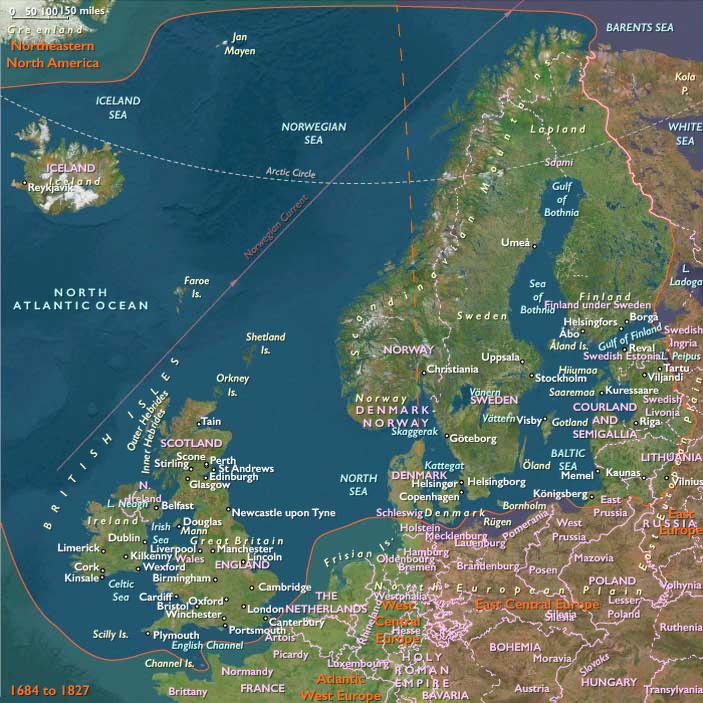
James makes one serious attempt to recover his crowns, when he lands in Ireland in 1689 but, after the defeat of the Jacobite forces by the Williamite forces at the Battle of the Boyne in the summer of 1690, James returns to France.
He lives out the rest of his life as a pretender at a court sponsored by his cousin and ally, King Louis XIV.
James is best known for his belief in absolute monarchy and his attempts to create religious liberty for his subjects against the wishes of the English Parliament.
Parliament, opposed to the growth of absolutism that is occurring in other European countries, as well as to the loss of legal supremacy for the Church of England, sees their opposition as a way to preserve what they regard as traditional English liberties.
This tension makes James's four-year reign a struggle for supremacy between the English Parliament and the Crown, resulting in his deposition, the passage of the English Bill of Rights, and the Hanoverian succession.