Jacopo Sansovino
Italian sculptor and architect
Years: 1486 - 1570
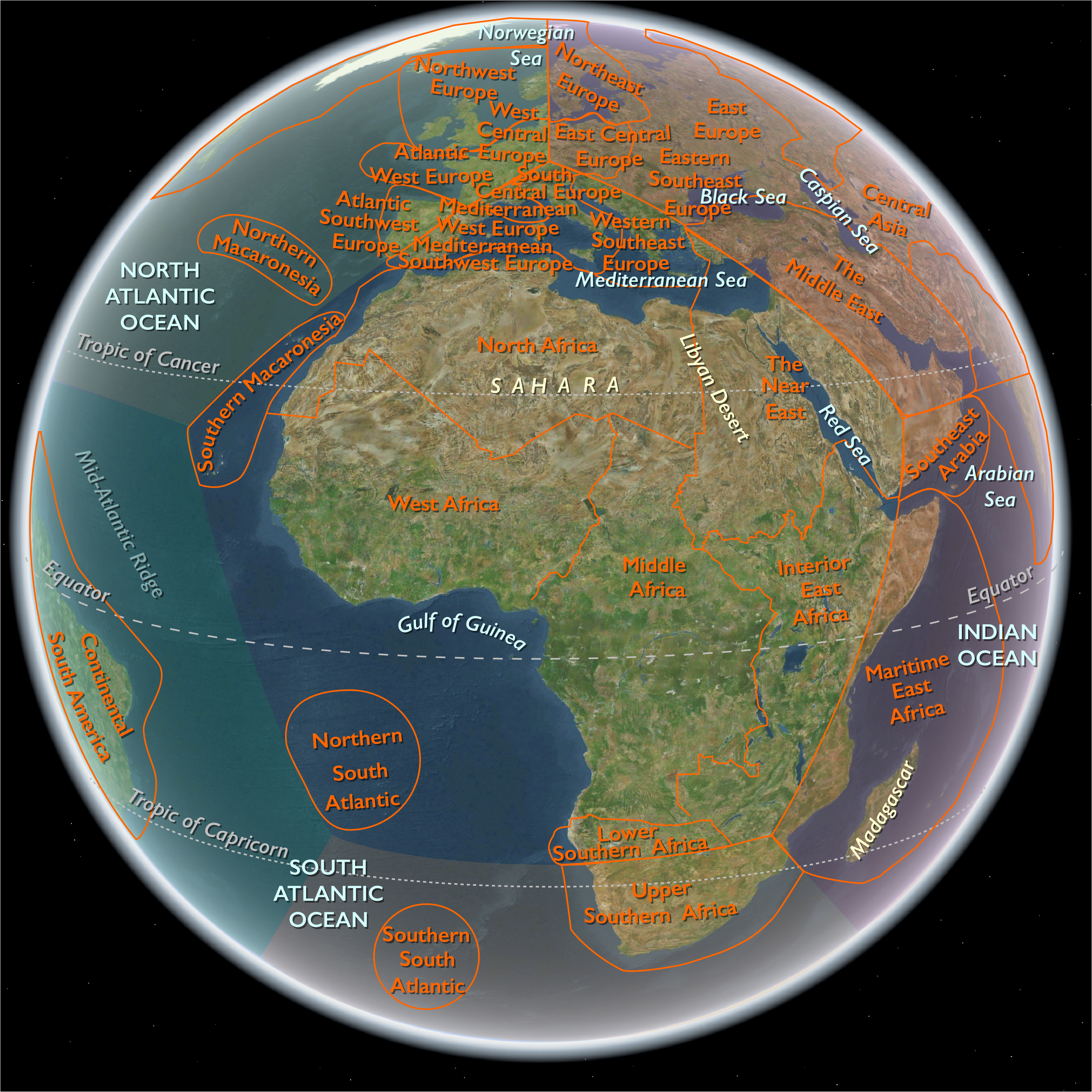
Jacopo d'Antonio Sansovino (July 2, 1486 – November 27, 1570) was an Italian sculptor and architect, known best for his works around the Piazza San Marco in Venice.
Andrea Palladio, in the Preface to his Quattro Libri, is of the opinion that Sansovino's Biblioteca Marciana is the best building erected since Antiquity.
Giorgio Vasari uniquely prints his Vita of Sansovino separately.

Related Events
Filter results
Showing 10 events out of 14 total
Andrea Sansovino executes a marble font for the Baptistery of San Giovanni in Volterra, with good reliefs of the Four Virtues and the Baptism of Christ, in a conservative style evocative of the fourteenth century, in 1502.
Sixteen-year-old Jacopo Tatti begins his training this year in Florence under Sansovino, whose surname he will eventually assume.
Donate Bramante's first work for Pope Julius II, as director of his vast building program, is the construction of the vast (eight hundred and fifty by two hundred and fifty-five feet/two hundred and fifty nine by seventy-eight meters) Cortile del Belvedere of the Vatican Palace in Rome, begun in 1505.
Bramante intends the structure to join the old villa of Innocent VIII with the Vatican Palace across a valley.
Conceived as a single enclosed space, the long Belvedere court connects the Vatican Palace with the Villa Belvedere in a series of terraces connected by stairs, and is contained on its sides by narrow wings.
The upper half of the huge court is to display the Vatican's collection of ancient sculpture, and the lower area is to be used for tournaments and pageants.
At the far end, Bramante places a giant exedra, an enormous semicircular niche capped with a half dome.
Florentine sculptor and architect Jacopo Sansovino in about 1505 follows his master Andrea Sansovino to Rome, where he will absorb classical influences in the course of restoring antique statues.
Fra Bartolommeo's “The Mystic Marriage of Saint Catherine,” a large altarpiece painted in 1511 in his monumentalized style, combines faultless technique, complex spatial organization, and subtle use of color.
Bartolommeo’s works typically blend the geometrical compositions developed in the fifteenth century with the classical figural style that he helped to develop from Leonardo's work.
Andrea del Sarto develops new classical interests and makes greater use of sfumato.
He begins in 1511 to paint his grisaille frescoes in the Chiostro dello Scalzo.
Jacopo Sansovino, while in Rome, had attracted the notice of Bramante and Raphael and made a wax model of the Deposition of Christ for Perugino to use.
He returns in 1511 to Florence, where he receives commissions for marble sculptures of St. James for the Duomo and a Bacchus, now in the Bargello.
His “Saint James”, considered the finest of all the statues contributed to that building, derives from Andrea’s “Baptist,” but indicates the influence of both Michelangelo and Raphael.
The figure’s more twisted posture and the heavier, ornamental drapery add High Renaissance overtones.
Fra Bartolommeo, the foremost painter in Florence after Leonardo da Vinci dies on October 31, 1517.
Andrea del Sarto, who, through his contact with Leonardo, Bartolommeo, Raphael's paintings, contemporary sculpture (especially that of Jacopo Sansovino, with whom he has collaborated), and the prints of Durer, has by now established a style characterized by greater use of sfumato and classical interests.
His popular “Madonna of the Harpies” altarpiece features the classical formal harmony, intense colors, and noble sweetness associated with Sarto’s mature work.
Considered his major contribution to High Renaissance art, it is a depiction of a dark-eyed Madonna and child on a pedestal, flanked by angels and two saints (Saint Bonaventure or Francis and John the Evangelist).
Originally completed in 1517 for the convent of San Francesco dei Macci, the altarpiece now resides in the Uffizi.
The figures have a Leonardo-like aura, with a pyramid shaped composition.
Leonardo’s unfortunate experiment with a new fresco technique in his great Last Supper, painted in the late 1490s for the refectory of the ducal church of Santa Maria delle Grazie, begins to show the first signs of decay in 1517.
For this work, Leonardo had sought a greater detail and luminosity than could be achieved with traditional fresco.
He painted The Last Supper on a dry wall rather than on wet plaster, so it is not a true fresco.
Because a fresco cannot be modified as the artist works, Leonardo instead chose to seal the stone wall with a double layer of dried plaster.
Then, borrowing from panel painting, he added an undercoat of white lead to enhance the brightness of the oil and tempera that was applied on top.
This was a method that had been described previously, by Cennino Cennini in the fourteenth century.
However, Cennini had recommended the use of secco for the final touches alone.
These techniques were important for Leonardo's desire to work slowly on the painting, giving him sufficient time to develop the gradual shading or chiaroscuro that was essential in his style.
Because the painting was on a thin exterior wall, the effects of humidity were felt more keenly, and the paint failed to properly adhere to the wall.
Because of the method used, soon after the painting was completed on February 9, 1498, it began to deteriorate.
As early as 1517, the painting was starting to flake.
Due to the methods used, and a variety of environmental factors, as well as intentional damage, very little of the original painting remains today, despite numerous restoration attempts, the last being completed in 1999.
The sack of Rome temporarily ends the city's role as a source of patronage and compels artists to travel to other centers in Italy, France, and Spain.
Il Rosso Fiorentino, whose Dead Christ with Angels typically combines the painter’s sculpturesque solidity with an expressive Mannerist aesthetic, flees for the north of Italy.
Parmigianino, whose major achievement during his stay in the city is Madonna and Child with Saints John the Baptist and Jerome, flees Rome for Bologna.
Florentine sculptor and architect Jacopo Sansovino moves to Venice.
This sack of Rome marks the end of the Roman Renaissance, damages the papacy's prestige and frees Charles V's hands to act against the Reformation in Germany and against the rebellious German princes allied with Luther.
The population of Rome has dropped from some fifty-five thousand before the attack, to a meager ten thousand.
An estimated six thousand to twelve thousand people have been murdered.
Many Imperial soldiers have also died in the past several months from diseases caused by the large number of unburied dead bodies in the city.
The pillage will only end when, after eight months, the food runs out, there is no one left to ransom and plague appears.
In commemoration of the Sack and the Guard's bravery, recruits to the Swiss Guard are sworn in on May 6 every year.
Michele Sanmicheli, who trained as an architect with Donato Bramante and Giuliano da Sangallo in Rome, skillfully employs classical elements in his notable Palazzo Canossa and Palazzo Bevilaqua, both of which will be constructed in the 1530s in his native Verona.
Born in San Michele, a quarter of Verona, which at the time was part of the Venetian terra ferma, Michele Sanmicheli had learned the elements of his profession from his father Giovanni and his uncle Bartolomeo, who both practiced successfully as builder-architects in Verona.
Like Jacopo Sansovino, he is a salaried official of the Republic of Venice, but unlike Sansovino, his commissions lie in Venetian territories outside Venice; he is no less distinguished as a military architect, and is employed in strengthening Venetian fortifications in Crete, Candia, Dalmatia and Corfu as well as a great fort at the Lido, guarding the sea entrance to the Venetian lagoon.
In visiting Cyprus and Crete for the Serenissima, Sanmicheli is probably the only practicing Venetian architect of the sixteenth century to have had the opportunity to see Greek architecture, a possible source for his use of Roman Doric columns without bases.
He had gone at an early age to Rome, probably to work as an assistant to Antonio da Sangallo the Elder, where he had opportunities to study classic sculpture and architecture.
He had gone in 1509 to Orvieto, where he practiced for the next two decades.
Among his earliest works were the first design of the duomo of Montefiascone, initiated in 1519, an octagonal building surmounted with a dome, and the church of Santa Maria delle Grazie.
He also designed and built the funerary chapel for the Petrucci family in the Gothic church of San Domenico in Orvieto.
Several palazzi at both places are attributed to him.
Sanmicheli was in Verona by 1527 at the latest, working on the monumental cannon-resistant city gates; he began to transform the fortifications of Verona according to the newer system of corner bastions, a system for the advancement of which he did much valuable service.
Sanmicheli builds two massively fortified and richly decorated city gates for Verona, the Porta Nuova and the Porta Palio, in which the richest possible Roman Doric is superimposed against layers of rustication.
Giorgio Vasari's impression is that "in these two gates it may truly be seen that the Venetian Senate made full use of the architect's powers and equaled the buildings and works of the ancient Romans” – the constant aim and ultimate goal of the Renaissance architects.
He also regularizes the Piazza Brà, opening up a vista to the Arena.
Jacopo Sansovino, resident in Venice since the 1527 sack of Rome, had in 1529 become chief architect and superintendent of properties (Protomaestro or Proto) to the Procurators of San Marco, making him one of the most influential artists in Venice.
The appointment had come with a salary of eighty ducats and an apartment near the clocktower in San Marco.
Within a year his salary had been raised to one hundred and eight ducats per year.
His masterworks embody prominent structures and buildings in central Venice found near Piazza San Marco, specifically the highly rusticated Zecca (public mint), the highly decorated Loggetta and its sculptures adjoining the Campanile, and various statues and reliefs for the Basilica of San Marco.
He also helpsrebuild a number of buildings, churches, palaces, and institutional buildings including the churches of San Zulian, San Francesco della Vigna, San Martino, San Geminiano (now destroyed), Santo Spirito in Isola, and the church of the Incurabili.
Among palaces and buildings are the Scuola Grande della Misericordia (early plans), Ca' de Dio, Palazzo Dolfin Manin, Palazzo Corner, Palazzo Moro, and the Fabbriche Nuove di Rialto.
Work begins on the Zecca in 1536: Sansovino derives his design for the fortress-like building from Rome’s first-century Porto Maggiore.
The versatile Sansovino in 1537 designs for the heart of Venice a second notable Roman-inspired building, the “Libreria Vecchia di San Marco,” opposite the Doge's Palace.
He also creates for San Marco a series of tribune reliefs.
Bartolommeo Ammanati has apparently studied with the sculptor Baccio Bandinelli, after which time he had worked in Venice with Jacopo Sansovino (assisting on the Library of St. Mark's, the Biblioteca Marciana, Venice) and designed, under Sansovino's influence, the monumental arch of the Benavides Palace in nearby Padua.
Closely imitating the style of Michelangelo, he is to be more distinguished in architecture than in sculpture.
Early marble statues include Victory (1540) and Leda with the Swan (both now in the Museo Nazionale del Bargello, Florence).
Villa Godi, a patrician villa in Lugo di Vicenza, Veneto, is one of the first projects by Andrea Palladio, as attested in his monograph: I Quattro Libri dell'Architettura.
The work had been commissioned by the brothers Girolamo, Pietro and Marcantonio Godi, started in 1537 and concluded in 1542, with later modifications to the rear entry and gardens.
The building is striking for the lack of ornamentation usually associated with Palladio's mature work, and for the refined, symmetrical proportions of the façade and massing of the structure.
The plan is arranged with two apartments on each side of the central axis with a recessed entry loggia and the main salon.
The plan published in I Quattro Libri dell'Architettura indicates that there was intended to be an extensive complex of farm buildings.
This preliminary work by Palladio still demonstrates characteristics of the architecture of his time.
A harmonic unity of landscape and architecture does not yet seem to have been an aspiration.
The building is a massive block consisting of three separate parts.
The representational and living areas are clearly separate from each other and do not present a unified appearance.
The flight of steps is flanked by balusters and, in its width, corresponds to the middle arcade of the loggia.