Iyasu I
Emperor of Ethiopia
Years: 1657 - 1706
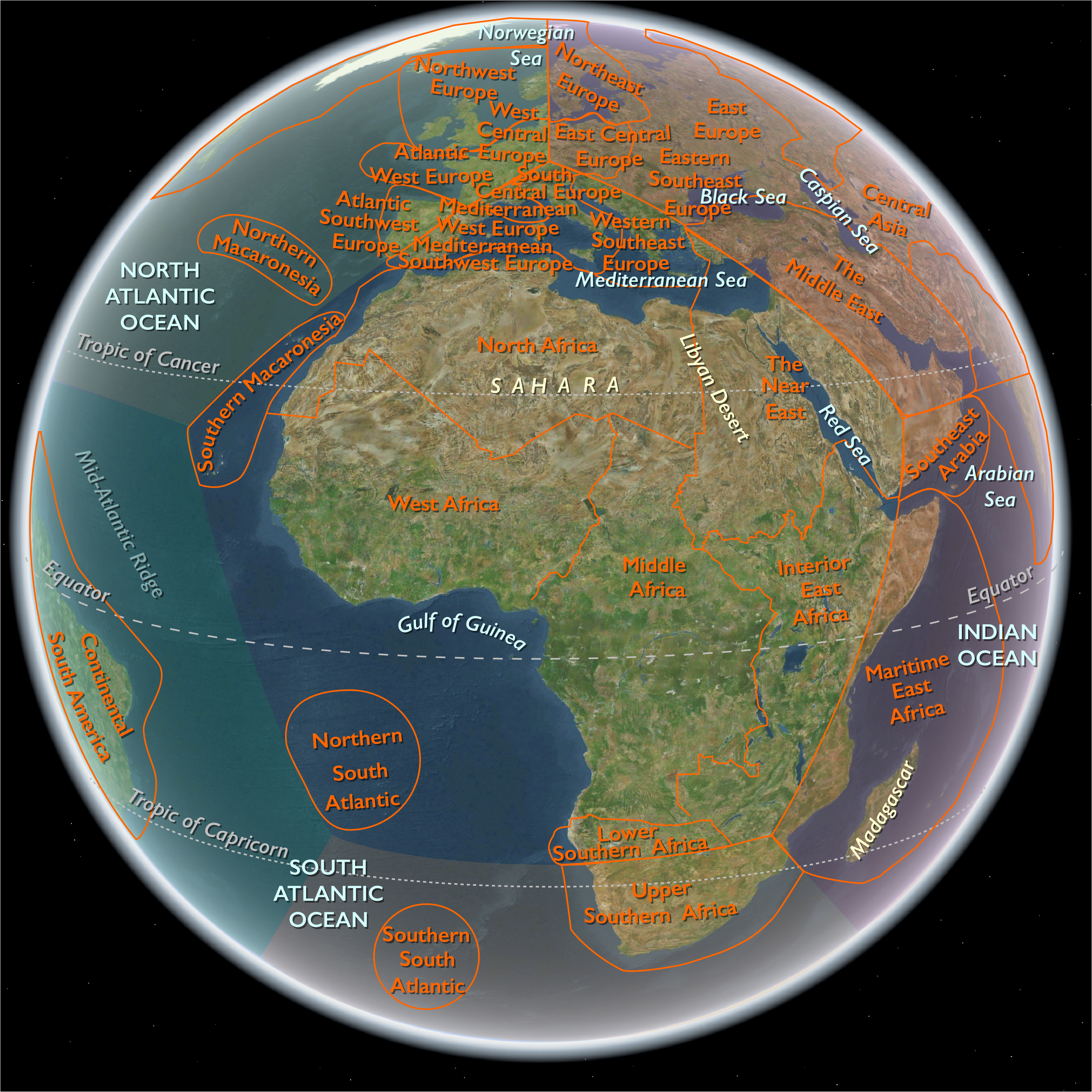
Iyasu I or Joshua I, also known as Iyasu the Great, is nəgusä nägäst (throne name Adyam Sagad, "to whom the confines of the earth bow"; 19 July 1682 - 13 October 1706) of Ethiopia, and a member of the Solomonic dynasty.
He is the son of Yohannes I and Empress Sabla Wangel.
According to G.W.B Huntingford, Iyasu "owed his reputation partly to the mildness of his character, exemplified in his treatment of the princes on Wehni in his first year, and his attention to religious matters, and partly to his abdication, retirement, and murder."



Related Events
Filter results
Showing 10 events out of 10 total
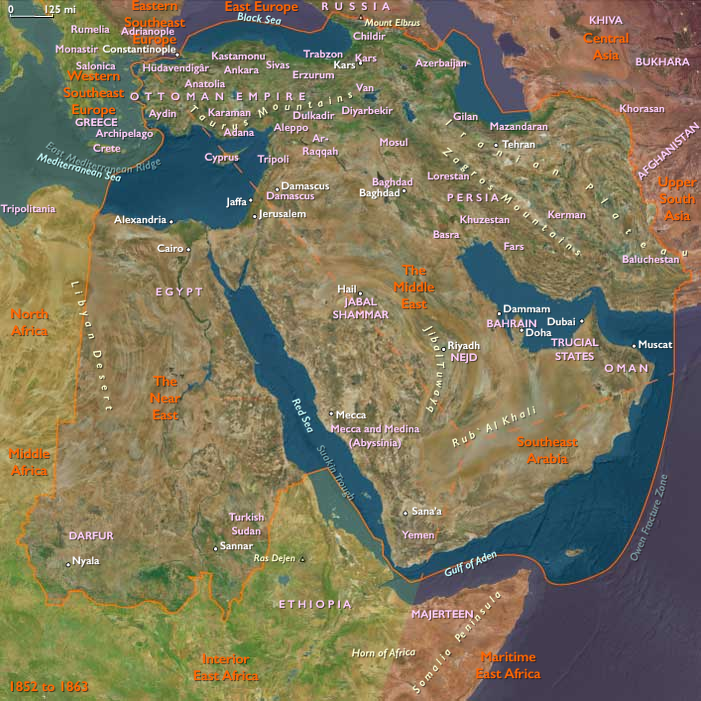
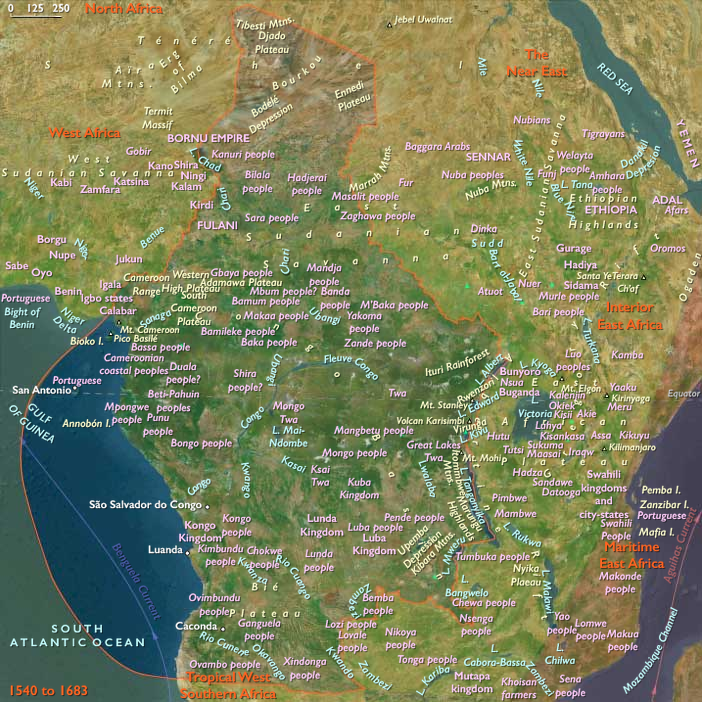
Interior East Africa (1672–1683 CE): Imperial Consolidation and Cultural Prosperity under Yohannes I
Continued Stability under Yohannes I
During the later years of Emperor Yohannes I (r. 1667–1682), Ethiopia enjoyed continued political stability, economic growth, and cultural flourishing. Yohannes expanded upon the foundations laid by his father, Emperor Fasilides, reinforcing the imperial power centered at Gondar—a thriving urban and cultural hub. The decade marked Ethiopia as one of East Africa’s most politically cohesive and culturally vibrant regions.
Architectural and Cultural Achievements
The imperial capital at Gondar continued to witness impressive architectural growth during this period. Yohannes I extended and enhanced the Fasil Ghebbi—the royal enclosure that became emblematic of the Ethiopian monarchy’s prestige and power. Notable among his accomplishments were additional palaces, administrative buildings, ornate churches, and monasteries. These projects solidified Gondar as the empire's symbolic heart and a major center of Orthodox Christianity and scholarship.
Ecclesiastical Influence and Literary Flourishing
Yohannes I placed strong emphasis on ecclesiastical scholarship and religious leadership, further consolidating the power of the Ethiopian Orthodox Church. Numerous illuminated manuscripts, religious texts, and chronicles were created during this era, enhancing Ethiopia’s literary tradition. Monastic centers around Lake Tana, particularly at monasteries such as Debre Libanos and Debre Damo, were actively supported by royal patronage, thereby reinforcing Ethiopia’s cultural and religious identity.
Diplomacy and Frontier Management
Yohannes maintained Ethiopia’s political stability through skillful diplomatic maneuvering. He ensured peace and balanced power along Ethiopia's eastern border with the Islamic Imamate of Aussa, the successor polity to the Adal Sultanate. Carefully managed diplomatic ties prevented major conflicts, ensuring safe trade routes through Zeila and other coastal settlements. Relations with the Afar and Somali peoples remained relatively peaceful, facilitating ongoing economic exchanges.
Integration and Stability of the Oromo Frontier
A major achievement of Yohannes’s administration was the progressive integration and accommodation of the Oromo peoples in the southern and western provinces of the empire. Employing strategies of intermarriage, land allocation, and careful military oversight, Yohannes stabilized these regions, further securing Ethiopia’s southern frontier and promoting peaceful coexistence among diverse ethnic groups.
Economic Expansion and Internal Prosperity
Stable governance under Yohannes I spurred economic prosperity. Trade routes linking the Ethiopian highlands with the Red Sea, the Arabian Peninsula, and the wider Indian Ocean basin were increasingly secure. Gondar benefited directly from this trade, becoming a hub for commerce in luxury goods, spices, ivory, coffee, and gold, thereby enriching the Ethiopian state and supporting the empire’s thriving urban centers.
Succession and Continuity
Yohannes I died in 1682, and his succession was orderly, reinforcing the political continuity and relative stability Ethiopia had enjoyed for decades. His son, Iyasu I (1682–1706), smoothly assumed the throne, continuing his father’s policies and further cementing the cultural achievements of the Gondarine period.
Key Historical Developments
-
Continued stability and flourishing of the imperial capital Gondar.
-
Expansion of monumental architecture in the royal compound (Fasil Ghebbi).
-
Strengthened ecclesiastical leadership, scholarship, and literary output.
-
Diplomatic stability maintained along the eastern frontier with Islamic polities, notably the Imamate of Aussa.
-
Successful integration and management of Oromo peoples in southern provinces.
-
Economic growth through secure internal trade and stable external commerce.
Long-Term Consequences and Historical Significance
The era from 1672 to 1683, under Emperor Yohannes I, marked a high point of Ethiopia’s Gondarine period. This time saw the consolidation of imperial authority, religious unity, and cultural prestige. Yohannes's diplomacy and integration policies provided Ethiopia with long-lasting stability, significantly influencing subsequent Ethiopian politics, religion, and cultural identity, and laying a robust foundation for the continued prosperity of the Gondarine Empire.
The growing controversy in Ethiopia over the nature of Christ had grown severe enough that in the last year of his reign Yohannes called a synod to resolve the dispute.
The Ewostathian monks of Gojjam advocate the formula "Through Unction Christ the Son was consubstantial with the Father", by which they have come to be known as the Qebat ("Unction") faction, who are supported by the Emperor's own son Iyasu; ...
...they are opposed by the monks of Debre Libanos, who at this time still advocate traditional Miaphysitism.
The outcome of the synod is in dispute: according to E.A. Wallis-Budge and H. Weld Blundell, Emperor Yohannes was persuaded to condemn the Qebat doctrine, which led to Iyasu attempting to flee his father's realm; but according to Crummey, Yohannes favored the Gojjame delegation for political reasons: at this time Gojjam is an important province.
These decisions will be revisited after Iyasu becomes Emperor, at a synod called by him in 1686.
Iyasu confronts an invasion of the Yejju and Wollo Oromo into Amhara in the second year of reign, defeating them at Melka Shimfa.
The northern expansion of the Oromos such as the Yejju and, in particular the Arsi, to ethnic Somali and Sidama territories mirrors the southern expansion of Amharas, and helps to influence contemporary ethnic politics in today’s Ethiopia.
Iyasu I (reigned 1682-1706) of Ethiopia, a celebrated military leader who excels at the most basic requirement of the warrior-king, campaigns constantly in districts on the south and southeast of the kingdom and personally leads expeditions to Shewa and beyond, areas from which royal armies have long been absent.
Iyasu also attempts to mediate the doctrinal quarrel in the church, but a solution eludes him.
He sponsors the construction of several churches, among them Debre Birhan Selassie, one of the most beautiful and famous of the churches in Gondar.
Iyasu's reign also sees the Oromo begin to play a role in the affairs of the kingdom, especially in the military sense.
Iyasu co-opts some of the Oromo groups by enlisting them into his army and by converting them to Christianity.
He comes gradually to rely almost entirely upon Oromo units and leads them in repeated campaigns against their countrymen who have not yet been incorporated into the Amhara-Tigray state.
Successive Gondar kings, particularly Iyasu II (reigned 1730-55), likewise rely upon Oromo military units to help counter challenges to their authority from the traditional nobility and for purposes of campaigning in far-flung Oromo territory.
By the late eighteenth century, the Oromo are playing an important role in political affairs as well.
At times during the first half of the nineteenth century, Oromo is the primary language at court, and Oromo leaders will come to number among the highest nobility of the kingdom.
The most important political figure in Ethiopia during the reign of Iyoas (reigned 1755-69), son of Iyasu II, is Ras Mikael Sehul, a good example of a great noble who makes himself the power behind the throne.
Mikael's base is the province of Tigray, which by now enjoys a large measure of autonomy and from which Mikael raises up large armies with which he dominates the Gondar scene.
In 1769 he demonstrates his power by ordering the murder of two kings (Iyoas and Yohannes II) and by placing on the throne Tekla Haimanot II (son of Yohannes II), a weak ruler who does Mikael's bidding.
Mikael continues in command until the early 1770s, when a coalition of his opponents compels him to retire to Tigray, where he eventually dies of old age.
Mikael's brazen murder of two kings and his undisguised role as kingmaker in Gondar signal the beginning of what Ethiopians have long termed the Zemene Mesafmt (Era of the Princes), a time when Gondar kings are reduced to ceremonial figureheads while their military functions and real power lies with powerful nobles.
During this time, traditionally dating from 1769 to 1855, the kingdom no longer exists as a united entity capable of concerted political and military activity.
Various principalities are ruled by autonomous nobles, and warfare is constant.
The Emperors become figureheads, controlled by warlords like Ras Mikael Sehul of Tigray, Ras Wolde Selassie of Tigray, and by the Yejju Oromo dynasty, such as Ras Gugsa of Yejju, which later leads to nineteenth-century Oromo rule of Gondar, changing the language of the court from Amharic to Afaan Oromo.
Traditionally, the beginning of this period is set on the date Ras Mikael Sehul deposes Emperor Iyoas (May 7, 1769), and its end to Kassa's coronation as Emperor Tewodros II (February 11, 1855), having defeated in battle all of his rivals.
Some historians date the murder of Iyasu the Great (October 13, 1706), and the resultant decline in the prestige of the dynasty, as the beginning of this period.
Others date it to the beginning of Iyoas's reign (June 26, 1755).
During the Zemene Mesafint, various lords come to abuse their positions by making Emperors and encroach upon the succession of the dynasty, by candidates among the nobility itself: for example, on the death of Emperor Tewoflos in 1711, the chief nobles of Ethiopia fear that the cycle of vengeance that had characterized the reigns of Tewoflos and Tekle Haymanot I (1706–1708) will continue if a member of the Solomonic dynasty is picked for the throne, so they select one of their own, Yostos, to be King of Kings (nəgusä nägäst).
However, the tenure of Yostos from 1711 to 1716 is brief, and the throne comes into the hands of the Solomonic house once again.
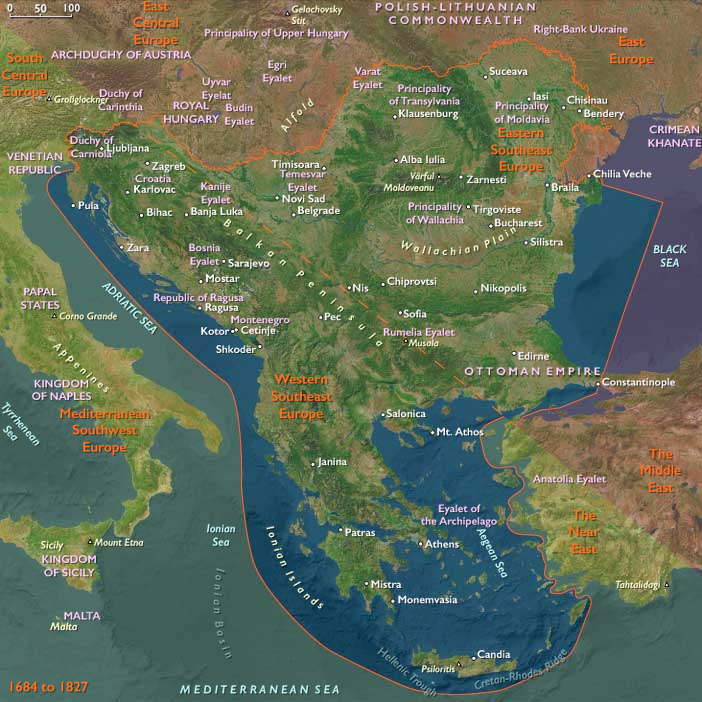
Interior East Africa (1684–1695 CE): Fragmentation and Regional Dynamics
In the aftermath of the prolonged turmoil caused by religious conflicts, the expansive Oromo migrations, and external influences such as Ottoman incursions, Interior East Africa entered a period marked by fragmented polities, shifting allegiances, and the beginnings of consolidation among local powers.
Ethiopia, under Emperor Iyasu I (reigned 1682–1706), enjoyed relative stability compared to earlier decades. Iyasu I, known as "Iyasu the Great," attempted to rebuild centralized authority within the empire by suppressing regional rebellions and re-establishing stronger control over the nobility. He undertook military campaigns against Oromo groups to the south and east, seeking to consolidate territories fragmented by decades of demographic shifts. He also began revitalizing Ethiopia’s religious and cultural institutions, restoring churches, and promoting Orthodox Christianity to reinforce imperial unity.
To the east, the Afar lowlands remained politically fragmented under the rule of the Imamate of Aussa. Established in 1577 from remnants of the former Adal Sultanate, the Imamate, centered at Asaita, persisted as a loose confederation of Afar clans led by religiously sanctioned Imams. Although theoretically unified under religious leadership, the Imamate struggled to maintain central authority, as powerful clan chiefs frequently challenged its control. The continuous inter-clan rivalries weakened the Imamate’s structure, setting the stage for its eventual replacement by the secular Aussa Sultanate in 1734.
Farther south, in the regions around Harar, Somali clans continued to dominate local politics and trade routes, maintaining Harar's status as a key Islamic and commercial center despite the ongoing rivalries among regional sultanates. Harar, having been diminished by earlier conflicts, nevertheless sustained significant cultural and economic influence, especially through its trade in coffee, ivory, and enslaved persons, connecting the Horn of Africa to Arabia and the wider Indian Ocean trading network.
This era witnessed a cautious equilibrium in the Horn region, characterized more by localized power struggles and internal consolidations than by expansive military conflicts. The Ottomans retained nominal coastal control, continuing their maritime dominance over important ports such as Massawa, yet their inland ambitions had largely subsided, leaving a power vacuum filled by regional entities.
Key Historical Developments:
-
Emperor Iyasu I attempts to rebuild centralized Ethiopian authority, reinvigorating Orthodox Christian institutions.
-
Persistent fragmentation in the Afar region under the weakened Imamate of Aussa, foreshadowing its eventual transition into the Aussa Sultanate.
-
Harar maintains its economic significance as a commercial hub, despite political fragmentation and clan rivalries among local Somali sultanates.
-
Continued nominal Ottoman coastal presence, focusing primarily on controlling trade routes rather than inland political expansion.
Long-Term Consequences and Historical Significance:
This transitional era laid foundations for the subsequent political transformations of Interior East Africa. Ethiopia’s relative consolidation under Iyasu I provided temporary stability, while the Afar region’s fragmentation anticipated the rise of the secular Aussa Sultanate. Simultaneously, the economic vitality of Harar emphasized its enduring importance, highlighting the interconnectedness of local politics, religion, and international trade within the broader Horn of Africa region.
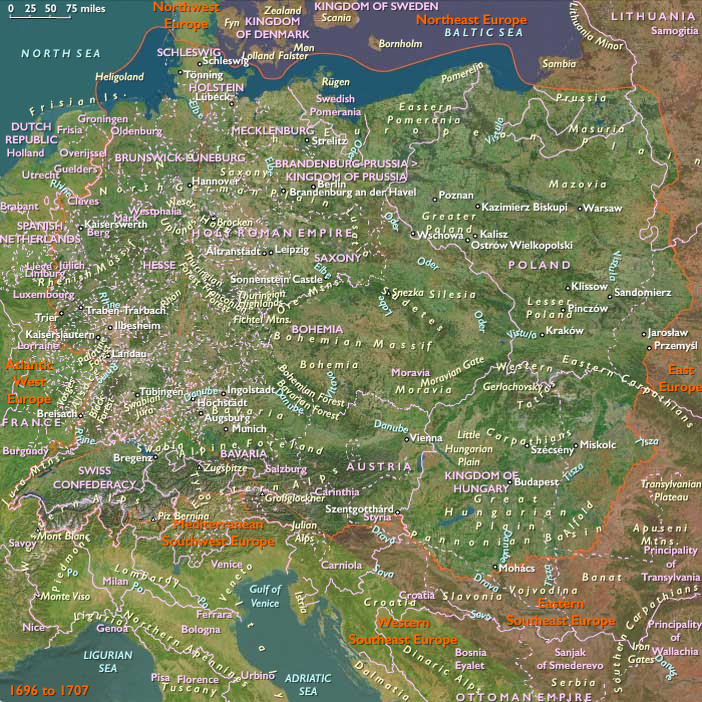
Interior East Africa (1696–1707 CE): Consolidation and Cultural Flourishing in Gondar
During the late seventeenth century, the Ethiopian city of Gondar solidified its status as a major cultural, political, and religious center under Emperor Iyasu the Great (reigned 1682–1706). Founded earlier in the century as a royal encampment by Emperor Fasilides, Gondar had rapidly grown into a significant urban center, becoming the permanent capital of the Ethiopian Empire.
By the reign of Iyasu the Great, Gondar’s population had swelled to over sixty thousand inhabitants, making it one of the largest cities in East Africa. Its urban landscape was marked by impressive architecture, including churches, monasteries, palaces, and administrative buildings, many of which survive to the present day despite the upheavals that would follow in the eighteenth century.
Emperor Iyasu, who vigorously pursued centralization, attempted to mobilize Gondar’s populace for his military campaigns against the Oromo in Damot and Gojjam. Notably, however, the citizens of Gondar refused the emperor’s command to temporarily relocate with him on campaign—an unprecedented assertion of communal autonomy. This event marked a significant shift in Ethiopian history: Gondar’s inhabitants had developed a distinctive sense of local community identity that superseded traditional royal demands.
Scholar Donald Levine describes Gondar as an "orthogenetic" rather than "heterogenetic" city—a center where Ethiopian culture and Amhara traditions flourished internally rather than through external influences. Unlike later Ethiopian capitals, such as Addis Ababa, which became associated with foreign customs, Gondar represented a proud embodiment of Ethiopia’s indigenous cultural and religious identity.
The cultural legacy of Gondar was thus one of inward development and refinement of traditional Amhara customs, artistic forms, and religious practices. Its flourishing cultural life reinforced Ethiopia’s self-perception as a distinct civilization, rooted deeply in its Orthodox Christian heritage and resistant to outside influences, even as it navigated internal struggles and external threats.
Key Historical Developments:
-
Gondar's population surpasses sixty thousand, reflecting its status as a major urban center in Ethiopia.
-
Citizens of Gondar assert a collective identity and refuse Emperor Iyasu’s demand to follow him on military campaigns, signaling a significant shift in royal-community relations.
-
The city becomes a center of orthogenetic cultural development, strengthening traditional Amhara customs, artistic expressions, and religious practices.
Long-Term Consequences and Historical Significance:
The consolidation of Gondar as a major cultural and political center had long-term implications for Ethiopia’s historical trajectory. Its orthogenetic cultural development fostered a distinctive Ethiopian identity that remained resilient against external cultural pressures. However, the emerging sense of local identity and independence from the imperial will hinted at the political decentralization and fragmentation that would characterize the empire in the subsequent century. Gondar’s cultural vitality, architectural achievements, and assertion of community autonomy made it a powerful symbol of Ethiopian tradition and identity well into modern times.
The population of Gondar is estimated to have exceeded sixty thousand during the seventeenth century.
Many of the buildings from this period survive, despite the turmoil of the eighteenth century.
Gondar has acquired a sense of community identity by the reign of Iyasu the Great: when the Emperor calls upon the inhabitants to decamp and follow him on his campaign against the Oromo in Damot and Gojjam, as had the court and subjects of earlier emperors, they refuse.
Although Gondar is by any definition a city, it is not a melting pot of diverse traditions, nor Ethiopia's window to the larger world, according to Donald Levine.
"It served rather as an agent for the quickened development of the Amhara's own culture. And thus it became a focus of national pride... not as a hotbed of alien custom and immorality, as they often regard Addis Ababa today, but as the most perfect embodiment of their traditional values." (Donald N. Levine, Wax and Gold: Tradition and Innovation in Ethiopia Culture (Chicago: University Press, 1972), p. 42).
As Levine elaborates in a footnote, it is an orthogenetic pattern of development, as distinguished from an heterogenetic one.