Ivan VI of Russia
Emperor of Russia
Years: 1740 - 1764
Ivan VI Antonovich of Russia (Ivan Antonovich; August 23 [O.S.
12 August] 1740 – July 16 [O.S.
5 July] 1764), is proclaimed Emperor of Russia in 1740, as an infant, although he never actually reigns.
Within less than a year, he is overthrown by the Empress Elizabeth of Russia, Peter I's daughter.
Ivan spends the rest of his life as a prisoner and is killed by his guards during an attempt made to free him.
Related Events
Filter results
Showing 10 events out of 11 total
Elisabeth Katharina Christine of Mecklenburg-Schwerin in 1722 had arrived in Russia with her mother, who had escaped and separated from her father, Charles Leopold, the Duke of Mecklenburg-Schwerin: her mother, Tsarevna Catherine of Russia (sister of Empress Anna), had been considered as a candidate to the throne in 1730, but her aunt had been chosen instead.
Elisabeth in 1733 had converted to the Orthodox religion and been given the name Anna Leopoldovna, which had made her acceptable as an heir to the throne.
She had in 1739 married Anthony Ulrich (1714–1776), son of Ferdinand Albert, Duke of Brunswick-Wolfenbüttel: he had been taken to Russia already in 1733, so that she could get to know him.
The empress Anna had on October 5, 1740, adopted their newborn son Ivan and proclaimed him heir to the Russian throne.
The empress dies on October 28, a few days after this proclamation, leaving directions regarding the succession, and appointing her favorite Ernest Biron, Duke of Courland, as regent.
Biron, however, has made himself an object of detestation to the Russian people, and after Biron threatens to exile Anna and her spouse to Germany, Anna Leopoldovna on November 8 has little difficulty in overthrowing him.
She now assumes the regency, and takes the title of Grand Duchess, but she knows little of the character of the people with whom she has to deal, knows even less of the conventions and politics of Russian government, and speedily quarrels with her principal supporters.
Anna Leopoldovna presides over a brilliant victory by Russian forces at the Battle of Villmanstrand in Finland after Sweden had declared war against her Government.
She has an influential favorite, Julia Mengden, daughter of the Livonian baron Magnus Gustav von Mengden.
Having participated in the coup that placed Anna Leopoldovna in power in 1740, Juila had been named the official nurse of Ivan VI of Russia.
Elizabeth, the second-oldest surviving daughter of Peter I of Russia and Catherine I of Russia, was born at Kolomenskoye, near Moscow, on December 18, 1709 (O.S.).
Her parents had been secretly married in the Cathedral of the Holy Trinity in St. Petersburg in November 1707.
The marriage had been made public in February 1712.
As her parents were not publicly acknowledged as being married at the time of her birth, Elizabeth's 'illegitimacy' will be used by political opponents to challenge her right to the throne.
She had on March 6, 1711, been proclaimed a Tsarevna, and on December 23, 1721, a Tsesarevna.
Of the twelve children of Peter and Catherine (five sons and seven daughters), only two daughters, Anna and Elizabeth, have survived.
Anna had been betrothed to the Duke of Holstein-Gottorp, nephew of the late King Charles XII of Sweden, Peter's old adversary.
Her father had tried to also find a brilliant match for Elizabeth with the French Royal court when he paid a visit there.
It had been Peter's intention to marry his second daughter to the young French King Louis XV, but the Bourbons had declined the offer as Elizabeth`s mother’s origin was deemed too obscure.
Elizabeth had then been betrothed to Prince Karl Augustus of Holstein-Gottorp, son of Christian Augustus, Prince of Eutin.
Politically, it was a useful and respectable alliance, but Karl Augustus had died a few days after the betrothal.
At the time of Peter's death in 1725, no marriage plan had succeeded.
As a child, Elizabeth was bright, if not brilliant, but her formal education was both imperfect and desultory.
Her father adored her.
Elizabeth was his daughter and in many ways resembled him as a feminine replica, both physically and temperamentally.
Peter had no leisure to devote to her training, and her mother was too down-to-earth and illiterate to superintend her formal studies.
She had a French governess, and was fluent in Italian, German and French.
She was also an excellent dancer and rider.
From her earliest years, she delighted everyone with her extraordinary beauty and vivacity.
She is commonly known as the leading beauty of the Russian Empire.
So long as Aleksandr Danilovich Menshikov had remained in power, Elizabeth had been treated with liberality and distinction by the government of her adolescent half-nephew Peter II.
The Dolgorukovs, an ancient boyar family, had deeply resented Menshikov.
With Peter II's attachment to Prince Ivan Dolgorukov, and with two of their family members on the Supreme State Council, they had the leverage for a successful coup.
Menshikov had been arrested, stripped of all his honors and properties and exiled to northern Siberia, where he later died in November 1729.
The Dolgorukovs hate the memory of Peter the Great, and have practically banished Peter's daughter from Court.
With the death of her father and the later accession of the Empress Anna, no royal court or noble house in Europe can allow a son to pay court to Elizabeth, as it would be seen as an unfriendly act to the Empress.
Marriage to a commoner is not possible as it would cost Elizabeth not only her title, but also her property rights and her claim to the throne.
Elizabeth's response had been to make a lover of Alexis Shubin, a handsome sergeant in the Semyonovsky Guards regiment.
After his banishment to Siberia (having previously been relieved of his tongue) by order of the Empress Anna, she had turned to a coachman and even a waiter.
Eventually, she consoles herself with a young Ukrainian peasant with a good bass voice who had been brought to Saint Petersburg by a nobleman for a church choir.
His name is Alexis Razumovsky, and Elizabeth has acquired him for her own choir.
A good and simple-minded man, untroubled by personal ambition, Elizabeth is devoted to him, and there is reason to believe that she could have married him in a secret ceremony in a rural church of Perovo (now a part of Moscow) in the autumn 1742, earning him the nickname of "the Emperor of the Night."
Elizabeth had been gathering support in the background during the reign of her cousin Anna; but after the death of Empress Anna, the regency of Anna Leopoldovna with infant Ivan VI has been marked by high taxes and economic problems.
Such a course of events compels the indolent, but by no means incapable, beauty to overthrow the weak and corrupt government.
Elizabeth, being the daughter of Peter the Great, enjoys much support from the Russian guards regiments, often visiting the regiments, marking special events with the officers and acting as godmother to their children.
The guards repay her kindness when on the night of November 25, 1741 OS (December 6 NS), Elizabeth seizes power with the help of the Preobrazhensky Regiment.
Arriving at the regimental headquarters dressed in a metal breastplate over her dress and grasping a silver cross she states, "Who do you want to serve? Me, the natural sovereign, or those who have stolen my inheritance?"
After winning the regiment over, ...
...the troops march to the Winter Palace where they arrest the infant Emperor, his parents and their own lieutenant-colonel, Count von Munnich.
It is a daring coup and passes without bloodshed.
This coup has the support of the ambassadors of France and Sweden, possibly with financial inducements to members of the Guard's regiments who want o change the pro-British and pro-Austrian policies of Anna Leopoldovna's Government.
Elizabeth has vowed that if she becomes Empress that she will not sign a single death sentence, an unusual promise that she—notably—will keep to throughout her life.
However, the new Tsarina reneges on her promises to return the Baltic provinces to Sweden and continues the vigorous prosecution of the war, under the guidance of her pro-Austrian chancellor, Aleksey Bestuzhev.
Elizabeth, naturally indolent and self-indulgent, and possessing little knowledge and no experience of affairs, had found herself at the age of thirty-three at the head of a great empire at one of the most critical periods of its existence.
Her proclamation as Empress Elizabeth I explains that the preceding reigns had led Russia to ruin: "The Russian people have been groaning under the enemies of the Christian faith, but she has delivered them from the degrading foreign oppression." (Antonov, Boris (2006). Russian Tsars. p. 106. Saint Petersburg: Ivan Fiorodov Art Publishers.)
Russia has been under the domination of German advisers and Elizabeth exiles the most unpopular of them, including Heinrich Ostermann, Burkhard von Munnich and Carl Gustav Lowenwolde.
Elizabeth crowns herself Empress in the Dormition Cathedral on April 25, 1742.
Elizabeth Petrovna, with all her shortcomings (documents often wait months for her signature), has inherited some of her father's genius for government, fortunately for herself and for Russia.
Her usually keen judgment and her diplomatic tact again and again recall Peter the Great.
What sometimes appears as irresolution and procrastination, is most often a wise suspension of judgment under exceptionally difficult circumstances.
The substantial changes made by Elizabeth's father, Peter the Great, have not exercised a really formative influence on the intellectual attitudes of the ruling classes as a whole.
Elizabeth makes considerable impact and lays the groundwork for its completion by her eventual successor, Catherine II.
After abolishing the cabinet council system that had been in favor during the rule of Anna, and reconstituting the senate as it had been under Peter the Great, with the chiefs of the departments of state (none of them Germans as was the case previously), the first task undertaken by the new empress had been to address her quarrel with Sweden.
Direct negotiations between the two powers had been opened on January 23, 1743, at Åbo (Turku).
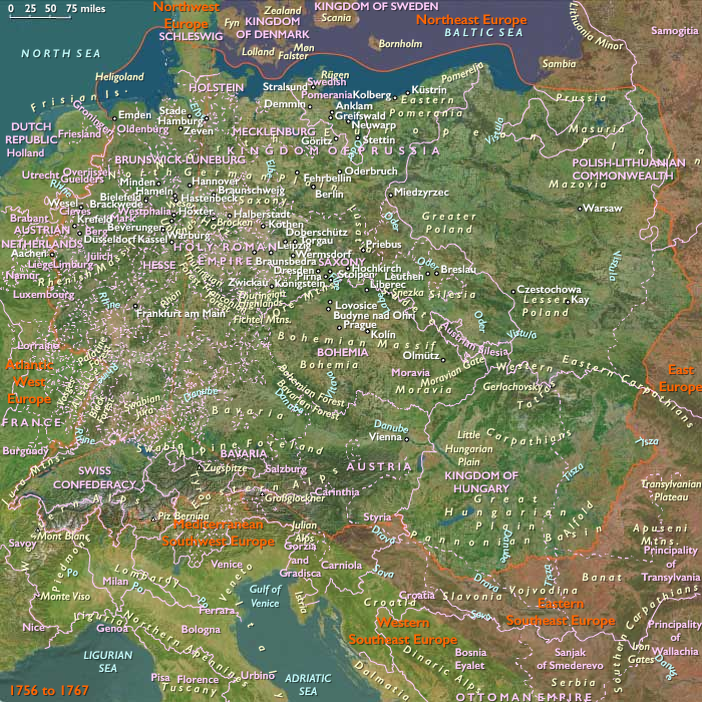
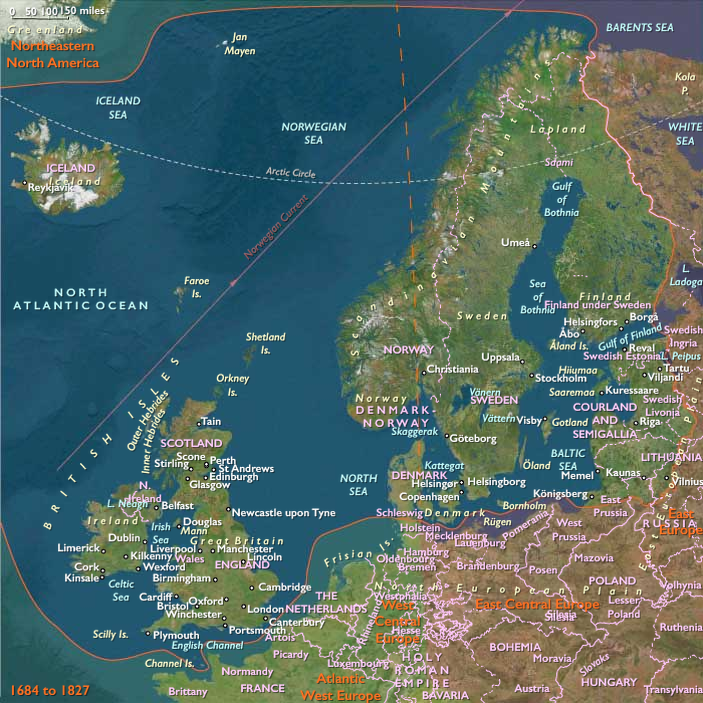
Sweden ion August 7, 1743 in the Treaty of Åbo cedes to Russia all the southern part of Finland east of the river Kymmene, which subsequently becomes the boundary between the two states.
Provisions of the treaty include the fortresses of Villmanstrand and Fredricshamn.
This triumphant issue can be credited to the diplomatic ability of the new vice chancellor, Aleksey Petrovich Bestuzhev-Ryumin.
His policies would have been impossible without her support.
Elizabeth had wisely placed Bestuzhev at the head of foreign affairs immediately after her accession.
He represents the anti-Franco-Prussian portion of her council, and his object is to bring about an Anglo-Austro-Russian alliance which, at this time, was undoubtedly Russia's proper system.
Hence, the bogus Lopukhina Conspiracy and other attempts of Frederick the Great and Louis XV to get rid of Bestuzhev (making the Russian court the center of a tangle of intrigue during the earlier years of Elizabeth's reign.)
Natalia Lopukhina during the reign of Anna of Russi had been described as "the brightest flower of St. Petersburg court".
Her liaisons with some of the most powerful courtiers and her arrogance toward Peter I's neglected daughter Elizaveta Petrovna must have fed the latter's jealousy.
Elizaveta's accession to the throne in 1741 had been a huge blow to Lopukhina.
It was owing to her friendship with Anna, wife of the diplomat Mikhail Bestuzhev, elder brother of the more famous Aleksey Bestuzhev, that she has managed to maintain her position at court.
The French agents de la Chétardie and Lestocq had In 1742, arranged a complicated intrigue to slander both Lopukhina and Bestuzheva, thereby securing the downfall of the Austrophilic chancellor Aleksey Bestuzhev.
Lopukhina's affection for the exiled Count von Löwenwolde being well-known, her correspondence with this courtier had been brought to light and presented to the Empress in the most unflattering light.
Simultaneously, it was reported that her son Ivan Lopukhin, being drunk in a tavern, had denounced Elizaveta's taste for English beer and mumbled several phrases which were interpreted calling for restoration of Ivan VI of Russia.
The inquiry that followed had established that the Lopukhin house used to be frequented by the Austrian agent Marquis Botta d'Adorno, who had allegedly promised his support for restoration of Ivan VI on the Russian throne.
After a rigid inquisition of twenty-five days, during which every variety of torture was freely employed against the accused, "the terrible plot," wrote the British minister, Sir Cyril Wych, "was found to be little more than the ill-considered discourses of a couple of spiteful passionate women."
Nevertheless, the two ladies principally concerned had their tongues publicly torn out before being sent to Siberia.
Lopukhina and Bestuzheva are on September 11, 1743, publicly punished.
They are brought onto a scaffold in front of the Twelve Collegia in Saint Petersburg, stripped naked, and flogged with birch rods and the knout on their buttocks.
Bestuzheva had bribed the executioner to give her only a mock flogging.
The two women escape execution, because before her accession in 1741, Elizaveta had vowed not to sign any death warrants as Empress.
The Russian ambassador to Austria had been instructed to demand Botta's condign punishment.
This demand was presented at a special audience; whereupon Empress Maria Theresa declared that she would never admit the validity of extorted evidence, and issues a manifesto to all the Great Powers defending Botta and accusing the Russian court of rank injustice.
It is generally believed that the savage reprisal was prompted primarily by Elizaveta's personal jealousy of Lopukhina's beauty and hostility towards the Mons family, who had blocked the ascension of her mother Catherine I of Russia to the throne.
Lopukhina will be allowed to return to the Russian capital only after Elizaveta's death on January 5, 1762.
Anna dies in 1740, and her infant grandnephew is proclaimed tsar as Ivan VI.
After a series of coups, however, he is replaced by Peter the Great's daughter Elizabeth (r. 1741-62).
During Elizabeth's reign, which is much more effective than those of her immediate predecessors, a Westernized Russian culture begins to emerge.
Among notable cultural events are the founding of Moscow University (1755) and the Academy of Fine Arts (1757) and the emergence of Russia's first eminent scientist and scholar, Mikhail Lomonosov.