Irenaeus
Bishop of Lugdunum in Gaul
Years: 125 - 202
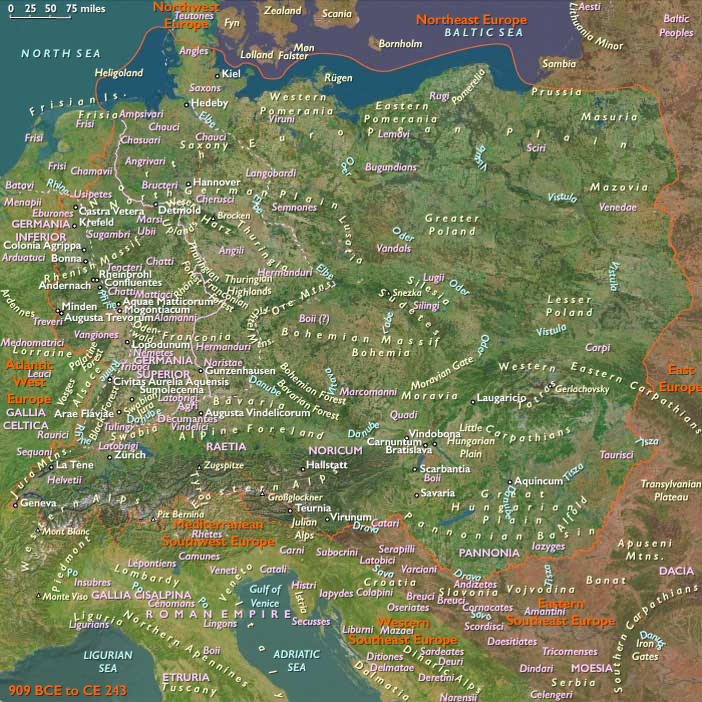
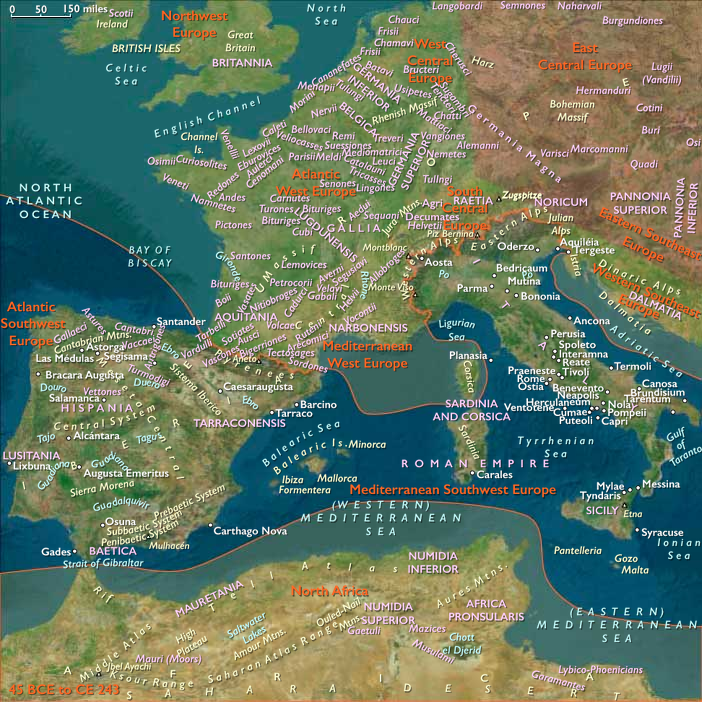
Irenaeus (2nd century CE – c. 202) is Bishop of Lugdunum in Gaul, at this time a part of the Roman Empire (now Lyons, France).
He is an early church father and apologist, and his writings are formative in the early development of Christian theology.
He is a hearer of Polycarp, who in turn was a disciple of John the Evangelist.
Irenaeus' best-known book, Adversus Haereses or Against Heresies (c. 180) is a detailed attack on Gnosticism, which is at this time a serious threat to the Church, and especially on the system of the Gnostic Valentinus.
As one of the first great Christian theologians, he emphasizes the traditional elements in the Church, especially the episcopate, Scripture, and tradition.
Irenaeus writes that the only way for Christians to retain unity is to humbly accept one doctrinal authority—episcopal councils in union with the bishop of Rome.
Against the Gnostics, who say that they possess a secret oral tradition from Jesus himself, Irenaeus maintains that the bishops in different cities are known as far back as the Apostles — and none of them was a Gnostic — and that the bishops provide the only safe guide to the interpretation of Scripture.
His writings, with those of Clement and Ignatius, are taken to hint at papal primacy.
[ Irenaeus is the earliest witness to recognition of the canonical character of all four gospels.
Irenaeus is recognized as a saint by the Eastern Orthodox Church, the Roman Catholic Church, and the Anglican Church.
His feast day is on June 28 in the Roman Catholic calendar of saints, where it was inserted for the first time in 1920; in 1960 it was transferred to July 3, leaving June 28 for the Vigil of the Feast of Saints Peter and Paul, but in 1969 it was returned to June 28, the day of his death.
The Lutheran Church, commemorates Irenaeus on that same date for his life of exemplary Christian witness.
In the Orthodox Church his feast day is August 23.