Ingegerd Olofsdotter of Sweden
Grand Princess of Kievan Rus'
Years: 1001 - 1050
Ingegerd Olofsdotter of Sweden also known as Irene, Anna and St. Anna (1001 – 10 February 1050), is a Swedish princess and a Grand Princess of Kiev.
She is the daughter of Swedish King Olof Skötkonung and Estrid of the Obotrites and the consort of Yaroslav I the Wise of Kiev.
Ingegerd or St. Anna is often confused with the mother of St. Vladimir “the Enlightener” of the Rus.
This is mainly because Ingegerd and Yaroslav also had a son named Vladimir.
However, St. Vladimir was actually the father of Ingegerd’s husband Yaroslav I “the Wise”, thus making her St. Vladimir’s daughter-in-law.
St. Vladimir is actually the son of Sviatoslav and Malusha.
Related Events
Filter results
Showing 10 events out of 10 total
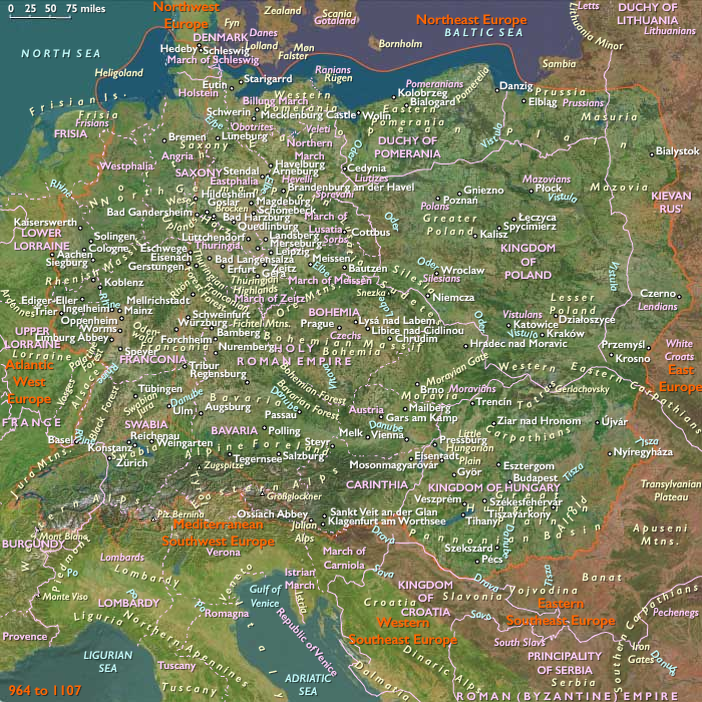
Legend says that Estrid of the Obrotrites was taken back to Sweden from a war in the West Slavic area of Mecklenburg as a war-prize.
She was most likely given by her father, a tribal chief of the Polabian Obotrites, as a peace offering in a marriage to seal the peace with King Olof Skötkonung, and she is thought to have brought with her a great dowry, as a great Slavic influence is represented in Sweden from her time, mainly among craftsmen.
Her husband also has a mistress, Edla, who comes from the same area in Europe as herself, and who was possibly taken to Sweden at the same time.
The king treats Edla and Estrid the same way and has given his son and his two daughters with Edla the same privileges as the children he has with Estrid, though it was Estrid he had married and made Queen.
Queen Estrid is baptized with her husband, their children and large numbers of the Swedish royal court in 1008, when the Swedish royal family converts to Christianity, although the king promises to respect the freedom of religion—Sweden is not to be Christian until the last religious war between Inge the Elder and Blot-Sweyn of 1084-1088.
A new had war erupted between Norway and Sweden when Olaf II of Norway reestablished the Norwegian kingdom.
Many men in both Sweden and Norway try to reconcile the kings.
Olof's cousin, the earl of Västergötland, Ragnvald Ulfsson and the Norwegian king's emissaries Björn Stallare and Hjalti Skeggiason had arrived in 1018 at the thing of Uppsala in an attempt to sway the Swedish king to accept peace and as a warrant marry his daughter Ingegerd Olofsdotter to the king of Norway.
The Swedish king had been greatly angered and threatened to banish Ragnvald from his kingdom, but Ragnvald was supported by his foster-father Thorgny Lawspeaker.
Thorgny had delivered a powerful speech in which he reminded the king of the great Viking expeditions in the East that predecessors such as Erik Anundsson and Björn had undertaken, without having the hubris not to listen to their men's advice.
Thorgny himself had taken part in many successful pillaging expeditions with Olof's father Eric the Victorious and even Eric had listened to his men.
The present king wants nothing but Norway, which no Swedish king before him had desired.
This displeases the Swedish people, who are eager to follow the king on new ventures in the East to win back the kingdoms that paid tribute to his ancestors, but it is the wish of the people that the king make peace with the king of Norway and give him his daughter Ingegerd as queen.
Thorgny had finished his speech by saying: if you do not desire to do so, we shall assault you and kill you and not brook any more of your warmongering and obstinacy.
Our ancestors have done so, who at Mula thing threw five kings in a well, kings who were too arrogant as you are against us.
Olof, however, in 1019 instead marries his daughter Ingegerd-Irene to the powerful Yaroslav I the Wise .
An impending war is settled when Olof agrees to share his power with his son Anund Jacob.
Olof is also forced to accept a settlement with Olaf II of Norway at Kungahälla, who already had been married (unbeknownst to Olof) with Olof's daughter, Astrid, through the Geatish jarl Ragnvald Ulfsson.
The death of Olof Skötkonung is said to have taken place in the winter of 1021–1022.
According to a legend, he was martyred at Stockholm after refusing to sacrifice to pagan gods.
Yaroslav relies on the Scandinavian alliance and attempts to weaken imperial influence on Kiev.
The Norwegian Viking Harald Hardrada and his men have reached the land of the Kievan Rus, where they serve in the armies of Yaroslav, whose wife Ingigerd is a distant relative of Harald.
He and Eilifr, son of that Rognvaldr, who had originally come to Novgorod with Ingigerd, have become joint chiefs of Yaroslav's bodyguard.
Harald serves a military apprenticeship in spring 1031, fighting in the Polish campaign of 1030-1031, which has as its object the recovery of territories previously lost in 1018.
Yaroslav reconquers the area later known as Red Rus', or Red Ruthenia, from the Poles and concludes an alliance with King Casimir I of Poland, sealed by the latter's marriage to Yaroslav's sister Maria.
Magnus is an illegitimate son of King Olaf Haraldsson (later St. Olaf), by his English concubine Alfhild, originally a slave (thrall) of Olaf's queen Astrid Olofsdotter.
Born prematurely, the child was weak and unable to breathe for the first few minutes, and he was probably not expected to survive.
Olaf was not present at the child's birth, and his Icelandic skald Sigvatr Tordarson became his godfather.
In a hasty baptism, Sigvatr named Magnus after the greatest king he knew of, also Olaf's greatest role model, Karla Magnus, or Charlemagne.
Against the odds, Magnus had gone on to grow strong and healthy, and he had become of vital importance to Olaf as his only son.
When Olaf was dethroned by the Danish king Cnut the Great in 1028, he had gone into exile with his family and court, including the young Magnus.
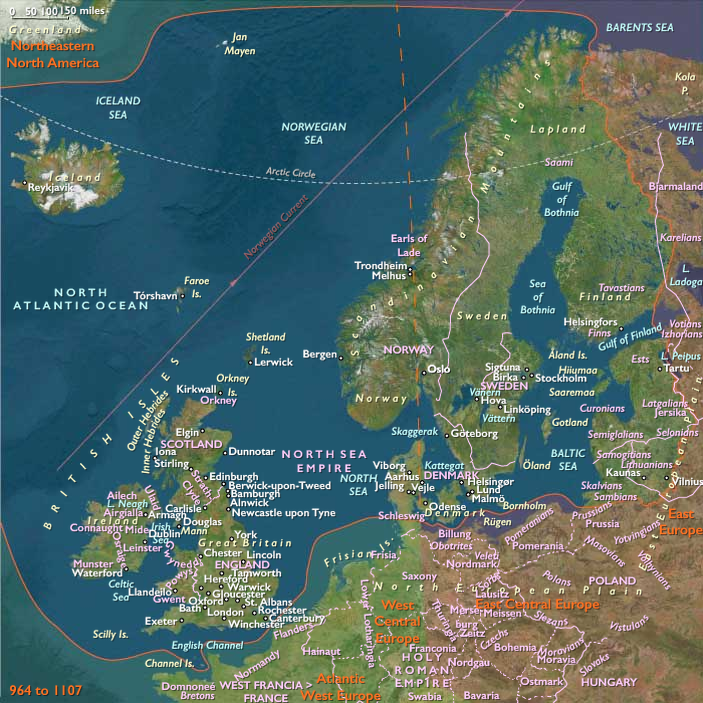
They had traveled over the mountains and through Eidskog during the winter, entered Värmland, and had been given shelter by a chieftain called Sigtrygg in Närke.
After a few months, they departed Närke, and by March went eastwards towards Sigtuna, where the Swedish king Anund Jacob had left them a ship.
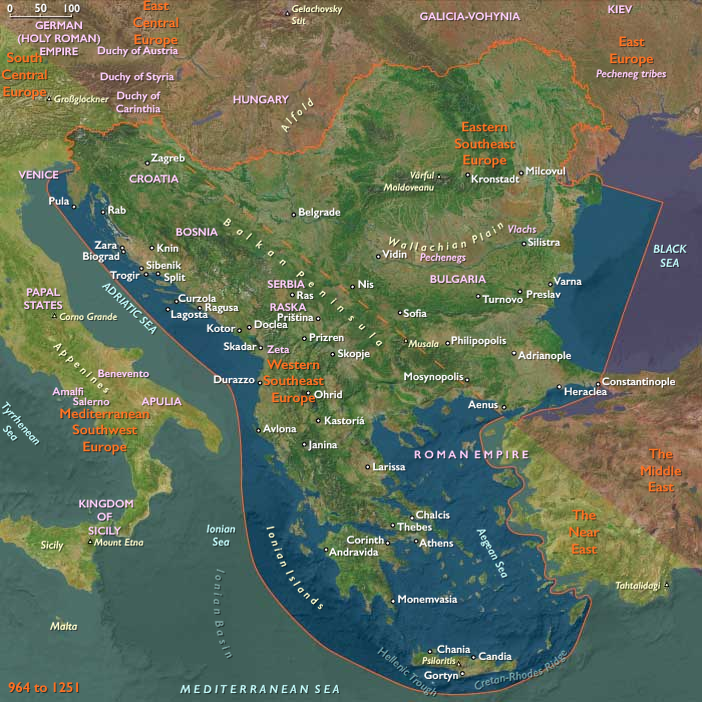
The party thereafter sailed through the Baltic Sea and into the Gulf of Finland, eventually landing in Kievan Rus' (Gardaríki).
They had made their first stop at Staraya Ladoga (Aldeigjuborg) to organize the further journey.
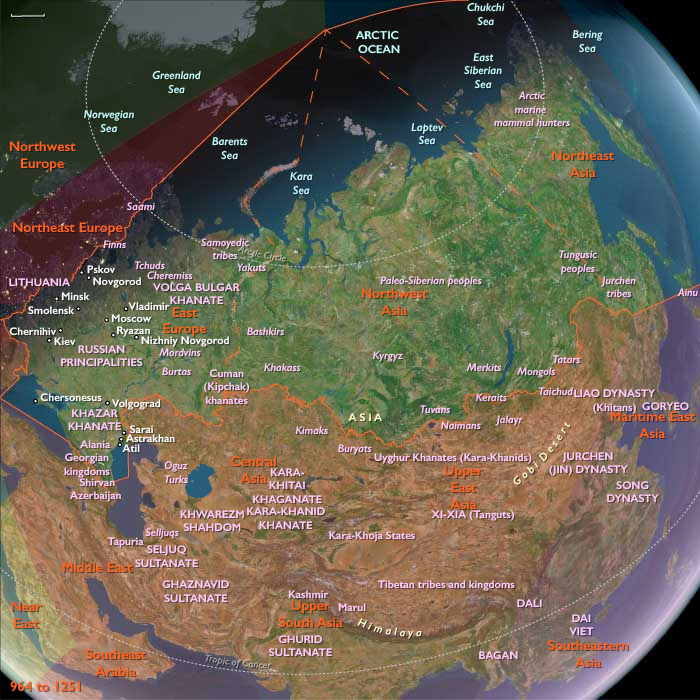
From there, they had traveled southwards to Novgorod (Holmgard), where Olaf had sought assistance from Grand Prince Yaroslav the Wise.
Yaroslav, however, had not wanted to become directly involved in the Scandinavian power-struggles, and declined to help.
After some time, in early 1030, Olaf had learned that the Earl of Lade Håkon Eiriksson, Cnut's regent in Norway, had disappeared at sea, and gathered his men to make a swift return to Norway.
Magnus was left to be fostered by Yaroslav and his wife Ingegerd.
A party including Magnus's uncle Harald Sigurdsson (later also to be king and then known as Harald Hardrada) had arrived in early 1031 to report the news of his father's death at the Battle of Stiklestad.
Magnus had for the past few year been educated in Old Russian and some Greek and has been trained as a warrior.
After Cnut's death in 1035, the Norwegian noblemen do not want to be under the oppressive rule of his son Svein and his mother Ælfgifu (known as Álfífa in Norway) any longer.
Einar Thambarskelfir and Kalf Arnesson, who had both sought to be appointed regents under Cnut after Olaf's death in 1030 (Cnut had instead appointed Svein and Ælfgifu), go together to Kievan Rus' to bring the boy back to rule as the King of Norway.
Einar Thambarskelfir and Kalf Arnesson, after receiving the approval of Ingegerd, return from Novgorod with Magnus to Sigtuna in early 1035, and receive backing from the Swedish king, brother of Magnus's stepmother Astrid.
Astrid immediately becomes an important supporter of Magnus, and an army is gathered in Sweden, headed by Einar and Kalf, to place Magnus on the Norwegian throne.
Liparit seizes the key fortress of Artanuji, thereby becoming the virtual ruler of the southern and eastern provinces of Georgia.
Bagrat IV, defeated in the battle, will not be able to restore his authority in the kingdom until 1059, forcing the renegade Duke Liparit into exile in Constantinople.
Swedish adventurer Ingvar the Far-Traveled makes a celebrated attempt to reopen the trade routes with the Muslim east.
Beside the Ingvar runestones, there are no extant Swedish sources that mention Ingvar, but there is Yngvar’s saga and three Icelandic annals that mention his death under the year 1041.
It is possible that it was King Anund Jakob or his brother and successor Emund the Old who mustered the Swedish leidang, a public levy of free farmers typical for medieval Scandinavians.
It is a form of conscription to organize coastal fleets for seasonal excursions and in defense of the realm.
The participants are evenly distributed along the husbys (royal estates), and twenty-four of the twenty-six Ingvar runestones are from Sweden (in the contemporary sense, i.e.
Svealand) and two from the Geatish district of Östergötland.
The people of Attundaland do not take part and this is probably done on purpose in order to keep a defensive army in Sweden, while the main force is away.
Anund Jacob is the brother of Ingegerd Olofsdotter, who is married to Yaroslav I of Novgorod and who had conquered Kiev in 1019 from his brother Sviatopolk.
This had been done with the help of Varangians, and according to Ingvar's saga, they had been led by Ingvar's father Eymund.
Yaroslav is currently having trouble with the Pechenegs, a nomad tribe.
The Swedish expedition has stayed for a few years in Kiev fighting against the Pechenegs, then (in 1042) they continue to the Black Sea and the Christian country, called Särkland (Georgia).
A feud between Bagrat IV and his former general, Liparit Baghvashi, a powerful duke of Kldekari, had erupted during their campaign against the Georgian city of Tbilisi (1037–1040), which is ruled by Arab emirs.
The king, advised by Liparit’s opponents, had made peace with Emir Ali ibn-Jafar, a sworn enemy of the duke, in 1040.
In retaliation, Liparit had revolted and endeavored to put Demetre, Bagrat’s half-brother, on the Georgian throne.
However, he had had no success and had ended hostilities with Bagrat, receiving the title of Grand Duke of Kartli, but giving up his son, Ioane, as a hostage of the king.
Liparit soon rises again in rebellion, requesting aid from Constantinople.
Supported by an imperial auxiliary force and an army of Kakheti (a kingdom in eastern Georgia), he releases his son and again invites the pretender prince Demetrius to be crowned king.
The latter in 1042 dies at the very beginning of the war, but Liparit continues to fight the king’s forces.
The royal army commanded by King Bagrat is joined by a Varangian detachment of one thousand men, probably a subdivision of the expedition of Ingvar the Far-Travelled.
According to an old Georgian chronicle, they had landed at Bashi, a place by the mouth of the Rioni river, in Western Georgia.
The two armies fight a decisive battle near the village of Sasireti, eastern Georgia, in the spring of 1042.
In fierce fighting, the royal army is defeated and retreats west.
According to the legendary saga about Ingvar, only one ship returned.
The twenty-six remaining rune stones testify to this, as no one mentions a surviving participant.
The most common phrases are similar to the one on the Gripsholm Runestone: “They died in the East, in Särkland.”
George Maniakes transfers his troops into the Balkans and is about to defeat Constantine's army in battle, when he is wounded and dies on the field near Thessaloniki, ending the crisis in 1043.
Constantine's extravagant punishment of the surviving rebels is to parade them in the Hippodrome, seated backwards on donkeys.
With his death, the rebellion ceases.
Harald Hardrada has become extremely rich during his time in the east, and had secured the wealth collected in Constantinople by shipments to Kievan Rus' for safekeeping (with Yaroslav the Wise acting as safekeeper for his fortune).
The sagas note that aside from the significant spoils of battle he had retained, he had participated three times in polutasvarf (loosely translated as "palace-plunder"), a term which implies either the pillaging of the palace exchequer on the death of the emperor, or perhaps the disbursement of funds to the Varangians by the new emperor in order to ensure their loyalty.
It is likely that the money Harald made while serving in Constantinople allowed him to fund his claim for the crown of Norway, which he will pursue in 1046.
If he participated in polutasvarf three times, these occasions must have been the deaths of Romanos III, Michael IV, and Michael V, in which Harald would have had opportunities, beyond his legitimate revenues, to carry off immense wealth.
After Zoe had been restored to the throne in June 1042 together with Constantine IX, Harald had requested to be allowed to return to Norway.
Although Zoe had refused to allow this, Harald had managed to escape into the Bosporus with two ships and some loyal followers.
Although the second ship had been destroyed by Constantinople’s cross-strait iron chains, Harald's ship had sailed safely into the Black Sea after successfully maneuvering over the barrier.
Despite this, Kekaumenos lauds the "loyalty and love" Harald had for the empire, which he reportedly maintained even after he returned to Norway and became king.
Following his escape from Constantinople, Harald had arrived back in Kievan Rus' later in 1042.
During his second stay there, he marries Elisabeth (referred to in Scandinavian sources as Ellisif), daughter of Yaroslav the Wise and granddaughter of the Swedish king Olof Skötkonung.
Shortly after Harald's arrival in Kiev,and immediately after Constantine’s victory over Maniakes, Yaroslav attacks Constantinople, and it is considered likely that Harald provided him with valuable information about the state of the empire.
The Rus' fleet is defeated with the help of Greek fire.
Constantine in 1046 marries his daughter Anastasia to the future Prince Vsevolod I of Kiev, the favorite son of his dangerous opponent Yaroslav I the Wise by Ingegerd Olofsdotter.