Igor of Kiev
Varangian ruler of Kievan Rus'
Years: 875 - 945
Igor I (Old East Slavic/Russian: Игорь; Ukrainian: Ігор; Old Norse: Ingvar) was a Varangian ruler of Kievan Rus' from 912 to 945.
Related Events
Filter results
Showing 7 events out of 7 total
Igor, supposedly the son of legendary Varangian adventurer Rurik of Novgorod (who died around 879), rules Kiev (according the Russian Primary Chronicle) at the death of Rurik’s successor, Oleg.
Constantine Zuckerman, drastically revising the chronology of the Primary Chronicle, argues that Igor actually reigned for three years, between summer 941 and his death in early 945.
He explains the epic thirty-three-year span of his reign in the chronicle by its author's faulty interpretation of Byzantine sources.
Indeed, the chronicle records none of Igor's activities prior to 941.
The Khazar Correspondence reveals that the Rus'-Byzantine War of 941, which takes place during the reign of Igor of Kiev, had been instigated by the Khazars, who wished revenge on the Empire after the persecutions of the Jews undertaken by Emperor Romanos I Lekapenos.
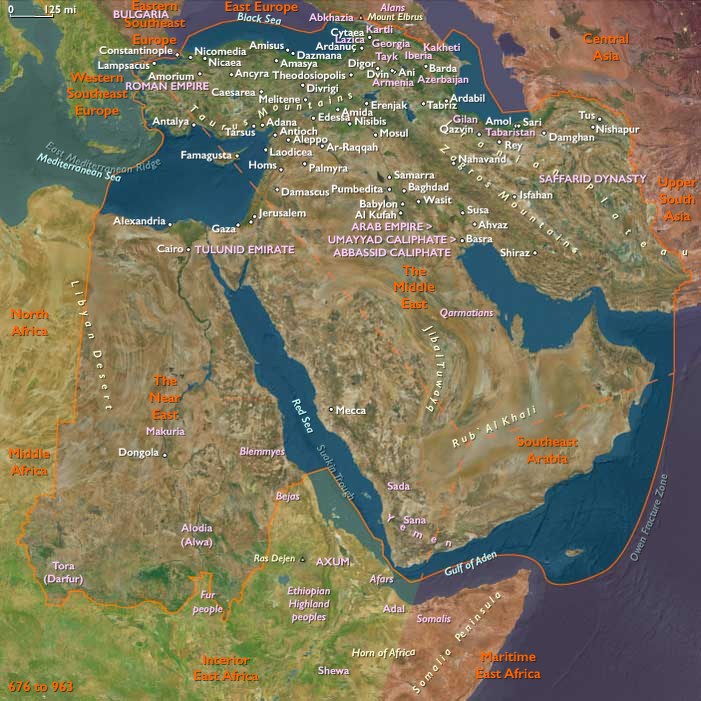
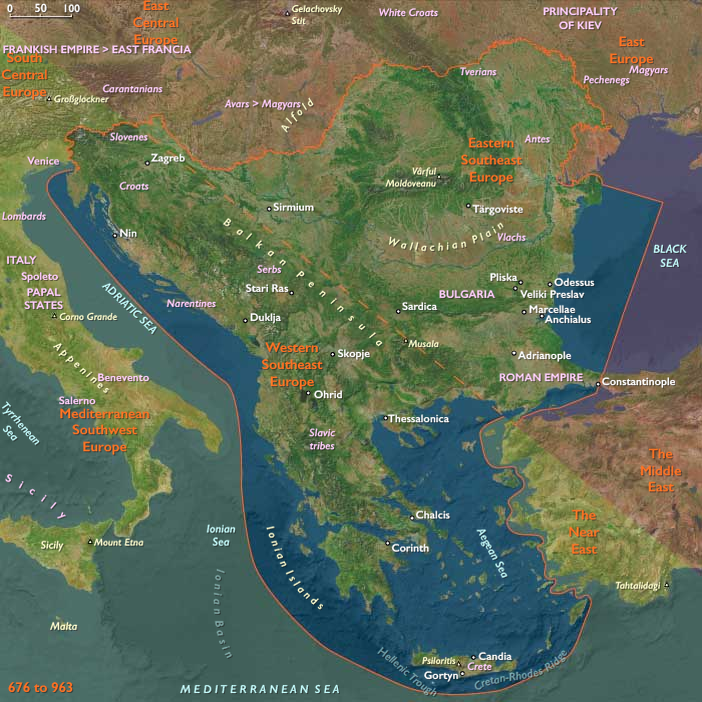
Eastern Southeast Europe (940–951 CE): Rus'-Byzantine Conflict and Regional Tensions
Settlement and Migration Patterns
Continued Demographic Stability
Between 940 and 951 CE, Eastern Southeast Europe maintained demographic continuity, with stable settlements and ongoing cultural interactions among Bulgarians, Slavs, Greeks, and other regional populations.
Political and Military Developments
Rus'-Byzantine War of 941
The period was notably marked by the Rus'-Byzantine War of 941, occurring during the reign of Igor of Kiev. According to the Khazar Correspondence, this conflict was instigated by the Khazars in response to Emperor Romanus I Lecapanus's persecutions of Jewish populations. The Khazars sought revenge by prompting the Rus' to launch an assault on the Byzantine Empire, reflecting complex regional alliances and tensions.
Continued Bulgarian and Byzantine Rivalries
The political landscape continued to be shaped by ongoing rivalry and occasional tensions between the Bulgarian and Byzantine states. Although Bulgaria maintained its regional prominence, its power dynamics were continually influenced by external pressures and internal challenges.
Economic and Technological Developments
Sustained Economic Stability
Economic activities remained robust during this period, supported by stable agricultural productivity, trade networks, and ongoing regional craftsmanship, especially in centers such as Preslav. Trade connections, particularly involving Constantinople and Kievan Rus, continued to underpin economic resilience.
Military Fortifications and Defenses
Investments in military fortifications and defensive structures remained crucial for safeguarding regional security, particularly in response to threats such as the Rus' invasion. These efforts protected economic interests and maintained territorial integrity.
Cultural and Artistic Developments
Continued Cultural Flourishing
The region sustained its vibrant artistic and cultural expression, notably in ceramics, glass, metalwork, and tile artistry. These crafts continued to define Bulgaria's cultural identity and were widely exported, reinforcing regional influence.
Scholarly Continuity and Literary Production
Educational institutions and scriptoria persisted in their vital roles, ensuring continued manuscript production and the preservation of classical and theological knowledge. This scholarly continuity significantly supported cultural resilience and intellectual development.
Social and Religious Developments
Influence of Religious Movements
The spread of Paulician and Bogomil doctrines continued, significantly influencing rural populations and contributing to broader religious and social dynamics. These movements further shaped regional religious thought and practice, fostering ongoing discussions about reform and spirituality.
Dominance and Stability of Orthodox Christianity
Despite emerging religious movements, Eastern Orthodox Christianity remained the dominant and stabilizing religious institution, significantly impacting societal structures, cultural cohesion, and regional identity.
Long-Term Consequences and Historical Significance
The period from 940 to 951 CE was defined by significant geopolitical conflicts, notably the Rus'-Byzantine War instigated by Khazar intrigues, and continued regional tensions between Bulgaria and Byzantium. These developments had enduring impacts, shaping the region’s military strategies, diplomatic relationships, and cultural landscape, thereby influencing Eastern Southeast Europe's historical trajectory.
The Rus' and their Pecheneg allies, both still nominally allies of Constantinople, disembark on the northern coast of Asia Minor and swarm over Bithynia in May 941.
As usual, they seem to have been well informed that the Imperial capital stands defenseless and vulnerable to attack: the imperial fleet had been engaged against the Arabs in the Mediterranean, while the bulk of the Imperial army had been stationed along the eastern borders.
Co-emperor Romanos I Lekapenos arranges a defense of Constantinople by having fifteen retired ships fitted out with throwers of Greek fire fore and aft.
Igor, wishing to capture these Greek vessels and their crews but unaware of the fire-throwers, has his fleet surround them.
Then, in an instant, the Greek-fire is hurled through tubes upon the Rus' and their allies: Liudprand of Cremona wrote: "The Rus', seeing the flames, jumped overboard, preferring water to fire.
Some sank, weighed down by the weight of their breastplates and helmets; others caught fire."
The captured Rus' are beheaded.
The imperial forces thus manage to dispel the Rus' fleet but not to prevent the pagans from pillaging the hinterland of Constantinople, venturing as far south as Nicomedia.
Many atrocities are reported: the Rus' are said to have crucified their victims and to have driven nails into their heads.
John Kourkouas and Bardas Phokas, two leading generals, speedily return to the capital in September, anxious to repel the invaders.
The Kievans promptly transferred their operations to Thrace, moving their fleet there.
When they are about to retreat, laden with trophies, the imperial navy under Theophanes falls upon them.
Greek sources report that the Rus' lost their whole fleet in this surprise attack, so that only a handful of vessels returned to their bases in the Crimea.
The captured prisoners are taken to the capital and beheaded.
Khazar sources add that the Rus' leader managed to escape to the Caspian Sea, where he met his death fighting the Arabs.
These reports might have been exaggerated, because Igor will be able to mount a new naval campaign against Constantinople as early as 944/945.
Romanos concludes a treaty with Prince Igor of Kiev in 944.
This crisis having passed, Kourkouas is free to return to the eastern frontier.
It has sometimes been suggested that a marriage alliance might bring together the Eastern and Western parts of the empire and so provide for a united defense against the common enemy in Sicily—the Arabs.
In 944, Constantine's five-year-old son is married to a daughter of Hugh of Provence, the Carolingian claimant to Italy.
Constantine also keeps up diplomatic contact with Otto I, the Saxon king of Germany.
Romanos' later reign has been marked by the old emperor's heightened interest in divine judgment and his increasing sense of guilt for his role in the usurpation of the throne from Constantine VII.
On the death of Christopher, by far his most competent son, in 931, Romanos had not advanced his younger sons in precedence over Constantine VII.
Fearing that Romanos will allow Constantine VII to succeed him instead of them, his younger sons Stephen and Constantine, impatient to succeed to power, arrest their father in December 944, carry him off to the Prince's Islands and compel him to become a monk.
The Lekapenos brothers threaten the position of Constantine VII, and the people of Constantinople, fearing only that the Porphyrogenitus emperor might be included in the purge accompanying the seizure of power, riot until Constantine appears at a window of the palace.
This show of loyalty emboldens him to banish Romanus' sons on January 27, 945.
Stephen and Constantine are likewise stripped of their imperial rank and sent into exile to their father.
Having never exercised executive authority, Constantine remains primarily devoted to his scholarly pursuits and relegates his authority to bureaucrats and generals, as well as to his energetic wife Helena Lekapene, the daughter of Emperor Romanos I and his wife Theodora.
Romanos II is a son of Emperor Constantine VII and Helena Lekapene.
Named after his maternal grandfather, Romanos had been married, as a child, to Bertha, the illegitimate daughter of Hugh of Arles, King of Italy, who changes her name to Eudokia after her marriage.
Constantine crowns his son Romanos co-emperor on April 6, 945.
John Kourkouas, although considered by some of his contemporaries "a second Trajan or Belisarius," is dismissed after the fall of the Lekapenoi in 945.
Nevertheless, his campaigns in the East have paved the way for the even more dramatic reconquests in the middle and the second half of the tenth century.
Constantine, now thirty-nine, will rule alone from this point forward.
He appoints to the highest army commands four members of the Phokas family, which had been in disgrace under the Lekapenoi, but takes no further reprisals, except for an incidental remark, in De ceremoniis, that Romanus Lecapenus was neither an aristocrat nor a cultured man.
That he does not depart from the admiral's basic policy-at home, maintaining a delicate balance among civil and military officers, landed aristocrats, and peasant soldiers; abroad, friendship with the Rus, peace with the Bulgarians, a limited commitment in Italy, and a resolute offensive against the Muslims—may be ascribed to statesmanship as well as to timidity.
The policy continues to be effective.
The Chersonese Greeks had alert the emperor about the approaching Kievans, who fled in 944/945.
This time, Constantinople hastens to buy peace and concludes a treaty with Kievan Rus'.
Its text is quoted in full in the Primary Chronicle.
The Emperor had sent gifts and offered tribute in lieu of war, and the Rus’ had accepted.
Envoys are sent between the Rus’, Constantinople, and the Bulgarians in 945, and a peace treaty is completed.
The agreement again focused on trade, but this time with terms less favorable to the Rus’, including stringent regulations on the conduct of Rus’ merchants in Cherson and Constantinople and specific punishments for violations of the law.
Constantinople may have been motivated to enter the treaty out of concern of a prolonged alliance of the Rus', Pechenegs, and Bulgarians against them, though the more favorable terms further suggest a shift in power.
Igor of Kiev is killed while collecting tribute from the Drevlyans in 945.
The Byzantine historian and chronicler, Leo the Deacon (born around 950), describes how Igor met his death: "They had bent down two birch trees to the prince’s feet and tied them to his legs; then they let the trees straighten again, thus tearing the prince’s body apart.")
He is avenged by his wife, Olga of Kiev.
The Primary Chronicle blames his death on his own excessive greed, indicating that he was attempting to collect tribute a second time in a month.
As a result, Olga changes the system of tribute gathering (poliudie) in what may be regarded as the first legal reform recorded in Eastern Europe.
Constantine Zuckerman, drastically revising the chronology of the Primary Chronicle, argues that Igor actually reigned for three years, between summer 941 and his death in early 945.
He explains the epic thirty-three-year span of his reign in the chronicle by its author's faulty interpretation of Byzantine sources.
Indeed, none of Igor's activity are recorded in the chronicle prior to 941.
Sviatoslav, a member of the Varangian Rurik dynasty, succeeds his father as duke of Kiev; his mother, Olga, rules as regent.
Virtually nothing is known about Sviatoslav's childhood and youth, which he spent reigning in Novgorod.
Sviatoslav was tutored by a Varangian named Asmud (meaning "quick as a leopard").
The tradition of employing Varangian tutors for the sons of ruling princes will survive well into the eleventh century.