Idris II of Morocco
Sultan of Morocco
Years: 791 - 828
Idris II (791-828) is the son of Idris I, the founder of the Idrisid dynasty in Morocco.
He was born in Volubilis two months after the death of his father.
Related Events
Filter results
Showing 9 events out of 9 total
North Africa (796–807 CE)
Aghlabid Ascendancy, Idrisid Expansion, and Flourishing Berber States
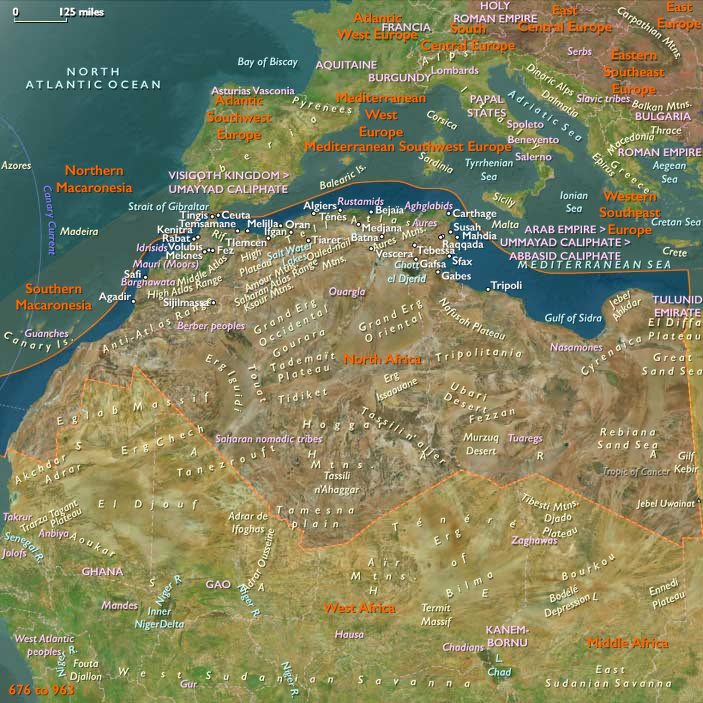
Between 796 and 807 CE, North Africa undergoes another significant political transformation marked by the establishment of the influential Arab-led Aghlabid dynasty in Ifriqiya, continued consolidation and territorial expansion of the Idrisids in Morocco, and the enduring strength of independent Berber states in the central Maghreb.
In 800 CE, the Abbasid Caliph Harun al-Rashid appoints Ibrahim ibn al-Aghlab as governor of Ifriqiya, based at Kairouan (Al Qayrawan). Ibrahim swiftly establishes the semi-autonomous hereditary Aghlabid dynasty, ruling nominally under Abbasid spiritual authority while exercising effective independence in political and administrative matters. The Aghlabids quickly earn a reputation for capable governance, significantly enhancing regional prosperity through ambitious infrastructure improvements, notably reviving Roman-era irrigation systems. This effort substantially increases agricultural productivity, bolstering the economy and enhancing Kairouan’s status as a major cultural and economic hub in the Islamic world.
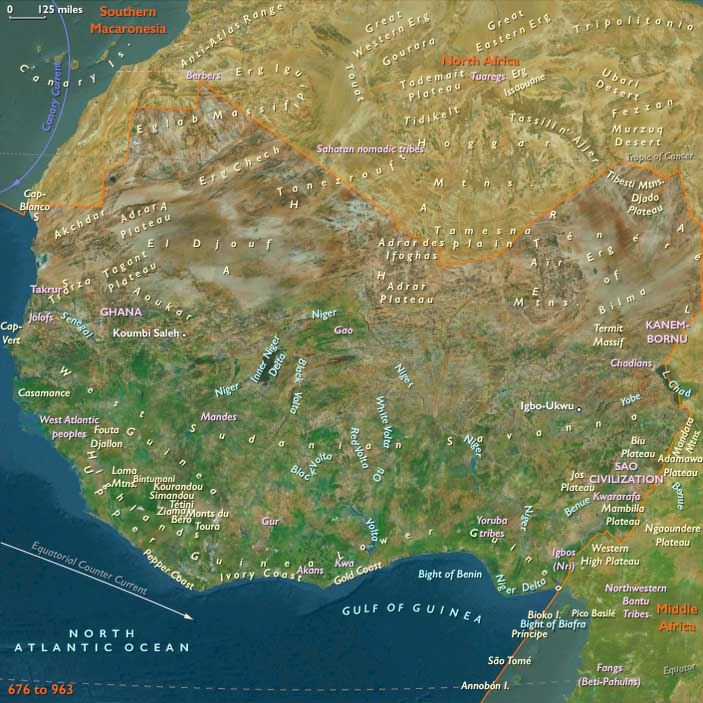
Simultaneously, further west, the Idrisid dynasty—founded by Idris I in 788 CE—continues its territorial and political expansion from its newly established capital at Fez (Fès). After Idris I's death in 791 CE, his successor, Idris II (ruling from 803 CE), significantly expands Idrisid territory, consolidating political control and actively fostering urban growth and economic development. Under his leadership, Fez flourishes culturally and economically, emerging as a vital center for Islamic scholarship, trade, and urban development in the western Maghreb.
The Berber-led Rustamid dynasty at Tahert (Tiaret) remains robustly independent, continuing as a prominent Ibadi Kharijite imamate. Renowned for scholarly and religious tolerance, Rustamid Tahert attracts intellectuals and merchants from across North Africa and beyond, serving as a crucial nexus for regional trade and cultural exchange. Its political stability and scholarly prestige contrast sharply with the declining Abbasid political presence in the broader Maghreb.
Meanwhile, other Berber polities, such as the coastal Barghawata confederation in Morocco, sustain their unique religious traditions and independent governance. Additionally, the Saharan trading center of Sijilmasa, strategically located along vital trans-Saharan routes managed by powerful Tuareg tribes, maintains its prosperous economic autonomy, ensuring continuous economic links between sub-Saharan Africa and the Mediterranean.
By the end of 807 CE, North Africa is firmly characterized by political and economic diversity, underpinned by vibrant regional states and influential dynasties. The Aghlabids effectively govern Ifriqiya as a prosperous semi-independent state, while the Idrisids consolidate their rule over Morocco. At the same time, independent Berber states such as the Rustamids maintain their stability and influence, reflecting a complex tapestry of cultural diversity and decentralized governance that will shape North African historical dynamics in subsequent decades.
The son of Idris I, born a few months after his father's assassination and called Idris also, is proclaimed imam of the Awr'ba in 803, when he is still a young boy.
His mother Kenza, the wife of Idris I, is the daughter of the chief of the Berber Awarba tribe.
Idris II, having never met his father, has been raised among the Berbers of Volubilis.
North Africa (808–819 CE)
Aghlabid Prosperity, Idrisid Consolidation, and Vibrant Berber Autonomy
Between 808 and 819 CE, North Africa experiences sustained political stability and economic prosperity under the rule of influential local dynasties, particularly the Arab-led Aghlabids in Ifriqiya and the Idrisids in Morocco, while Berber states maintain vibrant autonomy in the central Maghreb.
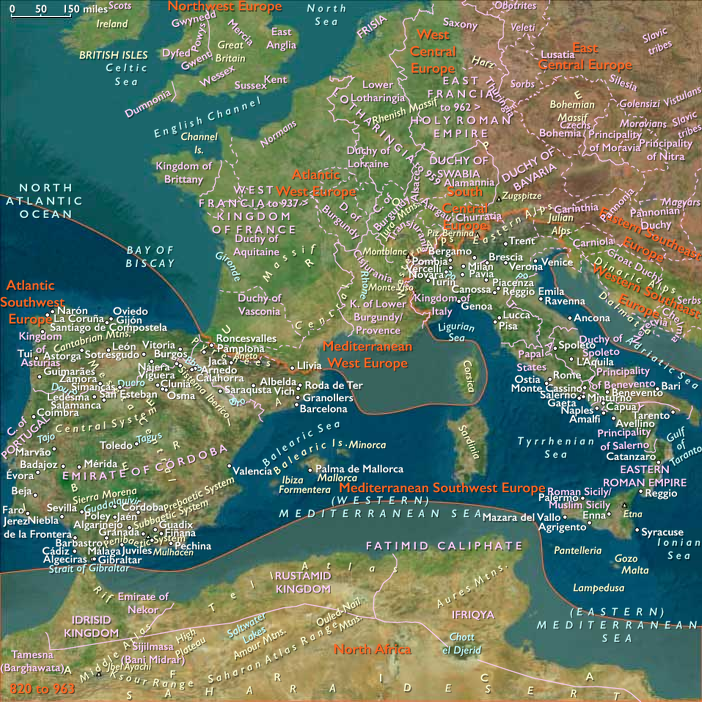
In Ifriqiya, the Aghlabid Dynasty, founded by Ibrahim ibn al-Aghlab in 800 CE, reaches significant prosperity and political stability. Kairouan (Al Qayrawan), the capital, thrives as an urban center of commerce, learning, and cultural exchange, rivaling major cities throughout the broader Islamic world. The Aghlabid rulers, notably Abdallah ibn Ibrahim (812–817 CE) and Ziyadat Allah I (817–838 CE), oversee extensive public works projects, dramatically expanding agricultural production through restored Roman-era irrigation systems. This fosters considerable regional wealth, making Ifriqiya a prosperous, semi-autonomous polity nominally loyal to the Abbasid Caliph in Baghdad.
To the west, the Idrisid Dynasty in Morocco further consolidates its political authority under Idris II, who continues his reign until 828 CE. After establishing the city of Fez (Fès) as his capital, Idris II significantly expands urban infrastructure, attracting scholars, merchants, and artisans. Under his governance, Fez becomes a leading intellectual and commercial hub, firmly embedding the Idrisid state as the dominant political force in western North Africa.
The central Maghreb remains firmly under the influence of the Rustamid Dynasty, based in Tahert (modern Tiaret). Governed by elective Ibadi Kharijite principles emphasizing justice, scholarship, and religious tolerance, the Rustamids continue to attract scholars, traders, and diverse religious groups from across North Africa and the Islamic world. The Rustamid imamate remains a pivotal node in regional commerce and intellectual exchange, a counterpoint to centralized Abbasid authority, highlighting indigenous Berber independence and regional cultural distinctiveness.
The coastal Barghawata confederation retains its distinctive identity, blending indigenous Berber traditions with Islamic practices along the Moroccan Atlantic coastline. Additionally, the oasis city of Sijilmasa, situated along vital trans-Saharan trade routes managed by influential Tuareg tribes, continues as a robust and prosperous economic center. Its wealth and influence underscore the importance of Saharan commerce, maintaining essential economic connections between sub-Saharan Africa and the Mediterranean world.
By the conclusion of 819 CE, North Africa stands as a region defined by substantial political autonomy, economic prosperity, and cultural diversity. The era concludes with the Aghlabid, Idrisid, and Rustamid states solidly established as influential regional powers. Together, they form a dynamic political mosaic characterized by decentralized governance, vibrant economic interconnectivity, and enduring cultural distinctiveness, setting the stage for continued historical evolution throughout subsequent centuries.
Idris II has established the state called, after himself, Idrisid, with the help of Arab refugees coming from both Spain and Aghlabid territory.
By moving the seat of his authority in 809 to Fez, the capital city he had started to build a year earlier, he makes clear he is establishing a state that is distinct from the Awr'ba Berber confederation.
A number of the exiled Córdoban revolutionaries sail to Alexandria and take control here until their expulsion, to Crete, in 827.
Many of the unsuccessful Spanish Muslim participants in the 818 “Revolt of the Arrabal” emigrate from Córdoba to North Africa to settle in Fés.
North Africa (820–831 CE)
Aghlabid Strength, Idrisid Flourishing, and Rustamid Stability
Between 820 and 831 CE, North Africa continues to experience relative stability and economic prosperity under influential dynasties: the Aghlabids in Ifriqiya, the Idrisids in Morocco, and the Ibadi Rustamids in central Algeria, each cultivating a distinct and vibrant regional identity.
In Ifriqiya, the Aghlabid Dynasty, ruling from their prosperous capital at Kairouan (Al Qayrawan), consolidates political control and economic strength. Ziyadat Allah I (817–838 CE) notably focuses on significant public works, expanding irrigation systems and encouraging agricultural productivity. His reign also sees the early stages of Aghlabid maritime ventures, setting the stage for later Mediterranean expeditions and territorial expansion.
Meanwhile, in Morocco, the Idrisid Dynasty under Idris II (803–828 CE) reaches its cultural and political zenith. Idris II enhances Fez (Fès) as a thriving commercial and intellectual center, attracting scholars, merchants, and artisans from across the broader Islamic world. Under his guidance, Fez becomes one of North Africa’s preeminent urban hubs, contributing significantly to the dynasty’s economic and political stature.
The Ibadi Rustamid Dynasty in Tahert (modern Tiaret) maintains its scholarly and religious influence through continued commitment to intellectual freedom and regional commerce. Its unique elective governance and tolerance draw traders and scholars from diverse backgrounds, reinforcing Rustamid stability and autonomy amid regional political shifts.
On the periphery, independent entities such as the coastal Barghawata confederation in Morocco, and the Saharan trading hub Sijilmasa, controlled by powerful Tuareg tribes, remain prosperous, driven by lucrative trans-Saharan commerce and autonomy from larger state formations.
Thus, by the conclusion of 831 CE, North Africa is defined by robust local dynasties and economic vitality, each regionally distinct yet interconnected through commerce, scholarship, and cultural exchange. This vibrant mosaic sets the foundation for continued developments in subsequent eras.
North Africa (832–843 CE)
Aghlabid Stability, Idrisid Growth, and Flourishing Autonomous States
Between 832 and 843 CE, North Africa continues its trajectory of dynastic stability, economic growth, and cultural vibrancy, marked notably by sustained Aghlabid strength in Ifriqiya, expanding influence of the Idrisid Dynasty in Morocco, and enduring autonomy among the Rustamids, Barghawata, Sijilmasa, and the Emirate of Nekor.
In Ifriqiya, the Aghlabid Dynasty, under Ziyadat Allah I (817–838 CE), maintains its peak of power, marked by administrative competence and substantial infrastructure investment. Ziyadat Allah I oversees major enhancements to irrigation systems and urban infrastructure, significantly enriching the agricultural and commercial base of Kairouan (Al Qayrawan). His efforts solidify Aghlabid control, setting the stage for later Mediterranean naval expansion and sustained prosperity.
To the west, the Idrisid Dynasty further develops its political and cultural presence. Following the death of Idris II in 828 CE, his sons and successors continue his legacy, reinforcing Fez (Fès) as a premier cultural, intellectual, and economic center. Under their leadership, the city attracts increasing numbers of scholars, artisans, and traders, furthering Morocco's prosperity and enhancing the dynasty’s prestige and influence.
The Ibadi Rustamid Dynasty, based in Tahert (modern Tiaret), maintains its prominence as an intellectual hub and a center of commerce. Renowned for tolerance, religious diversity, and scholarship, Tahert continues to thrive independently, drawing merchants and scholars from across the Islamic world, and sustaining robust regional trade connections.
Independent polities also thrive during this era. The coastal Barghawata confederation in Morocco consolidates its distinct religious and cultural identity, blending indigenous traditions with unique Islamic practices. In the Saharan region, the economically pivotal city-state of Sijilmasa, strategically controlled by influential Tuareg tribes, remains a central hub for trans-Saharan commerce, significantly facilitating trade in gold, salt, and slaves.
The Emirate of Nekor, an independent entity established in the Rif region of northern Morocco, continues to flourish as a vital economic and cultural crossroads. Founded in the early eighth century by Yemeni immigrants of the Banu Salih family, Nekor maintains strong Mediterranean trade links, particularly with the Umayyad emirate of al-Andalus, and serves as a prominent point of intercultural exchange.
Thus, by 843 CE, North Africa remains characterized by robust regional diversity and prosperity, anchored by stable dynastic centers in Ifriqiya and Morocco, and bolstered by vibrant independent Berber and Arab states. This period lays essential foundations for future developments and shifts in regional power.
North Africa (844–855 CE)
Aghlabid Maritime Expansion, Idrisid Consolidation, and Continued Berber Autonomy
Between 844 and 855 CE, North Africa continues to thrive under powerful regional dynasties, characterized by sustained Aghlabid maritime ambitions, steady consolidation of the Idrisids in Morocco, and enduring independence of autonomous Berber states and emirates.
In Ifriqiya, the Aghlabid Dynasty, notably under Muhammad I ibn al-Aghlab (841–856 CE), actively pursues maritime expansion in the central Mediterranean. From their capital at Kairouan (Al Qayrawan), Aghlabid fleets intensify naval operations, achieving significant successes in Sicily, ultimately laying the groundwork for an extensive Muslim presence there. Prosperity continues to grow in Ifriqiya through commerce, advanced agricultural techniques, and infrastructure enhancements, reinforcing Kairouan's status as a major economic and cultural center.
To the west, the Idrisid Dynasty of Morocco maintains its growth and stability, particularly through urban development and administrative consolidation. Fez (Fès) further solidifies its role as an influential center of commerce, learning, and craftsmanship, with Idrisid governance fostering cultural vibrancy and economic strength.
In central Algeria, the Rustamid Dynasty, based in Tahert (modern Tiaret), remains an independent and culturally rich Ibadi Kharijite imamate, continuing as a key regional trading and scholarly nexus. The Rustamids’ tolerant policies ensure Tahert's reputation as an open and diverse center for religious and intellectual discourse.
Meanwhile, the Emirate of Nekor, an independent polity in Morocco's Rif region, sustains its prosperous trade-based economy and cultural exchanges, connecting the Mediterranean trade networks with al-Andalus. Likewise, along Morocco’s Atlantic coast, the distinct religious identity of the Barghawata confederation continues to thrive autonomously.
The Saharan city-state of Sijilmasa, centrally managed by powerful Tuareg tribes, flourishes as a pivotal trans-Saharan trade hub, maintaining prosperous commercial relationships extending deep into sub-Saharan Africa.
By 855 CE, North Africa's political landscape remains vibrant, characterized by successful regional dynasties, independent Berber entities, and prosperous commercial centers, all fostering continued cultural and economic vitality across the Maghreb.