Idi Amin
President of Uganda from 1971 to 1979
Years: 1925 - 2003
Idi Amin Dada Oumee (c. 1925 – August 16, 2003) is a Ugandan military officer who serves as the President of Uganda from 1971 to 1979.
Popularly known as the "Butcher of Uganda", he is considered one of the cruelest despots in world history.
Amin was born in Koboko to a Kakwa father and Lugbara mother.
In 1946, he joins the King's African Rifles (KAR) of the British Colonial Army as a cook.
He rises to the rank of lieutenant, taking part in British actions against Somali rebels in the Shifta War and then the Mau Mau rebels in Kenya.
Uganda gains independence from the United Kingdom in 1962, and Amin remains in the armed forces, rising to the position of major and being appointed Commander of the Uganda Army in 1965.
He becomes aware that Ugandan President Milton Obote is planning to arrest him for misappropriating army funds, so he launches a military coup in 1971 and declares himself President.
During his years in power, Amin shifts from being a pro-Western ruler enjoying considerable support from Israel to being backed by Libya's Muammar Gaddafi, Zaire's Mobutu Sese Seko, the Soviet Union, and East Germany.
In 1975, Amin becomes the chairman of the Organization of African Unity (OAU), a Pan-Africanist group designed to promote solidarity among African states.
Uganda is a member of the United Nations Commission on Human Rights from 1977 to 1979.
The UK breaks diplomatic relations with Uganda in 1977, and Amin declares that he has defeated the British and added "CBE" to his title for "Conqueror of the British Empire".
Radio Uganda now announces his entire title: "His Excellency President for Life, Field Marshal Alhaji Dr. Idi Amin Dada, VC, DSO, MC, CBE".[9]
As Amin's rule progressed into the late 1970s, there was increased unrest against his persecution of certain ethnic groups and political dissidents, along with Uganda's very poor international standing due to Amin's support for the terrorist hijackers in Operation Entebbe.
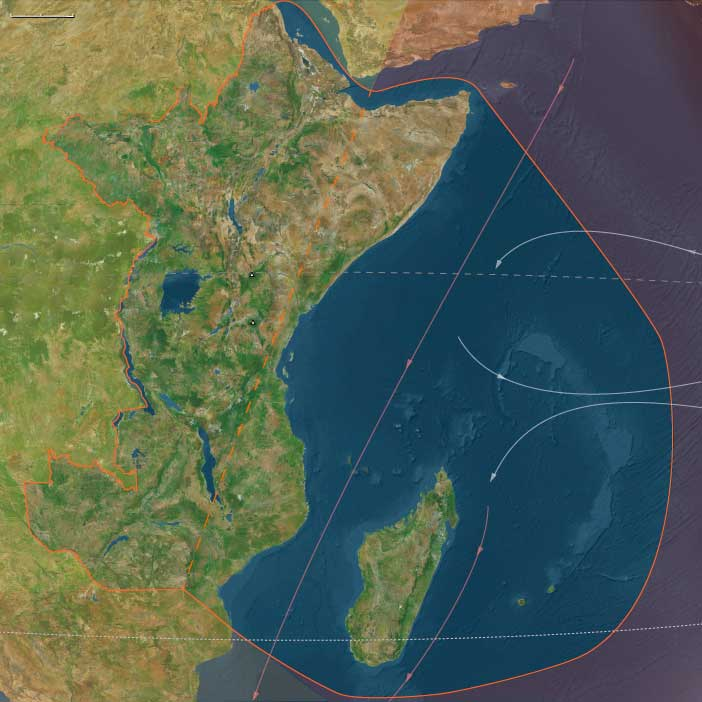
He next attempts to annex Tanzania's Kagera Region in 1978, so Tanzanian president Julius Nyerere has his troops invade Uganda; they capture Kampala on April 11, 1979 and oust Amin from power.
Amin goes into exile, first in Libya, followed by Iraq, and finally in Saudi Arabia, where he lives until his death on August 16, 2003.
Amin's rule wis characterized by rampant human rights abuses, political repression, ethnic persecution, extrajudicial killings, nepotism, corruption, and gross economic mismanagement. International observers and human rights groups estimate that between 100,000[11] and 500,000 people were killed under his regime.[9]