Ibrahim Abboud
Sudanese president and political figure
Years: 1900 - 1983
General Ibrahim Abboud (October 26, 1900, in Suakin – September 8, 1983, in Khartoum) is a Sudanese president and political figure.
A career soldier, Abboud serves in the Second World War in Egypt and Iraq.
In 1949, Abboud becomes the deputy Commander in Chief of the Sudanese military.
Upon independence, Abboud becomes the Commander in Chief of the Military of Sudan.
He serves as the head of state of Sudan between 1958 and 1964 and as president of Sudan in 1964; however, he soon resigns, ending Sudan's first period of military rule.
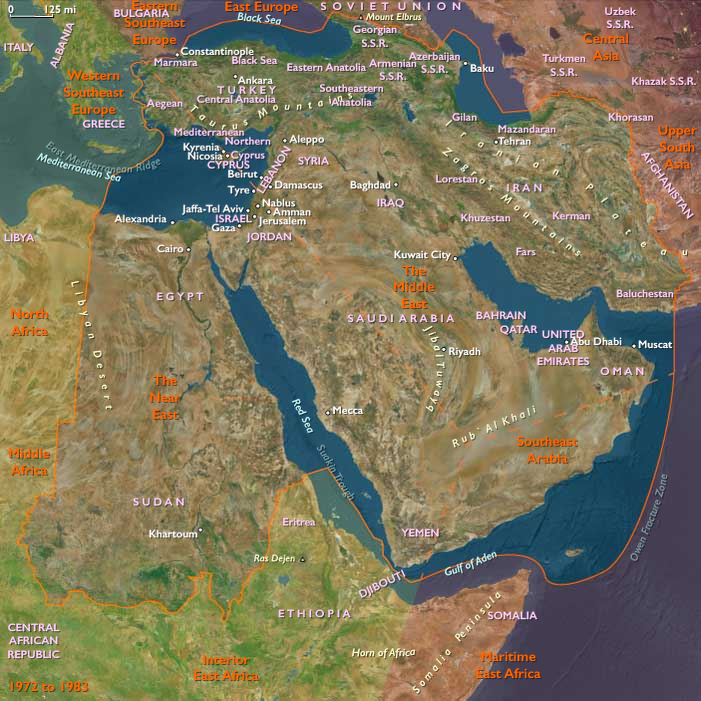
Ibrahim Abboud is born October 26, 1900 in Mohammed-Gol, near the old port city of Suakin on the Red Sea.
He trains as an engineer at the Gordon Memorial College and at the Military College in Khartoum.
He receives a commission in the Egyptian Army in 1918 and transfers to the Sudan Defence Force in 1925, after its creation separate from the Egyptian army.
During the Second World War he serves in Eritrea, in Ethiopia, with the Sudan Defence Force, and with the British army in North Africa.
After the war, Abboud commands the Camel Corps, then rises rapidly to commander of the Sudan Defence Force in 1949 and assistant commander in chief in 1954.
With the declaration of independence for the Sudan in 1956, he is made commander in chief of the Sudanese military forces.
After the Sudanese army stages a coup d'état in November 1958, overthrowing the civilian government of Abdullah Khalil, General Abboud leads the new military government.
Between 1956 and 1958, Sudanese nationalist leaders from both major parties seek to find solutions to the seemingly intractable problems of building a nation, developing the economy and creating a permanent constitution.
Neither Ismail al-Azhari, leader of the Nationalist Unionist party and the first prime minister of the Sudan, nor his rival, Abdullah Khalil, the Umma party leader and successor to al-Azhari as prime minister, is able to overcome the weaknesses of the political system or to grapple with the country's problems.
Parliamentary government is so discredited that General Abboud, who formerly had remained studiously aloof from politics, leads coup d'état on November 117, 1958, to end, in his words, "the state of degeneration, chaos, and instability of the country."
The Council of State and cabinet are dismissed, parliament and all political parties are declared dissolved, and the constitution is suspended.