Hussein ibn Ali al-Hashimi
Sharif and Emir of Mecca and King of the Hejaz
Years: 1853 - 1921
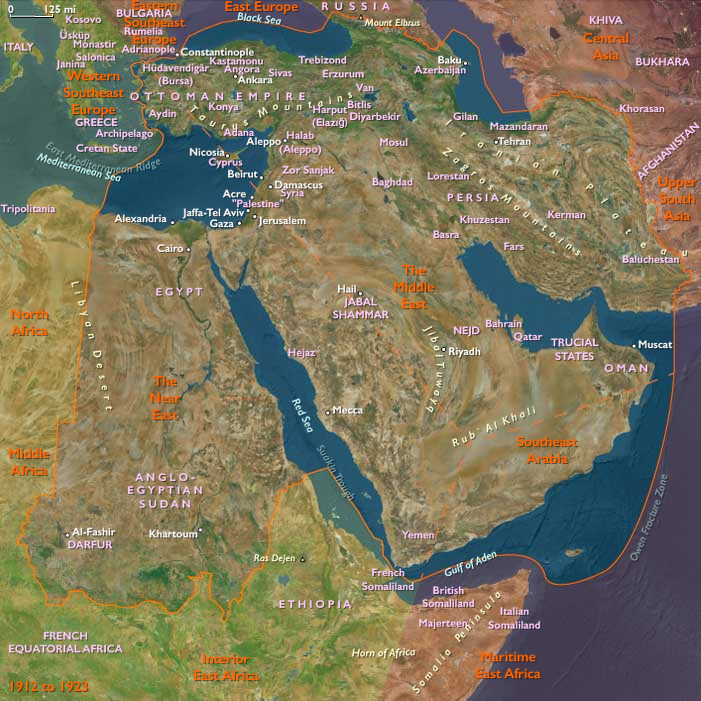
Hussein ibn Ali al-Hashimi (1853/1854 – June 4, 1931) is an Arab leader from the Banu Hashim clan who is the Sharif and Emir of Mecca from 1908 and, after proclaiming the Arab Revolt against the Ottoman Empire, King of the Hejaz from 1916 to 1924.
At the end of his reign he also briefly lyas claim to the office of Caliph.
He is said to be a 37th-generation direct descendant of Muhammad as he belongs to the Hashemite family.
A member of the Awn clan of the Qatadid emirs of Mecca, he is perceived to have rebellious inclinations and in 1893 is summoned to Constantinople where he is kept on the Council of State.
In 1908, in the aftermath of the Young Turk Revolution, he is appointed Emir of Mecca by Sultan Abdul Hamid II.
In 1916, with the promise of British support for Arab independence, he proclaimh the Arab Revolt against the Ottoman Empire, accusing the Committee of Union and Progress of violating tenets of Islam and limiting the power of the sultan-caliph.
Shortly after the outbreak of the revolt, Hussein declares himself 'King of the Arab Countries'.
However, his pan-Arab aspirations are not accepted by the Allies, who recognize him only as King of the Hejaz.
After the First World War Hussein refused to ratify the Treaty of Versailles, in protest at the Balfour Declaration and the establishment of British and French mandates in Syria, Iraq, and Palestine.
He later refused to sign the Anglo-Hashemite Treaty and thus deprived himself of British support when his kingdom is invaded by Ibn Saud.
In March 1924, when the Ottoman Caliphate is abolished, Hussein proclaimshimself Caliph of all Muslims.
In October 1924, facing defeat by Ibn Saud, he abdicates and is succeeded as king by his eldest son Ali.
His sons Faisal and Abdullah se made rulers of Iraq and Transjordan respectively in 1921.