Hugh II, Duke of Burgundy
Duke of Burgundy
Years: 1084 - 1143
Hugh II (1084 – c. 6 February 1143) was Duke of Burgundy between 1103 and 1143. Hugh is son of Odo I, Duke of Burgundy. Hugh is selected custos for the monastery of St. Benigne, and this office would be held by his descendants until the end of the twelfth century.
In 1124, Hugh and his brother-in-law, William III, Count of Ponthieu, dispatch forces to Reims to support their overlord, King Louis VI of France, in his conflict with Emperor Henry V.
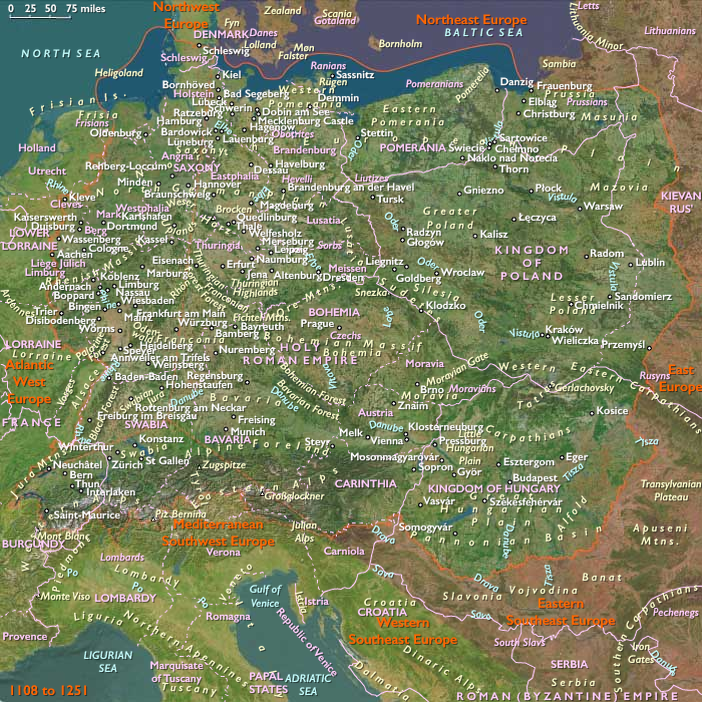
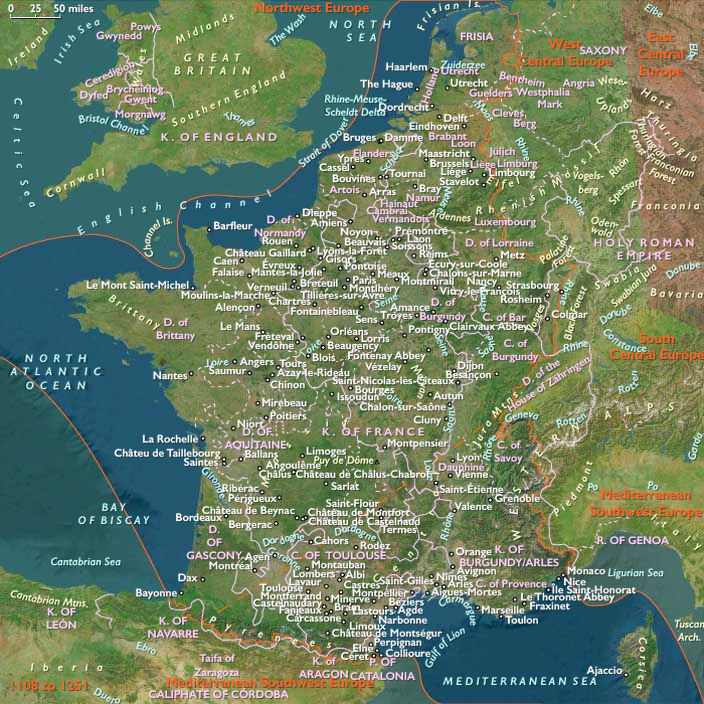
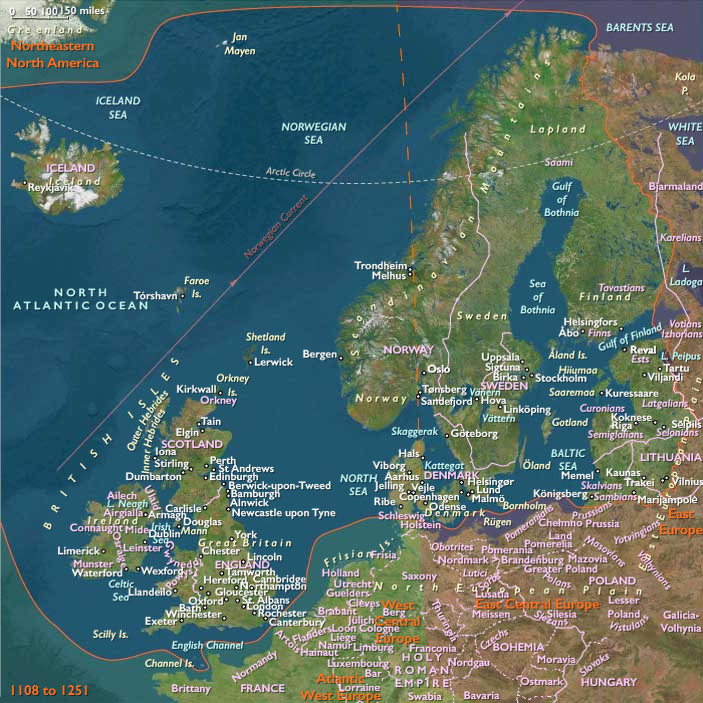
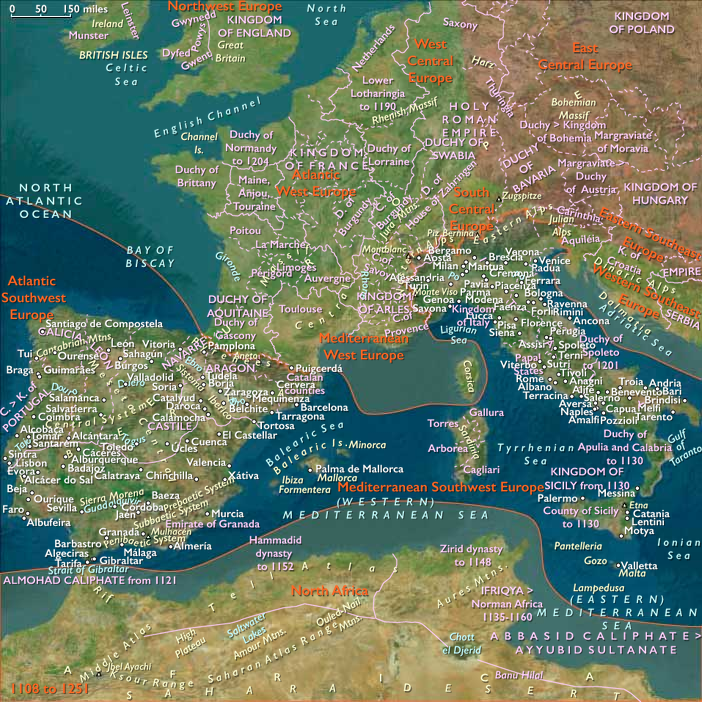

Related Events
Filter results
Showing 5 events out of 5 total
Atlantic West Europe (1096–1107): Crusading Zeal, Dynastic Struggles, and Economic Transformation
Between 1096 and 1107, Atlantic West Europe—including the Low Countries, Normandy, Brittany, Aquitaine, the Duchy of Burgundy, the County of Burgundy (Franche-Comté), Alsace, and central France—underwent significant transformation characterized by the profound impact of the First Crusade, continuing dynastic and territorial conflicts, urban expansion, and religious revitalization.
Political and Military Developments
-
France: Capetian Challenges and Limited Authority
- Philip I (r. 1060–1108) maintained only limited control over powerful vassals, focusing instead on internal stability and managing regional disputes.
- Philip's ongoing marital controversy continued to strain his relationship with the papacy, undermining royal prestige.
-
Normandy and England: Conflict and Succession Struggles
- Robert Curthose, Duke of Normandy (r. 1087–1106), departed for the First Crusade (1096–1099), temporarily leaving Normandy vulnerable to political instability and rebellion.
- William II Rufus of England died under suspicious circumstances (1100), and his younger brother, Henry I, swiftly seized the English throne, heightening tensions with Robert.
- In 1106, Henry decisively defeated Robert at the Battle of Tinchebray, capturing Normandy and reunifying the Anglo-Norman domains under his rule.
-
Flanders: Stable Leadership and Economic Growth
- Robert II of Flanders (r. 1093–1111) continued stable governance, benefiting from increasing urban prosperity and successful trade networks in northern Europe.
-
Aquitaine: Ducal Prosperity
- William IX (r. 1086–1127), known for his cultural patronage, strengthened Aquitaine's autonomy, focusing on internal economic development and literary patronage.
-
Brittany: Strategic Diplomacy
- Duke Alan IV (r. 1084–1112) sustained Breton independence, carefully balancing relations with Normandy, England, and France to secure regional autonomy.
-
Duchy of Burgundy: Continued Stability
- Eudes I (r. 1079–1103) and his successor Hugh II (r. 1103–1143) consolidated Burgundian territorial authority, managing local feudal relationships while keeping autonomy from direct Capetian control.
-
County of Burgundy (Franche-Comté) and Alsace: Imperial Alignment
- Reginald II (r. 1087–1097) and his successor William II (r. 1097–1125) maintained strong ties to the Holy Roman Empire, diverging politically from the French-controlled Duchy of Burgundy.
- Alsace remained prosperous, leveraging strategic trade positions and cultural exchanges between French and German territories.
Economic and Social Developments
-
Urbanization and Commercial Expansion
- Major cities in the Low Countries (Bruges, Ghent, Ypres) continued thriving as leading textile and trade hubs, reinforcing Atlantic West Europe's economic vitality.
- Champagne fairs gained prominence, integrating trade routes across northern and southern Europe.
-
Feudal Consolidation and Social Structures
- Feudal structures deepened in Normandy and the Duchy of Burgundy, with increasing delineation of aristocratic and knightly responsibilities, especially influenced by the Crusades.
Religious and Cultural Developments
-
Impact of the First Crusade (1096–1099)
- The First Crusade, launched in 1096, profoundly influenced the region, drawing away prominent nobles (like Robert Curthose and Robert II of Flanders) and reshaping the political landscape upon their return.
- The Crusade intensified religious fervor, reshaped ecclesiastical authority, and spurred popular enthusiasm across the region.
-
Monastic Reform and Expansion
- The rapid growth of Cluniac and early Cistercian monasteries continued, driven by widespread religious reform movements and increased lay patronage.
-
Cultural Patronage and Literary Growth
- Duke William IX of Aquitaine, considered the first troubadour poet, stimulated a new cultural renaissance in Aquitaine, promoting vernacular literature, poetry, and courtly culture.
Legacy and Long-term Significance
The era 1096–1107 significantly reshaped Atlantic West Europe:
- The successful conclusion of the First Crusade altered regional politics, redistributed feudal power, and heightened religious sentiment.
- Normandy's reunification under Henry I laid the groundwork for later Anglo-French conflicts, influencing centuries of rivalry.
- Economic growth and urbanization, particularly in the Low Countries, set a precedent for the later medieval economic prosperity of the region.
- William IX’s cultural patronage laid crucial foundations for the flourishing troubadour tradition and courtly literature of the High Middle Ages.
This era concluded the transformative eleventh century, setting Atlantic West Europe firmly onto a path of greater political complexity, economic vitality, and cultural sophistication.
Atlantic West Europe (1108–1119): Consolidation, Expansion, and Cultural Renewal
Between 1108 and 1119, Atlantic West Europe—which includes the Low Countries, Brittany, Normandy, Aquitaine, Burgundy, central France, Alsace, and Franche-Comté—underwent significant political stabilization, territorial consolidation, and early cultural renaissance. This era marked the strengthening of feudal structures, the expansion of royal and ducal authority, and flourishing monastic and intellectual activity.
Political and Military Developments
-
France: Royal Consolidation under Louis VI
-
King Louis VI "the Fat" (r. 1108–1137) significantly expanded Capetian royal authority, subduing rebellious nobles in the Île-de-France and strengthening royal influence over central France.
-
Louis VI utilized diplomacy and military action to consolidate power, particularly asserting dominance over rebellious barons and castellans.
-
-
Normandy: English and French Rivalries
-
Henry I of England (r. 1100–1135), also Duke of Normandy, secured control over the duchy following internal struggles, reinforcing the Anglo-Norman connection and stabilizing the region through administrative reforms.
-
-
Aquitaine and Poitou: Ducal Power
-
William IX, Duke of Aquitaine (r. 1086–1127), one of the first troubadours, maintained strong regional control, navigating between asserting ducal autonomy and managing feudal obligations to the French crown.
-
-
Brittany and the Loire Valley: Regional Autonomy
-
Brittany remained largely independent, with Duke Alan IV (r. 1084–1112) and Conan III (r. 1112–1148) solidifying local governance and defending against external pressures.
-
-
Low Countries: Emerging Urban Autonomy
-
Cities in Flanders, such as Bruges and Ghent, experienced economic prosperity, enhancing their political influence and autonomy from feudal lords.
-
-
Burgundy and Alsace: Feudal Stability
-
The Duchy of Burgundy maintained semi-autonomous stability under Duke Hugh II (r. 1103–1143), balancing regional power dynamics through alliances and feudal management.
-
Economic and Social Developments
-
Agricultural Expansion and Economic Growth
-
Improved agricultural methods and the expansion of arable land led to demographic growth and economic stability, supporting the rise of regional trade networks.
-
Increased production sustained burgeoning urban markets and long-distance trade routes, especially in wine, wool, and textiles.
-
-
Urbanization and Trade Networks
-
The rise of trade fairs and market towns, particularly in Champagne, facilitated extensive trade across Atlantic West Europe, enhancing urban economic power and integration.
-
Cultural and Intellectual Developments
-
Monastic Reform and Intellectual Revival
-
The spread of Cluniac and Cistercian monastic reform movements revitalized spiritual life, boosted agricultural productivity, and encouraged intellectual activity.
-
Notable monasteries such as Cluny and Cîteaux gained prominence, influencing religious practice, culture, and politics.
-
-
The Rise of Troubadour Culture
-
The court of William IX of Aquitaine became a hub for troubadour poetry, significantly influencing European literary culture and courtly tradition.
-
Religious Developments
-
Church Reform and Centralization
-
Continued efforts toward church reform and papal authority, initiated in the previous century, gained momentum, shaping ecclesiastical governance and relations with secular powers.
-
Tensions between church authority and local secular rulers occasionally arose, shaping the broader social and political landscape.
-
Legacy and Significance
The period 1108–1119 established crucial foundations in Atlantic West Europe, reinforcing royal authority, regional stability, and economic prosperity. Cultural and intellectual advancements, driven by monastic reforms and the troubadour tradition, laid the groundwork for the vibrant intellectual and cultural life that characterized the high medieval period.
Atlantic West Europe (1120–1131): Dynastic Stability, Urban Growth, and Intellectual Expansion
Between 1120 and 1131, Atlantic West Europe—which encompasses the Low Countries, Brittany, Normandy, Aquitaine, Burgundy, central France, Alsace, and Franche-Comté—experienced a period marked by dynastic consolidation, urban expansion, increased trade activity, and significant cultural and intellectual developments.
Political and Military Developments
-
France: Continued Royal Authority under Louis VI
-
Louis VI (r. 1108–1137) further consolidated royal power, suppressing baronial rebellions and centralizing administrative authority, thereby strengthening Capetian influence throughout central and northern France.
-
-
Normandy: Dynastic Crisis and Stability
-
The tragic sinking of the White Ship (1120) resulted in the loss of William Adelin, heir of Henry I of England, creating a succession crisis with lasting implications for Normandy and England.
-
Despite this setback, Henry I (r. 1100–1135) maintained firm control over Normandy, stabilizing the duchy through effective governance and diplomacy.
-
-
Aquitaine: Ducal Influence and Troubadour Culture
-
William IX, Duke of Aquitaine (r. 1086–1127), continued to promote courtly and troubadour culture, asserting significant ducal autonomy and fostering a vibrant intellectual and artistic environment.
-
His successor, William X (r. 1127–1137), faced early challenges but maintained Aquitaine’s regional prominence.
-
-
Brittany and Burgundy: Regional Autonomy
-
Brittany under Conan III (r. 1112–1148) sustained its independence, balancing diplomatic relationships with Normandy, England, and France.
-
Burgundy maintained internal stability under Duke Hugh II (r. 1103–1143), reinforcing feudal structures and local governance.
-
Economic and Social Developments
-
Urbanization and Expanding Trade Networks
-
Towns such as Bruges, Ghent, and Ypres in the Low Countries flourished economically, driven by expanding cloth and textile trade networks across Europe.
-
The Champagne fairs grew in prominence, serving as crucial hubs for commerce and financial exchange, significantly enhancing regional economic integration.
-
-
Agricultural Innovation and Demographic Growth
-
Continued agricultural improvements and land clearances facilitated population growth, stimulating both rural productivity and urban economic development.
-
Cultural and Intellectual Developments
-
Rise of Scholasticism and Intellectual Revival
-
The University of Paris became increasingly influential, attracting notable scholars and students from across Europe, significantly advancing theological and philosophical scholarship.
-
The influence of scholastic thinkers such as Peter Abelard, active during this period, began to profoundly shape European intellectual culture.
-
-
Troubadour Tradition and Courtly Literature
-
The cultural patronage of the Aquitanian ducal court continued to support troubadour poetry and music, deeply influencing courtly literature and culture across Western Europe.
-
Religious Developments
-
Expansion of Monasticism and Reform
-
The Cistercian monastic movement rapidly expanded, establishing influential abbeys across the region, notably Clairvaux (founded 1115), becoming centers of spiritual reform and economic activity.
-
Monastic houses remained influential in regional politics, economics, and intellectual discourse, driving significant religious reform.
-
Legacy and Significance
The era 1120–1131 in Atlantic West Europe was characterized by strengthened dynastic stability, significant urban and economic expansion, and a vibrant cultural and intellectual scene. These developments solidified regional foundations, laying essential groundwork for the later flourishing of the High Middle Ages.
Atlantic West Europe (1132–1143): Dynastic Tensions, Economic Expansion, and Cultural Flourishing
Between 1132 and 1143, Atlantic West Europe—which includes the Low Countries, Brittany, Normandy, Aquitaine, Burgundy, central France, Alsace, and Franche-Comté—underwent significant changes marked by dynastic tensions, continued economic expansion, and dynamic cultural developments.
Political and Military Developments
-
France: Capetian Consolidation and Baronial Struggles
-
Louis VI (r. 1108–1137) continued to strengthen royal authority but faced persistent opposition from powerful feudal barons.
-
His successor, Louis VII (r. 1137–1180), inherited a stronger monarchy but encountered immediate challenges in maintaining royal dominance.
-
-
Normandy and England: Succession Crisis Intensifies
-
Following Henry I's death (1135), Normandy and England plunged into a succession crisis between Stephen of Blois and Matilda (daughter of Henry I), sparking the protracted conflict known as "The Anarchy."
-
-
Aquitaine: Ducal Authority and Expansion
-
William X (r. 1127–1137) maintained Aquitaine’s cultural prestige and political autonomy.
-
Upon his death, his daughter Eleanor became duchess (r. 1137–1204), significantly altering the political landscape of the region.
-
-
Brittany and Burgundy: Continued Autonomy
-
Brittany under Conan III (r. 1112–1148) preserved its autonomy, navigating diplomatic complexities between Normandy and France.
-
Burgundy, led by Duke Hugh II (r. 1103–1143), remained internally stable and retained local governance structures.
-
Economic and Social Developments
-
Expansion of Trade and Urbanization
-
Major cities like Bruges, Ghent, and Ypres continued flourishing, further integrating into broader European trade networks, especially textiles and wool trade.
-
The Champagne fairs grew increasingly influential as international commercial hubs, facilitating exchange between northern and southern Europe.
-
-
Agricultural Advances and Population Growth
-
Agricultural productivity increased due to improved farming techniques, supporting sustained population growth and greater urbanization.
-
Cultural and Intellectual Developments
-
Flourishing Scholasticism
-
Scholasticism thrived, especially at the University of Paris, attracting scholars such as Peter Abelard, whose philosophical and theological works gained widespread attention.
-
-
Literary and Troubadour Traditions
-
Eleanor of Aquitaine's accession reinforced Aquitaine's cultural prominence, fostering troubadour poetry and music, significantly influencing European literature and courtly culture.
-
Religious Developments
-
Monastic Growth and Influence
-
The expansion of the Cistercian order continued rapidly, with Clairvaux Abbey under Bernard of Clairvaux becoming particularly influential in religious and political affairs.
-
Monasteries remained crucial economic and cultural centers, promoting reform and spiritual renewal.
-
Legacy and Significance
The period from 1132 to 1143 saw intensified dynastic struggles, notably the English-Norman succession crisis, alongside ongoing economic prosperity and cultural dynamism. These developments significantly influenced the region’s political landscape, shaping Atlantic West Europe's trajectory into the High Middle Ages.
Atlantic West Europe (1144–1155): Dynastic Shifts, Royal Ambitions, and Cultural Expansion
Between 1144 and 1155, Atlantic West Europe—which includes the Low Countries, Brittany, Normandy, Aquitaine, Burgundy, central France, Alsace, and Franche-Comté—experienced significant dynastic shifts, intensified royal ambitions, continued economic expansion, and notable cultural developments.
Political and Military Developments
-
France: Capetian Authority and Territorial Expansion
-
Louis VII (r. 1137–1180) embarked on the Second Crusade (1147–1149), temporarily leaving governance to trusted advisors, but ultimately strengthened royal authority despite the Crusade’s failure.
-
Ongoing feudal struggles and territorial disputes required constant negotiation and occasional military action.
-
-
Normandy and England: The Anarchy Continues
-
The succession war between Stephen of Blois and Matilda persisted, deeply destabilizing Normandy and England.
-
Geoffrey Plantagenet, Count of Anjou, successfully captured Normandy (1144), significantly altering regional power dynamics.
-
-
Aquitaine: Eleanor's Influence Expands
-
Eleanor of Aquitaine (r. 1137–1204) divorced Louis VII in 1152, marrying Henry Plantagenet (future Henry II of England) soon afterward, dramatically reshaping political alliances and strengthening the Angevin realm.
-
-
Brittany and Burgundy: Continued Stability Amid Challenges
-
Conan III of Brittany (r. 1112–1148) and his successor Hoël III (r. 1148–1156) navigated increasing pressures from Normandy and France, maintaining regional autonomy.
-
Burgundy remained stable under Eudes II (r. 1143–1162), preserving local authority and managing external threats.
-
Economic and Social Developments
-
Urban Growth and Trade Networks
-
Commercial expansion continued, especially in textile-producing cities like Bruges and Ghent, which strengthened economic ties across Europe.
-
The Champagne fairs maintained their crucial role in European trade, further integrating northern and southern markets.
-
-
Rural Prosperity and Agricultural Innovation
-
Advances in agricultural methods supported rural prosperity, facilitating continued urbanization and population growth.
-
Cultural and Intellectual Developments
-
Rise of Gothic Architecture
-
The beginnings of Gothic architecture emerged, exemplified by the construction of the Basilica of Saint-Denis (consecrated in 1144), influencing church-building throughout the region.
-
-
Intellectual Growth and Scholasticism
-
Continued development of scholastic thought at the University of Paris, with Bernard of Clairvaux exerting significant theological influence.
-
Religious Developments
-
Second Crusade and Religious Zeal
-
The failed Second Crusade (1147–1149), preached by Bernard of Clairvaux, impacted regional religious enthusiasm and subsequent perceptions of crusading ideals.
-
-
Monastic Influence and Reform
-
Cistercian monasteries, especially Clairvaux, continued to expand their influence both spiritually and economically.
-
Legacy and Significance
The period from 1144 to 1155 was marked by significant shifts in political power, notably Eleanor of Aquitaine’s remarriage, which altered the balance of regional alliances. Cultural developments, particularly Gothic architecture and intellectual expansion, left enduring legacies shaping Atlantic West Europe's trajectory through the High Middle Ages.