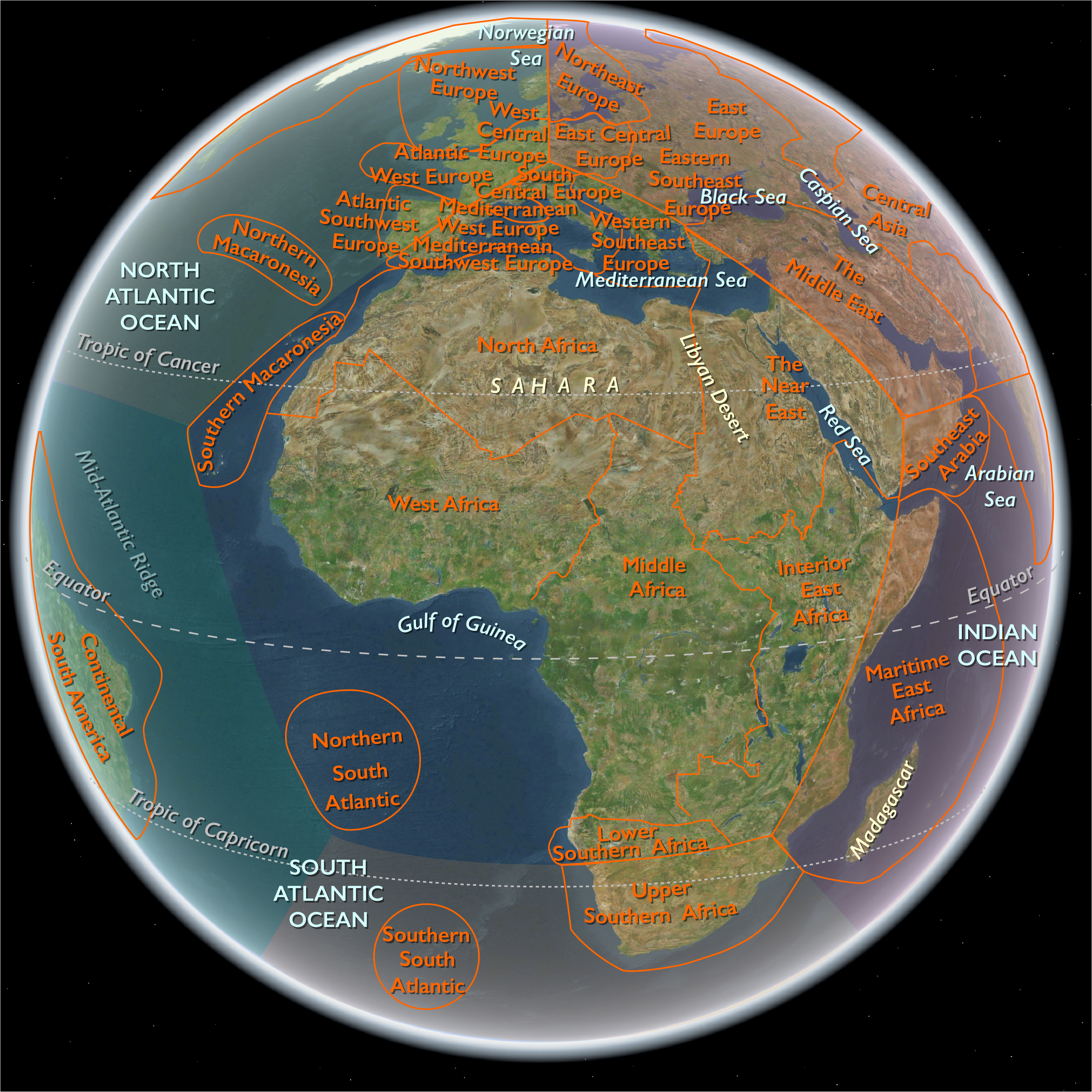
The Near East, 1984 to 1995 CE: Turmoil, Conflict, and Shifting Alliances
Sudan: Famine, Revolt, and Military Coups
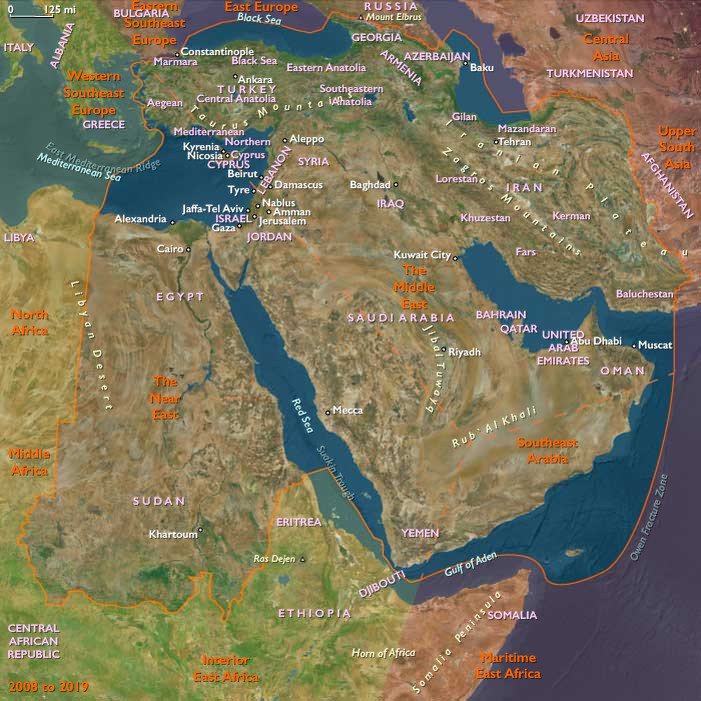
In 1984 and 1985, Sudan faces a devastating famine exacerbated by drought, placing millions at severe risk, especially in the western regions. Despite the urgency, the Sudanese regime initially attempts to conceal the crisis from international scrutiny. Economic troubles worsen as negotiations with the International Monetary Fund (IMF) lead the government to announce price hikes for basic commodities, sparking widespread unrest.
In March 1985, widespread dissatisfaction triggers mass demonstrations and strikes, particularly in the capital city, Khartoum, but also across Sudan's major urban centers. On April 2, 1985, a unified front of eight unions demands a general political strike aimed explicitly at ending the existing regime. The movement rapidly escalates, culminating in massive demonstrations and an almost total paralysis of governmental institutions and economic activity.
Amidst the escalating turmoil, on April 6, 1985, Lieutenant General Abd ar Rahman Siwar adh Dhahab leads a Sudanese Military Coup, overthrowing President Jaafar Nimeiry, who flees to Egypt. A fifteen-member Transitional Military Council (TMC) assumes control, promising a return to civilian rule.
Unstable Civilian Governments and Renewed Military Rule
In June 1986, Sadiq al Mahdi forms a fragile coalition government comprising his Umma Party, the Democratic Unionist Party (DUP), the National Islamic Front (NIF), and four southern parties. Despite initial hopes, Mahdi's government proves weak and ineffective, plagued by internal factionalism, corruption, and personal rivalries.
Facing persistent governmental paralysis, Sadiq al Mahdi dismisses his cabinet within a year, citing their failure to draft a new penal code to replace Sharia, reach agreements with the IMF, resolve the ongoing Second Sudanese Civil War, or attract essential remittances from expatriates. A subsequent coalition government also proves ineffective, further destabilizing the nation.
In 1989, as peace negotiations with southern rebels are underway, General Omar al-Bashir leads another military coup, establishing a junta uninterested in negotiation. Al-Bashir consolidates power, ultimately declaring himself president and setting the stage for prolonged authoritarian rule.
Egypt: Mubarak’s Economic Challenges
Under President Hosni Mubarak, Egypt continues balancing its diplomatic relationship with Israel and reducing tensions with Arab neighbors. Internally, however, the country faces severe socio-economic challenges. Despite growth in agricultural and industrial output, Egypt struggles to cope with rapid population growth, urban poverty, and rising unemployment. Massive rural-to-urban migration exacerbates these problems, leading to widespread urban poverty, particularly evident in sprawling slums surrounding Cairo.
Regional Instability and the Arab-Israeli Conflict
This era sees intensifying regional conflicts and significant geopolitical shifts. In Palestine, the First Intifada (1987–1993) dramatically escalates tensions between Palestinians and Israelis, prompting international concern and intervention. This uprising underscores Palestinian grievances against Israeli occupation and fuels increased militancy on both sides.
The persistent Israeli occupation of Southern Lebanon (ongoing from 1985 to 2000) exacerbates regional instability, resulting in protracted clashes and fostering environments conducive to sustained violence.
Diplomatic efforts, notably the landmark Oslo Accords of 1993 and the subsequent Oslo II Accords in 1995, temporarily renew hopes for peace by outlining frameworks for Palestinian self-governance. Despite these efforts, continuing violence and mutual distrust hinder substantial progress. Related negotiations continue with the Wye River Memorandum (initiated in 1995), underscoring ongoing challenges in securing lasting peace.
Yemen and Broader Regional Dynamics
The Yemeni Civil War of 1994 emerges as another significant regional conflict, illustrating deep-seated internal divisions exacerbated by the aftermath of Yemen’s earlier North-South conflicts.
The Impact of the Cold War’s End
The global Cold War (1947–1991) significantly shapes regional dynamics until its conclusion in the early 1990s. The ideological rivalry and superpower interventions heavily influence local conflicts, alliances, and power structures. Its conclusion sees a realignment of regional strategies and political relationships, affecting both domestic and international policies throughout the Near East.
Legacy of the Era
From 1984 to 1995, the Near East is marked by severe humanitarian crises, political instability, and complex regional conflicts. These events underscore the enduring challenges faced by Sudan, Egypt, and their regional neighbors, laying foundations for further political, economic, and social turmoil in subsequent decades.