Zhu Youcheng was born in an era where the royal concubine Lady Wan and her associates were on the lookout to murder any child born to the Chenghua Emperor.
The young prince, hidden away by the former empress of the Chenghua Emperor, had escaped death only through a stroke of luck.
Zhu Youcheng was only introduced to his father at the age of five, in 1475, and was created crown prince.
He had been a brilliant child early on and received the best education offered at that time.
Immersed in Confucian education, he had excelled in his studies.
After ascending the throne in 1487 as the Hongzhi Emperor, Zhu Youcheng models his administration after Confucian ideology and he becomes a hardworking and diligent emperor.
He closely supervises all affairs of state, lowers taxes, reduces government spending and makes wise appointments of ministers to government posts.
Individuals such as Liu Jian, Xie Qian and Wang Shu work closely with the Hongzhi Emperor, thus creating a seldom-seen atmosphere of cooperation within the government.
In addition, the emperor also encourages his ministers to be open about all issues, even acknowledging criticisms directed towards the emperor himself.
This creates a more transparent government and introduces fresh energy into the Ming dynasty.
As a result, the populace once again prospers.
It is said that the power of individual eunuchs was curtailed and palace intrigues, prevalent in previous reigns, were absent during his reign.
The Hongzhi Emperor has been compared to the Hongwu Emperor and Yongle Emperor as one of the most brilliant emperors of the Ming dynasty.
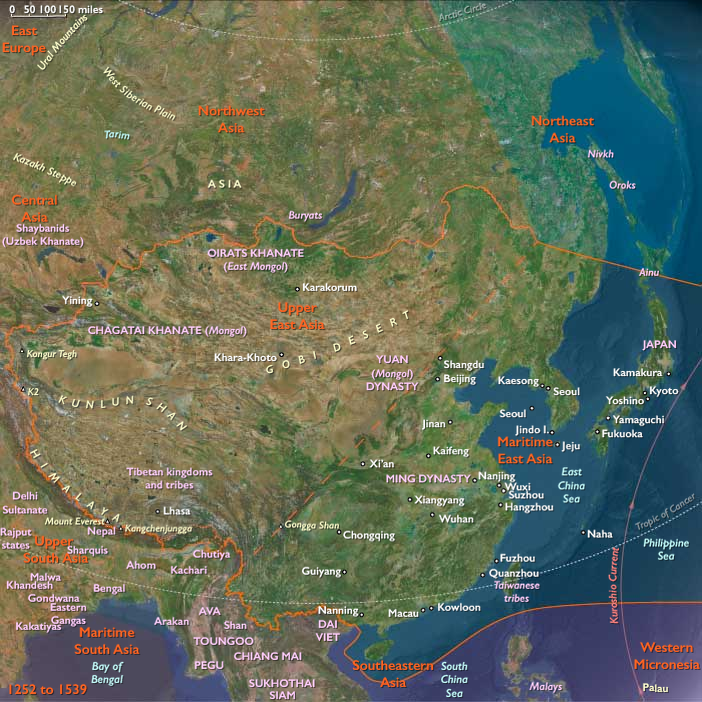
In the spring of 1488, the shipwrecked Korean crew of the Jeju-do official Choe Bu are traveling up the Grand Canal while escorted by the Ming courier service en route back to Korea.
Choe observes ferry ships passing by, holding officials who are from the Ministries of War, Justice, and Personnel.
When he asked what is going on, it is explained to him that the new Hongzhi Emperor is ridding his government of corrupt and incompetent officials, and this is a final gesture of good will by the emperor in providing them with a comfortable passage back home by ship.