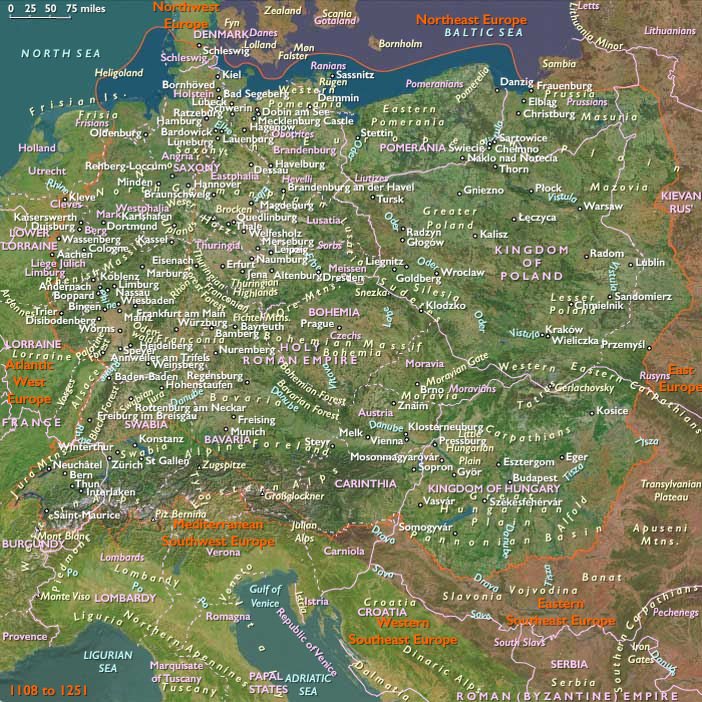
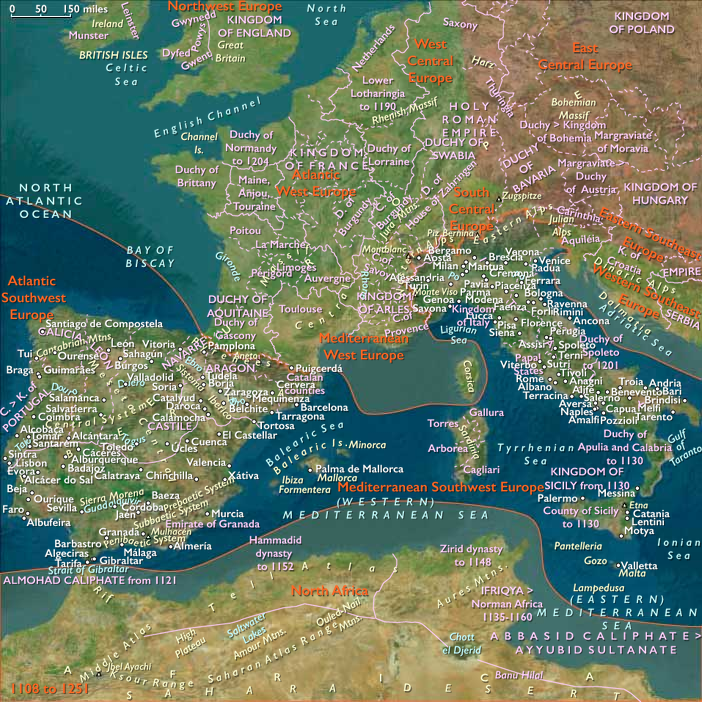
Frederick had been crowned in Mainz as King of Germany—formally, King of the Romans—on December 9, 1212.
His authority in Germany has remained tenuous, however, and he is recognized only in southern Germany; in northern Germany, the center of Guelph power, Otto had continued to hold the reins of royal and imperial power despite his excommunication.
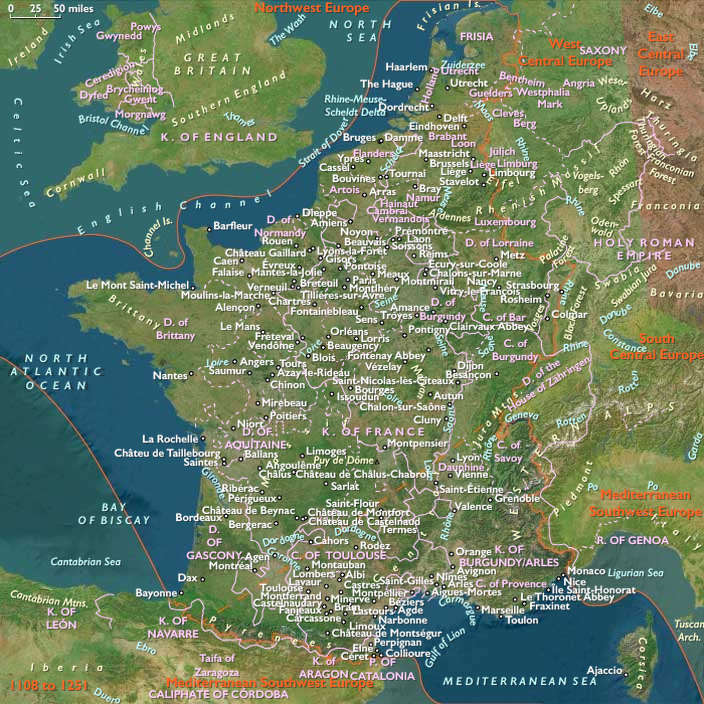
But Otto's decisive military defeat at the Bouvines had forced him to withdraw to the Guelph hereditary lands where, virtually without supporters, he died in 1218.
The German princes, supported by Innocent III, had again elected Frederick king of Germany in 1215, and he was crowned king in Aachen on July 23, 1215, by one of the three German archbishops.
It is not until another five years have passed, and only after further negotiations between Frederick, Innocent III, and Honorius III, that Frederick is crowned Holy Roman Emperor in Rome by Honorius III on November 22, 1220.
At the same time, Frederick's oldest son Henry takes the title of King of the Romans, and Honorius finally gives Frederick permission to keep the Holy Roman Empire and Sicily united, thus furthering Frederick’s ultimate plan to unite all of Italy under imperial dominion.