Henry IV of Castile
King of Castile and León
Years: 1425 - 1474
Henry IV (Castilian: Enrique, Galician: Henrique) (January 5, 1425 – December 11, 1474), King of the Crown of Castile, nicknamed the Impotent (ruled 1454–1474), is the last of the weak late medieval kings of Castile.
During Henry's reign the nobles increase in power and the nation becomesless centralized.
Related Events
Filter results
Showing 10 events out of 36 total
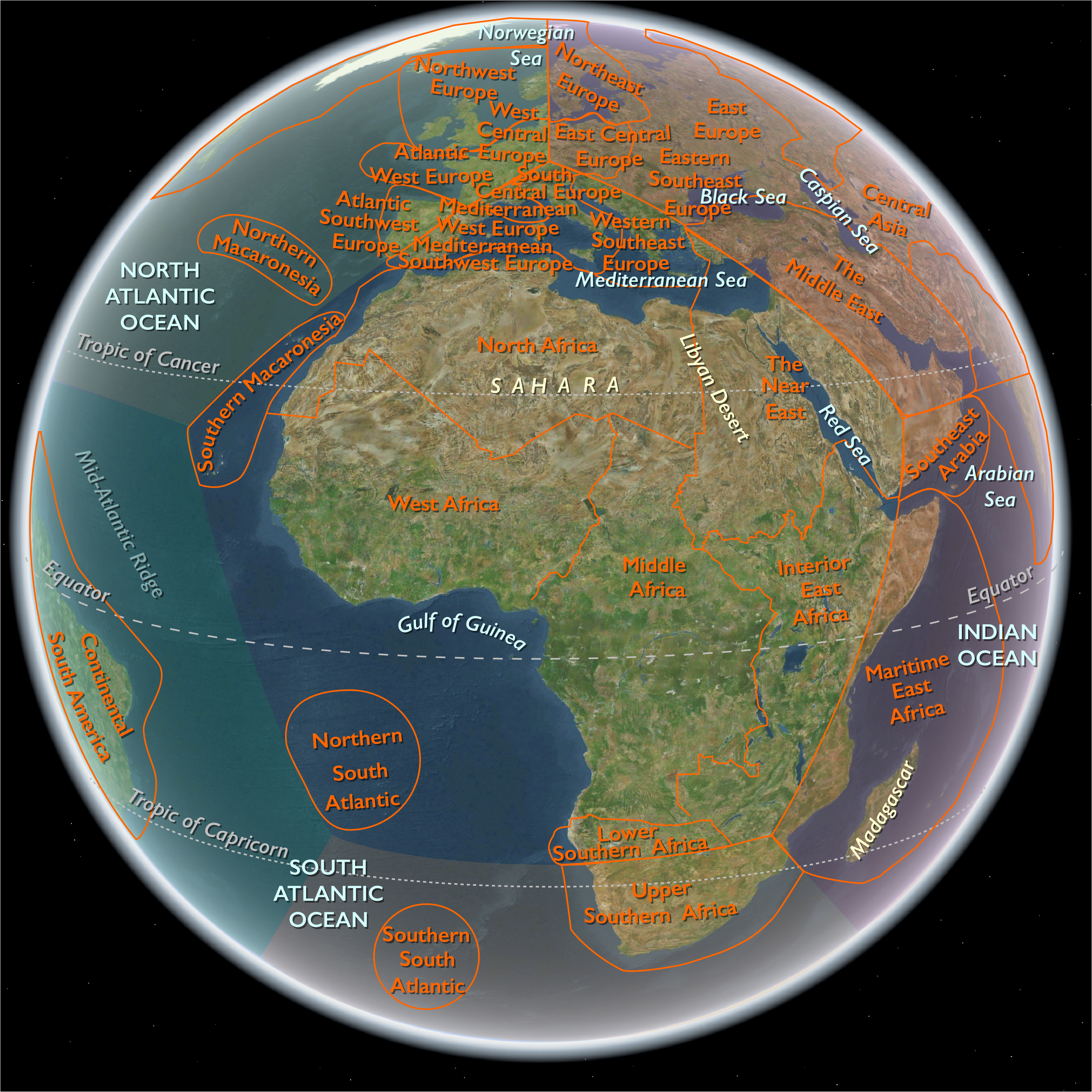
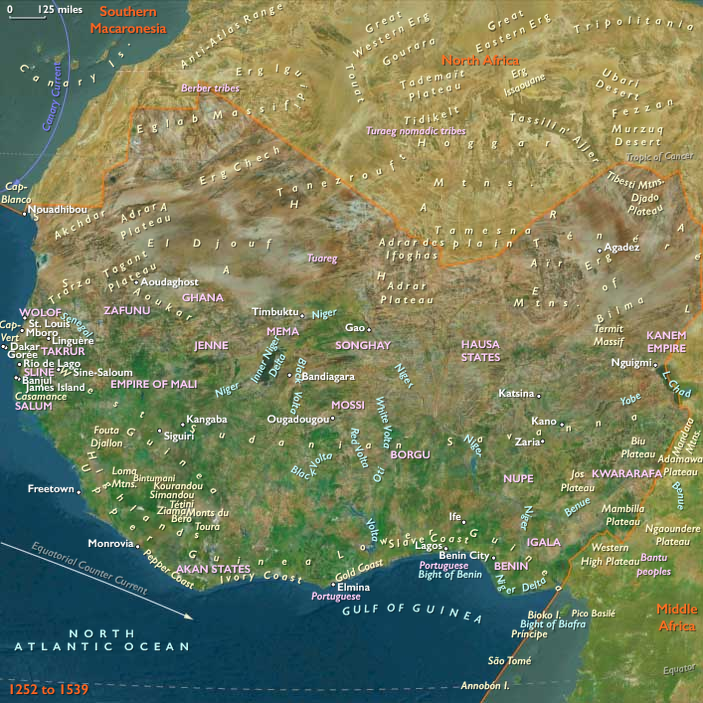
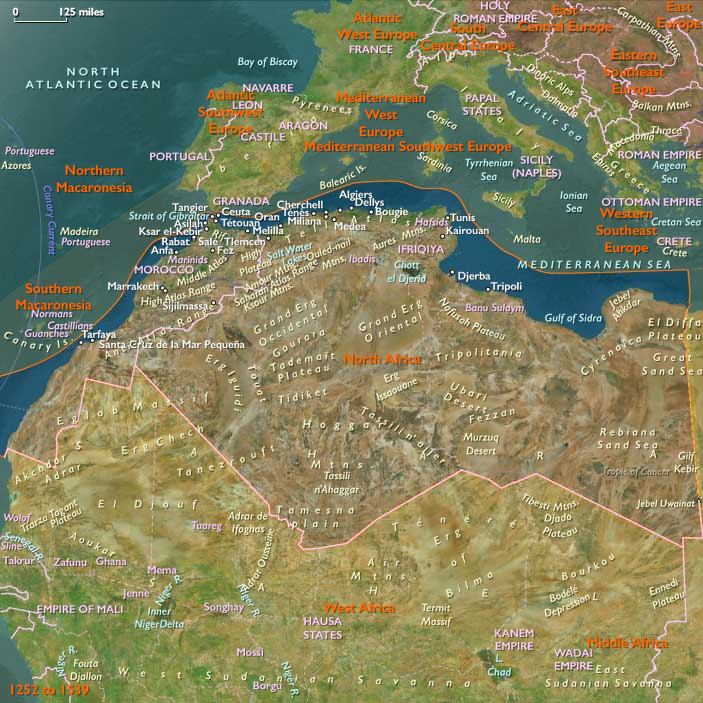
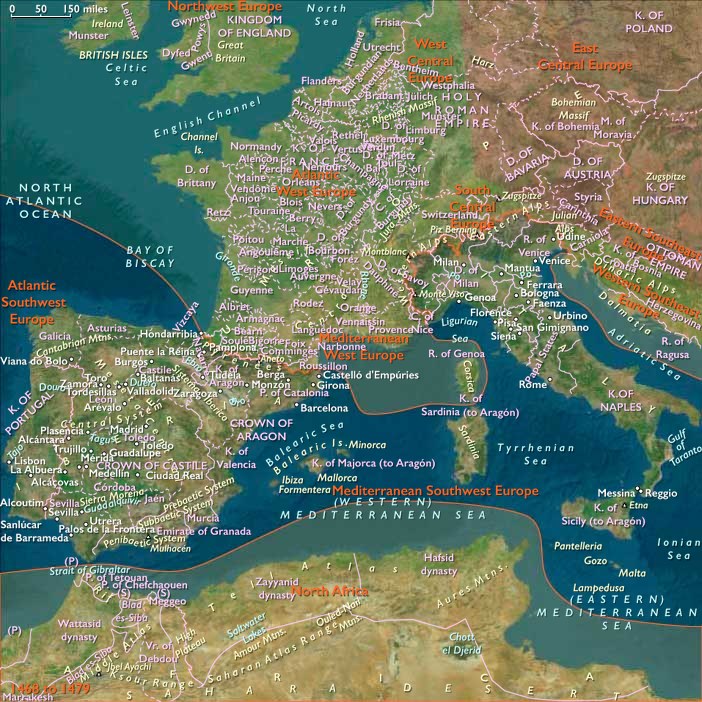
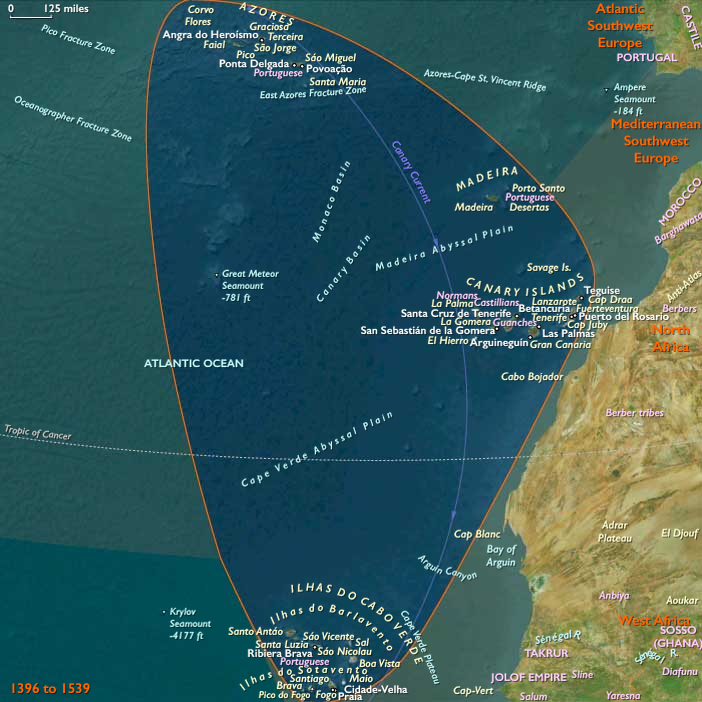
Atlantic Southwest Europe (1396–1539 CE): Estuaries, Shipyards, and the First Oceanic Empires
Geographic & Environmental Context
The subregion of Atlantic Southwest Europe includes continental Portugal and Spain’s Atlantic façade from the Gulf of Cádiz to the Bay of Biscay—the Tagus, Sado, Mondego, Douro, and Minho estuaries; Portugal’s Alentejo and Algarve coasts; Spain’s Guadalquivir–Cádiz seaboard; and the Cantabrian–Galician rías (A Coruña, Vigo, Gijón, Santander) and Basque capes (Bilbao–San Sebastián). These shorelines and river corridors bound maritime towns to grain-and-vine interiors and iron-rich uplands.
Climate & Environmental Shifts
The Little Ice Age brought cooler winters, stormier seas, and variable rains:
-
Iberian west & south coasts: more frequent Atlantic gales and bar shifts at estuary mouths (Douro, Tagus, Guadalquivir), alternately silting and scouring channels.
-
Northwest (Galicia–Asturias–Cantabria): heavy rainfall and rough seas; rich upwelling sustained fisheries.
-
Interior hinterlands: periodic droughts hit Alentejo and Andalusian cereal zones; frosts checked vines and olives in bad years; good years yielded ample wheat, wine, and oil.
Subsistence & Settlement
-
Rural belts: Wheat, rye, barley, olives, and vines; cork oak montado in Alentejo; gardens and orchards along river terraces.
-
Fisheries: Sardine and tunny on the Portuguese and Andalusian shelves; cod and whale began to matter for Basque fleets in the early 16th century. Saltworks (Aveiro, Setúbal, Cádiz) underwrote fish preservation and trade.
-
Ports & river towns: Lisbon (Tagus) and Porto (Douro); Seville and Cádiz (Guadalquivir–Cádiz); A Coruña–Vigo (rías), Santander, Bilbao and San Sebastián on the Bay of Biscay; Viana do Castelo, Figueira da Foz, Setúbal along Portugal’s coast. Urban workshops produced sails, rope, barrels, and victuals for ocean-going fleets.
Technology & Material Culture
-
Shipbuilding & navigation: The caravel (lateen rig, shoal-draft) matured on Portugal’s south coast; rounder naos carried freight across oceans. Magnetic compass, sternpost rudder, astrolabe, cross-staff, portolan charts, and toleta de marteloio tables improved blue-water navigation.
-
Maritime institutions: In Portugal, the Order of Christ’s revenues (successor to the Templars) and the crown’s Casa da Guiné and later Casa da Índia in Lisbon centralized Atlantic/Indian trade. Basque iron and timber supported Biscayan yards.
-
Urban & courtly arts: Manueline architecture (rope, coral, armillary motifs) crowned Lisbon/Belém; Mudéjar–Plateresque blended in Andalusia; guild crafts (textiles, leather, ceramics) supplied ships and cities.
Movement & Interaction Corridors
-
Estuary arteries: The Tagus, Douro, and Guadalquivir funneled grain, wine, oil, salt fish, and hides from interior plains to oceanic convoys; return flows brought spices, gold, and slaves by the early 1500s.
-
Atlantic lanes: Portugal’s Volta do Mar looped down the African coast and home via mid-ocean westerlies; Andalusian–Cantabrian coasting linked Biscay iron and salt fish to southern shipyards and markets.
-
Pilgrimage & fairs: Santiago de Compostela drew pilgrims through Galician ports; Lisbon and Seville fairs knit merchants from Italy, Flanders, and the Maghreb.
-
Imperial routes (first phase): After 1498, spice fleets sailed India–Lisbon; after 1492, Castilian fleets used the Guadalquivir–Seville corridor to the Caribbean.
Cultural & Symbolic Expressions
-
Religious life: Cathedrals and confraternities structured urban devotion; seafarers’ brotherhoods honored Our Lady of Good Voyage; shrines dotted headlands and capes (e.g., Cape St. Vincent).
-
Court and chronicle: Portuguese chronicles (Gomes Eanes de Zurara) celebrated exploration; Iberian courts patronized cartography and cosmography.
-
Communal identities: Fisher guilds, ship carpenters, ropewalkers, coopers, and salt-pan communities developed strong customs and saints’ days; Basque whalers forged distinctive sea rituals.
Environmental Adaptation & Resilience
-
Risk-spreading portfolios: Mixed farming (cereal–vine–olive), stock-raising, and salt-fish curing buffered bad harvests; riverine mills and terraces stabilized yields.
-
Harbor works: Jetties and dredging (Lisbon, Porto, Seville) fought bar siltation; salt granaries and fish warehouses bridged lean seasons.
-
Maritime provisioning: Biscayan and Portuguese fleets salted fish and whale meat; victualing yards stockpiled biscuit, wine, oil, and salted pork for oceanic voyages.
Technology & Power Shifts (Conflict Dynamics)
-
Iberian realignments: The Conquest of Ceuta (1415) opened Portugal’s North African gateway and Atlantic thrust; the War of the Castilian Succession (1475–1479)—including the Battle of Toro (1476)—ended with the Treaty of Alcáçovas (1479), fixing early Atlantic spheres between Castile and Portugal. The Treaty of Tordesillas (1494) divided extra-European worlds meridionally.
-
Oceanic breakout: Vasco da Gama’s voyage (1497–1499) linked the Tagus to India; Pedro Álvares Cabral (1500) reached Brazil; Portugal’s Estado da Índia took shape after the Battle of Diu (1509) and the Capture of Malacca (1511), routing Eastern spices to Lisbon.
-
Castile’s Atlantic: From 1492, Columbus’s voyages (out of Palos/Cádiz) opened Caribbean routes; Seville’s Casa de la Contratación (from 1503) regulated fleets.
-
Privateering & defense: Biscay–Galician coasts armed against English, Breton, and Norman raiders; corsair warfare flickered in the Bay of Biscay and off the Algarve.
Transition
By 1539 CE, Atlantic Southwest Europe had transformed from a cluster of estuarine towns into the launchpad of two oceanic empires. Lisbon and Seville–Cádiz rose as global entrepôts; Biscayan and Galician ports provisioned fleets and pioneered whaling and Atlantic cod. Inland cereals, vines, and olives still fed the system, but caravel and nao had redrawn horizons—binding Iberian estuaries to Africa, Asia, and the Americas, and setting the stage for a sixteenth century of maritime hegemony and imperial rivalry.
Atlantic Southwest Europe (1444–1455 CE): Portuguese Maritime Dominance and Humanist Flourishing, Castilian Political Tensions under John II, and Navarrese Diplomatic Realignment
Between 1444 and 1455 CE, Atlantic Southwest Europe—including Galicia, northern and central Portugal, Asturias, Cantabria, and northern Spain south of the Franco-Spanish border (43.05548° N, 1.22924° W)—experienced accelerated Portuguese maritime expansion and cultural renewal through Renaissance humanism, increasing internal tensions within Castile’s aristocracy under the later reign of King John II, and careful diplomatic realignment in Navarre. These developments significantly influenced regional governance stability, economic prosperity, cultural exchanges, and decisively set the stage for the full Iberian Renaissance in subsequent decades.
Political and Military Developments
Portuguese Maritime Dominance and Overseas Expansion
Under the youthful yet ambitious King Afonso V (1438–1481 CE) and continued guidance from Prince Henry the Navigator, Portuguese maritime exploration expanded significantly. Portuguese explorers reached Cape Verde (1444) and later extended influence down Africa’s western coast, establishing trading posts and fortifications. By 1455, Portugal decisively dominated Atlantic exploration and trade, setting a strong foundation for global empire-building.
Castilian Aristocratic Tensions under John II
Castile, under the later reign of King John II (1406–1454 CE), experienced heightened internal aristocratic conflicts, particularly involving powerful noble families and factions vying for influence. Despite these tensions, John II’s administration decisively preserved Castilian territorial coherence and governance structures. His death in 1454 resulted in the accession of his son, Henry IV (1454–1474 CE), whose reign began with challenges inherited from these internal aristocratic struggles.
Navarrese Diplomatic Realignment under John II of Aragón
In Navarre, following Queen Blanche I’s death in 1441, her husband, John II of Aragón (1425–1479 CE as co-ruler) decisively assumed sole governance. His rule involved careful diplomatic realignment, increasingly emphasizing ties with Aragón. Despite tensions with Navarrese nobility over internal administration, he preserved Navarre’s territorial autonomy and regional stability through cautious diplomatic maneuvering with Castile, Aragón, and France.
Economic Developments
Agricultural Prosperity and Rural Stability
Agricultural productivity remained strong, decisively supported by diversified crops—grain, olives, vineyards, citrus fruits, almonds—and robust livestock production. Mining activities (notably gold and silver in Galicia and Asturias) and artisanal crafts significantly reinforced regional economic resilience and demographic stability.
Portuguese Maritime Trade and Atlantic Commerce
Portuguese maritime trade decisively flourished through the ports of Lisbon, Porto, Braga, and Coimbra, increasingly dominating Atlantic commerce routes. Trading posts along Africa’s coast and the exploration of the Cape Verde islands significantly enhanced Portugal’s economic prosperity and maritime influence. Galicia, particularly through ports like A Coruña, continued vibrant trade, reinforcing regional economic resilience.
Pilgrimage Economy and Regional Vitality
Pilgrimage routes to Santiago de Compostela continued to support sustained regional economic vitality through hospitality industries, artisanal commerce, infrastructure projects, and cultural exchanges. Persistent pilgrimage activity significantly reinforced Galicia’s economic stability and international recognition.
Cultural and Religious Developments
Portuguese Renaissance and Humanist Flourishing
Portugal decisively advanced in Renaissance humanist scholarship under King Afonso V. Increasingly robust cultural exchanges with Italian city-states and northern Europe deepened humanist influences on literature, education, architecture, philosophy, and scientific inquiry. Portuguese intellectual life flourished through courtly patronage, scholarly institutions, and maritime exploration literature, laying critical foundations for Portugal’s mature Renaissance era.
Castilian Cultural Continuity and Early Humanist Influence
Despite internal political tensions, Castilian culture remained vibrant, decisively influenced by early humanist contacts, especially from Italy. Intellectual exchanges and scholarly patronage shaped Castilian literature, educational reforms, and philosophical inquiry, laying essential groundwork for the later Spanish Renaissance.
Galician Cultural and Ecclesiastical Patronage
Galicia maintained significant cultural prominence, decisively supported by ecclesiastical authorities of Santiago de Compostela and monastic communities. Scholarly initiatives, manuscript preservation, artistic patronage, and architectural projects continued, reinforcing Galicia’s cultural identity and international visibility.
Persistent Cultural Syncretism and Local Traditions
Orthodox Christianity consistently integrated indigenous Iberian and Celtic traditions, particularly in rural Galicia and northern Portugal. Persistent cultural syncretism decisively reinforced regional identities, social cohesion, and cultural resilience during this transformative era of maritime expansion and humanist flourishing.
Civic Identity and Governance
Portuguese Civic Unity and Global Ambitions
Portugal decisively reinforced civic unity, national identity, and governance stability under King Afonso V and Prince Henry the Navigator. Maritime explorations and overseas ambitions significantly shaped Portuguese civic identity and laid foundations for global empire-building and cultural flourishing.
Castilian Governance Resilience amid Internal Tensions
Despite internal aristocratic tensions during John II’s later reign, Castile decisively maintained territorial integrity, governance stability, and regional coherence. Effective administration structures significantly preserved Castilian civic identity and set conditions for future governance consolidation under Henry IV.
Navarrese Regional Autonomy and Diplomatic Stability
Navarre decisively preserved regional autonomy, diplomatic stability, and governance coherence under John II of Aragón. Careful diplomatic maneuvering significantly maintained territorial integrity, internal coherence, and northern Iberian geopolitical stability.
Notable Regional Groups and Settlements
-
Portuguese: Experienced decisive maritime dominance, economic expansion, and cultural renewal through Renaissance humanist influences under King Afonso V, significantly shaping Portugal’s historical trajectory and future global influence.
-
Castilians: Maintained decisive governance stability, territorial integrity, and cultural continuity despite internal political tensions under John II, significantly influencing Iberian political and intellectual developments.
-
Galicians: Sustained vibrant economic prosperity, cultural vitality, and ecclesiastical prominence, significantly reinforced by pilgrimage activity and maritime commerce.
-
Basques (Navarre): Preserved regional autonomy, diplomatic neutrality, and stable governance under John II of Aragón, significantly shaping northern Iberian political coherence.
Long-Term Significance and Legacy
Between 1444 and 1455 CE, Atlantic Southwest Europe:
-
Achieved decisive Portuguese maritime expansion, global commercial dominance, and deepening Renaissance humanist scholarship, significantly setting foundations for Portugal’s subsequent global empire and cultural flourishing.
-
Maintained Castilian governance resilience, territorial integrity, and cultural continuity despite internal aristocratic struggles, laying important groundwork for the later Spanish Renaissance.
-
Preserved Navarrese diplomatic prudence, territorial autonomy, and governance stability under John II of Aragón, significantly influencing northern Iberian geopolitical coherence.
-
Experienced sustained agricultural prosperity, expanded maritime commerce, pilgrimage-driven economic vitality, and vibrant cultural renewal, profoundly shaping regional historical trajectories.
This transformative era decisively shaped regional identities, governance structures, economic continuity, cultural resilience, and intellectual foundations, profoundly influencing Atlantic Southwest Europe’s trajectory toward the full flowering of the Iberian Renaissance.
John II of Castile and León dies in 1454; his thirty-year-old son succeeds him as Henry IV.
Henry had married Blanche of Navarre in 1440, promised in 1436 to the heir of Castile in the peace treaty between Navarre and Castile.
After thirteen years of childless marriage, Blanche had complained that the debitum conjugale remains unpaid.
An official examination confirmed the virginity of Blanche.
A divorce was granted by the Pope on the grounds that some "witchcraft" had prevented Henry from consummating the marriage.
After this, Blanche had been sent home to Navarre, where she is imprisoned by her family.
For this reason, the new king comes to be called “Henry the Impotent.”
Atlantic Southwest Europe: Dynastic Ambitions and Maritime Expansion (1456–1467)
Between 1456 and 1467, Atlantic Southwest Europe was marked by Portugal’s intensified maritime expansion, continued political turbulence in Castile, and persistent dynastic struggles in Navarre. This era deepened Portugal’s integration into global trade networks, while Castile’s internal conflicts and Navarrese succession crises continued to shape regional stability and identity.
Political and Military Developments
-
Portugal:
- King Afonso V (r. 1438–1481) pursued aggressive expansion in North Africa, conquering strategic Moroccan coastal cities such as Alcácer Ceguer (1458) and Arzila (1471 preparations begun), reinforcing Portugal’s growing overseas empire and maritime strength.
- Internally, royal power stabilized, allowing Portugal to invest greater resources in naval technology, cartography, and maritime exploration under the sponsorship of Prince Henry the Navigator until his death (1460).
-
Northern Castile and León:
- The troubled reign of King Enrique IV (r. 1454–1474) deepened divisions within Castile, notably in northern regions such as Galicia and the Basque provinces, where noble families increasingly asserted regional autonomy amidst weakened central control.
- Enrique’s contested marriage and disputed succession gave rise to political factions that undermined royal authority, eventually leading to civil unrest and the preliminary steps toward civil war.
-
Navarre:
- Political tension persisted under King John II of Aragon’s controversial interference in Navarrese affairs, culminating in conflicts with his son Charles, Prince of Viana, whose mysterious death in 1461 provoked rebellion and turmoil.
- Navarre increasingly became a pawn in broader Iberian political struggles, destabilizing governance while strengthening regional identities and fueling future conflicts.
Economic and Maritime Expansion
-
Portuguese Maritime Dominance:
- Portugal consolidated its maritime empire, significantly profiting from Atlantic trade networks and the African gold and slave trade, which transformed Lisbon and Porto into prosperous, internationally renowned ports.
- Advances in shipbuilding and navigation enabled more ambitious voyages, underpinning Portugal’s economic expansion and establishing foundations for future global dominance.
-
Trade in Northern Spain:
- Basque ports such as Bilbao, San Sebastián, and Santander maintained strong commercial links to northern Europe, particularly England and Flanders, benefiting economically despite ongoing political instability within Castile.
- The export of wool, iron, and fish from the Basque territories and northern Castile continued robustly, reinforcing the economic vitality of these semi-autonomous regions.
Cultural and Social Developments
-
Advancement of Humanism:
- Portuguese courts increasingly patronized scholars, mapmakers, and explorers, significantly contributing to Renaissance humanism. Influential cartographers such as Fra Mauro and navigators trained in Portuguese nautical schools pushed forward European geographic understanding.
- Cultural and artistic influences from Italy and Flanders enriched royal and noble courts across northern Iberia, particularly in Portugal, fostering a vibrant cultural milieu.
-
Local Autonomy and Regional Identities:
- Basque, Galician, and Navarrese communities continued to defend their traditional legal privileges and cultural practices, reinforcing regional identities amidst Castile’s political weakness.
- Religious pilgrimages, particularly to Santiago de Compostela, remained significant, promoting cultural interchange and scholarly activity along well-traveled routes connecting Iberia with broader European intellectual networks.
Significance and Legacy
The period 1456–1467 was crucial for Atlantic Southwest Europe’s long-term trajectory. Portugal's strategic investments in maritime expansion established the framework for its future global empire, while Castilian political instability set the stage for later decisive civil conflicts. Concurrently, regional autonomy and cultural resilience in the Basque territories and Navarre solidified identities that would deeply influence subsequent political developments and regional interactions.
Atlantic Southwest Europe (1456–1467 CE): Portuguese Global Ambitions and Renaissance Flourishing, Castilian Political Instability under Henry IV, and Navarrese Diplomatic Complexity
Between 1456 and 1467 CE, Atlantic Southwest Europe—including Galicia, northern and central Portugal, Asturias, Cantabria, and northern Spain south of the Franco-Spanish border (43.05548° N, 1.22924° W)—experienced continued Portuguese global maritime expansion and cultural flourishing under Renaissance humanism, intensifying political tensions and governance instability in Castile under King Henry IV, and complex diplomatic maneuvering in Navarre under John II of Aragón. These developments decisively shaped regional political structures, economic prosperity, cultural exchange, and set the stage for the transformative Iberian Renaissance.
Political and Military Developments
Portuguese Maritime Ambitions and Global Influence
Under the dynamic reign of King Afonso V (1438–1481 CE), Portugal’s global maritime ambitions decisively accelerated. Explorations under royal sponsorship continued down the African coast, notably reaching Sierra Leone (1462). Portuguese navigators expanded strategic trading networks and established colonial settlements, significantly consolidating Portugal’s maritime dominance and global influence.
Castilian Governance Instability under Henry IV
Castile, under the reign of King Henry IV (1454–1474 CE), suffered intensified internal political instability, aristocratic conflicts, and weak royal authority. Noble factions increasingly challenged Henry IV’s governance, culminating in open rebellion during the Farsa de Ávila (1465), a symbolic deposition. Despite profound governance instability, Castile retained territorial integrity and resilient administrative institutions, although regional power struggles significantly disrupted internal stability.
Navarrese Diplomatic Complexity under John II of Aragón
Navarre, governed by John II of Aragón (1425–1479 CE), experienced increased diplomatic complexity and internal tensions, especially due to disputes with powerful Navarrese nobility and succession issues involving his children, notably the Prince of Viana. Nevertheless, John II maintained Navarre’s territorial autonomy and diplomatic stability through careful negotiation, significantly influencing regional coherence amid broader Iberian instability.
Economic Developments
Agricultural Resilience and Economic Prosperity
The region decisively maintained agricultural productivity and economic prosperity, bolstered by diversified crops—including grain, vineyards, olives, citrus fruits, almonds—and robust livestock production. Mining (particularly gold and silver in Galicia and Asturias) and artisanal crafts significantly supported economic stability and demographic resilience.
Portuguese Maritime Commerce and Global Trade Networks
Portuguese maritime commerce flourished decisively through Lisbon, Porto, Braga, and Coimbra, dominating Atlantic trade routes and expanding commerce with West Africa and northern Europe (England, Flanders, Normandy, Brittany). Expansion into West African markets decisively enhanced Portugal’s economic prosperity and maritime dominance. Galicia, particularly through ports such as A Coruña, maintained strong trade activity, reinforcing regional economic resilience.
Pilgrimage Economy and Regional Stability in Galicia
The pilgrimage to Santiago de Compostela decisively supported regional economic stability through hospitality industries, artisanal commerce, infrastructure projects, and cultural exchanges. Persistent pilgrimage significantly reinforced Galicia’s economic resilience, cultural prominence, and international visibility.
Cultural and Religious Developments
Portuguese Renaissance Flourishing under Afonso V
Under King Afonso V, Portugal decisively advanced Renaissance humanist scholarship, education, literature, and artistic patronage, fueled by extensive global maritime interactions. Increased contacts with Italy, northern Europe, and newly explored African territories deepened humanist influences, enriching Portuguese intellectual life, scientific inquiry, cartography, architecture, and early colonial administration, significantly shaping Portugal’s mature Renaissance era.
Castilian Intellectual Continuity amid Governance Tensions
Despite governance instability under Henry IV, Castilian culture remained robust, significantly influenced by increasing contacts with Renaissance Italy. Early humanist influences advanced literary, philosophical, and educational reforms, laying foundational elements for Castile’s subsequent cultural renewal.
Galician Cultural Resilience and Ecclesiastical Patronage
Galicia decisively maintained vibrant cultural prominence, strongly supported by Santiago de Compostela’s ecclesiastical institutions and monastic communities. Scholarly endeavors, manuscript preservation, artistic patronage, and architectural projects continued, reinforcing Galicia’s cultural identity and international reputation.
Persistent Cultural Syncretism and Local Traditions
Orthodox Christianity consistently integrated indigenous Iberian and Celtic traditions, particularly in rural Galicia and northern Portugal. Persistent cultural syncretism decisively reinforced regional identities, social cohesion, and cultural resilience during this transformative period.
Civic Identity and Governance
Portuguese Civic Unity and Global Aspirations
Portugal decisively reinforced civic unity, national identity, and stable governance under King Afonso V. Maritime exploration significantly shaped Portuguese collective ambitions, laying critical foundations for Portugal’s global empire, economic prosperity, and cultural prominence.
Castilian Civic Identity amid Governance Instability
Despite significant internal political struggles under Henry IV, Castile decisively preserved civic unity, territorial integrity, and institutional resilience. Aristocratic factionalism challenged royal authority but ultimately strengthened Castilian regional identity and administrative institutions through adversity.
Navarrese Regional Autonomy and Diplomatic Stability
Under John II of Aragón, Navarre decisively preserved territorial autonomy, diplomatic stability, and internal governance coherence despite increasing complexity. Skillful diplomatic maneuvering significantly maintained regional stability and northern Iberian geopolitical coherence.
Notable Regional Groups and Settlements
-
Portuguese: Experienced decisive global maritime expansion, economic prosperity, and Renaissance cultural flourishing under Afonso V, significantly shaping Portugal’s historical trajectory and future global influence.
-
Castilians: Maintained territorial integrity, institutional resilience, and cultural continuity despite governance instability under Henry IV, significantly influencing Iberian political and intellectual developments.
-
Galicians: Sustained vibrant economic resilience, cultural vitality, and ecclesiastical prominence, significantly reinforced by pilgrimage activity and maritime commerce.
-
Basques (Navarre): Preserved regional autonomy, diplomatic neutrality, and stable governance under John II of Aragón, significantly influencing northern Iberian political coherence.
Long-Term Significance and Legacy
Between 1456 and 1467 CE, Atlantic Southwest Europe:
-
Achieved significant Portuguese maritime dominance, economic expansion, and Renaissance cultural flourishing, decisively setting foundations for Portugal’s subsequent global empire and cultural prominence.
-
Experienced intensified Castilian political instability and aristocratic struggles under Henry IV but preserved territorial integrity, governance resilience, and early humanist influences, significantly shaping the foundations for future stability and Renaissance cultural renewal.
-
Maintained Navarrese diplomatic complexity, territorial autonomy, and governance stability under John II of Aragón, significantly influencing northern Iberian geopolitical coherence.
-
Experienced sustained agricultural prosperity, expanding maritime commerce, pilgrimage-driven economic stability, and vibrant cultural resilience, profoundly shaping regional historical trajectories.
This transformative era decisively shaped regional identities, governance structures, economic continuity, cultural resilience, and intellectual foundations, profoundly influencing Atlantic Southwest Europe’s trajectory toward the full Iberian Renaissance.
Portugal’s Afonso V at age twenty-four turns his attentions to North Africa, where Ceuta had been conquered from the king of Morocco during the reign of his grandfather, John I.
The new king now wants to expand the conquests.
Alfonso and Castile’s King Henry IV, reflecting European fear of the Muslim Ottoman Turks following their 1453 seizure of Constantinople, agree to launch a crusade against the Muslims in their corner of the world: Alfonso is charged with the conquest of of the Muslims in present Morocco; Henry is to subjugate the Moorish Emirate of Granada in al-Andalus.
Charles leaves Majorca unauthorized in 1460 and lands in Barcelona, where he is welcomed by the two chief factions, the Busca and the Biga.
John does not initially react to the situation, but he calls Charles to his court at Lleida to discuss the proposed marriage of Charles to Isabella, infanta of Castile.
He still refuses to recognize Charles as his "first born", probably seeking to reserve that title for Ferdinand, but arousing opposition in the meantime.
Charles opens negotiations with Henry IV of Castile, his father's inveterate enemy.
At Lleida on December 2, 1460, he is arrested and imprisoned in Morella.
This causes an uproar in Catalonia, where Charles is immensely popular, and the king is forced to suspend court.
The Generalitat and the Diputació, the municipal council of Barcelona, create a Consell del Principat ("Council of the Principality") to settle the matter of the rightful succession.
A parliament is called for January 8, 1461.
Castilian forces capture Gibraltar from the Nasrids on August 20, 1462, in what is known as the Eighth Siege of Gibraltar.
An immediate dispute breaks out between the House of Medina Sidonia (the Guzmán family) and the House of Arcos (the Ponce de León family) about the possession of the town.
Finally, the initiative of Juan Alonso de Guzmán, 1st Duke of Medina Sidonia succeeds and he takes possession of the town as personal property.
However, the King of Castile, Henry IV, declares Gibraltar to be Crown property and not the personal property of the Guzman family.
Restoring the charter granted to Gibraltar in 1310, Henry takes two additional measures: the lands previously belonging to Algeciras (destroyed in 1369) are granted to Gibraltar; and the status of collegiate church is solicited from Pope Pius II and granted to the Santa María Church (the present day Cathedral of St. Mary the Crowned on the site of the old Moorish Mosque).
St. Bernard of Clairvaux, whose feast falls on August 20, becomes the Patron Saint of Gibraltar.
The Generalitat offers the crown to Henry IV of Castile, who accepts it in August and sends John de Beaumont as his lieutenant.
John II, the victor at Tàrrega, joins his forces with Gaston's at Montcada in September and marches towards Barcelona.
The city is besieged until Hug Roger III arrives with relief troops by sea in October.