North Africa (700–711 CE)
Umayyad Consolidation, Musa ibn Nusayr’s Campaigns, and Prelude to Andalusian Conquest
Between 700 and 711 CE, the Umayyad Caliphate solidifies its rule across North Africa, overcoming local resistance, reorganizing administrative structures, and preparing the groundwork for further westward expansion into the Iberian Peninsula.
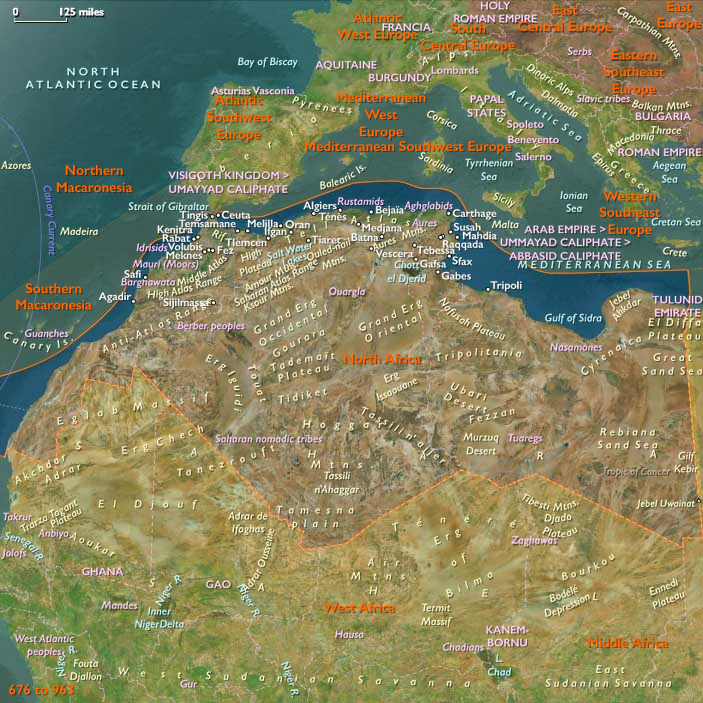
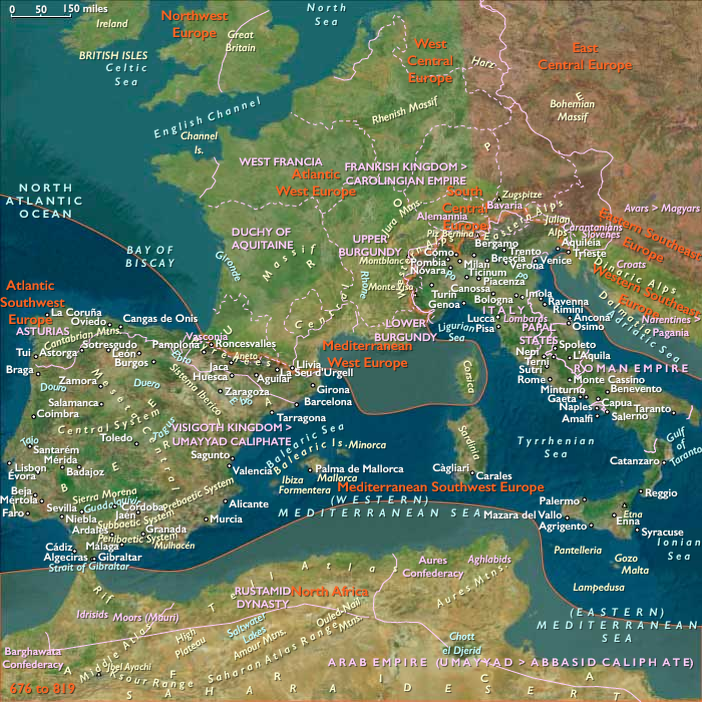
With Byzantine authority fully extinguished following the definitive fall of Carthage in 698 CE, the Umayyads, based at Kairouan (Al Qayrawan), firmly establish the province of Ifriqiya, encompassing present-day Tunisia, eastern Algeria, and western Libya. Hassan ibn al-Nu'man, the Umayyad governor, systematically pacifies resistance in coastal urban centers and undertakes rebuilding efforts to stabilize the newly conquered territories.
However, Berber resistance continues to challenge Umayyad control, especially in inland and mountainous regions. Tribes in the rugged Aurès Mountains, including the fiercely independent Austoriani and Leutae, consistently oppose centralized Arab governance, while pastoralist tribes of Arzugitana and the aggressive Laguatan confederation maintain resistance through persistent raiding and disruption of Arab supply lines.
In 703 CE, the Umayyad caliph appoints Musa ibn Nusayr as the new governor of Ifriqiya. Musa embarks on aggressive military campaigns designed to definitively suppress persistent Berber revolts and extend Arab control across the Maghreb. Under Musa’s leadership, Arab forces secure territories further westward, penetrating deeply into modern-day Algeria and Morocco, significantly expanding Arab political and military influence.
Musa’s approach combines military strength with pragmatic diplomacy, notably fostering alliances with key Berber groups through fairer taxation policies, equitable treatment, and greater integration into Arab military ranks. This strategy gradually stabilizes Umayyad rule, winning many Berbers to active participation in future campaigns.
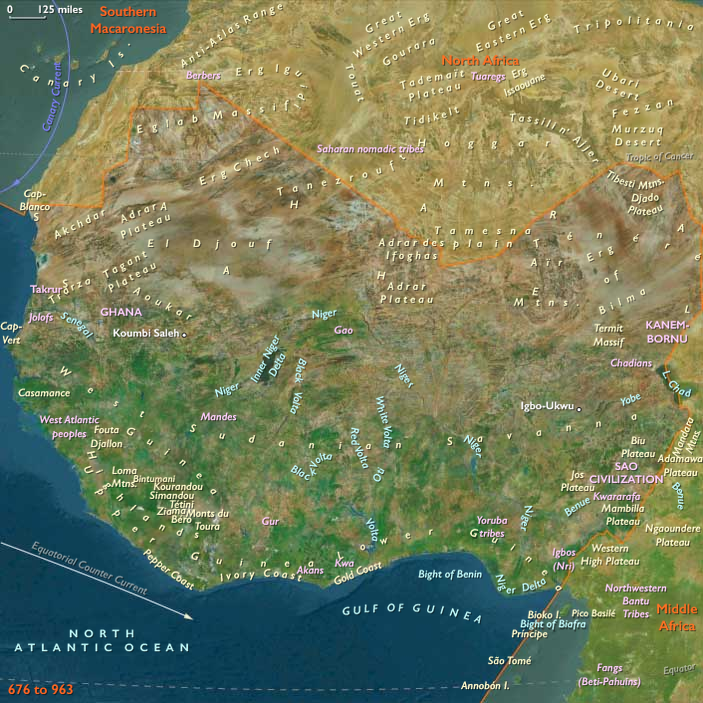
Economic activity and trade flourish during this period, driven by improved regional stability and revitalized Mediterranean commerce. The reorganization of agriculture and trade routes bolsters urban economies, particularly in revitalized coastal cities such as Tunis. Simultaneously, Saharan trade, managed by powerful Tuareg and other Berber tribes, remains economically critical, maintaining essential trans-Saharan commercial networks connecting sub-Saharan Africa with the Mediterranean.
Religious transformation accelerates during these years as Islam continues to permeate indigenous Berber societies. However, localized traditions and cultural identities remain resilient, laying the groundwork for the complex integration of Berber and Arab-Islamic culture.
By the end of 711 CE, Musa ibn Nusayr’s successful military and diplomatic efforts have positioned North Africa as a stable, strategically vital Umayyad province. This stability and the recruitment of Berber forces set the stage for the upcoming Umayyad conquest of Visigothic Hispania, initiating the historical era known as Al-Andalus.