Hannibal (Mago)
Carthaginian general
Years: 450BCE - 406BCE
Hannibal (nickname Mago) is a grandson of Hamilcar Mago.
Related Events
Filter results
Showing 10 events out of 15 total
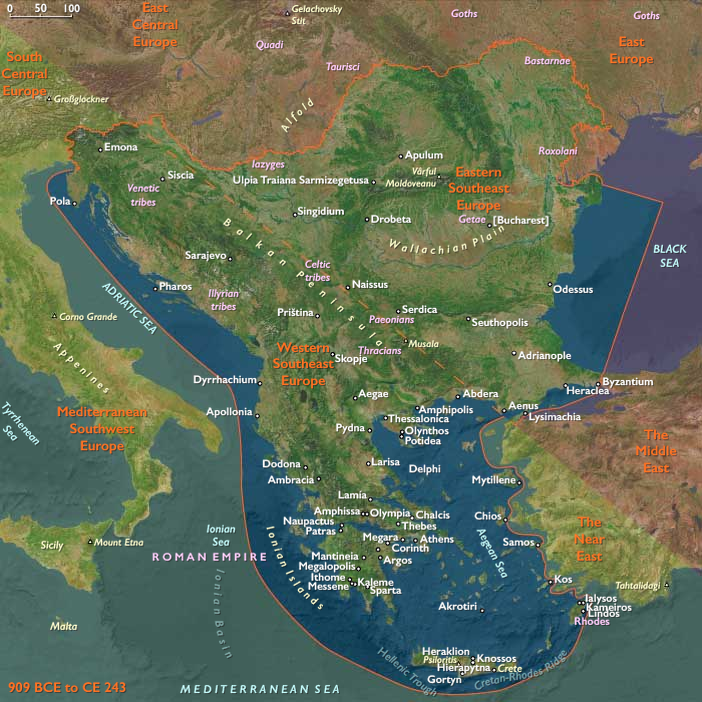
Mediterranean Southwest Europe (477–334 BCE): Iberian Artistry and Regional Power Shifts
The age 477–334 BCE in Mediterranean Southwest Europe is defined by artistic cultural achievements in Iberia, evolving political and territorial dynamics in Italy, Sicily, and conflicts involving emerging powers like Rome and Carthage.
Iberian Culture and Art
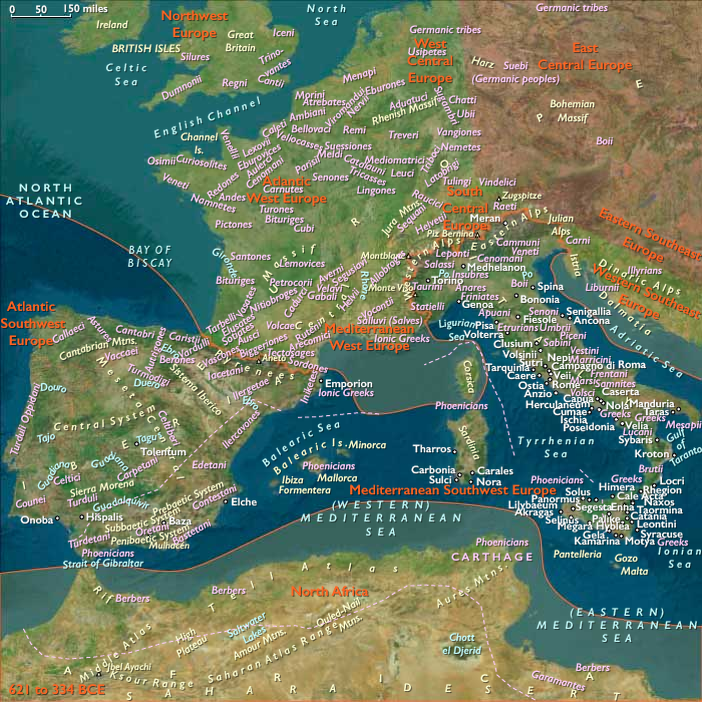
The Iberian Peninsula witnesses significant cultural and artistic achievements, especially from the ancient Iberian people known as the Bastetani or Bastuli. Their territory spans present-day Almería, Granada, Albacete, eastern Málaga, southeastern Jaén in Andalusia, and western Murcia. Prominent towns include Baria (present-day Villaricos), Bailo (Cádiz), Abdera, Sexi, Malaca, and Carteia. Notably, Iberian sculpture reaches a high point with the creation of iconic works such as the Lady of Baza (la Dama de Baza), a limestone female figure displaying traces of painted stucco decoration discovered in 1971 near Granada.
Another significant Iberian sculpture is the famous Lady of Elche, a Phoenician-influenced, polychrome stone bust depicting a regal woman from around the fourth century BCE. This sculpture, believed to have associations with the Carthaginian goddess Tanit, demonstrates a blend of Iberian craftsmanship and Hellenistic artistic influences. Its construction, featuring an aperture at the rear, suggests it likely functioned as a funerary urn.
Etruscan and Roman Transformations
Throughout this period, the power of the Etruscans steadily declines, challenged by incursions from both Rome and Celtic tribes. The city of Veii, a rich Etruscan center, falls to Rome in 396 BCE after a prolonged siege led by General Marcus Furius Camillus. Subsequently, Roman territorial expansion continues, notably with the capture of Sutri and Nepi in 387 BCE, followed by Caere and its port of Pyrgi in 384 BCE.
Additionally, in response to increasing social tensions, Rome undergoes significant political restructuring. The plebeian class gains greater political rights, most notably after 367 BCE, when one of the two Roman consuls is consistently chosen from the plebeians, allowing broader representation in the Senate.
Greek Colonization and Sicilian Conflicts
Sicily remains a focal point of Greek colonization and conflicts during this age. Notably, the Greek city of Poseidonia falls under domination by the Lucanians before 400 BCE, subsequently renamed Paestum. Furthermore, conflicts between Greek colonies such as Selinus and Segesta draw in Carthaginian involvement. The Second Sicilian War (410–404 BCE) begins after Carthage, under Hannibal Mago, intervenes to support Segesta, dramatically shaping Sicilian geopolitics.
In 344 BCE, Timoleon of Corinth intervenes decisively in Sicilian affairs, defeating the tyrant Hicetas and a Carthaginian army at the Battle of the Crimissus, resulting in a peace treaty in 338 BCE that restricts Carthaginian influence in Sicily.
Roman-Latin and Samnite Wars
The era is also marked by critical military conflicts, such as the Latin War (340–338 BCE), which concludes with the dissolution of the Latin League and the expansion of Roman territorial control. Concurrently, the First Samnite War (343–341 BCE) sees Rome drawn into conflict with the warlike Samnites, initially siding with the city-state of Capua. Although this first conflict ends quickly, it foreshadows prolonged future struggles between Rome and Samnium.
Celtic Expansion
Celtic tribes, notably the Senones, significantly impact northern Italy, crossing the Alps around 400 BCE. By 390 BCE, under King Brennus, they sack Rome after defeating Roman forces at the Allia River, causing extensive destruction and prompting a costly Roman tribute.
Legacy of the Era
The age 477–334 BCE profoundly shapes Mediterranean Southwest Europe, characterized by significant artistic achievements, shifting geopolitical landscapes in Italy and Sicily, the rise of Rome as a dominant regional power, and ongoing cultural integration influenced by Iberian, Greek, Roman, and Carthaginian interactions. These developments lay the groundwork for the subsequent classical civilizations and the broader historical trajectory of the region.
North Africa (477–334 BCE)
Carthaginian Dominance, Cyrenaic Stability, and Berber Integration
Emergence of Berber Civilization and Phoenician Expansion
By the Iron Age, the diverse peoples of North Africa had coalesced into a distinct native population known as the Berbers. Unlike Egypt, which had been part of the historic record since the Bronze Age, the Maghreb remained in a largely prehistoric state until Phoenician traders from Tyre (present-day Lebanon) established extensive maritime networks along the North African coast. These traders established numerous depots and trading posts, creating vital links in a chain stretching from the Levant to Spain, eventually fostering treaties and robust commercial relations with Berber tribes.
Carthage’s Maritime Supremacy and Economic Consolidation
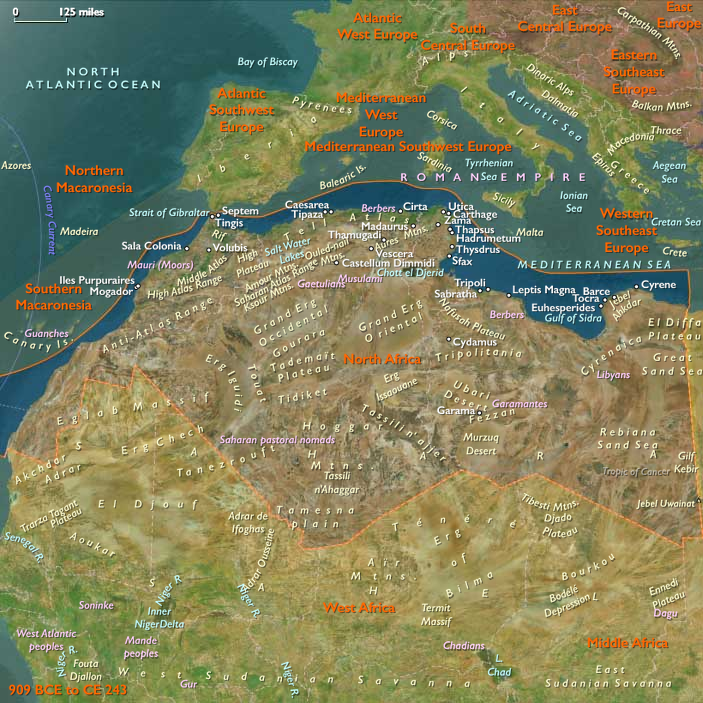
From 477 to 334 BCE, Carthage consistently reinforces its maritime power, expanding naval capabilities and safeguarding essential Mediterranean trade routes. Strategic dominance over northern Tunisia and key colonies such as Leptis, Oea (modern Tripoli), and Tangier ensures sustained regional economic growth and political influence. By the fifth century BCE, Carthage had extended its hegemony across much of North Africa, fostering a distinctive civilization known as Punic. Punic settlements on the Libyan coast included Oea, Labdah (later Leptis Magna), and Sabratah, collectively known as Tripolis (Three Cities).
Strategic Diplomacy and Military Balance
Throughout this era, Carthage expertly navigates its rivalry with Greek city-states, especially Syracuse, employing balanced diplomatic strategies alongside military readiness to manage tensions and maintain regional equilibrium. Diplomatic engagements extend to managing relations with Greek, Egyptian, and potentially Persian interests, ensuring stable geopolitical dynamics in the Mediterranean.
Cyrenaica’s Economic Prosperity and Diplomatic Skill
The Greek Pentapolis—Cyrene, Barce (Al Marj), Euhesperides (Benghazi), Teuchira (Tukrah), and Apollonia (Susah)—maintains economic vitality, driven by robust exports of grain, fruit, horses, and notably the medicinal plant Silphium. Cyrene’s sustained investment in infrastructure and religious institutions highlights enduring regional prosperity and political stability, adeptly managing pressures from external Carthaginian, Egyptian, and Persian influences.
Deepening Berber Integration and Economic Stability
As Carthaginian power grows, its impact on indigenous Berber populations dramatically increases. Berber civilization, already advanced in agriculture, manufacturing, trade, and political organization, experiences intensified integration with Carthaginian trade networks. Important commercial hubs like Oea (Tripoli) facilitate regional prosperity and stable economic integration. Trade links strengthen between Carthage and interior Berber tribes, though territorial expansion also leads to the enslavement or military recruitment of some Berbers and the extraction of tribute from others. By the early fourth century BCE, Berbers form the largest contingent within the Carthaginian army.
Cultural Synthesis and Religious Syncretism
Intercultural interactions among Berber, Carthaginian, and Greek populations flourish, significantly advancing artistic developments in pottery, textiles, and metalwork. Religious syncretism continues deepening, harmoniously integrating indigenous Berber traditions with Phoenician and Greek religious elements, enhancing the region's cultural diversity and complexity.
Enduring Foundations for Regional Influence
By 334 BCE, North Africa demonstrates sustained political stability, robust economic growth, and rich cultural integration. The enduring maritime power of Carthage, Cyrenaica’s diplomatic resilience, and cohesive Berber economic integration collectively reinforce a strong regional framework, ensuring ongoing prominence within the broader Mediterranean geopolitical context.
Mediterranean Southwest Europe (417–406 BCE): Sicilian Conflicts and Peloponnesian Reverberations
The era 417–406 BCE in Mediterranean Southwest Europe is marked by heightened tensions and pivotal conflicts in Sicily influenced by wider Greek geopolitical dynamics, ongoing developments within the Roman Republic, and sustained interactions among Carthaginians, Greeks, and indigenous populations across the broader region.
Sicilian Rivalries and the Athenian Expedition
The enduring rivalry between two significant Sicilian cities, Dorian-Greek Selinus and Ionian-Greek Segesta, escalates dramatically during this period. In 416 BCE, Selinus defeats Segesta, seizing its territory and prompting Segesta to appeal for external aid. Initially turned away by Carthage, Segesta successfully solicits assistance from Athens, setting in motion a substantial Athenian military intervention—the infamous Sicilian Expedition (415–413 BCE).
The Sicilian Expedition results in catastrophic failure for Athens. Facing the formidable defenses of Syracuse, Athens suffers a devastating defeat, losing two hundred ships and thousands of soldiers—crippling its military power and dramatically shifting the balance of the Peloponnesian War. This defeat emboldens Sparta and its Persian allies, marking a decisive turning point against Athenian dominance in the Mediterranean.
Second Sicilian War: Carthage and Syracuse
Following another defeat at the hands of Selinus in 411 BCE, Segesta submits to Carthaginian authority, significantly shifting local allegiances. Carthage, now actively involved, dispatches Hannibal Mago to aid Segesta, leading to a decisive victory against Selinus in 410 BCE. Attempts at diplomatic resolution between Carthage, Segesta, Selinus, and Syracuse fail, culminating in Hannibal Mago’s larger military expedition to Sicily and initiating the Second Sicilian War between Carthage and Syracuse.
Roman Republic: Institutional Reforms and Alliances
Amid regional turmoil, the Roman Republic undergoes notable institutional developments. Rome's social structure evolves as the tribunus plebis—tribune of the plebeians—gains prominence, significantly enhancing plebeian representation in governance. The formation of the Foedus Cassianum in 493 BCE, an alliance of mutual defense between Rome and the Latin League, continues to strengthen Roman political and military alliances, enabling Rome to consolidate influence in central Italy despite external conflicts and internal social challenges.
Artistic and Cultural Developments
The Etruscans, although facing political and military pressures, continue to flourish artistically. Fine Etruscan metalwork and sculpture—exemplified by iconic works like the bronze Capitoline She-Wolf—remain prominent, illustrating ongoing cultural sophistication and technical excellence in artistic production. Such works underscore the enduring cultural legacy of the Etruscans, even as their political dominance wanes.
Broader Regional Dynamics
Throughout Mediterranean Southwest Europe, indigenous populations, Carthaginians, Greeks, and Romans engage in complex interactions shaped by trade, alliances, and military confrontations. The power struggles in Sicily reflect broader shifts across the Mediterranean, highlighting how local conflicts can ripple through wider geopolitical landscapes. Carthaginian involvement in Sicily particularly underscores growing Carthaginian influence in western Mediterranean politics and commerce.
Legacy of the Era
The era 417–406 BCE significantly shapes the geopolitical and cultural landscape of Mediterranean Southwest Europe. The disastrous Athenian defeat in Sicily redefines Greek political dynamics, Carthaginian assertiveness in Sicily reshapes regional power balances, and Roman internal developments strengthen the foundations of republican governance, setting the stage for further expansion and regional influence.
North Africa (417–406 BCE)
Carthaginian Consolidation, Cyrenaic Adaptability, and Cultural Integration
Continued Maritime Supremacy and Territorial Stability
From 417 to 406 BCE, Carthage maintains its robust maritime supremacy, fortifying naval defenses and securing critical Mediterranean trade routes, notably around western Sicily, Sardinia, and coastal regions toward Cyrenaica. Following disruptions caused by the Iberian colonies' secession—resulting in the loss of crucial silver and copper supplies—Carthage increasingly focuses on consolidating control over North African territories. It notably conquers the fertile northern half of modern-day Tunisia and strengthens strategic colonies such as Leptis and Oea (modern Tripoli).
Carthage reinforces productive diplomatic and economic relations with interior Berber tribes, ensuring consistent access to vital regional resources. Thriving colonial cities like Tangier continue facilitating robust economic exchanges and fostering greater integration between coastal settlements and inland Berber communities.
Carthage also continues supporting significant exploratory missions, including Mago Barca’s remarkable journey across the Sahara Desert to Cyrenaica and further voyages by Hanno the Navigator down the African coast.
Diplomatic Strategy and Continued Regional Rivalries
Carthaginian diplomacy remains central in managing persistent rivalry with Greek city-states, particularly those in Sicily, which have experienced periods of internal strife and prosperity following the decisive Battle of Himera, where Syracuse emerged dominant over Carthage. Despite ongoing minor military skirmishes, strategic diplomacy effectively contains broader Greek expansionist ambitions. While maintaining cautious vigilance, Carthage continues leveraging diplomatic channels, potentially including Persian connections, to maintain regional balance and safeguard its interests.
Cyrenaica’s Economic Stability and Political Resilience
The Greek Pentapolis—Cyrene, Barce (Al Marj), Euhesperides (Benghazi), Teuchira (Tukrah), and Apollonia (Susah)—maintains significant economic prosperity through sustained exports of grain, fruit, horses, and notably, the medicinal plant Silphium. Cyrene continues investing in impressive civic and religious infrastructure projects, reflecting ongoing economic success and political stability.
Despite pressures from Carthaginian, Egyptian, and Persian influences, Cyrenaica skillfully employs internal governance and strategic diplomacy to uphold regional autonomy, successfully preserving Greek cultural identity and political independence.
Enhanced Berber Economic Integration and Autonomy
Coastal Berber populations further integrate economically and culturally with Carthaginian trade networks, adopting sophisticated agricultural techniques, maritime innovations, and artisanal expertise. Cities such as Oea (Tripoli) remain critical commercial hubs, supporting economic integration and sustained regional cooperation.
Inland Berber tribes retain substantial autonomy, effectively preserving their traditional governance structures and cultural practices. Indirect participation in thriving coastal economies ensures ongoing economic stability and cultural resilience.
Deepened Cultural Exchange and Syncretic Developments
The period sees continued vibrant cultural exchanges among Berber, Carthaginian, and Greek communities. This sustained interaction results in flourishing artistic traditions—particularly in pottery, textiles, and metalwork—demonstrating advanced cultural synthesis. Religious syncretism further deepens, harmoniously blending indigenous Berber beliefs with Phoenician and Greek religious elements, enhancing regional cultural diversity.
Foundations for Continued Regional Strength
By 406 BCE, North Africa demonstrates continued political stability, economic prosperity, and dynamic cultural interactions. Carthaginian maritime strength, Cyrenaic diplomatic resilience, and integrated Berber economies collectively reinforce a strong, cohesive regional structure, ensuring ongoing prominence and geopolitical influence within the Mediterranean sphere.
Carthage goes to the help of Segesta, an ally in Sicily, in 409 BCE and turns the war into one of revenge for the earlier defeat of Hamilcar's forces at Himera in 480 BCE.
Hannibal, son of Gisgo, grandson of Hamilcar, and shofet of Carthage in 410 BCE, reasserts Carthaginian power in Sicily by invading the island with an army of one hundred thousand men.
The Carthaginians destroy Selinus; the city's walls are razed, and only twenty-six hundred of its inhabitants escape. (Selinus, although repopulated as a Carthaginian tributary, will never truly recover.)
Hannibal next besieges Himera, where his grandfather had met his death.
The Carthaginian forces enter the city-state in 409, plunder it, and permanently destroy it before departing.
In the process of this conquest Hannibal is said to have killed some three thousand prisoners of war, reportedly as revenge for the defeat his grandfather suffered in the Battle of Himera seventy years before.
The exiled Hermocrates, in attempting to force his way back to Syracuse, he is killed in a street fight during the winter of 408-407 in an attempt, so his enemies say, to establish a tyranny.
Seven troubled years have followed the Athenian surrender in 413.
For most of this period, there has been war with Carthage and internal convulsions that Carthage constantly seeks to exploit.
Hermocrates had plundered Carthaginian possessions in Sicily from Selinus after 408 BCE, and in response Carthage sends an army to Sicily under Hannibal Mago and Himilco II of the Magonid family, which faces a coalition of Sicilian Greeks under the leadership of Syracuse.
The Syracusans elect one Dionysius, who had begun his working life as a clerk in a public office, as supreme military commander in 406 BCE because of his achievements in the war against Carthage that had begun in 409 BCE.
Hannibal, whose Carthaginian forces return to Sicily, dies during the campaign in a plague that had broken out during the siege of Akragas in 406 BCE, but his brother Himilco forces the city's surrender after eight months, following which the Carthaginian troops plunder and destroy the city.
North Africa (405–394 BCE)
Carthaginian Resurgence, Cyrenaic Stability, and Berber Integration
Renewed Carthaginian Maritime Power and Territorial Consolidation
Between 405 and 394 BCE, Carthage revitalizes its maritime strength and economic networks, recovering from the disruptions caused by the Iberian colonies' earlier secession. The city further consolidates territorial control in the northern fertile half of modern-day Tunisia and bolsters its strategic colonies, including Leptis and Oea (modern Tripoli). Carthage’s strengthened naval power and strategic fortifications effectively secure critical Mediterranean trade routes, notably around western Sicily, Sardinia, and coastal regions toward Cyrenaica.
Continued diplomatic relations and trade with interior Berber tribes ensure a steady supply of essential regional resources, further fostering mutual economic prosperity. Prominent colonies like Tangier thrive, serving as key hubs that facilitate economic integration between coastal settlements and inland Berber communities.
Diplomatic Maneuvering and Renewed Rivalries
Carthaginian diplomacy remains central in addressing ongoing tensions with Greek city-states, particularly over influence in Sicily. The strategic rivalry with Greek powers, notably Syracuse, leads to periodic conflicts, underscoring the continuing importance of both military preparedness and diplomatic engagement. Carthage strategically manages these tensions to limit Greek expansion, leveraging diplomatic channels to maintain regional stability and balance.
Cyrenaica’s Ongoing Economic and Political Stability
The Greek Pentapolis—Cyrene, Barce (Al Marj), Euhesperides (Benghazi), Teuchira (Tukrah), and Apollonia (Susah)—continues to enjoy robust economic health, driven by sustained exports of grain, fruit, horses, and the medicinal plant Silphium. Cyrene remains central to this prosperity, maintaining significant investment in civic and religious infrastructure that reflects economic vitality and political stability.
Cyrenaica continues skillfully balancing external pressures from Carthaginian, Egyptian, and Persian interests through effective internal governance and astute diplomacy. This approach enables the region to preserve Greek cultural identity and political autonomy.
Deepened Economic Integration and Berber Autonomy
Coastal Berber communities enhance their economic and cultural integration within Carthaginian trade networks, increasingly adopting sophisticated agricultural practices, maritime technologies, and artisanal skills. Important commercial centers such as Oea (Tripoli) play crucial roles in fostering regional economic cooperation and sustained prosperity.
Inland Berber populations retain their substantial autonomy, successfully maintaining traditional governance structures and cultural identities. Their indirect engagement with prosperous coastal economies supports ongoing regional economic stability and cultural resilience.
Cultural Synthesis and Religious Syncretism
Cultural interactions among Berber, Carthaginian, and Greek populations intensify further, promoting an even richer exchange of traditions. Flourishing hybrid artistic practices, especially in pottery, textiles, and metalwork, reflect heightened cultural synthesis. Religious syncretism deepens, integrating indigenous Berber traditions with Phoenician and Greek beliefs, significantly enriching regional cultural diversity.
Continued Regional Influence and Stability
By 394 BCE, North Africa maintains a high degree of political stability and economic prosperity, underscored by Carthage's maritime resurgence, Cyrenaic diplomatic resilience, and robust Berber economic integration. Collectively, these elements reinforce the region’s influential position, ensuring sustained prominence within the broader Mediterranean geopolitical landscape.