Gustav Mahler
Austrian composer and conductor
Years: 1860 - 1911
Gustav Mahler (7 July 1860 – 18 May 1911) is a late-Romantic Austrian composer and one of the leading conductors of his generation.
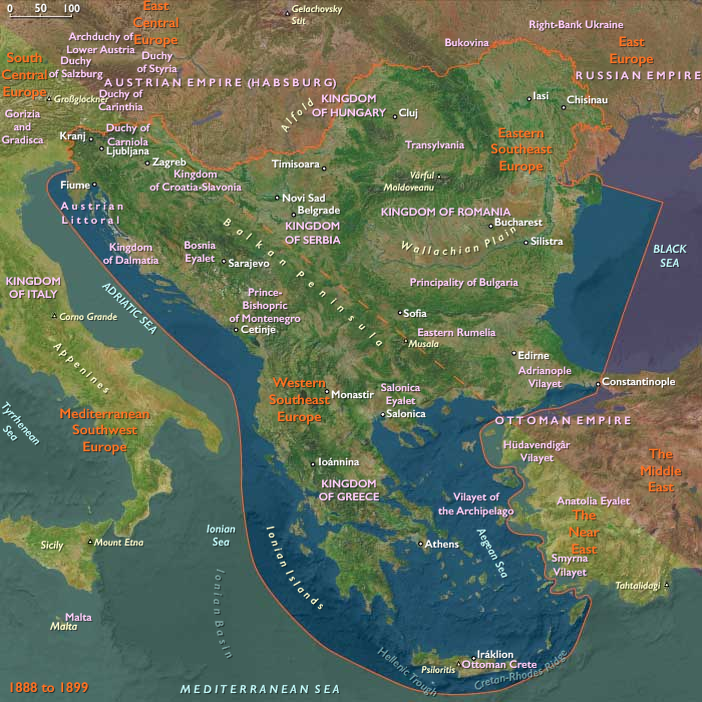
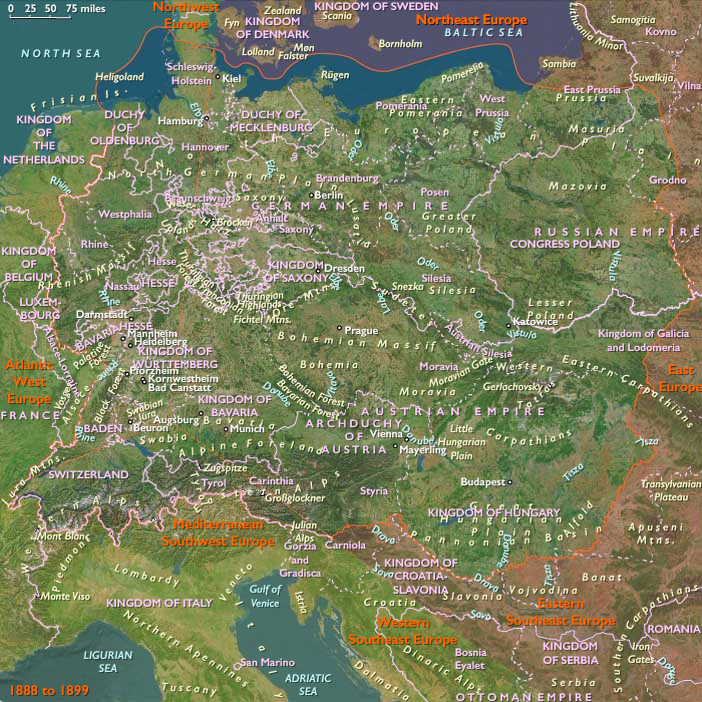
He was born in the village of Kalischt, Bohemia, in what was then the Austrian Empire, now Kaliště in the Czech Republic.
Then his family moved to nearby Iglau (now Jihlava) where Mahler grew up.
As a composer, he acts as a bridge between the 19th-century Austro-German tradition and the modernism of the early 20th century.
While in his lifetime his status as a conductor is established beyond question, his own music gains wide popularity only after periods of relative neglect which include a ban on its performance in much of Europe during the Nazi era.
After 1945, the music is discovered and championed by a new generation of listeners; Mahler then becomes one of the most frequently performed and recorded of all composers, a position he has sustained into the 21st century.
Born in humble circumstances, Mahler displays his musical gifts at an early age.
After graduating from the Vienna Conservatory in 1878, he holds a succession of conducting posts of rising importance in the opera houses of Europe, culminating in his appointment in 1897 as director of the Vienna Court Opera (Hofoper).
During his ten years in Vienna, Mahler—who had converted to Catholicism from Judaism to secure the post—experienced regular opposition and hostility from the anti-Jewish press.
Nevertheless, his innovative productions and insistence on the highest performance standards ensure his reputation as one of the greatest of opera conductors, particularly as an interpreter of the stage works of Wagner and Mozart.
Late in his life, he is briefly director of New York's Metropolitan Opera and the New York Philharmonic.
Mahler's œuvre is relatively small in size though extremely wide in scope, depth and complexity.
For much of his life, composing is necessarily a part-time activity while he earns his living as a conductor, but he devotes as much time as he can to his compositions, faithfully reserving his summer months for intense periods of creative concentration, supplemented as time permitted during his active concert seasons with the tasks of editing and orchestrating his expansive works.
Aside from early works, such as a movement from a piano quartet composed when he was a student in Vienna, Mahler's works are designed for large orchestral forces, symphonic choruses and operatic soloists.
Most of his twelve symphonic scores are very large-scale works, often employing vocal soloists and choruses in addition to augmented orchestral forces.
These works are often controversial when first performed, and several are slow to receive critical and popular approval; exceptions include his Symphony No.
2, Symphony No.
3, and the triumphant premiere of his Eighth Symphony in 1910.
Some of Mahler's immediate musical successors include the composers of the Second Viennese School, notably Arnold Schoenberg, Alban Berg and Anton Webern.
Shostakovich and Benjamin Britten are among later 20th-century composers who admire and are influenced by Mahler.
The International Gustav Mahler Institute was established in 1955, to honor the composer's life and work.