Giuliano de Medici
Duke of Nemours
Years: 1479 - 1516
Giuliano di Lorenzo de' Medici (March 12, 1479 – March 17, 1516) is an Italian nobleman, the third son of Lorenzo the Magnificent.


Related Events
Filter results
Showing 10 events out of 27 total
The recorded fresco work from the brush of Piero di Cosimo is the landscape background in Rosselli's fresco of the Sermon on the Mount, in the Sistine Chapel.
On the other hand, Piero enjoys a great reputation as a portrait painter: the most famous of his work is in fact the portrait of a Florentine noblewoman, Simonetta Vespucci, mistress of Giuliano de' Medici.
Simonetta is a Genoese noblewoman who had married Marco Vespucci of Florence at the age of either fifteen or sixteen, and who was renowned for being the greatest beauty of her era—certainly of the city of Florence.
She was admired by all of Florence for her beauty, which later becomes a legend after her premature death in 1476 at the age of twenty-three.
Sandro Botticelli had been inspired by her features in The Birth of Venus and Piero di Cosimo had been a passionate admirer.
The subject is a young girl portrayed at half length in profile, facing left.
Her breasts are bared and a small snake twines around the necklace she is wearing.
In the background is an open landscape, arid on the left and lush on the right.
The dark clouds are a symbol of her early death, as is the dead tree in the background.
At the base of the painting is a border with an inscription that mimics carved letters, a method used in art since the Flemish painter Jan van Eyck at the beginning of the century; it reads: SIMONETTA IANUENSIS VESPUCCIA.
The dark clouds contrast with the pure profile of the face and the clear complexion.
It is traditionally identified as a portrait of Simonetta.
Giorgio Vasari regarded her as portraying Cleopatra, because of the toplessness and the snake, which he identified with the asp with which, according to Plutarch, Cleopatra committed suicide.
However, the art historian Norbert Schneider regards it as more likely that the iconography of the portrait derives from that in late Classical antiquity, in which the snake, especially biting its own tail, symbolized the cycle of time and hence rejuvenation, and was thus associated with Janus, the Roman god of the new year, and with Saturn, who became a "Father Time" figure because his Greek name, Kronos, was conflated with Chronos, meaning "time".
The inscription refers to Simonetta as Januensis (of Genoa, but the variant spelling punning on Janus).
The snake was also the symbol of Prudentia; in that interpretation, it would be praise for Simonetta's wisdom.
An alternative suggestion is that she is presented as Proserpina, with the snake symbolizing the pagans' hope of resurrection.
The bust, in fifteenth-century style, is slightly turned towards the spectator, so as to favour the view, and her shoulders are wrapped in a richly embroidered cloth.
According to Schneider, her naked breasts would not have caused any offense to contemporary viewers.
They were rather an allusion to "Venus pudica", or the "chaste" Venus.
Her features have a surprising purity.
The forehead is high, according to the fashion of the time which included a shaved hairline.
The hairstyle is that of a married woman, gathered up in braids and richly decorated with ribbons, beads, and pearls.
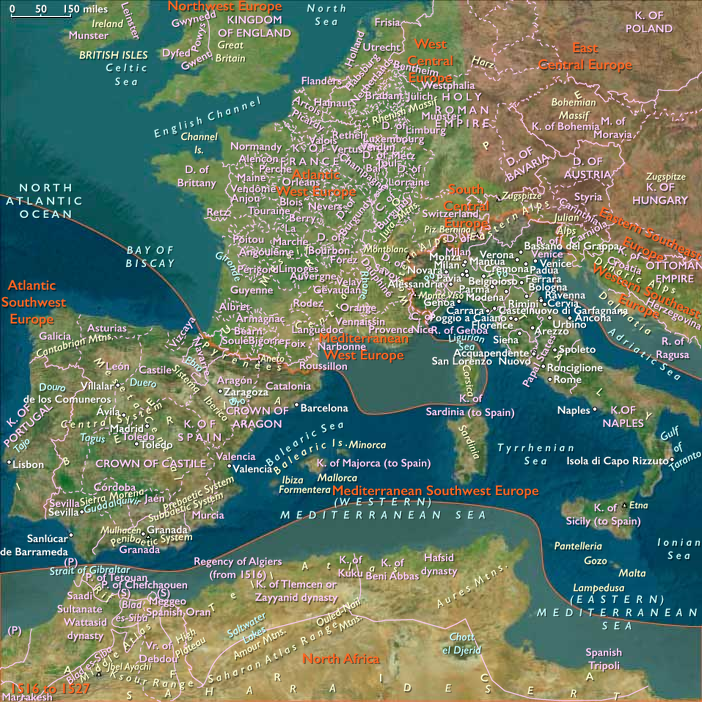
The Treaty of Blois and Shifting Alliances in Northern Italy (1513)
On March 23, 1513, as the fragile alliances of the League of Cambrai unraveled, the Republic of Venice and King Louis XII of France concluded the significant Treaty of Blois, pledging a radical new partition of northern Italy. This treaty dramatically reversed earlier diplomatic alignments, shifting the complex political landscape of the Italian peninsula and marking a critical juncture in the ongoing Italian Wars.
Diplomatic Context and Negotiations
Initially formed in 1508, the League of Cambrai had united the Papacy, France, the Holy Roman Empire, and Spain against Venetian territorial ambitions. However, by 1513, internal tensions had surfaced dramatically. Pope Julius IIand Venice insisted on maintaining Maximilian Sforza as Duke of Milan, whereas Emperor Maximilian I and King Ferdinand of Spain secretly plotted to install their own cousin as ruler, creating severe diplomatic friction.
Further complicating matters, Julius II aggressively pursued the annexation of Ferrara into the Papal States, drawing resistance from Ferdinand, who favored an independent Ferrara as a counterbalance to growing papal authority. Most contentious, however, was Emperor Maximilian’s stance towards Venice itself: he categorically refused to relinquish any Imperial territories, notably the strategically valuable Veneto, prompting him to sign a secret agreement with Julius II explicitly excluding Venice from any territorial settlements. When Venice objected, Julius openly threatened to reorganize the League of Cambrai against her once again.
Facing this existential diplomatic crisis, Venice pragmatically turned to Louis XII of France, setting aside previous hostilities. Negotiations culminated swiftly in the Treaty of Blois, through which France and Venice agreed upon the division of all northern Italy between themselves, fundamentally realigning European power politics.
Strategic and Political Implications
The Treaty of Blois represented a stunning diplomatic reversal. It isolated Emperor Maximilian and significantly undermined papal ambitions, illustrating clearly the volatility of early 16th-century alliances. France’s willingness to align with its former adversary Venice demonstrated Louis XII’s prioritization of immediate strategic gain over prior diplomatic commitments, reflecting the pragmatic political realities of the time.
Consequences and Legacy
This realignment dramatically reshaped the strategic landscape, precipitating further conflict in the ongoing Italian Wars. It intensified geopolitical instability, deepened distrust among European powers, and further entrenched France’s involvement in Italian affairs, setting the stage for prolonged continental rivalries. The shifting alliances epitomized by the Treaty of Blois thus became emblematic of the broader political instability and opportunistic diplomacy characterizing early modern European statecraft.
Niccolò Machiavelli, in diplomatic missions abroad between 1499 and 1508, has met many of the most powerful political figures of the age.
From 1502 to 1503, he had witnessed the brutal reality of the state-building methods of Cesare Borgia and his father, Pope Alexander VI, who had been engaged in the process of trying to bring a large part of central Italy under their possession.
The pretext of defending Church interests had been used as a partial justification by the Borgias.
Other excursions to the court of Louis XII and the Spanish court influence his writings, such as The Prince.
Machiavelli had been responsible for the Florentine militia between 1503 and 1506.
He distrusts mercenaries (a distrust he explains in his official reports and later in his theoretical works as due to their unpatriotic and uninvested nature in war, making their allegiance fickle and often too unreliable when most needed) and had instead staffed his army with citizens, a policy which proves to be successful many times.
Under his command, Florentine citizen-soldiers had defeated Pisa in 1509.
However, Machiavelli's success does not last.
In August 1512, the Medici, backed by Pope Julius II use Spanish troops to defeat the Florentines at Prato, although many historians have argued that this was due to Piero Soderini's unwillingness to compromise with the Medici, who were holding Prato under siege.
In the wake of the siege, Soderini resigns as Florentine head of state and leaves in exile.
This experience will, like Machiavelli's time in foreign courts and with the Borgia, heavily influence his political writings.
Ramon de Cardona marches into Tuscany at the Pope's request, smashes Florentine resistance, overthrows the Republic, and installs Giuliano de' Medici as ruler of the city.
Machiavelli is deprived of office in September 1512 when the Medici, led by Lorenzo il Magnifico's grandson, Lorenzo, effect a Habsburg-assisted return to govern Florence under a veiled despotism.
Lorenzo's uncle Giovanni will guide the government the first year until he is elected pope as Leo X and leaves for Rome.
On the subject of territory, however, fundamental disagreements quickly arise.
English Expedition to Bayonne and Navarre (June–October 1512)
In June 1512, in fulfillment of commitments made under the broader context of the League of the Holy League, a substantial English force arrived in the Basque region, landing at Hondarribia (Fuenterrabía) near Bayonne, with the goal of opening a new front against France. Commanded by Thomas Grey, 2nd Marquess of Dorset, and conveyed by Admiral Edward Howard, this expeditionary force was intended to strike at southern France and support the territorial ambitions of England’s ally, Ferdinand II of Aragon.
However, rather than proceeding swiftly into French territory, Dorset's troops remained encamped at Bayonnethroughout the summer of 1512, awaiting further coordination from their Spanish allies. Ferdinand of Aragon strategically diverted their efforts toward the conquest of the independent Kingdom of Navarre, leveraging English forces to consolidate his own territorial ambitions rather than directly challenging France in Guyenne as originally planned.
The prolonged delay near Bayonne severely depleted English morale, finances, and supplies, causing significant frustration among the troops. They remained largely idle, undersupplied, and ineffective until October 1512, by which time Ferdinand had achieved his objectives in Navarre without significant benefit to England’s broader strategic aims.
Political and Military Implications
This episode underscores the diplomatic complexity of early sixteenth-century European alliances, demonstrating Ferdinand of Aragon’s shrewd manipulation of England’s strategic objectives. Rather than aiding English interests directly, Ferdinand exploited the English presence primarily for Spanish gains in Navarre. England's strategic vulnerability, logistical difficulties, and inexperience in conducting distant continental warfare became painfully apparent, underscoring the precariousness of alliances during this turbulent period.
Consequences and Legacy
The ill-fated 1512 English campaign significantly damaged Anglo-Spanish trust, reshaped diplomatic perceptions, and contributed to cautionary English foreign policy in subsequent decades. Moreover, Ferdinand’s success in Navarre, facilitated by English support, permanently altered regional geopolitics, embedding the Iberian Peninsula within the broader narrative of Europe's shifting alliances. This episode foreshadowed England's cautious stance in future continental engagements, highlighting both the complexity of early 16th-century alliances and the strategic manipulation underlying European warfare and diplomacy.
Emperor Maximilian Joins the Holy League; Louis XII Seeks Scottish Support (November 1512)
In November 1512, Holy Roman Emperor Maximilian I formally joined the Holy League, aligning himself strategically alongside Pope Julius II, Ferdinand II of Aragon, and King Henry VIII of England against King Louis XII of France. Maximilian's entry into the alliance significantly reinforced the Holy League’s military and diplomatic weight, escalating tensions and further isolating France in the complex landscape of early 16th-century European diplomacy.
Facing an increasingly unified and formidable coalition, Louis XII turned to France’s traditional ally, Scotland, seeking military support to counterbalance the threat posed by England. Historically bound by the Auld Alliance, France hoped Scotland would engage English forces directly on Britain’s northern border, compelling England to divert attention from its continental ambitions.
Strategic and Political Implications
Maximilian’s decision to join the Holy League reflected his ongoing desire to reclaim lost Imperial territories and expand Habsburg influence in Northern Italy, aligning temporarily with Pope Julius II’s goals of limiting French dominance. Meanwhile, Louis XII's overtures toward Scotland illustrated the strategic complexities of European alliances: by invoking the historic Franco-Scottish bond, he aimed to open a second front against Henry VIII, thereby alleviating pressure on French territories.
Consequences and Legacy
The involvement of Maximilian significantly strengthened the Holy League’s hand in the Italian Wars, deepening the political isolation of France and escalating European hostilities. Louis XII’s diplomatic maneuvering successfully drew Scotland into military conflict against England, culminating in the tragic Battle of Flodden (1513). This critical engagement diverted English resources and attention, but ultimately resulted in a disastrous Scottish defeat, reshaping Anglo-Scottish relations for generations.
Thus, Maximilian’s decision to join the Holy League and Louis XII's diplomatic appeals to Scotland had profound, lasting impacts, underscoring the interconnected nature of European geopolitics in early 16th-century Atlantic West Europe.
Piero de' Medici's younger brother Giovanni, a cardinal, has used his influence with Pope Julius II to bring the family back to positions of power.
When the Medici return to Florence in 1512-13, the Jews return also.
The Medici accuse Machiavelli of conspiracy against them and have him imprisoned.
Despite having been subjected to torture ("with the rope", where the prisoner is hanged from his bound wrists, from the back, forcing the arms to bear the body's weight, thus dislocating the shoulders), he denies involvement and is released after three weeks.
A French army of ten thousand, commanded by Louis de la Trémoille, crosses the Alps and advances on Milan in late May 1513; at the same time, Bartolomeo d'Alviano and the Venetian army march west from Padua.
The unpopularity of Maximilian Sforza, who is seen by the Milanese as a puppet of his Swiss mercenaries, enables the French to move through Lombardy with little resistance; Trémoille seizes Milan.
The remaining Swiss withdraw to Novara.
The Swiss may have intended to annex part (or all) of Milan to the Swiss Confederation.
Novara, about forty kilometers west of Milan, is the second most important city of the Milanese duchy.
The French are surprised at their camp there on June 6 by a Swiss relief army of some thirteen thousand troops, who have come to relieve their forces in the town.
The German Landsknecht mercenaries of the French, pike-armed like the Swiss, are able to form up into heavy squares, and the French are able to deploy some of their artillery.
Despite this, the Swiss onslaught, sweeping in from multiple directions due to forced marches which achieve encirclement of the French camp, take the French guns, push back the Landsknecht infantry regiments, and destroy the Landsknecht squares.
Caught off guard, the French heavy cavalry, their decisive arm, is unable to properly deploy, and plays little role in the fight.
The battle is particularly bloody, with five thousand casualties (other sources state up to ten thousand) on the French side, and moderate losses for the Swiss pikemen, mostly suffered from the French artillery as the Swiss move into the attack.
Seven hundred men are killed in three minutes by heavy artillery fire.
Additionally, after the battle, the Swiss execute the hundreds of German mercenaries they have captured who had fought for the French.
The Swiss also capture twenty-two French guns with their carriages.
The defeat forces Louis XII to withdraw from Milan and Italy in general, and leads to the temporary restoration of Duke Maximilian Sforza, although he is widely regarded to be the puppet of his Swiss mercenaries and "allies", who hold real military power in Milan.
Swiss Victory at Novara and the Retreat to Dijon (1513)
In 1513, the Swiss infantry decisively defeated the French army at the Battle of Novara, marking a turning point in the War of the League of Cambrai and severely weakening France’s strategic position in Northern Italy. Despite their victory, the Swiss forces could not effectively pursue and destroy the retreating French due to their notable lack of cavalry units, limiting their ability to exploit their battlefield success fully.
Nevertheless, several determined contingents of Swiss mercenaries pursued the retreating French forces deep into French territory, eventually reaching Dijon. The pursuit ended only after French commanders negotiated a substantial monetary settlement to persuade the Swiss to withdraw peacefully from France.
Strategic and Military Consequences
The French defeat at Novara inaugurated a period of severe military setbacks for the French alliance. The battle revealed France’s vulnerability against disciplined Swiss infantry tactics, altering perceptions of battlefield supremacy in early 16th-century Europe. More broadly, this defeat significantly reduced French territorial ambitions and influence in Northern Italy, emboldening France’s rivals, especially the Swiss, the Papacy, and the Holy League coalition.
Geopolitical Significance and Legacy
The outcome at Novara reshaped the strategic landscape of the Italian Wars. France’s failure there demonstrated limitations in their military organization, prompting strategic reassessments that influenced subsequent military reforms. It also confirmed the Swiss infantry as an elite fighting force in Europe, solidifying their military reputation.
The resulting decline of French influence encouraged rival European powers—especially the Habsburgs and Papal States—to intensify efforts to reshape the balance of power in Italy. The broader impact of Novara was thus to perpetuate warfare, diplomatic realignments, and territorial struggles that continued to influence European geopolitics for decades.