Gian Lorenzo Bernini
Italian sculptor, architect, painter, playwright, and designer
Years: 1598 - 1680
Gian Lorenzo Bernini (also spelled Gianlorenzo or Giovanni Lorenzo) (Naples, 7 December 1598 – Rome, 28 November 1680) is an Italian artist who works principally in Rome.
He is the leading sculptor of his age and also a prominent architect.
In addition he paints, writes plays, and designs metalwork and stage sets.

Related Events
Filter results
Showing 10 events out of 17 total
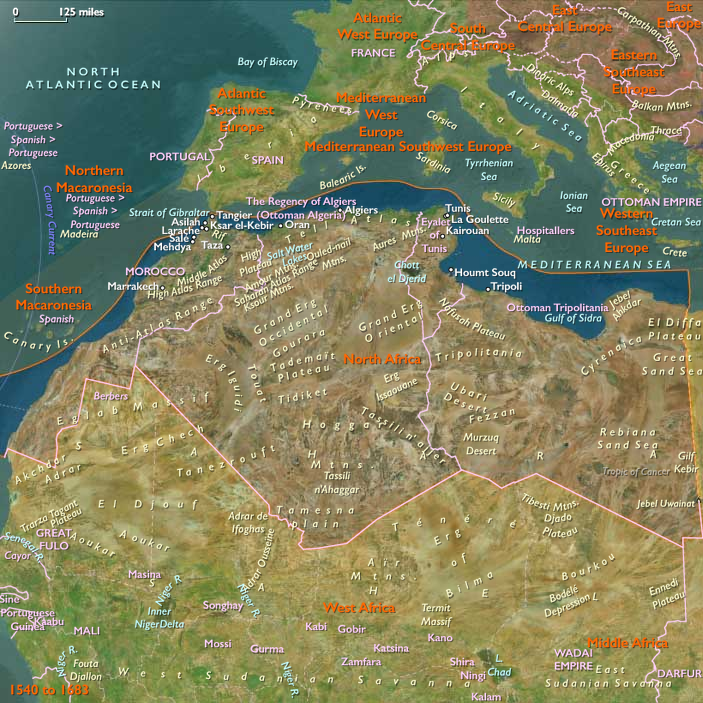
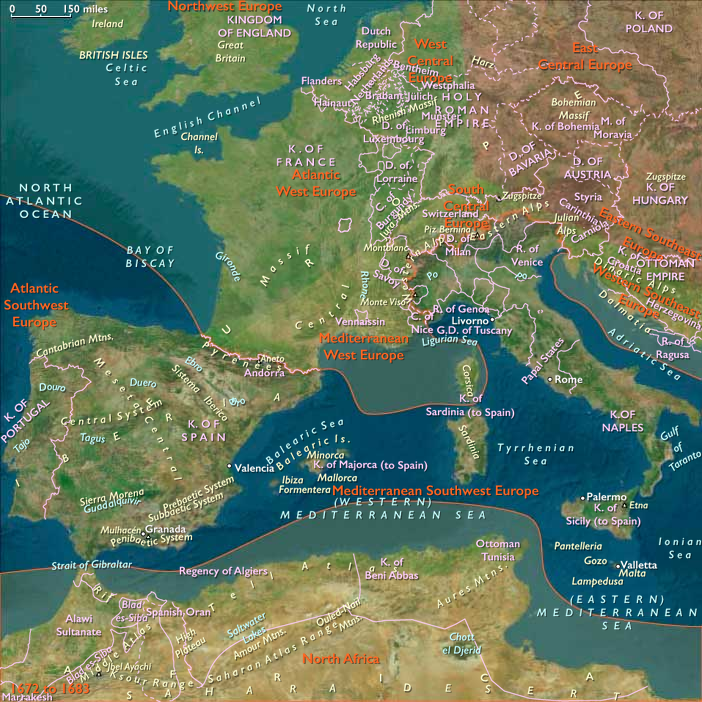
Mediterranean Southwest Europe (1612–1623 CE): Artistic Flourishing, Religious Realignments, and Political Dynamics
The era 1612–1623 CE in Mediterranean Southwest Europe witnesses a vibrant interplay of artistic brilliance, religious developments, and shifting political landscapes. From Italy’s innovative artistic and scientific progress to Spain’s religious and literary introspection, and Malta’s continuing strategic fortifications, the region reflects broader European trends within its distinctive cultural fabric.
Italy: Pinnacle of Baroque Art and Scientific Inquiry
Italy remains the epicenter of European cultural life, with the Baroque style fully flourishing in painting, sculpture, and architecture. The period sees masterpieces by artists such as Gian Lorenzo Bernini, whose dynamic sculptures—such as Apollo and Daphne and the early work on David—showcase intense emotional expression and technical virtuosity. Artemisia Gentileschi, one of the few prominent female artists of the era, emerges with strikingly realistic and emotionally charged works such as Judith Slaying Holofernes (1614–1620), exemplifying both dramatic realism and a powerful feminist perspective.
Simultaneously, Italy remains central to European scientific inquiry, particularly astronomy and physics. Galileo Galilei publishes The Assayer in 1623, further promoting scientific methodology and observational astronomy, despite increasing opposition from religious authorities. The intellectual climate remains tense yet prolific, highlighting Italy’s dual role as a center of creative genius and scientific advancement.
Spain: Literary Brilliance and Religious Conservatism
Spain continues to experience its literary Golden Age, enriched by the continued influence of playwrights such as Lope de Vega, who produces numerous dramas capturing the intricacies of human nature and society. Luis de Góngora, one of Spain's greatest Baroque poets, publishes his complex and ornate works, influencing Spanish literature profoundly with a style known as Gongorism, characterized by elaborate metaphor and rich imagery.
Religiously, Spain intensifies its conservative stance, with the Spanish Inquisition maintaining strict orthodoxy, reflecting a broader European climate of religious conflict amid the Thirty Years' War. This heightened conservatism impacts intellectual and cultural expression, influencing themes of moral introspection and spiritual intensity in Spanish literature and art.
Malta: Continued Defensive Enhancement and Cultural Prestige
Malta, under the Knights Hospitaller, sustains its defensive fortification efforts begun in the previous century. The strategic importance of Malta escalates with the construction of additional coastal towers and fortifications, including the Wignacourt towers, enhancing its role as a key Mediterranean defense against Ottoman incursions. The Knights also expand their humanitarian efforts, reinforcing Malta’s cultural prestige through the renowned Sacra Infermeria, a cutting-edge medical facility known across Europe for its advanced healthcare practices.
Venice: Economic and Cultural Vibrancy
Venice remains an essential economic and cultural hub, balancing its trade relationships with the Ottoman Empire and broader European markets. This position enables Venice to continue importing exotic goods, influencing European tastes, fashion, and daily life. The exchange of goods like coffee, spices, and textiles enhances Venice’s cosmopolitan atmosphere, fostering an environment where diverse ideas and cultures intermingle.
Venetian art and music also flourish, with figures like Claudio Monteverdi pioneering developments in Baroque opera. Monteverdi's L'incoronazione di Poppea (The Coronation of Poppea) further revolutionizes the operatic form, reinforcing Venice’s reputation as a major European cultural center.
Political Dynamics and Diplomatic Maneuvering
The period is marked by intricate political and diplomatic maneuvering throughout the region. Spain’s involvement in European conflicts, particularly its entanglement in the Thirty Years’ War, strains its economic resources, affecting its political stability. Conversely, Italian states engage in intricate diplomatic negotiations and shifting alliances to navigate the turbulent political landscape shaped by broader European conflicts.
Legacy of the Era
The years 1612–1623 CE in Mediterranean Southwest Europe are defined by artistic innovation, religious conservatism, and strategic political maneuvering. Italy’s Baroque brilliance, Spain’s introspective literary and religious climate, Malta’s fortification and medical advancements, and Venice’s thriving trade and cultural milieu collectively portray a region deeply interconnected with broader European developments, setting a foundational stage for subsequent historical transformations.
Mediterranean Southwest Europe (1624–1635 CE): Artistic Triumphs, Epidemic Crisis, and Political Challenges
The period 1624–1635 CE in Mediterranean Southwest Europe is marked by profound contrasts. It showcases artistic flourishing and advancements in science and culture alongside devastating epidemics and turbulent political developments. From Italy’s extraordinary artistic achievements to Spain’s ongoing literary and political challenges, and Malta’s continued defensive enhancements, the era captures the complexities of regional life within the broader European context.
Italy: Baroque Mastery and Plague Devastation
Italy continues as Europe's artistic powerhouse, epitomized by the work of Gian Lorenzo Bernini, who solidifies his position as the leading figure of Baroque sculpture and architecture. His completion of major works such as the Baldacchino in St. Peter's Basilica (1624–1633) reinforces Rome’s cultural preeminence. Concurrently, Caravaggio's legacy influences Italian art profoundly, characterized by dramatic chiaroscuro and emotional realism.
However, artistic triumph is marred by tragedy as the bubonic plague sweeps through Italy in 1629–1631, devastating cities including Milan, Venice, Florence, and Bologna. Milan suffers heavily, losing nearly half of its population—an event vividly chronicled by Alessandro Manzoni in his novel I promessi sposi (The Betrothed). Venice sees a catastrophic loss of approximately one-third of its population, severely impacting trade and industry. Florence, Bologna, Modena, and Parma also experience severe demographic and economic decline.
Despite the epidemic, scientific inquiry thrives as Galileo Galilei continues to expand scientific horizons, notably facing increased scrutiny from religious authorities. His works influence European intellectual circles, emphasizing empirical observation and scientific method.
Spain: Cultural Resilience Amidst Political Strain
Spain endures ongoing political and economic pressures exacerbated by involvement in the Thirty Years’ War (1618–1648), draining resources and weakening political stability. Nonetheless, the literary Golden Age remains vibrant. Pedro Calderón de la Barca emerges as a dominant playwright, producing profound works such as La vida es sueño (Life is a Dream, 1635), exploring complex themes of destiny, free will, and human existence.
In contrast, religious conservatism persists, with the Spanish Inquisition maintaining tight control over cultural expression. This period sees intensified efforts to maintain religious orthodoxy amid broader European religious and political turmoil, reflecting Spain's struggle to preserve stability internally and externally.
Malta: Fortifications and Cultural Influence
Malta, under the Knights Hospitaller, continues strategic fortifications, constructing additional watchtowers and coastal defenses to reinforce Mediterranean security against Ottoman threats. The island maintains its cultural prestige through the renowned Sacra Infermeria, an advanced hospital celebrated across Europe for pioneering healthcare practices.
Valletta flourishes culturally, serving as a significant Mediterranean center for art and intellectual exchange. The Knights promote cultural and religious endeavors, enhancing Malta's European reputation beyond its strategic significance.
Venice: Trade Decline and Cultural Vibrancy
Despite severe losses from the plague, Venice remains an essential commercial hub, albeit one facing diminishing prominence due to the shifting trade routes and increasing European maritime competition. Nonetheless, the city retains cultural vibrancy, particularly through the continued innovations in Baroque music. Claudio Monteverdi continues his influential work, notably in operatic composition, reinforcing Venice’s reputation as a cultural beacon.
Political Dynamics and Shifting Alliances
Throughout Mediterranean Southwest Europe, political landscapes are characterized by complex diplomatic maneuvering and shifting alliances. Italy’s city-states navigate the repercussions of the Thirty Years’ War, adjusting alliances to preserve autonomy and economic interests. In contrast, Spain’s involvement in widespread European conflicts exacerbates domestic instability, challenging its economic and political foundations.
Legacy of the Era
The years 1624–1635 CE in Mediterranean Southwest Europe reflect a period of paradox—simultaneous artistic brilliance and catastrophic epidemics, cultural vibrancy, and intense political strain. Italy's profound artistic achievements and scientific inquiry, Spain's literary depth amidst political turmoil, Malta's fortified and culturally enriched society, and Venice's resilient economic and cultural life collectively illustrate the region's dynamic resilience amid adversity, laying critical foundations for future historical transformations.
Fontana della Barcaccia (English: "Fountain of the Old Boat"), a Baroque fresh-water fountain in Rome, in the Piazza di Spagna, just below the Spanish Steps, is so named because it is in the shape of a half-sunken ship with water overflowing its bows.
Commissioned by Pope Urban VIII, the fountain is completed in 1627 by Pietro Bernini and his son Gian Lorenzo Bernini.
The shape had been chosen because, prior to the river walls being built, the Tiber often flooded and in 1598 there had been a particularly bad flooding and the Piazza di Spagna was flooded up to a meter.
The water had receded to leave behind a boat in the square.
Pietro Berrettini da Cortona, born to a family of artisans including his uncle Filippo Berrettini, in Cortona, at this time a town in the Grand Duchy of Tuscany, had first apprenticed with Andrea Commodi in Florence but soon departed for Rome at about 1612, where he had joined the studio of Baccio Ciarpi.
In Rome, he had received encouragement from many prominent patrons including the Colonna.
According to a biography, his deft copies of Raphael's Roman frescoes had brought him to the attention and patronage (1623) of the Sacchetti brothers, Marcello and Giulio, who have become respectively papal treasurer and cardinal (1626) during the Barberini papacy.
In the Sacchetti orbit, he has met Cardinal Francesco Barberini, the nephew of Pope Urban VIII, as well as the antiquarian, Cassiano dal Pozzo.
These three men had helped him gain a major commission in Rome (1624-1626), a fresco decoration in the newly constructed Bernini church of Santa Bibiana.
In 1626, the Sacchetti had engaged Cortona to paint for them three large canvases of the Sacrifice of Polyxena, Triumph of Bacchus, and Rape of the Sabines (the latter, in about 1629), and to paint a series of frescoes in the Villa Sacchetti in Castel Fusano, near Ostia, using a team that includes the young Andrea Sacchi.
Soon the rising prodigy will attract the patronage of the powerful papal Barberini family.
He has already been involved in the fresco decoration of the Palazzo Mattei,and Cardinal Orsini had commissioned from him an Adoration of the Shepherds around 1626 for San Salvatore in Lauro.
The site on the Piazza Barberini in Rome's Rione Trevi had formerly been occupied by a garden-vineyard of the Sforza family, in which a palazzetto had been built in 1549.
The sloping site had passed from one cardinal to another during the sixteenth century, with no project fully getting off the ground.
When Cardinal Alessandro Sforza met financial hardships, the still semi-urban site had been purchased in 1625 by Maffeo Barberini, of the Barberini family, who had then taken the papal throne as Pope Urban VIII.
Three great architects work to create the Palazzo Barberini, each contributing his own style and character to the building.
Carlo Maderno, then at work extending the nave of St. Peter's, had been commissioned to enclose the Villa Sforza within a vast Renaissance block along the lines of Palazzo Farnese; however, the design has quickly evolved into a precedent-setting combination of an urban seat of princely power combined with a garden front that has the nature of a suburban villa with a semi-enclosed garden.
Maderno had begun in 1627, assisted by his nephew Francesco Borromini.
When Maderno died in 1629, Borromini had been passed over and the commission awarded to Bernini, a young prodigy at this time better known as a sculptor.
Borromini had stayed on regardless and the two architects had worked together, albeit briefly, on this project and at the Palazzo Spada.
Poussin, having fallen ill, had been taken into the house of his compatriot Jacques Dughet, where he had been nursed by Dughet’s daughter, Anna Maria, who Poussin marries in 1630.
His two brothers-in-law are artists and a nephew, Gaspard Dughet, will later took Poussin’s surname.
During the late 1620s and 1630s, Poussin has the opportunity to experiment and formulate his own stance in painting with reference to others which he does through study of the antique and works such as Titian’s Bacchanals at the Casino Ludovisi and the paintings of Domenichino and Guido Reni.
At the same time, the Roman Baroque is emerging: in the 1620s, Cortona was producing his early Baroque paintings for the Sacchetti family; Bernini, having established his reputation in sculpture, was designing the great bronze baldachin in St. Peter’s; and an ingenious architectural imagination was emerging in works by Borromini.
Bernini completes work on the Palazzo Barberini by 1633.
The palazzo is disposed around a forecourt centered on Bernini's grand two-story hall backed by an oval salone, with an extended wing dominating the piazza, which lies on a lower level.
At the rear, a long wing protects the giardino segreto ("secret garden"), from the piazza below, above which it rises from a rusticated basement that is slightly battered like a military bastion.
The main block presents three tiers of great arch-headed windows, like glazed arcades, a formula that is more Venetian than Roman.
On the uppermost floor, Borromini's windows are set in a false perspective that suggests extra depth, a feature that will be copied into the twentieth century.
Flanking the hall, two sets of stairs lead to the piano nobile, a large squared staircase by Bernini to the left and a smaller oval, or helicoidal, staircase by Borromini to the right.
Aside from Borromini's false-perspective window reveals, among the other influential aspects of Palazzo Barberini, ones that will be repeated throughout Europe, are the unit of a central two-story hall backed by an oval salone and the symmetrical wings that extended forward from the main block to create a cour d'honneur.
The Salon ceiling is graced by Pietro da Cortona's masterpiece, the Baroque fresco of the Allegory of Divine Providence and Barberini Power.
This vast panegyric allegory is to become highly influential in guiding decoration for palatial and church ceilings; its influence can be seen in other panoramic scenes such as the frescoed ceilings at Sant'Ignazio (by Pozzo); or those at Villa Pisani at Stra, the throne room of the Royal Palace of Madrid, and the Ca' Rezzonico in Venice (by Tiepolo).
Also in the palace is a masterpiece of Andrea Sacchi, a contemporary critic of the Cortona style, Divine Wisdom.
Today Palazzo Barberini houses the Galleria Nazionale d'Arte Antica, one of the most important painting collections in Italy, and is home also to the Italian Institute of Numismatics.
Recently found hidden in the cellars of the rear part of the building is a Mithraeum, dating probably from the second century CE.
Mediterranean Southwest Europe (1636–1647 CE): Epidemic Aftermath, Cultural Flourishing, and Political Realignments
The era 1636–1647 CE in Mediterranean Southwest Europe is characterized by recovery from devastating plagues, significant cultural advancements, and shifting political dynamics. Italy, Spain, Malta, and Venice each navigate unique challenges, embracing artistic innovation, fostering intellectual discourse, and adjusting to the shifting balance of regional and European power.
Italy: Recovery, Cultural Vitality, and Jewish Advocacy
Italy begins to recover gradually from the severe plague epidemic of the previous decade, though demographic and economic impacts linger. Despite these challenges, cultural and intellectual life resumes vigorously. In Venice, Simone Luzzato, a prominent rabbi, publishes his groundbreaking Essay on the Jews in Venice (1638). His innovative economic arguments advocate for tolerance and improved conditions for Italian Jews, emphasizing their indispensable role in commerce and the stability they provide by lacking foreign allegiances.
Meanwhile, artistic production thrives. The ongoing Baroque movement continues to flourish under masters like Gian Lorenzo Bernini, whose work significantly influences sculpture and architecture across Europe. Claudio Monteverdi furthers Venetian opera, enriching the city’s vibrant cultural milieu.
Spain: Continued Strain and Artistic Expression
Spain remains embroiled in political and military tensions, notably through continued involvement in the Thirty Years' War, leading to persistent financial strains and societal unrest. Despite these adversities, the Spanish Golden Age in literature and arts persists. Esteemed playwright Pedro Calderón de la Barca continues to produce significant works, further enriching Spanish theater. Calderón’s dramas, marked by profound philosophical and theological explorations, epitomize the resilience and creative vitality of Spanish culture amid political and economic hardship.
Religious orthodoxy continues to prevail under the watchful eye of the Spanish Inquisition, which maintains strict control over cultural and religious life, reflecting Spain’s internal tensions between creative expression and conservative forces.
Malta: Continued Fortification and Cultural Prestige
The Knights Hospitaller in Malta sustain their vigorous defensive enhancements and continue to fortify coastal defenses against persistent Ottoman threats. Valletta, increasingly fortified and culturally vibrant, remains a significant center of European intellectual and artistic exchange. The renowned Sacra Infermeria continues its advancement in medical sciences, reinforcing Malta’s prestige in healthcare and humanitarian practices across Europe.
Venice: Trade Realignments and Continued Cultural Influence
Venice, still recovering from the catastrophic plague losses, continues to face shifting trade dynamics that challenge its longstanding maritime dominance. The city adapts economically, shifting toward new trading networks and alliances. Nonetheless, its cultural prestige remains intact. Venice continues to excel musically, notably through Monteverdi’s operatic compositions, reinforcing its central role in European artistic and cultural innovation.
Political Realignments and European Influence
This era also witnesses significant political realignments, driven by the continued fallout of the Thirty Years' War. Italian city-states realign their diplomatic and economic strategies to maintain autonomy and prosperity. Spain grapples with increasingly unsustainable military commitments, prompting domestic unrest and economic instability. Malta strategically navigates its role between major European powers, continuing to serve as a critical Mediterranean bastion.
Legacy of the Era
The period 1636–1647 CE illustrates Mediterranean Southwest Europe’s resilient recovery from severe crises, significant cultural contributions, and strategic political adaptations. Italy’s advocacy for Jewish economic integration, Spain’s persistent artistic and literary output amid profound internal and external pressures, Malta’s fortified presence and medical advancements, and Venice’s cultural resilience and adaptability collectively underscore the region's enduring capacity for innovation and adaptation amid adversity.
Anthony Van Dyck’s great success has compelled the painter to maintain a large workshop in London, a studio which is to become "virtually a production line for portraits".
According to a visitor to his studio he usually only makes a drawing on paper, which is then enlarged onto canvas by an assistant; he then paints the head himself.
The clothes are left at the studio and often sent out to specialists.
In his last years these studio collaborations will account or some decline in the quality of work.
In addition, many copies untouched by him, or virtually so, are produced by the workshop, as well as by professional copyists and later painters; the number of paintings ascribed to him will by the nineteenth century become huge, as with Rembrandt, Titian and others.
However most of his assistants and copyists cannot approach the refinement of his manner, so compared to many masters consensus among art historians on attributions to him is usually relatively easy to reach, and museum labeling is now mostly updated (country house attributions may be more dubious in some cases).
The relatively few names of his assistants that are known are Dutch or Flemish; he probably prefers to use trained Flemings, as no English equivalent training yet exists.
Van Dyck paints many portraits of men, notably Charles I and himself, with the short, pointed beards in fashion at this time; consequently this particular kind of beard will much later (probably first in America in the nineteenth century) be named a vandyke or Van dyke beard (which is the anglicized version of his name).
The architect of the Palais-Cardinal, Jacques Lemercier, had also received a commission to build a château and a surrounding town in Indre-et-Loire; the project has culminated in the construction of the Château Richelieu and the town of Richelieu.
To the château, Richelieu has added one of the largest art collections in Europe and the largest collection of ancient Roman sculpture in France.
(The heavily resurfaced and restored Richelieu Bacchus will continue to be admired by neoclassical artists.)
Among his three hundred paintings by moderns, most notably, he owns Leonardo's Virgin and Child with Saint Anne, The Family of the Virgin by Andrea del Sarto, the two famous Bacchanales of Nicolas Poussin, as well as paintings by Veronese and Titian, and Diana at the Bath by Rubens, for which he is so glad to pay the artist's heirs three thousand écus, that he makes a gift to Rubens' widow of a diamond-encrusted watch.
His marble portrait bust by Bernini is not considered a good likeness and has been banished to a passageway.