Gia Long
1st Emperor of the Nguyen Dynasty of Vietnam
Years: 1762 - 1820
Emperor Gia Long (8 February 1762 – 3 February 1820), born Nguyễn Phúc Ánh, is the first Emperor of the Nguyen Dynasty of Vietnam.
Unifying what is now modern Vietnam in 1802, he founds the Nguyen Dynasty, the last of the Vietnamese dynasties.
A nephew of the last Nguyen Lord who ruled over southern Vietnam, Nguyen Anh is forced into hiding in 1777 as a fifteen-year-old when his family is slain in the Tay Son revolt.
After several changes of fortune in which his loyalists regain and again lose Saigon, he befriends the French Catholic priest Pigneau de Behaine.
Pigneau champions his cause to the French government—and manages to recruit volunteers when this falls through—to help Nguyen Anh regain the throne.
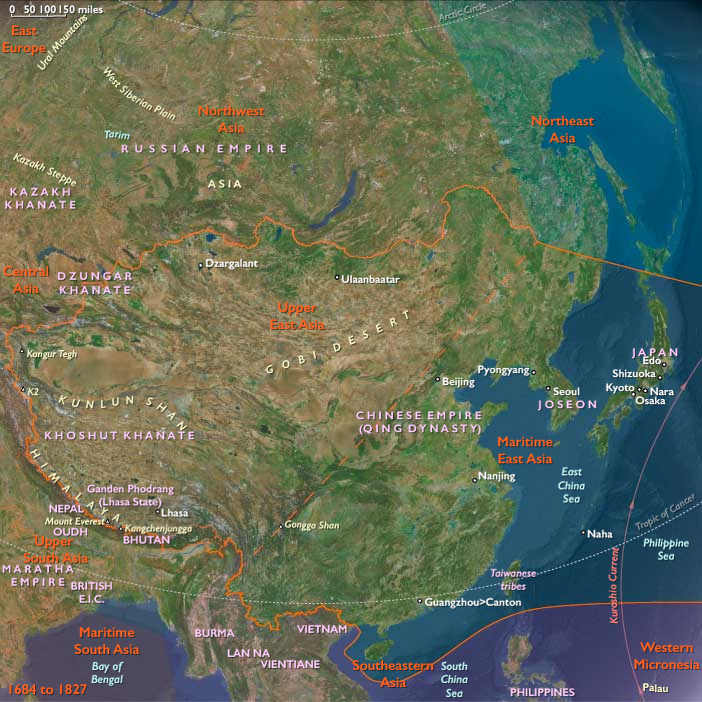
From 1789, Nguyen Anh is once again in the ascendancy and begins his northward march to defeat the Tay Son, eventually moving by 1802 to the border with China, which had previously been under the control of the Trinh Lords.
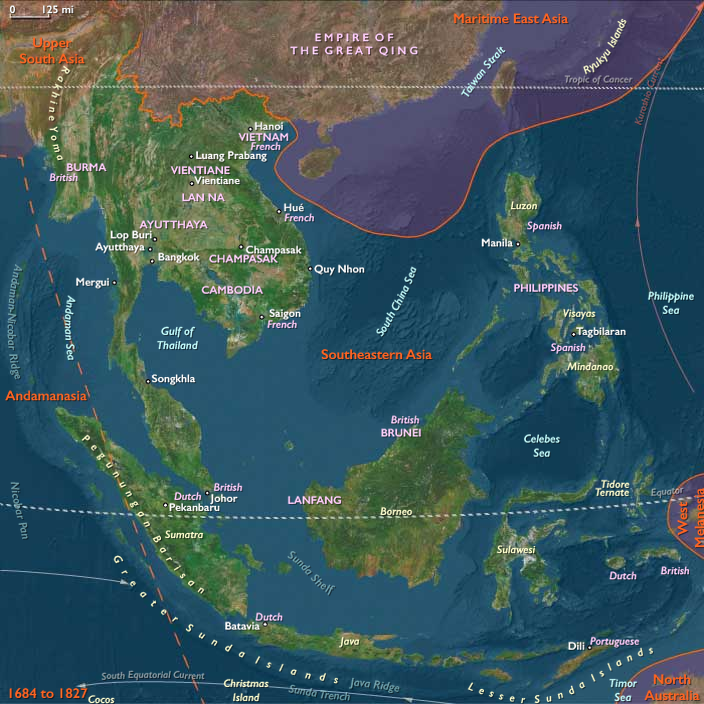
When this is over, he has reunited Vietnam after centuries of internecine feudal warfare with a greater land mass than ever before, stretching from China down to the Gulf of Siam.
Gia Long's rule is noted for its Confucian orthodoxy.
He repeals ths Tay Son reforms and reinstates the classical Confucian education and civil service system.
He moves the capital from Hanoi south to Huế as the country's populace had also shifted south over the preceding centuries, and builds up fortresses and a palace in his new capital.
Using French expertise, he modernizes Vietnam's defensive capabilities.
In deference to the assistance of his French friends, he tolerates the activities of Roman Catholic missionaries, a tolerance that will become increasingly restricted under his successors.
Under his rule, Vietnam strengthens its military dominance in Indochina, expelling Siamese forces from Cambodia and making it a vassal state.