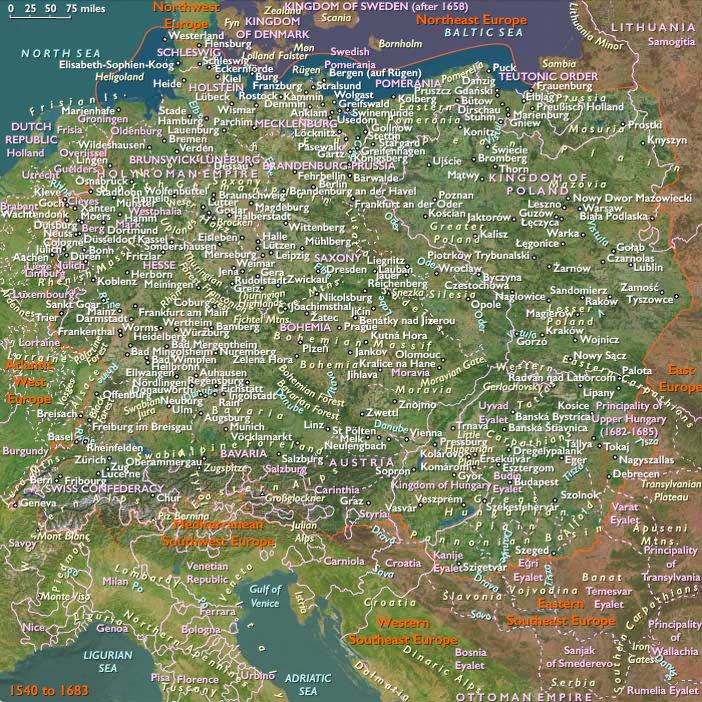
Georgius Agricola, the German mineralogist and educator who serves as town physician of Joachimsthal, dies at sixty-one on November 21, 1555, having completed his twenty-five-year study of all aspects of the mining and metallurgy industry by which his town thrives.
His De re metallica, a twelve-chapter treatise on mining and metallurgy, including two hundred and ninety-two woodcut illustrations carefully executed by Blasius Weffringis, will see posthumous publication in early 1556.
Agricola has also authored several works on medicine, geology, mineralogy, politics, and economics.
De re metallica mentions the use of a forked hazelwood stick—the virgula divina, or "divining rod"—to find silver ore in medieval German mines.
Agricola's treatise serves as an engineering tool, demonstrating that basic mining operations—draining and ventilating the mines, carrying the ore to the surface, and crushing and washing it preparatory to working it—are all undergoing mechanization.