George Talbot
4th Earl of Shrewsbury
Years: 1468 - 1538
George Talbot, 4th Earl of Shrewsbury, 4th Earl of Waterford, KG, KB, PC (c. 1468 – July 26, 1538) is the son of John Talbot, 3rd Earl of Shrewsbury, and Lady Catherine Stafford, daughter of the 1st Duke of Buckingham.

Related Events
Filter results
Showing 9 events out of 9 total
enry VIII's Expedition to Calais and the March Toward Thérouanne (June 1513)
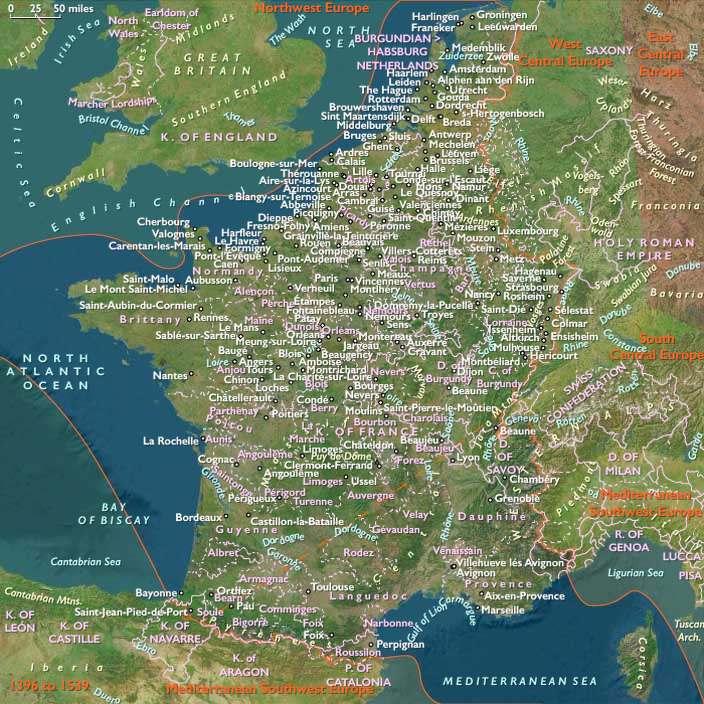
In May and June 1513, English forces under King Henry VIII began gathering in strength at Calais, marking the onset of Henry’s ambitious military campaign against France. Initially commanded by George Talbot, Earl of Shrewsbury, appointed Lieutenant-General on May 12, the English army grew steadily as noblemen and their retainers arrived, meticulously recorded in the contemporary Chronicle of Calais from June 6 onward.
Organization and Command Structure
The English force assembled was substantial and diverse. Shrewsbury commanded the vanguard, numbering around eight thousand men, while Charles Somerset, Lord Herbert, oversaw the rearguard comprising about six thousand troops. King Henry himself arrived at Calais with the main force—approximately eleven thousand soldiers—on June 30, 1513, dramatically reinforcing morale and underscoring the seriousness of the expedition.
The organization of Henry’s army reflected a sophisticated combination of troop types and military innovations. The assembled force included cavalry, artillery units, disciplined infantry formations, English longbowmen equipped with specially hardened steel-tipped arrows capable of penetrating contemporary armor, and notably, a contingent of eight hundred German mercenaries marching prominently ahead of the king, reflecting the continental military practices and alliances of the period.
The provisioning and administration of Henry's troops were coordinated by the rising political figure Cardinal Thomas Wolsey, acting as the King's Almoner, a position crucial in securing logistical and financial resources for the army.
Governance in England During Henry’s Absence
As Henry departed for the campaign, he appointed his queen, Catherine of Aragon, as Rectrix et Gubernatrix("Rector and Governor") to administer England and Wales in his stead. Catherine's temporary rule during Henry’s absence across the Channel highlighted both the King's trust in her leadership capabilities and the political significance attached to this military venture.
Strategic Goals and Implications
Henry’s primary strategic goal was to capture the fortified town of Thérouanne, a key defensive and logistical point in northern France. Its fall would significantly bolster English presence in continental Europe and challenge French influence directly. The size, organization, and symbolic weight of Henry’s personally led army underscored his determination to establish England as a central European military power, aligning closely with broader Holy League objectives.
Consequences and Legacy
Henry VIII’s personal presence at Calais and subsequent march toward Thérouanne marked an ambitious step in England's ongoing struggle for prominence in European politics and warfare. The 1513 campaign, though mixed in outcomes, demonstrated Henry’s military ambitions, showcasing emerging military technologies and tactical innovations, and profoundly shaping England’s diplomatic and military trajectory throughout the sixteenth century.
Siege of Thérouanne: Henry VIII’s Encampment and Military Challenges (July 1513)
In July 1513, the English siege of Thérouanne under King Henry VIII encountered stiff resistance from the French garrison commanded by Antoine de Créquy, Sieur de Pont-Remy. Despite determined efforts, the English forces—led by George Talbot, Earl of Shrewsbury—initially made limited progress. Shrewsbury set up artillery batteries and began mining operations toward the town walls, but the defenders, comprising both French and German soldiers, countered effectively, responding vigorously with sustained artillery fire, including one distinctive regular cannon shot nicknamed the "whistle" by the English troops.
Challenges and Setbacks
The siege faced logistical and tactical setbacks. Notably, two English cannons—prominently named "John the Evangelist" and the "Red Gun"—had been abandoned en route, and French skirmishing hindered their recovery, resulting in casualties among the English forces. The chronicler Edward Hall notes the significant involvement of prominent English commanders, including Henry Bourchier, Earl of Essex, and highlights tactical counsel offered by the Welsh nobleman Rhys ap Thomas.
Reports of the siege’s slow progress and logistical inefficiencies spread widely, reaching diplomatic observers as far away as Venice, damaging England's military reputation abroad. An Imperial agent of Margaret of Savoy, observing the siege, reported critically that two "obstinate men" dominated English decision-making: Charles Brandon, Viscount Lisle (whom he referred to as the "Grand Esquire"), and Cardinal Thomas Wolsey, the king’s influential Almoner.
Henry VIII’s Encampment
Henry VIII himself occupied a heavily fortified and carefully arranged encampment east of Thérouanne. English chroniclers vividly described Henry’s personal accommodations, including a robust wooden cabin equipped with an iron chimney, surrounded by elaborate, colorful tents of blue, yellow, and white fabric, prominently displaying the royal heraldic symbols—such as the Lion, Dragon, Greyhound, Antelope, and Dun Cow. The encampment itself was carefully positioned and fortified with extensive artillery, emphasizing Henry’s determination to maintain pressure on Thérouanne despite initial setbacks.
Military and Political Implications
The slow progress and tactical difficulties during the siege highlighted logistical weaknesses and challenged English military prestige. Nonetheless, the determined effort and significant resources allocated demonstrated Henry’s seriousness about projecting military power on the European continent, reinforcing his diplomatic leverage within the Holy League alliance.
Consequences and Legacy
The siege of Thérouanne became a significant military and symbolic event in Henry VIII’s early reign. Though fraught with operational difficulties, the eventual surrender of Thérouanne (later in the campaign) contributed to Henry’s personal reputation as a warrior-king. The siege also brought to prominence key figures—most notably Wolsey and Brandon—who would shape English politics and military strategy throughout the coming decades.
Henry VIII Meets Emperor Maximilian at Aire-sur-la-Lys (August 1513)
In August 1513, Emperor Maximilian I arrived at Aire-sur-la-Lys to join forces personally with King Henry VIIIduring the ongoing campaign against France. This significant diplomatic and military meeting took place amid carefully orchestrated ceremony and contrasting symbolism. Maximilian and his court appeared in black mourning attire, grieving the recent death of his wife, Bianca Maria Sforza, while Henry and his entourage wore vibrant, luxurious cloth-of-gold, highlighting the splendor and confidence of English royalty.
Diplomatic Ceremony and Symbolism
On August 11, King Henry, dressed in elegant, light armor, traveled to Aire-sur-la-Lys with his richly attired retinue, presenting a stark visual contrast to Maximilian's somber mourning clothes. Henry subsequently hosted Maximilian at his elaborate encampment from the weekend beginning August 13, entertaining the Emperor beneath an impressive tent and gallery lavishly decorated with cloth-of-gold, symbolizing English wealth, royal prestige, and diplomatic ambition.
Impact and Reactions
This meeting between the English king and the Holy Roman Emperor was received with considerable enthusiasm and seen as highly significant diplomatically. News of their personal encounter delighted Henry’s queen, Catherine of Aragon, who expressed pride and satisfaction in a letter to Cardinal Thomas Wolsey. Catherine saw this personal diplomacy as both a great honor for Henry and an event that would notably enhance Maximilian’s reputation throughout Europe, elevating the prestige and unity of the Holy League alliance.
Strategic and Political Implications
The presence of Emperor Maximilian personally alongside Henry at Aire-sur-la-Lys signified a remarkable moment of diplomatic cooperation within the Holy League, emphasizing the seriousness of European efforts against French dominance. The dramatic contrast between Maximilian’s somber mourning and Henry’s golden extravagance symbolized not only differences in personal circumstances but also distinct national styles of royal representation and power projection.
Consequences and Legacy
The diplomatic encounter at Aire-sur-la-Lys reinforced England’s emergent role as a key player on the European political stage, demonstrating Henry VIII’s strategic ambition and personal diplomacy. It further solidified the bond between Henry and Maximilian, influencing subsequent military and diplomatic actions in the ongoing conflict with France, and helping establish the young English king’s international stature and confidence.
Fall and Destruction of Thérouanne (August 1513)
On August 22, 1513, after a prolonged siege and intense diplomatic maneuvering, the strategically significant French fortress-town of Thérouanne surrendered to the English forces led by King Henry VIII and his commander George Talbot, Earl of Shrewsbury. Following the decisive encounter at Guinegate (the so-called "Battle of the Spurs"), Henry’s forces repositioned their encampment south of Thérouanne on August 20, no longer fearing French counterattacks.
Negotiations and Surrender
Initially resistant and unimpressed by displays of captured French banners, the defending French and German garrison under Antoine de Créquy eventually capitulated due to severe shortages of essential supplies. Diplomatic sources confirmed that these supply issues proved critical in bringing defenders to negotiations. Following the surrender, Shrewsbury ceremonially presented the keys of Thérouanne to King Henry, symbolizing English victory and dominance.
Systematic Demolition of Thérouanne
Upon receiving control of the town, Henry immediately ordered its comprehensive demolition, intending to permanently disable Thérouanne’s strategic value to France. Approximately eight to nine hundred English soldiers began dismantling its defensive structures, systematically tearing down town walls and three major defensive bastions, pushing the ruins into the town’s deep, dry defensive ditches. These ditches contained deeper pits specifically designed to be set aflame, generating choking smoke as a defensive measure against attackers.
International Observations and Plans for Complete Destruction
The Milanese ambassador to Emperor Maximilian, Paolo Da Laude, reported that English plans went beyond simple demolition; he learned of intentions to completely burn the town once the defensive structures had been dismantled. This measure highlighted Henry VIII’s determination to prevent any future reoccupation or military use of Thérouanne, clearly conveying the severity of English strategic objectives.
Consequences and Legacy
The comprehensive destruction of Thérouanne marked a powerful demonstration of English military capability and Henry’s personal ambition to decisively weaken French power in the region. This episode symbolized a shift toward ruthless tactical policies, underlining the era’s increasingly destructive nature of warfare. Thérouanne’s demolition served both strategic and symbolic purposes: it demonstrated the English capacity for sustained military campaigns abroad, greatly enhancing Henry VIII’s prestige among European allies, while severely diminishing French regional defenses.
The Siege of Thérouanne and French Attempts to Relieve the Town (August 1513)
In August 1513, as the English siege of Thérouanne tightened under King Henry VIII, French commanders made vigorous and creative attempts to resupply the beleaguered fortress town. Facing increasingly desperate circumstances, French commanders undertook bold missions to break through English lines, highlighting both the strategic value of the town and the determined resilience of its defenders.
The Successful Resupply by Fonterailles (July–August 1513)
Earlier, in late July 1513, a daring French relief expedition led by Fonterailles successfully penetrated English lines, delivering crucial supplies—gunpowder and food provisions, notably bacon—to Thérouanne. Aided by artillery cover from the town's defenses, Fonterailles reinforced the garrison with about eighty fresh soldiers, boosting the morale and confidence of the defenders. Reports sent back to Venice described significant English casualties, approximately three hundred men, emphasizing the effectiveness of the operation.
Fonterailles confidently declared afterward that the town could endure until further aid arrived on a larger scale. These events provided temporary encouragement to French resistance, but also alerted English commanders to their vulnerability to swift French countermeasures.
The Subsequent French Relief Attempt: Stradiotes and Cavalry (August 16, 1513)
Encouraged by Fonterailles' partial success, the French attempted another ambitious resupply in mid-August. A larger relief force was assembled at Blangy, composed of mixed companies of heavy cavalry (gendarmes), pikemen, and specialized stradiotes—light cavalry of Balkan origin noted for their distinctive equipment: short stirrups, small spears, curved Turkish swords, and distinctively shaped hats. According to chronicler Edward Hall, each stradiot carried a side of bacon and a sack of gunpowder for delivery to the besieged town.
To distract and divide English attention, French commanders—La Palice, Louis, Duke of Longueville, and Charles IV, Duke of Alençon—split their forces. The heavy cavalry units, separated into two groups, attempted coordinated maneuvers intended to occupy the English and enable the swift, lightly armed stradiotes to slip through the siege lines.
English Defensive Measures and Strategic Response
In anticipation, English forces under King Henry VIII and George Talbot, Earl of Shrewsbury, had already repositioned and reinforced their lines. Henry had personally overseen securing the strategically important position at the Tower of Guinegate, expelling French spear-armed cavalry stationed there. English artillery and troops maintained tight vigilance, prepared to counter any further French attempts at breakthrough.
To improve tactical flexibility and response times, English engineers had improved defenses around the siege perimeter. Reports dispatched to Venice noted significant English casualties from earlier skirmishes, reflecting the real costs and stakes involved in the siege operations. Nevertheless, the English remained resolute in their determination to maintain the siege.
Consequences and Legacy
Despite determined French relief attempts, ultimately these efforts failed to break the siege decisively, with the English and their allies soon gaining the upper hand. Yet, the episodes illustrate vividly the complexity, intensity, and ingenuity of military engagements during the early 16th century. The encounters around Thérouanne particularly underscore the rapidly evolving tactics of combined arms warfare, the increasing importance of mobile units such as the stradiotes, and the logistical challenges faced by European commanders.
The siege of Thérouanne, culminating in English victory and the town’s eventual destruction, became emblematic of Henry VIII’s aggressive early foreign policy, vividly capturing the blend of chivalric symbolism, strategic maneuvering, and ruthless practical tactics characteristic of warfare in Atlantic West Europe in the early sixteenth century.
The Battle of the Spurs (August 16, 1513)
On August 16, 1513, the Battle of the Spurs (La Journée d'Esperons) took place near Thérouanne, marking a significant English victory during King Henry VIII's French campaign. This clash vividly illustrated the decisive power of tactical awareness and effective use of combined cavalry and infantry forces, leaving lasting consequences for the French military position in northern France.
Prelude: Early French Maneuvers and English Vigilance
French forces under commanders Jacques de La Palice, Louis d'Orléans, Duke of Longueville, and Charles IV, Duke of Alençon, intended to surprise the besieging English army at dawn, relieving the strategically important garrison of Thérouanne. However, their movements were promptly detected by English "border prickers"—light cavalry from the English-Scottish borders famed for their vigilance and scouting skill—who alerted Henry VIII to the impending French advance.
Responding swiftly, Henry organized a substantial force from the siege lines, dispatching a vanguard of approximately 1,100 cavalry followed by 10,000–12,000 infantry.
The Engagement near Bomy and French Tactical Errors
La Palice's cavalry encountered English scouts near the village of Bomy, approximately five miles from Thérouanne. Recognizing their plans had been compromised, the French hesitated on an exposed hillside, ostensibly to allow their stradiots—specialized Albanian light cavalry tasked with delivering supplies—to reach Thérouanne. This hesitation proved a critical tactical misjudgment.
English mounted archers dismounted and delivered sustained, flanking arrow fire from a nearby hedgerow. Simultaneously, English heavy cavalry formed opposite La Palice, who now realized the strength and preparedness of Henry’s approaching infantry.
The English Cavalry Charge and French Rout
With the French delayed and vulnerable, the Clarenceux Herald famously encouraged the Earl of Essex to initiate a cavalry charge. The subsequent English cavalry attack struck precisely as the French began retreating, throwing their ranks into chaos. At this critical juncture, the stradiots—already repelled by Thérouanne’s defenders' cannon fire—collided disastrously with their own heavy cavalry, exacerbating French confusion. Additionally, the timely arrival of Imperial cavalry forces, allied with Henry, further sealed the French collapse.
Panic overtook the French cavalrymen, who, in their rush to escape, discarded lances, banners, and even cut away their horses' heavy armor. This chaotic retreat earned the clash its enduring nickname, "Battle of the Spurs," highlighting the speed with which French cavalry fled the field.
Consequences of the Battle
The English pursuit lasted approximately three miles, capturing high-ranking French prisoners including Jacques de La Palice, the famous knight Pierre Terrail, seigneur de Bayard, and the Duke of Longueville. Sir Rhys ap Thomasnotably captured four French standards. Overall, English forces claimed nine French standards and captured twenty-one noble prisoners clad in luxurious cloth-of-gold.
Reports recorded about three thousand French casualties, compared to minimal English losses, which included only three notable soldiers killed.
Despite formal Imperial cooperation, friction emerged between English and Imperial troops concerning the fate of captured prisoners. Some noble captives taken by Imperial forces were reportedly released without being presented to Henry VIII, highlighting underlying tensions within the allied camp.
During the battle, Thérouanne's garrison launched a diversionary attack on Charles Somerset, Lord Herbert'sposition, but their attempt achieved little strategic success.
Strategic Significance and Legacy
The decisive English victory at the Battle of the Spurs marked a significant morale and strategic triumph for Henry VIII, bolstering his reputation as a successful military leader. The defeat severely weakened French attempts to relieve Thérouanne, contributing directly to its surrender and destruction shortly afterward. The clash also reinforced the growing importance of English tactical flexibility, particularly the effectiveness of combined arms and disciplined infantry support against traditional heavy cavalry charges.
The Battle of the Spurs thus became an iconic military event during Henry’s reign, exemplifying England’s emergence as a formidable power in early 16th-century European warfare.
Henry VIII's Victories, Siege of Tournai, and the Aftermath of Flodden (September 1513)
In early September 1513, the combined English and Imperial forces under King Henry VIII and Emperor Maximilian I capitalized on their recent victory at Thérouanne, quickly shifting their strategic focus to the wealthy Flemish city of Tournai, despite Henry’s initial preference for attacking the strategically valuable port of Boulogne.
Diplomatic and Strategic Realignments
On September 5, the Florentine ambassador reported the English successes to Pope Julius II, who promptly conveyed congratulations to Cardinal Thomas Wolsey, Henry’s trusted counselor and diplomatic architect of the campaign. Simultaneously, discussions among the allied commanders had redirected their focus to the wealthy city of Tournairather than Boulogne, Henry’s initially preferred target. The siege and capture of Tournai promised greater economic and symbolic gains for the allied coalition, further undermining French authority in northern France.
Battle of Flodden and Anglo-Scottish Relations
Amid these events, Henry VIII received dramatic and symbolic news from England. His wife, Queen Catherine of Aragon, who had governed as Rector and Governor of England during his absence, sent the bloodstained coat and gauntlets of the Scottish king, James IV, slain at the Battle of Flodden on September 9. Catherine humorously but dramatically suggested to Henry that he use the Scottish king's coat as his battle banner, writing pointedly that while she had contemplated sending the body itself, "Englishmen's hearts would not suffer it." Her words swiftly became legendary, captured in contemporary reports as:
"As Henry had sent her a captive duke, she should soon send him a king."
The Scottish defeat and James IV’s death had immense significance, severely weakening the Scottish threat on England’s northern border and bolstering Henry’s domestic reputation.
Henry’s Triumph at Lille and Flemish Celebrations
Following these decisive victories, Henry and Maximilian visited St. Pol, St. Venan, Neve, and Béthune before arriving at Lille on September 10, 1513, where Margaret of Savoy held court. Henry’s ceremonial entry into Lille was notably grandiose, reflecting his enhanced stature following the battlefield successes. That evening, chroniclers recorded Henry VIII playing musical compositions on various instruments—especially the lute—to the delight of Margaret’s sophisticated court.
Siege and Capture of Tournai
Concurrent with these diplomatic celebrations, the siege and capture of Tournai proceeded quickly. The city’s wealth and economic prominence made it a strategic prize for Henry, significantly offsetting the costly, arduous siege of Thérouanne. Henry’s successful entry into Tournai on September 23, 1513, further secured England’s military prestige in Europe, placing the English firmly on the European geopolitical stage.
Strategic and Political Consequences
Henry’s triumphs at Thérouanne, Tournai, and indirectly at Flodden represented a watershed moment. These victories marked a rare and impressive assertion of English military and diplomatic strength, significantly enhancing England’s prestige among European allies and rivals. Domestically, Catherine of Aragon’s prominent role in governing England and her notable symbolic gestures after Flodden increased her popularity and reinforced Henry’s own image as a martial king.
Yet these victories were not without complexities. Reports suggested friction persisted between English and Imperial troops, particularly concerning prisoners and spoils. Nonetheless, Henry’s personal command and conspicuous success significantly elevated his international status, setting a standard he would strive repeatedly to emulate throughout his reign.
Long-term Consequences and Historical Significance
These interconnected events profoundly impacted European politics, confirming the importance of the Anglo-Imperial alliance and illustrating the increasing sophistication and complexity of Renaissance warfare. Henry’s successful campaign shaped English policy and strategic ambitions for decades, reinforced the emergence of Cardinal Wolsey as a diplomatic force, and firmly positioned Henry VIII as a central actor on the European stage.
The Siege and Surrender of Tournai (September 1513)
In September 1513, following the English victory at Guinegate, King Henry VIII's attention turned decisively toward the city of Tournai. Despite determined defensive measures by the city's French garrison, led by local commanders and supported by townspeople, Tournai succumbed to the overwhelming military pressure applied by English forces, further supported by Imperial allies under Emperor Maximilian I.
Defensive Measures by Tournai’s Garrison
As English forces advanced, the defenders of Tournai took drastic steps to bolster their defenses:
- On September 11, the garrison demolished numerous houses situated near the city gates to deny shelter or cover to the English.
- On September 13, the defenders set fire to the suburbs, creating an additional defensive obstacle and emphasizing their determination to resist capture.
The defenders also ordered women and children to repair breaches in the city walls caused by English artillery bombardment on September 15, further underscoring their resolve to withstand the siege.
Negotiations and Internal Dynamics
Despite their steadfastness, internal pressures eventually forced Tournai’s defenders toward negotiation. English chroniclers such as Raphael Holinshed and Richard Grafton misinterpreted some events, mistakenly suggesting internal betrayal; however, in reality, it was the acute lack of supplies, increasing pressure from artillery bombardment, and limited reinforcements that compelled the defenders toward negotiation.
English commanders, particularly Charles Brandon and Richard Foxe, Bishop of Winchester, negotiated directly with the town's representatives beginning around September 20. The city garrison formally surrendered to English forces, effectively ending organized resistance.
During the final days before the surrender, English troops, led by commanders like Charles Brandon, secured notable symbolic victories. Brandon personally captured two statues from one of the city gates, a symbolic gesture underlining English dominance and the humiliation of French defenders.
Misunderstandings and Historical Record
English historical chronicles, notably those by Raphael Holinshed and Richard Grafton, inaccurately portrayed events inside Tournai, suggesting the presence of traitors ("vaunt-parlers") who deliberately sabotaged the city’s defenses. Contemporary diplomatic accounts indicate instead a more complex scenario—one of measured but ultimately ineffective resistance amid logistical desperation and deteriorating morale among the defenders.
Consequences and Legacy
The formal surrender of Tournai on September 23, 1513, marked a major English victory, enhancing Henry VIII’s international prestige and temporarily extending English political and military presence deep into continental Europe. The capture of the city, a valuable economic and symbolic prize, underscored the effectiveness of English military planning and the strategic capabilities of Henry’s commanders.
However, despite the immediate English success, the destruction of the suburbs, extensive defensive damage to Tournai, and ensuing logistical strain complicated English occupation efforts. Furthermore, chronic misunderstandings reflected in English sources later shaped public perception of the siege, influencing national memory and historical narratives.
Consequences and Legacy
The fall of Tournai represented a high-water mark in Henry VIII’s early reign, bolstering his reputation as a martial king. Yet, strategically, it represented a short-term gain rather than a lasting conquest; the city was difficult to defend and was ultimately returned to French control under diplomatic arrangements in subsequent years. Nonetheless, the episode vividly demonstrated the complexity of early sixteenth-century siege warfare and the critical importance of accurate historical recording and interpretation.
Henry VIII at Tournai and the Aftermath of the 1513 Campaign (October 1513–1518)
On October 2, 1513, King Henry VIII celebrated his victory at Tournai by attending mass at the city’s cathedral, a powerful symbolic moment marking the peak of his successful continental campaign. Henry ceremonially knighted many of his captains, underscoring their valor and solidifying his martial reputation. In a significant cultural gesture, the city of Tournai presented Margaret of Austria with an exquisite set of tapestries depicting scenes from Christine de Pizan’s "Book of the City of Ladies", a literary work famous for its celebration of female virtue and wisdom, reflecting Margaret’s own influential status in European diplomacy.
English Administration and Fortification of Tournai (1513–1518)
Following the town's capture, Tournai remained under English administration, with William Blount, 4th Baron Mountjoy, appointed as its governor. English military engineers undertook an ambitious reconstruction and fortification program between August 1515 and January 1518, investing around £40,000 to build a substantial new citadel and strengthen the town’s defenses. Yet this costly project would remain incomplete due to shifting diplomatic priorities.
Financial and Diplomatic Realities: Towards the Treaty of 1518
Despite initial enthusiasm for further military campaigns in 1514, Henry VIII's ambitions were curtailed by harsh financial realities. His significant financial support for allies Ferdinand of Aragon and Emperor Maximilian I had yielded little practical benefit for England, leaving the royal treasury severely depleted. Additionally, Pope Julius II’s death and the accession of the more diplomatically flexible Pope Leo X opened avenues for peace negotiations rather than continued warfare.
Recognizing these realities, Henry turned toward diplomacy. In 1514, he concluded a treaty with King Louis XII of France, cemented through the politically significant marriage between Louis and Henry’s sister, Mary Tudor, who had previously been promised to the younger Charles of Castile, future Holy Roman Emperor Charles V.
This treaty not only marked a strategic retreat from military ambitions but also secured an unprecedented eight-year peace between England and France—extraordinary for its length given the era’s turbulent diplomacy. Ultimately, this represented a pragmatic choice, acknowledging fiscal realities and diplomatic opportunities rather than continuing costly and uncertain military campaigns.
Consequences and Historical Legacy
Henry VIII’s 1513 campaign and subsequent diplomatic maneuvering had profound implications. Though his military successes at Thérouanne and Tournai briefly elevated England’s continental prestige, financial pressures and shifting alliances demonstrated clearly the limitations of England’s resources and the volatile nature of European geopolitics.
The Treaty of 1518, returning Tournai to France on October 4, 1518, symbolized Henry’s acceptance of diplomatic realities over martial ambitions. Nonetheless, these campaigns deeply shaped Henry VIII’s self-image as a warrior-king, influencing English foreign policy for decades. Moreover, the cultural and diplomatic gestures of this period—such as the Tournai tapestries gifted to Margaret of Austria—highlighted the sophisticated interplay of politics, art, and symbolism in early sixteenth-century European diplomacy.