
George Johnston (New South Wales)
Lieutenant-Governor of New South Wales
1764 CE to 1823 CE
Lieutenant-Colonel George Johnston (19 March 1764 – 5 January 1823) is briefly Lieutenant-Governor of New South Wales, Australia after leading the rebellion later known as the Rum Rebellion.
World
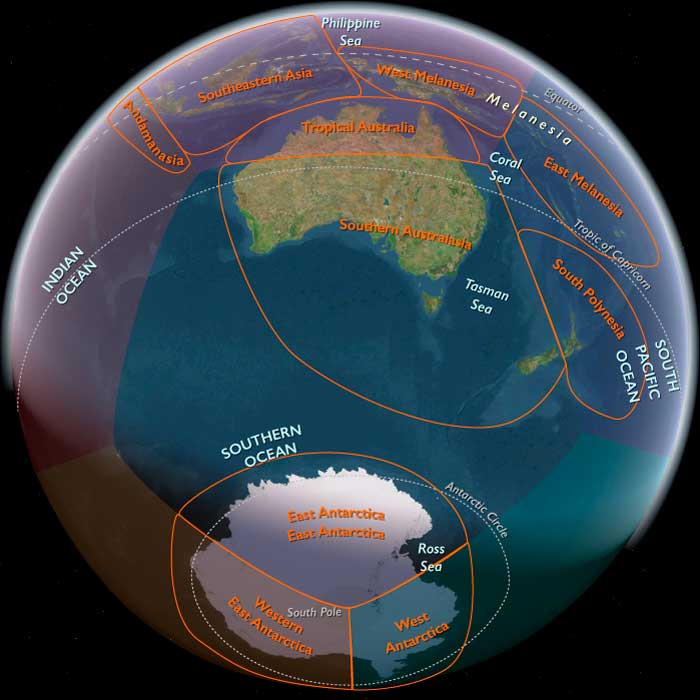
Southern Oceania
View →Related Events
Showing 10 events out of 13 total
Many convicts in the Castle Hill area had been involved in the 1798 rebellions in Ireland and subsequently transported as exiles-without-trial to the Colony of New South Wales from late 1799.
Phillip Cunningham, a veteran of the 1798 rebellion, and William Johnston, another Irish convict at Castle Hill, plan an uprising in which over six hundred and eighty-five convicts at Castle Hill intend to meet with nearly eleven hundred convicts from the Hawkesbury River area, rally at Constitution Hill, and march on Parramatta, then Sydney (Port Jackson) itself.
According to Helen Mackay, their goal was to establish Irish rule in the colony and obtain ships for those that wanted to return to Ireland to help revive the failed Irish Rebellion of 1803.
John Cavenah sets fire to his hut at Castle Hill at 8:00 on the evening of March 4, 1804, as the signal for the rebellion to begin.
While this fire is not seen by the convicts at Green Hills, today's Windsor, on the Hawkesbury River, Cunningham activates the plan to gather weapons, ammunition, food and recruits from local supporters and the government farm at Castle Hill.
With Cunningham leading, about two hundred to three hundred rebels break into the Government Farm's buildings, taking firearms, ammunition, and other weapons.
The constables and overseers are overpowered and the rebels now go from farm to farm on their way to Constitution Hill at Parramatta, seizing more weapons and supplies including rum and spirits, and recruiting others to join their cause.
Their move had been informed from the intelligence gathered a year previous when twelve convicts decamped from Castle Hill, scouring the surrounding districts seeking out friends and sympathizers.
On capture each and every one had the same story—they were heading to China by crossing over the Blue Mountains.
When news of the uprising spreads there is great panic among the colony of around five thousand inhabitants with officials such as Samuel Marsden fleeing the area by boat, escorting Elizabeth Macarthur and her children, as an informer had advised that an attack will be made on the farm to draw troops away from Parramatta.
One hundred and forty men from the HMS Calcutta, as well as the Sydney Loyal Association militia, take over guard duties, and a New South Wales Corps contingent of fifty-six personnel including Lieutenant William Davies and Quartermaster Sergeant Thomas Laycock are dispatched to march through the night to bolster the garrison at Parramatta.
Meanwhile, the provost marshal, Thomas Smyth, had been sent ahead to contact Major George Johnston at Annandale.
The troops from Sydney arrive at 1:30 am, and after a quick inspection an advance guard is sent to the west of the town.
Johnston arrives at Government House in Parramatta about four hours later, not long after King had declared martial law under the Mansfield doctrine of posse comitatus.
King's proclamation of martial law applies to a wide area extending from Castle Hill to the Hawkesbury and Nepean areas, and empowers citizens in the area to detain those who lack the appropriate passes.
A curfew has also been enacted and an amnesty declared, which gives those who are involved twenty-four hours to surrender.
On Johnston's arrival at Parramatta, King delivers his orders, in writing, to Johnston, then verbally to his small detachment.
Johnston is to proceed to the western gate of the park around Government House, where the rebels had been seen a few hours earlier.
If they are not there, he is ordered to exploit towards Toongabbie and Castle Hill to locate them and then await further orders.
He is also empowered to fire upon anyone who does not obey his directions.
Shortly after 5:00 am, Johnston sets out to locate the main rebel force.
In addition to the troops he had brought with him, a number of civilians volunteer along with the thirty-six armed members of the Parramatta Loyal Association militia are also called out and take over defense of the town.
Over fifty enroll in a reserve militia combined with the NSW Corps to march out and confront the rebels.
Johnston decides to advance in two columns, one which he leads himself towards Toongabbie, and another under a subaltern, Davies, which is sent along the Castle Hill Road.
Initially, it was believed that the rebels were at Toongabbie, but on arrival Johnston is informed that they had moved on to Constitution Hill.
A small party under a corporal is sent to outflank this position, while an assault force of around a dozen men advances on the summit, only to find it abandoned, with the rebels having moved off towards the Hawkesbury, about seventeen miles (twenty-seven kilometers) away.
As the morning progresses, the heat of the day threatens to stymie the efforts of the marching troops, who are poorly equipped for the pursuit.
Nevertheless, about six miles (nine point seven miles) from Toongabbie, Johnston locates the main rebel party of around two hundred and thirty to two hundred and sixty men near Rouse Hill.
Johnston first sends his mounted trooper on to call the rebels to surrender and take the benefit of the Governor's amnesty for early surrender.
This failing, he dispatches Roman Catholic priest Father James Dixon to appeal to them.
Next he rides up himself, appealing to them, then gets their agreement to hear Father Dixon again.
The pursuing forces had meanwhile closed up and Major Johnston with Trooper Analzark comes again to parley, calling down the leaders Cunningham and Johnston from the hill.
Demanding their surrender, he receives the response "Death or Liberty" from Cunningham, to which some were reported to have added "and a ship to take us home".
With the NSW Corps and militia now formed up in firing lines behind him, Major Johnston and Analzark produce pistols, duping, while under truce, the two leaders of the uprising, and escorting them back to the Redcoats' lines.
Quartermaster Sergeant Thomas Laycock, on being given the order to engage, directs over fifteen minutes of musket fire, then charges, cutting Cunningham down with his cutlass.
The now leaderless rebels first try to fire back, then break and disperse.
At least fifteen rebels had fallen during the battle, according to the official reports.
Major Johnston prevents further bloodshed and killings by threatening his troops with his pistol, tempering their enthusiasm.
Several convicts are captured and others killed in the pursuit, which goes up to Windsor all day until late in the night, with new arrivals of soldiers from Sydney joining in the search for rebels.
During this phase the rebels obtain around third of the entire colony's armaments but their numbers have dwindled to several hundred, eventually reaching a total of two hundred and thirty-three.
Cunningham is elected "King of the Australian Empire" during the short period of the rebellion, and his followers declare the area "New Ireland".
Nevertheless, Cunningham and William Johnston commence drilling their men, while a party unsuccessfully tries to enter Parramatta, where they were to set fire to a building to signal other conspirators to begin converging on Constitution Hill.
Cunningham, being involved in two previous rebellions and the mutiny on the Anne, knows from experience that the most important element of a rebellion or uprising is secrecy.
However, there are two defections—an Irish convict overseer named Sloane and Lewis Bulger—and the commandant at Parramatta, Captain Edward Abbott, who has warning of the rebellion as it is happening, commences defensive measures and sends a message to the Governor in Sydney.
With their courier, John Griffen, having had second thoughts about passing on the instructions Cunningham had given him to pass on to Brian Furey and subsequently being arrested, the call out messages to Windsor, Parramatta and Sydney fail, and the uprising is confined to west of the Parramatta area.
After fruitlessly waiting for a signal of a successful internal takeover of Parramatta, and the non-appearance of reinforcements. Cunningham is forced to withdraw from Parramatta to Toongabbie to re-assess his strategy.
Having already declared his hand, and deprived of both surprise and facing a superior and well disciplined force of Redcoats and enthusiastic militia, the uprising under Cunningham has no recourse but to withdraw west towards the Hawkesbury hoping to pick up more recruits and meeting his missing forces on the way to add to his forces.
Following this, large parties who had lost their way in the night turn themselves in under the amnesty or make their way back to Castle Hill, where a large party of about seventy under Samuel Humes are captured by a detachment of the Loyal Parramatta Association.
Two men, John Burke and Bryan McCormack, are reprieved and detained at the Governor's pleasure; seven are whipped with two hundred or five hundred lashes, then allotted to the Coal River chain gang; while twenty-three others, including Cavenah, are sent to the Newcastle coal mines.
Another thirty-four prisoners are placed in irons until they can be "disposed of".
It is not known whether some, or all of them, were sent to the Coal River.
Of the remaining rebels, some are put on good behavior orders against a trip to Norfolk Island, while the majority are pardoned and allowed to return to their places of employment as having been coerced into the uprising.
Cunningham, badly wounded but still alive, is court martialed under the martial law and hanged at the Commissariat Store at Windsor, which he had bragged he would burn down.
Initially, military officers had been intent on hanging a token number of those captured, having convened a military court at the Whipping Green, but this had been quickly stopped by Governor Gidley King, who feared the repercussions.
Martial law is eventually lifted on March 10, 1804, but this does not end the insurgency.
Irish plots will continue to develop, keeping the Government and its informers vigilant, with military call out rehearsals continuing over the next three years.
Governor King remains convinced that the real inspirers of revolt had kept out of sight, and has some suspects sent to Norfolk Island as a preventive measure.
William Bligh’s confrontational administrative style during his time in Sydney has provoked the wrath of a number of influential settlers and officials.
They include the wealthy landowner and businessman John Macarthur and prominent Crown representatives such as the colony's Principal Surgeon, Thomas Jamison, and senior officers of the New South Wales Corps.
Jamison and his military associates are defying government regulations by engaging in private trading ventures for profit: Bligh is determined to put a stop to this practice.
The conflict between Bligh and the entrenched colonists culminates in another mutiny, the Rum Rebellion, when, on January 26, 1808, disgruntled military officers of the New South Wales Corps (the Rum Corps) under Major George Johnston march on Government House in Sydney and arrest him on January 26, 1808, seizing control of the colony.
A rebel government is subsequently installed and Bligh, now deposed, makes for Hobart in Tasmania aboard HMS Porpoise.
Major General Lachlan Macquarie, newly appointed governor of New South Wales, was born on the island of Ulva off the coast of the Isle of Mull in the Inner Hebrides, a chain of islands off the West Coast of Scotland.
Few details are known of either his father or his birthplace.
His mother was the daughter of a Maclaine chieftain who owned a castle on the Isle of Mull.
He left the island at the age of fourteen.
If he did attend the Royal High School of Edinburgh, it was only for a very brief period because, at the same age, he volunteered for the army.
Macquarie had joined the 84th Regiment of Foot in 1776, traveling with it to North America in 1777 to take part in the American War of Independence.
As a new recruit on the way to America, he had participated in the Battle of the Newcastle Jane, marking the first naval victory for a British merchant ship over an American privateer.
Initially stationed at Halifax, Nova Scotia, he had been commissioned as an ensign five months after his arrival.
Transferred in 1781 to the 71st (Highland) Regiment of Foot, he served with them in New York, Charleston, and Jamaica.
Returning to Scotland in 1784 as a half-pay lieutenant, he saw subsequent service with the army Egypt and in India, where he became a Freemason in January 1793 at Bombay, in Lodge No. 1 (No. 139 on the register of the English "Moderns" Grand Lodge).
Promoted Captain in 1789, Major in 1801, and Lieutenant-Colonel, commanding the 73rd Regiment of Foot, in 1805, he had married Jane Jarvis, daughter of the Chief Justice of Antigua, in 1793; she died of tuberculosis three years later.
Macquarie's cousin Elizabeth Henrietta Campbell became his second wife in November 1807.
Appointed Governor of New South Wales in April 1809, he and his wife departed from England the following month aboard the HMS Dromedary, accompanied by the HMS Hindostan, and had reached reached Sydney on December 28.
Macquarie begins his term as governor on January 1, 1810.
The British government, in making this appointment, had reversed its practice of appointing naval officers as governor and had chosen an army commander in the hope that he will be able to secure the cooperation of the unruly New South Wales Corps.
He is aided by the fact of his arrival in New South Wales at the head of his own military unit, the 73rd Regiment.
Commanding regular troops, he is unchallenged by the New South Wales Corps, whose members have become settled in farming, commerce and trade.
Macquarie's first task is to tackle is to restore orderly, lawful government and discipline in the colony following the Rum Rebellion of 1808 against Governor Bligh.
Macquarie had been ordered by the British government to arrest both John Macarthur and Major George Johnston, two of the leaders of the Rum Rebellion, but both Macarthur and Johnston had already sailed for England to defend themselves by the time Macquarie arrived in Sydney in December 1809.
Macquarie immediately sets about canceling the various initiatives taken by the rebel government—for example, all "pardons, leases and land grants" made by the rebels are revoked, (although many will later be re-issued).