George II of Great Britain
King of Great Britain and Ireland, Duke of Brunswick-Lüneburg (Hanover) and Archtreasurer and Prince-elector of the Holy Roman Empire
Years: 1683 - 1760
George II (George Augustus; German: Georg II.
August; 30 October / 9 November 1683 O.S./N.S.
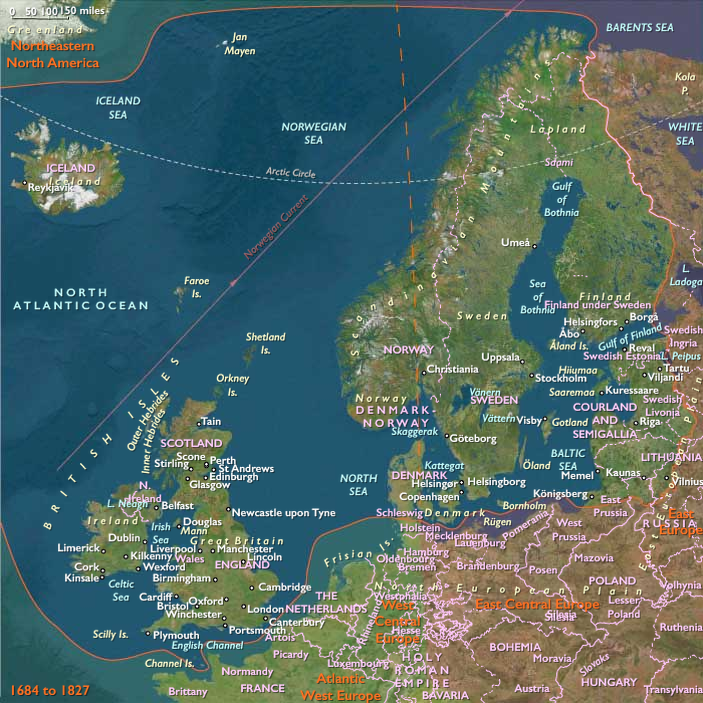
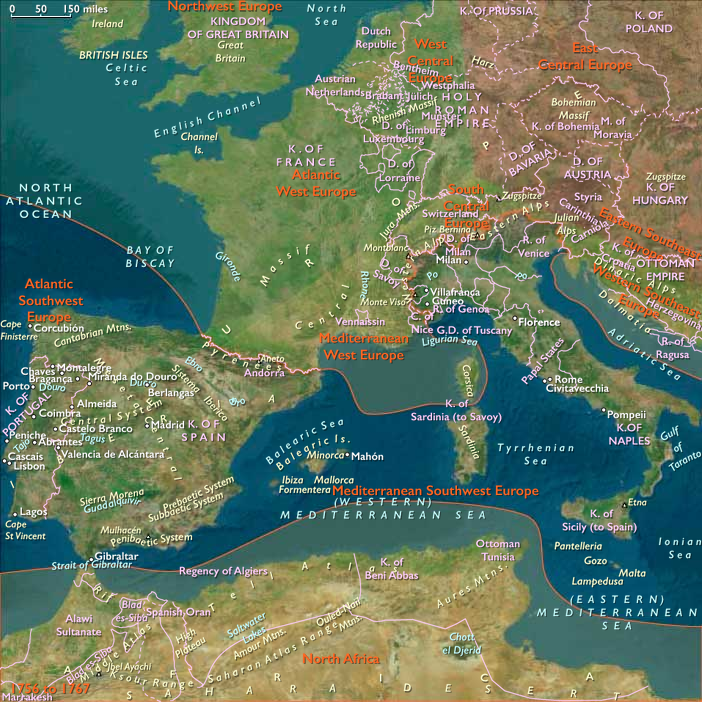
– 25 October 1760) was King of Great Britain and Ireland, Duke of Brunswick-Lüneburg (Hanover) and Archtreasurer and Prince-elector of the Holy Roman Empire from 11 June 1727 (O.S.)
until his death.
George is the last British monarch born outside Great Britain.
He was born and brought up in Northern Germany.
In 1701, his grandmother, Sophia of Hanover, becomes second-in-line to the British throne after about fifty Catholics higher in line are excluded by the Act of Settlement, which restricts the succession to Protestants.
After the deaths of Sophia and Anne, Queen of Great Britain, in 1714, his father George I, Elector of Hanover, inherits the British throne.
In the first years of his father's reign as king, George is associated with opposition politicians, until they rejoin the governing party in 1720.
As king from 1727, George exercises little control over British domestic policy, which is largely controlled by Great Britain's parliament.
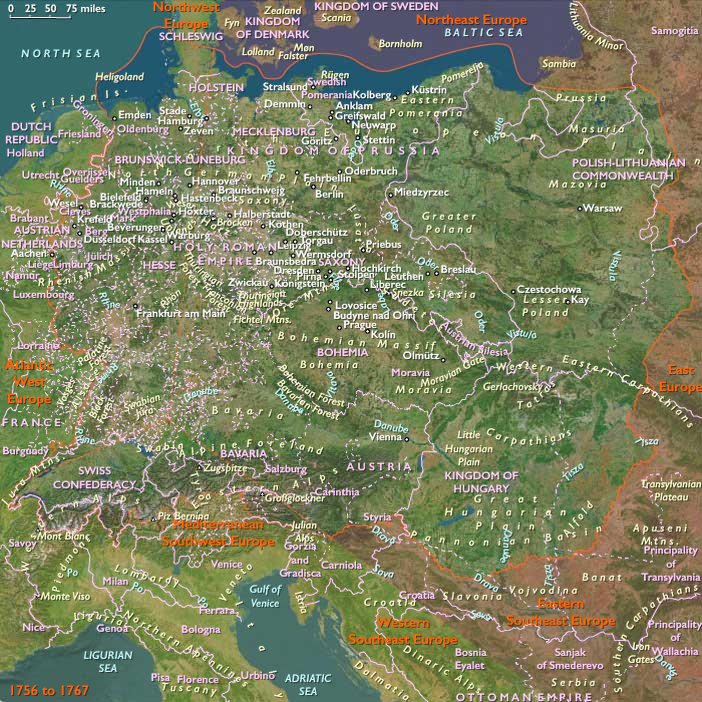
As elector, he spends 12 summers in Hanover, where he has more direct control over government policy.
He has a difficult relationship with his eldest son, Frederick, who supports the parliamentary opposition.
During the War of the Austrian Succession, George participates at the Battle of Dettingen in 1743, and thus becomes the last British monarch to lead an army in battle.
In 1745, supporters of the Catholic claimant to the British throne, James Francis Edward Stuart ("The Old Pretender"), led by James's son Charles Edward Stuart ("The Young Pretender" or "Bonnie Prince Charlie") attempt and fail to depose George in the last of the Jacobite rebellions.
Frederick dies unexpectedly in 1751, leaving George's grandson, George III, as heir apparent and ultimately king.
For two centuries after his death, history tended to view George II with disdain, concentrating on his mistresses, short-temper, and boorishness.
Since then, some scholars have reassessed his legacy and conclude that he held and exercised influence in foreign policy and military appointments.