George Frideric Handel
German-British Baroque composer
Years: 1685 - 1759
George Frideric Handel (German: Georg Friedrich Händel) (23 February 1685 – 14 April 1759) is a German-British Baroque composer, famous for his operas, oratorios, anthems and organ concertos.
Handel was born in 1685, in a family indifferent to music.
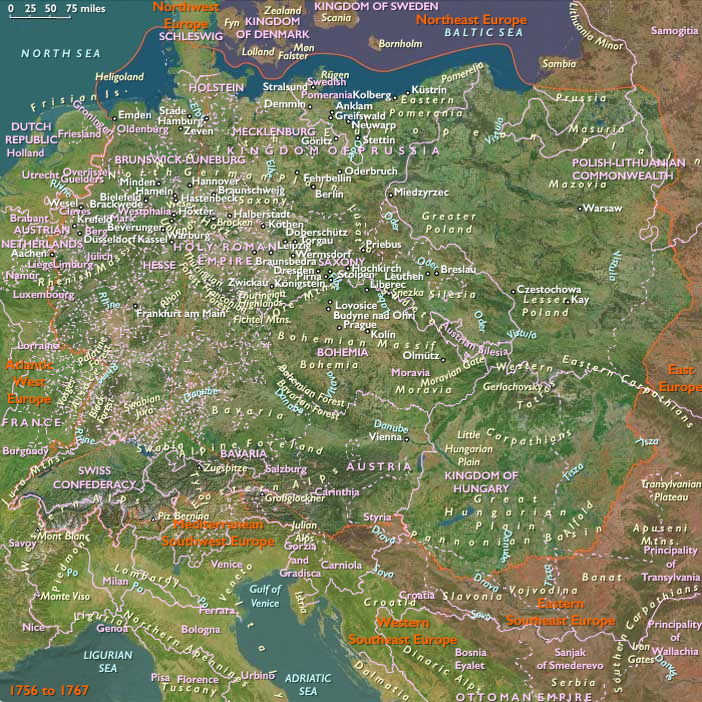
He receives critical musical training in Halle, Hamburg and Italy before settling in London (1712) and becoming a naturalized British subject in 1727.
By this time, he is strongly influenced by the great composers of the Italian Baroque and the middle-German polyphonic choral tradition.
Within fifteen years, Handel, a dramatic genius, starts three commercial opera companies to supply the English nobility with Italian opera, but the public comes to hear the vocal bravura of the soloists rather than the music.
In 1737 he has a physical breakdown, changes direction creatively and addresses the middle class.
As Alexander's Feast (1736) is well received, Handel makes a transition to English choral works.
After his success with Messiah (1742) he never performs an Italian opera again.
Handel is only partly successful with his performances of English Oratorio on mythical and biblical themes, but when he arranges a performance of Messiah to benefit the Foundling Hospital (1750) the critique ends.
The pathos of Handel's oratorios is an ethical one.
They are hallowed not by liturgical dignity but by the moral ideals of humanity.
Almost blind, and having lived in England for almost fifty years, he dies a respected and rich man.
Handel is regarded as one of the greatest composers of all time, with works such as Water Music, Music for the Royal Fireworks and Messiah remaining popular.
Handel composed more than forty operas in over thirty years, and since the late 1960s, with the revival of baroque music and original instrumentation, interest in Handel's operas has grown.
His operas contain remarkable human characterization—especially for a composer not known for his love affairs.