Georg Magnus Sprengtporten
Swedish, Finnish and Russian politician
Years: 1740 - 1819
Count Georg Magnus Sprengtporten, or Göran Magnus Sprengtporten, as he prefers to call himself (December 16, 1740 – October 13, 1819), is a Swedish, Finnish and Russian politician, younger brother of Jacob Magnus Sprengtporten.
Related Events
Filter results
Showing 10 events out of 42 total
With one brief exception, all of the governors general are Russian.
The first governor general is the Swedish-Finn Goran Sprengtporten, who is ably assisted by the prominent Swedish-Finn politician, Gustaf Mauritz Armfelt.
The chief instrument of government in the grand duchy is the Government Council, renamed in 1816 the Senate, which is composed of fourteen Finns appointed by the tsar.
The counterpart of the Senate in St. Petersburg is the Committee for Finnish Affairs, composed of Finns, which presents Finnish requests to the tsar; however, Finnish civil servants usually carry on the business of government with little interference from the tsarist government in St. Petersburg.
The Diet is formally the lawmaking body of the government; it cannot initiate legislation, however, but can only petition the tsar to introduce legislation.
The tsar, moreover, can summon and can dismiss the Senate without reference to the Diet.
There is an independent judicial system.
Finland even maintains its own customs system, and taxes collected in Finland remain in the country.
Finns are exempted from conscription into the Russian army.
Despite these safeguards, Finland still feels the autocracy of the tsar.
The Finnish Diet is dismissed in 1809, and it will not reconvene or more than fifty years.
Although the government of the grand duchy represents an uneasy balance between the traditions of Finnish self-government and those of Russian autocracy, as long as the Russians respect the balance, the Finnish people will be satisfied.
The period of Russian rule is characterized by peaceful internal development, largely because, for the first time in centuries, Finland is free of war.
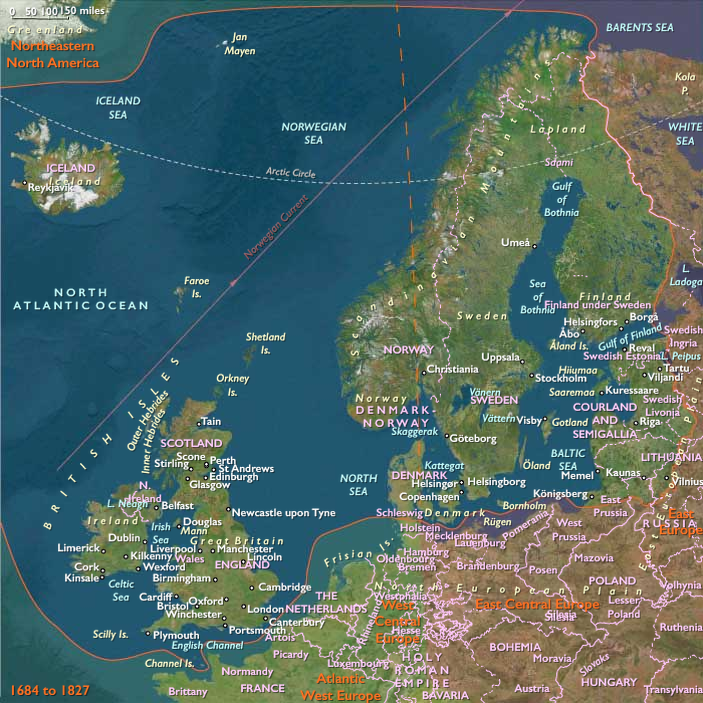
Northeast Europe (1780–1791 CE): Enlightened Reform, Military Ambitions, and Scientific Innovation
Between 1780 and 1791 CE, Northeast Europe experienced a dynamic period characterized by enlightened reforms, ambitious military campaigns, significant scientific discoveries, and sustained economic and cultural development. Sweden under Gustav III pursued renewed military objectives alongside internal reforms, Denmark–Norway maintained strategic neutrality and domestic modernization, and Prussia under Frederick the Great and subsequently Frederick William II continued administrative efficiency and economic stability. The era was also marked by notable scientific advancements, exemplified by the groundbreaking work of Swedish chemist Peter Jacob Hjelm.
Sweden: Gustav III’s Enlightened Absolutism and Military Ambitions
King Gustav III (r. 1771–1792), having restored royal absolutism in Sweden in 1772, continued extensive internal reforms aimed at strengthening the monarchy, modernizing administration, and advancing cultural life. Alongside domestic reforms, Gustav pursued ambitious foreign policy objectives, notably attempting to revise the territorial outcomes of the earlier Great Northern War. In 1788, Sweden declared war against Russia, seeking to reclaim lost territories along Finland’s eastern border.
The Russo-Swedish War and the Anjala League Mutiny
During the ensuing conflict (1788–1790), known as the Russo-Swedish War, an important internal incident was the mutiny of a faction of Finnish officers within the Swedish military, known as the Anjala League. The mutineers, led prominently by former Swedish army colonel Göran Sprengtporten, aimed to avoid provoking severe Russian retaliation against Finland. Although swiftly suppressed and lacking broad support among Finnish officers, the mutiny highlighted increasing war-weariness among many Finns, particularly Finnish nobles, who were growing weary of Finland's frequent role as a battleground between Sweden and Russia.
Due to Russia’s simultaneous military commitments in a major conflict against the Ottoman Empire, Sweden secured an advantageous diplomatic settlement in the Treaty of Värälä (1790), effectively ending the conflict without territorial changes. Thus, despite Gustav III’s ambitious objectives, the territorial boundaries of Finland remained unchanged, preserving the status quo while leaving underlying tensions unresolved.
Scientific Advancement: Hjelm’s Isolation of Molybdenum
During this period, Sweden also witnessed significant scientific progress. In 1781–1782, Swedish chemist Peter Jacob Hjelm, encouraged by colleague Carl Wilhelm Scheele, successfully isolated the metal molybdenum. By heating a paste composed of molybdenum oxide and linseed oil at high temperatures in a crucible, Hjelm achieved the first-ever isolation of this element. Naming the newly discovered metal from the Greek molybdos, meaning “lead,” Hjelm’s achievement represented a major advancement in European chemical science, underscoring Sweden’s continued prominence in scientific and industrial chemistry research.
Danish–Norwegian Neutrality and Enlightened Domestic Reforms
Under the rule of King Christian VII (r. 1766–1808), Denmark–Norway continued to focus on domestic modernization and cautious neutrality in regional politics. Economic prosperity increased through investments in infrastructure, agriculture, and maritime commerce. Copenhagen became increasingly vibrant as a center of commerce, culture, and Enlightenment-inspired education, maintaining stability and economic growth amidst broader European geopolitical uncertainties.
Prussian Stability under Frederick II and Frederick William II
Prussia under Frederick II (Frederick the Great) (r. 1740–1786), and later under Frederick William II (r. 1786–1797), maintained disciplined governance, economic stability, and strategic territorial control. Frederick II’s enlightened reforms in education, administration, and agriculture persisted, bolstering Prussia’s economic and administrative efficiency, especially in territories around Königsberg (Kaliningrad).
Economic Prosperity and Urban Stability
Key urban centers across Northeast Europe, including Stockholm, Copenhagen, Königsberg, Riga, and Reval (Tallinn), continued to thrive economically, benefiting from maritime trade, improved infrastructure, and stable governance. Regional economic integration deepened, supported by expanding merchant networks and commercial growth, contributing substantially to urban prosperity and stability.
Finland: Agricultural Improvements and the Burden of Warfare
Finland, still under Swedish rule, experienced continued agricultural productivity and internal economic stability. Improvements in scientific agriculture—such as the continued use of potatoes, building upon earlier advancements—enhanced food security and economic resilience. However, the Russo-Swedish War of 1788–1790 reinforced concerns among Finns about the persistent vulnerability and risks associated with Finland’s geopolitical position, as highlighted by the Anjala League incident.
Stability and Incremental Progress in the Baltic Territories
The Baltic territories—Estonia, Latvia, and Lithuania—experienced steady economic growth and internal stability. Predominantly governed by Baltic-German nobility, these regions maintained relative tranquility, with urban centers such as Riga and Reval thriving economically and culturally. Enlightenment-inspired local reforms and educational advancements gradually enhanced regional prosperity and stability.
Cultural Flourishing and Intellectual Life
Cultural and educational institutions flourished across Northeast Europe. King Gustav III significantly patronized arts and sciences in Sweden, establishing influential institutions including the Swedish Academy (Svenska Akademien) in 1786. Denmark–Norway and Prussia continued to nurture academic and cultural development, supporting Enlightenment ideals and intellectual advancement throughout the region.
Diplomatic Pragmatism and Regional Realignment
Diplomatic interactions during this era remained pragmatic and cautious. Sweden’s brief military ambition against Russia revealed clear limitations on Swedish geopolitical influence and highlighted Finland’s vulnerability. Denmark–Norway maintained neutrality and stability, while Prussia skillfully avoided involvement in destabilizing conflicts, preserving regional stability and internal growth.
Legacy of the Era
The period from 1780 to 1791 CE significantly impacted Northeast Europe through Sweden’s ambitious yet ultimately inconclusive war efforts, critical internal political events like the Anjala League mutiny, and landmark scientific advancements exemplified by Hjelm’s discovery of molybdenum. These developments shaped regional geopolitical relationships, reinforced internal political and economic stability, and promoted continued scientific and cultural vitality, laying a strong foundation for future historical trajectories.
Northeast Europe (1804–1815 CE): Geopolitical Transformations, Territorial Reconfigurations, and the End of Old Alliances
Between 1804 and 1815 CE, Northeast Europe experienced dramatic geopolitical upheaval, territorial realignments, and profound socioeconomic adjustments due to the far-reaching consequences of the Napoleonic Wars. Central to this era was the dissolution of the centuries-old union between Sweden and Finland, Finland’s transition into a Russian Grand Duchy with substantial autonomy, Denmark–Norway’s forced alliance shifts and territorial losses, Prussia’s military setbacks and subsequent reform-driven resurgence, and incremental social progress within the Baltic territories, particularly Estonia’s initial steps towards peasant reform.
Sweden’s Loss of Finland and Internal Political Reorganization
Under King Gustav IV Adolf (r. 1792–1809), Sweden adopted an anti-Napoleonic stance, leading to diplomatic isolation. Following France and Russia’s alliance at the Treaty of Tilsit (1807), Napoleon urged Tsar Alexander I to compel Sweden into joining their alliance against Britain. Complying with this directive, Russia invaded Finland in 1808, quickly overwhelming Sweden’s poorly organized defenses in the ensuing Finnish War (1808–1809). The war culminated with the decisive Treaty of Hamina (Fredrikshamn) on September 17, 1809, through which Sweden formally ceded Finland to Russia, thereby dissolving their historic union.
This significant territorial loss triggered domestic political upheaval, forcing the abdication of Gustav IV Adolf. His uncle succeeded him as Charles XIII (r. 1809–1818), under whom Sweden adopted a new constitutional monarchy in 1809, effectively ending absolutism. Subsequently, Sweden sought diplomatic realignment, electing Jean-Baptiste Bernadotte (later King Karl XIV Johan) as crown prince in 1810, marking Sweden’s entry into the anti-Napoleonic coalition and initiating a dramatic geopolitical shift.
Finland: Autonomy and Conciliation Under Russian Sovereignty
Initially, Russia planned to annex Finland directly as an ordinary province, but recognizing potential Finnish resistance, Tsar Alexander I offered an alternative arrangement. Under his proposal, Finland was not annexed outright but joined to Russia through the person of the tsar himself, creating the autonomous Grand Duchy of Finland. This arrangement preserved Finland’s existing laws, constitution, and administrative traditions from the era of Swedish absolutism, including the comprehensive Law Code of 1734, which safeguarded individual rights.
In 1809, the Finnish Diet convened at Porvoo (Swedish, Borgå) to formally endorse this agreement, and as a further act of goodwill, in 1812 the tsar returned to Finland territories previously annexed by Russia in the eighteenth century. This careful conciliatory approach proved effective, securing Finnish loyalty for decades. The governance structure stipulated that the tsar directly controlled Finland’s government through an appointed Governor-General—the first being the Swedish-Finn Göran Sprengtporten, assisted notably by prominent Swedish-Finn statesman Gustaf Mauritz Armfelt.
During this transitional period, Finnish society and economy remained predominantly agrarian, with approximately ninety percent of its roughly 900,000 inhabitants engaged in farming by 1810. The combined effects of warfare, heavy taxation, and previous famines had suppressed population growth, keeping urbanization minimal and society largely static, despite shifting political affiliations.
Danish–Norwegian Conflict and Union Dissolution
Denmark–Norway, governed by Crown Prince (later King) Frederick VI (r. 1808–1839), was reluctantly drawn into the Napoleonic conflict after Britain attacked and captured the Danish fleet at Copenhagen in 1807. Forced into an alliance with Napoleonic France, Denmark–Norway’s maritime commerce was severely restricted, causing considerable economic distress. Following Napoleon’s defeat, the Treaty of Kiel (1814) compelled Denmark to cede Norway to Sweden, ending the centuries-old Danish-Norwegian union. Despite Norway’s brief bid for independence in 1814, the subsequent Convention of Moss secured a personal union under the Swedish crown, dramatically reordering the political landscape of Scandinavia.
Prussian Struggles and Reformative Resurgence
Prussia, initially neutral under King Frederick William III (r. 1797–1840), suffered catastrophic defeat by Napoleonic forces at Jena–Auerstedt in 1806, losing vast territories and prestige at the Treaty of Tilsit (1807). This defeat spurred extensive internal reforms focused on military modernization, educational improvements, and administrative restructuring, especially crucial in the strategic exclave around Königsberg (Kaliningrad). These reforms enabled Prussia’s resurgence, pivotal participation in Napoleon’s defeat at Leipzig (1813), and ultimate territorial and diplomatic rehabilitation at the Congress of Vienna (1815).
Estonia’s First Steps Towards Serfdom Reform
Within the Baltic territories, significant socioeconomic progress emerged when Estonia initiated its first real reforms of serfdom in 1804, granting peasants limited rights and protections. While modest, these reforms marked the beginning of gradual social transformations in Estonian rural life, setting a precedent for broader changes in subsequent decades.
Economic Resilience in Urban Centers
Major Northeast European cities—Stockholm, Copenhagen, Königsberg, Riga, and Reval (Tallinn)—managed relative economic resilience despite wartime disruptions. Danish maritime commerce faced severe British restrictions but later stabilized. Sweden’s internal reorganization and alliance shifts fostered eventual economic stabilization, while Prussian urban recovery was supported by post-war reforms and infrastructure investments.
Cultural and Intellectual Continuity
Throughout Northeast Europe, cultural and intellectual life maintained resilience. Finland, despite its territorial transfer to Russia, preserved its distinct cultural institutions, education systems, and traditions. In Sweden and Denmark, scholarly and cultural institutions continued to thrive, benefiting from Enlightenment ideals and intellectual continuity. Prussia’s educational reforms notably enhanced regional intellectual vigor, helping underpin societal recovery after military setbacks.
Diplomatic Reorientation and Legacy of the Era
Diplomatic interactions in this period were marked by strategic realignments and pragmatic flexibility. Sweden’s dramatic shift from diplomatic isolation toward an anti-Napoleonic coalition significantly redefined its international relationships. The transformation of Finland into a Russian Grand Duchy altered the regional balance, while Denmark–Norway’s forced alliance and union dissolution reshaped Scandinavia’s political configuration. Prussia’s internal reforms and diplomatic repositioning laid critical foundations for its later prominence.
The era from 1804 to 1815 CE thus profoundly reshaped Northeast Europe. Sweden’s loss of Finland fundamentally altered both states’ trajectories, while Finland’s autonomy under Russia established a unique governance model. Denmark–Norway’s dissolution and Prussia’s transformative recovery underscored the complexity of geopolitical realignments. Collectively, these developments defined regional identities, diplomatic alliances, and socioeconomic structures, leaving an enduring legacy on Northeast Europe’s subsequent historical evolu
The level of detail is so great that Russian maps of Finland are in many respects more accurate than their Swedish counterparts.
The Russians had the services of General Georg Magnus Sprengtporten when forming their plans.
Sprengtporten had suggested going on to an offensive during the winter since Finland is mostly isolated when seas are frozen.
His ideas had been further developed by General Jan Pieter van Suchtelen before General Friedrich Wilhelm von Buxhoeveden was appointed as the commander of the Russian army in Finland in December 1807.
The plan involves using the series of fortifications built after 1790 as staging grounds for the Russian advances into Finland.
In southern Finland, armies are to isolate the fortifications and first take control of the whole of southern Finland before advancing further to the north.
Forces in Savolax are to press hard against the Swedes and reach the Gulf of Bothnia towards Uleåborg and Vasa to cut off the retreat of the main body of the Swedish army.
He is notified of the Russian invasion on February 21, and since it is impossible to hold the predefined defense lines, as the army had not yet fully assembled, he orders the army to assemble at Tavastehus.
While the garrison is seven hundred men strong, only a third of the men have actual functioning weapons, while most of the fortress' guns have no carriages.
The fortress has fallen into disrepair and lacks both adequate food and ammunition stores.
Even the wells are found to be unusable.
The Russians, after starting the siege on February 21, issue a surrender demand for the fort, but this is refused by the Swedes.
Instead of facing the Russians at Tavastehus, he orders the army to withdraw.