Gamal Abdel Nasser
2nd President of Egypt
Years: 1918 - 1970
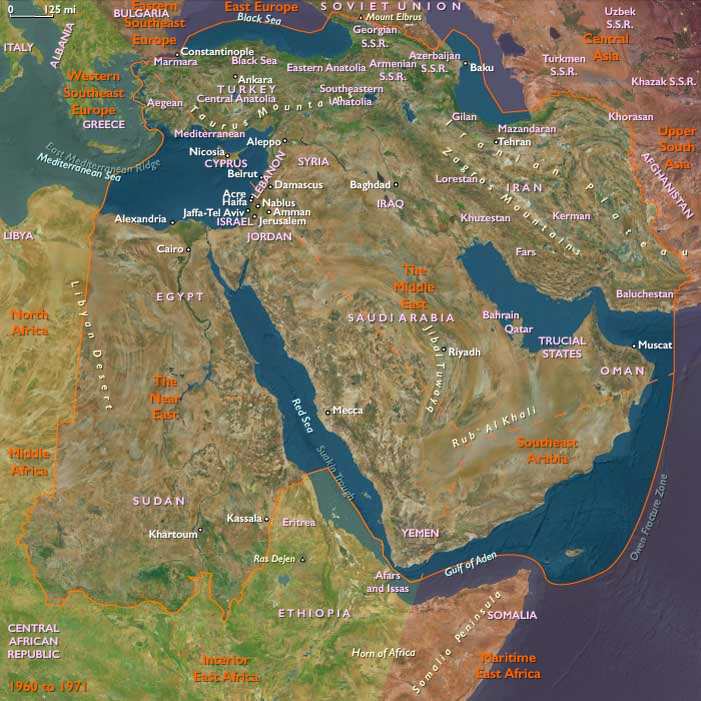
Gamal Abdel Nasser Hussein (January 15 , 1918 – September 28, 1970) is the second President of Egypt from 1956 until his death.
Nasser plans the 1952 overthrow of the monarchy, and serves as deputy prime minister in the new government.
In 1953, Nasser introduces far-reaching land reforms and following a 1954 Muslim Brotherhood-led assassination attempt on his life, he orders a crackdown against the organization, puts President Muhammad Naguib under house arrest, and assumes executive office.
A June 1956 public referendum approves both the new constitution and Nasser's nomination for presidency.
Nasser's neutralist policies during the Cold War lead to tense relations with Western powers, who withdraw funding for the planned Aswan Dam.
Nasser's retaliatory move to nationalize the Suez Canal Company in 1956 is acclaimed within Egypt and the Arab world.
Britain, France, and Israel invade Sinai in the Suez Crisis, but withdraw amid international pressure and boost Nasser's political standing significantly.
From now onward, Nasser's popularity in the region grows substantially and calls for pan-Arab unity under his leadership increased, culminating with the formation of the United Arab Republic with Syria (1958-1961).
In 1962, Nasser begins a series of major socialist measures and modernization reforms in Egypt.
Despite setbacks to his pan-Arabist cause, by 1963, Nasser's supporters gain power in several Arab countries.
He also becomes embroiled in the North Yemen Civil War at this time.
Nasser introduces a new constitution in 1964, the same year he becomes president of the international Non-Aligned Movement.
Nasser begins his second presidential term in March 1965 after running unopposed, his political opponents legally forbidden from competing.
Following Egypt's concessions to Israel in the 1967 Six-Day War, Nasser resigns only to renege after popular demonstrations called for his reinstatement.
In 1968, his efforts to regain the lost territory become known as the War of Attrition.
Between the 1967 defeat and 1968, Nasser appoints himself prime minister, begins a process of depoliticizing the military and promises political liberalization reforms.
After the conclusion of the 1970 Arab League summit, Nasser suffers a heart attack and dies.
His funeral in Cairo draws five million mourners and an outpouring of grief across the Arab world.
Nasser remains an iconic figure and symbol of Arab dignity in the present day, especially for his pan-Arabist and anti-imperialist efforts and modernization policies.
His presidency also encourages and coincides with an Egyptian cultural boom, particularly in the arts.
Nasser's detractors criticize his authoritarianism, his government's human rights violations, and his failure to establish enduring civil institutions, with arguments that his populist relationship with the citizenry is responsible for Egypt's future dictatorial governance.
Historians describe Nasser as one of the towering political figures of modern Middle East history and politics in the 20th century.