Gaius Julius Civilis
leader of the Batavian rebellion against the Romans
Years: 25 - 78
Gaius Julius Civilis is the leader of the Batavian rebellion against the Romans in 69.
By his nomen, it can be told that he (or one of his male ancestors) was made a Roman citizen (and thus, the tribe a Roman vassal) by either Augustus or Caligula.



Related Events
Filter results
Showing 10 events out of 20 total
The Revolt of the Batavi (69–70 CE): A Germanic Uprising Against Rome
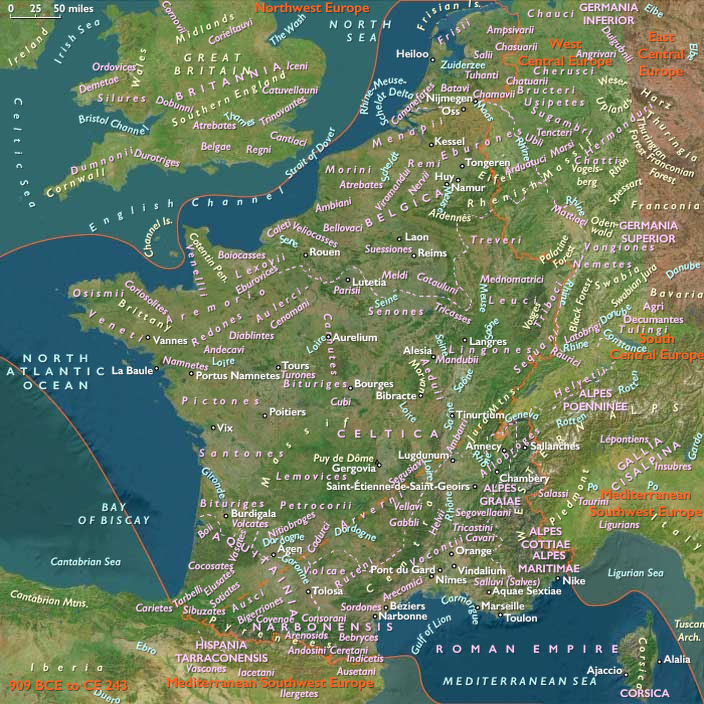
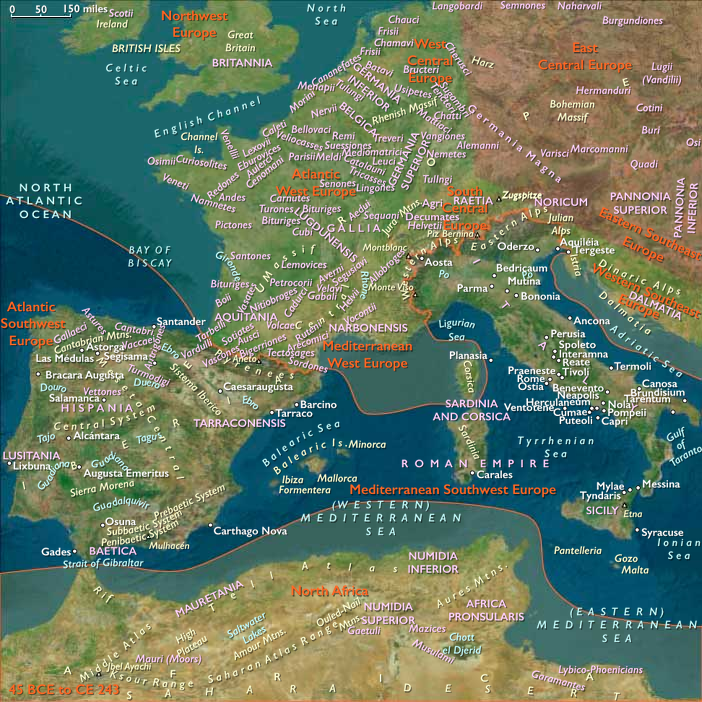
The Revolt of the Batavi (69–70 CE) was a major uprising against the Roman Empire, centered in the province of Germania Inferior (modern southern Netherlands and the North Rhineland). Led by Gaius Julius Civilis, a Batavian prince and former auxiliary officer, the revolt was one of the most serious challenges to Roman rule on the Rhine frontier, occurring during the chaos of the Year of the Four Emperors (69 CE).
Background: The Batavi and Rome
- The Batavi were a small but militarily powerful Germanic tribe, inhabiting the Rhine delta.
- They were allied with Rome, providing elite auxiliary cavalry for the Roman army.
- However, resentment grew over excessive taxation, forced levies, and mistreatment by Roman officials.
The Revolt Begins (69 CE)
- Civilis, a Batavian noble and former Roman officer, led the rebellion, capitalizing on Rome’s internal instability during the civil war between Vespasian and Vitellius.
- The revolt was initially successful, as the Batavi were joined by:
- Neighboring Germanic tribes from inside and outside the empire.
- Celtic tribes from Gallia Belgica, further expanding the rebellion.
Early Batavian Victories
- The rebels inflicted several humiliating defeats on Roman forces in the region.
- They destroyed two Roman legions, severely weakening Rome’s military presence along the Rhine.
- The rebellion threatened Roman control over Germania Inferior and northern Gaul, forcing Rome to divert resources to suppress the uprising.
Roman Counteroffensive and Defeat of the Rebels
- By 70 CE, with Vespasian securing his rule in Rome, he dispatched a massive Roman army under General Quintus Petillius Cerialis to crush the rebellion.
- The Romans launched a decisive counterattack, gradually defeating the rebels and retaking lost territory.
- After a series of engagements, the Batavi were forced to surrender.
Aftermath: Humiliating Peace Terms
- Following peace negotiations, the Batavi submitted to Rome once again, but under harsh conditions:
- A Roman legion was permanently stationed at Noviomagus (modern Nijmegen, Netherlands).
- The Batavi were forcibly reintegrated into the empire and remained under closer Roman control.
Significance of the Revolt
- The Batavian Revolt demonstrated the vulnerability of Rome’s frontier provinces during times of political instability.
- It marked one of the last major uprisings in the north before Rome secured its hold over Germania Inferior.
- The Batavi continued to serve as auxiliaries in the Roman army, but their political influence was significantly reduced.
Though ultimately unsuccessful, the Batavian Revolt remains one of the most significant challenges to Roman authority in the northern provinces, highlighting the limits of Roman control over its Germanic subjects.
The Batavi, a sub-tribe of the Germanic Chatti tribal group who had rendered valuable aid under the early emperors, had been well treated in order to attach them to the cause of Rome.
They are exempt from tribute, but are obliged to supply a large number of men for the army.
Gaius Julius Civilis, a hereditary prince of the Batavi, the prefect of a Batavi cohort, and a veteran of twenty-five years' service, had distinguished himself by service in Britain, where he and the eight Batavi cohorts had played a crucial role in both the Roman invasion in 43 CE and the subsequent subjugation of southern Britain.
Before and during the disturbances that followed the death of Nero, Civilis had been twice imprisoned on a charge of rebellion, and narrowly escaped execution.
Civilis in early 69 had been released by Vitellius, when the latter, having launched his mutiny against Otho, was in urgent need of the Batavi's military support.
The Batavi regiments, having duly helped Vitellius overthrow Otho at the Battle of Bedriacum, were then ordered to return home, but at this point came the mutiny of Vespasian, commander of forces in Syria.
Vitellius' general in Germania Inferior, ordered to raise more troops, squanders the goodwill of the Batavi by attempting to conscript more Batavi than the maximum stipulated in their treaty.
The brutality and corruption of the Roman recruiting centurions bring already deep discontent in the Batavi homeland to the boil.
Civilis, commanding the Batavian auxiliary troops allocated in the summer of 69 to the Rhine legions, takes up arms under the pretense of siding with Vespasian and induces the inhabitants of his native country to rebel.
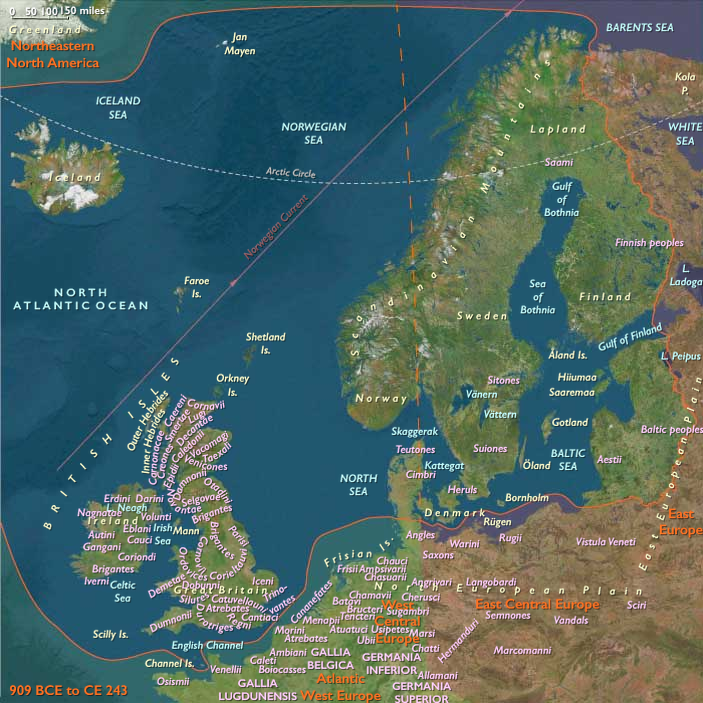
The Batavi are immediately joined by several neighboring German tribes, the most important of whom are the Frisii.
Vespasian, who is fighting Vitellius for the imperial throne, salutes the rebellion that keeps his enemy from calling the Rhine legions to Italy.
The Batavi are promised independence and Civilis is on his way to becoming king, but, for unknown reasons, this is not enough for the Batavi.
Civilis chooses to pursue vengeance and swears to destroy the two Roman legions.
The timing is well chosen: with the civil war of the Year of the Four Emperors at its peak, it will take some time before Rome can produce an effective counterattack.
Moreover, the eight Batavian auxiliary units of Vitellius' army are on their way home and can be easily persuaded to join the rebellion for an independent Batavia.
This is an important reinforcement.
Apart from being veteran troops, their numbers are greater than the combined Roman troops stationed in Moguntiacum (Mainz) and …
…Bonna (Bonn).
The tribe of the Cananefates lives in lands between the Batavians and the North Sea.
The inducements used by Civilis to instigate rebellion are not known, but the Cananefates, led by their chief Brinno, attack several Roman forts, including Traiectum, modern Utrecht.
With most of the troops in Italy fighting in the civil war, the Romans are caught off guard.
Flaccus, commander of the Rhine legions, sends auxiliary troops to control the situation.
The result is another disaster for the Romans.
Civilis assumes the role of mastermind of the rebellion and defeats the Romans near modern Arnhem.
Flaccus orders the V Alaudae and the XV Primigenia legions to deal with the problem.
Accompanying them are three auxiliary units, including a Batavian cavalry squadron, commanded by Claudius Labeo, a known enemy of Civilis.
The battle takes place near modern Nijmegen.
The Batavian regiment deserts to their countrymen, dealing a blow to the already feeble morale of the Romans.
The result is disastrous: a Roman army is beaten and the legions forced to retreat to their base camp of Castra Vetera (modern Xanten).
Civilis in September 69 initiates the siege of Castra Vetera, the camp of the five thousand legionaries of V Alaudae and XV Primigenia.
The camp is very modern, filled with supplies and well defended, with walls of mud brick and wood, towers and a double ditch.
After some failed attempts to take the camp by force, Civilis decides to starve the troops into surrender.
Flaccus meanwhile decides to wait for the result of the war in Italy.
The Rhine legions not long before had been punished by Galba for their actions against the rebel Vindex of Gallia Lugdunensis.
Vespasian is winning the war and Civilis is helping him to become emperor by preventing at least the two legions besieged in Xanten, loyal to Vitellius, from coming to his rescue.
Flaccus and his commanders do not want to risk a second military gaffe and decide to wait for instructions.
Civilis continues the siege after the news of Vitellius' defeat arrives; he is fighting not for Vespasian but for Batavia.
Flaccus starts to prepare a counterattack to rescue the besieged legions.
Civilis is not going to wait until they were fully prepared and launches a surprise attack.
His best eight cavalry regiments in the evening of December 1 attack the Romans in Krefeld.
The Roman army wins the battle and destroys the Batavian cavalry, but their own losses are enormous.
Civilis, knowing that the Romans will come to Castra Vetera, abandons the siege and threatens to attack Moguntiacum.
The Romans are misled and rush to the rescue of their main base in Germania Inferior.
In Moguntiacum, they receive the news of Vespasian's accession to the throne.
Flaccus decides to celebrate the event by distributing a sum of money to the legions, but these legions are historically loyal to Vitellius, their former commander, and this act of generosity is interpreted as an offense.
Flaccus is murdered and his second-in-command deserts, leaving the Roman army in a state of confusion.
Civilis sees his chance and before the Romans know what is happening, his troops besiege Castra Vetera once more.
Veleda, a völva (priestess and prophet) of the Germanic tribe of the Bructeri, predicts the complete success of Civilis and the fall of the Roman Empire.
It is not clear whether Veleda merely prophesied the rebellion or actively incited it; given the Germans' adoration of her as a goddess, remote in her tower, the distinction may not have been clear at the time.
The district known as Sequania had formed part of Belgica under Augustus..
After the death of Vitellius, the inhabitants refuse to join the Gallic revolt against Rome instigated by Gaius Julius Civilis and Julius Sabinus, and drive back Sabinus, who has invaded their territory.
A triumphal arch at Vesontio (Besançon), which in return for this service is made a colony, possibly commemorates this victory.
The year 70 begins with the odds favoring the rebels.
Two legions are still besieged at Castra Vetera and the rest of the Roman army is not large enough to cope with the revolt.