Fulgencio Yegros
first head of state of independent Paraguay
Years: 1780 - 1821
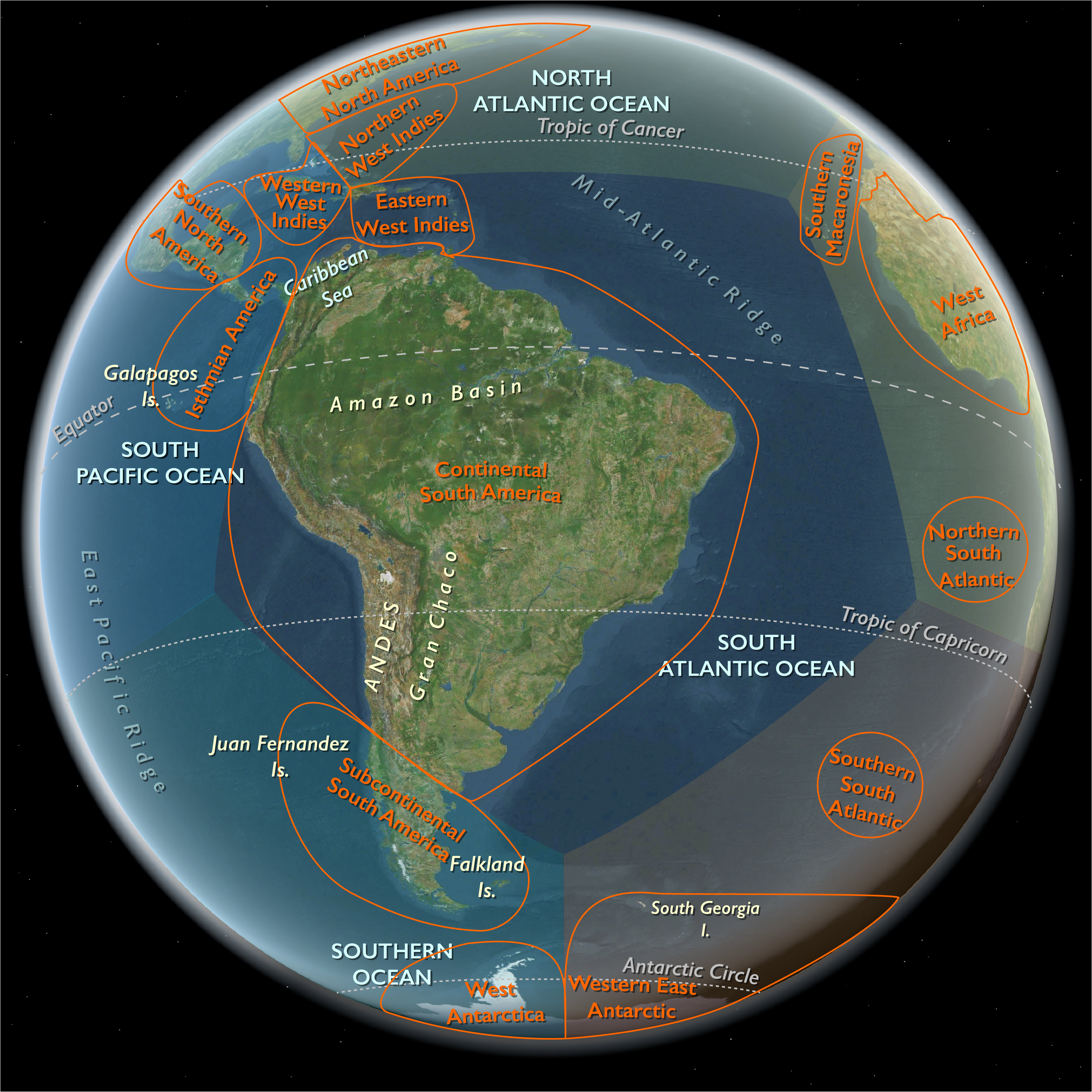
Fulgencio Yegros y Franco de Torres (born 1780 in Quyquyhó, died 1821) is a Paraguayan soldier and the first head of state of independent Paraguay.
The town of Yegros is named in his honor.
Related Events
Filter results
Showing 10 events out of 28 total
José Gaspar Rodriguez de Francia is one of the greatest figures in Paraguayan history.
Ruling from 1814 until his death in 1840, Francia succeeds almost single-handedly in building a strong, prosperous, secure, and independent nation at a time when Paraguay's continued existence as a distinct country seems unlikely.
He leaves Paraguay at peace, with government coffers full and many infant industries flourishing.
Frugal, honest, competent, and diligent, Francia is tremendously popular with the lower classes, but despite his popularity, Francia tramples on human rights, imposing an authoritarian police state based on espionage and coercion.
Under Francia, Paraguay undergoes a social upheaval that destroys the old elites.
Paraguay's congress, which meets on September 30, 1813, is certainly the first of its kind in Latin America.
There are more than eleven hundred delegates chosen by universal male suffrage, and many of these delegates represent the poor, rural Paraguayan majority.
Ironically, the decisions of this democratically elected body will set the stage for a long dictatorship.
Herrera is neither allowed to attend the sessions, nor to present his declaration; instead the congress gives overwhelming support to Francia' s anti-imperialist foreign policy.
The delegates reject a proposal for Paraguayan attendance at a constitutional congress at Buenos Aires and establish a Paraguayan republic—the first in Spanish America—with Francia as first consul.
Francia is supposed to trade places every four months with the second consul, Fulgencio Yegros, but Francia's consulship marks the beginning of his direct rule because Yegros is little more than a figurehead.
Yegros, a man without political ambitions, represents the nationalist criollo military elite, but Francia is the more powerful because he derives his strength from the nationalist masses.
The junta panics when it learns that a porteño diplomat is on his way to Asunción because it realizes it is not competent to negotiate without José Gaspar Rodríguez de Francia.
In November 1812, the junta members invite Francia to take charge of foreign policy, an offer Francia accepts.
In return, the junta agrees to place one-half of the army and half the available munitions under Francia's command.
In the absence of anyone equal to him on the junta, Francia now controls the government.
When the Argentine envoy, Nicolas de Herrera, arrives in May 1813, he learns to his dismay that all decisions have to await the meeting of a Paraguayan congress in late September.
Meanwhile, Paraguay again declares itself independent of Argentina and expels two junta members known to be sympathetic to union with Argentina.
Under virtual house arrest, Herrera has little scope to build support for unification, even though he resorts to bribery.
Francia has consolidated his power by persuading the insecure Paraguayan elite that he is indispensable, but at the end of 1811, dissatisfied with the political role that military officers are beginning to play, he resigns from the junta.
From his retirement in his modest chacra (cottage or hut) at Ibaray, near Asuncion, he tells countless ordinary citizens who come to visit him that their revolution hass been betrayed, that the change in government has only traded a Spanish-born elite for a criollo one, and that the present government is incompetent and mismanaged.
In fact, the country is rapidly heading for a crisis.
Not only are the Portuguese threatening to overrun the northern frontiers, but Argentina has also practically closed the Rio de la Plata to Paraguayan commerce by levying taxes and seizing ships.
To make matters worse, the porteño government has agitated for Paraguayan military assistance against the Spanish in Uruguay and, disregarding the Treaty of October 11, for unification of Paraguay with Argentina.
The porteño government also informs the junta it wants to reopen talks.
Francia becomes a member of Paraguay's ruling junta after the cuartelazo (coup d'etat) of May 14-15, which brings independence.
Although real power rests with the military, Francia's many talents attract support from the nation's farmers.
Probably the only man in Paraguay with diplomatic, financial, and administrative skills, Francia builds his power base on his organizational abilities and his forceful personality.
By outwitting porteño diplomats in the negotiations that produce the Treaty of October 11, 1811 (in which Argentina implicitly recognizes Paraguayan independence in return for vague promises of a military alliance), Francia proves that he possesses skills crucial to the future of the country.
Francia had demonstrated an early interest in politics and attained with difficulty the position of alcalde del primer voto, or head of the Asuncion cabildo, by 1809, the highest position to which he could aspire to as a criollo.
Born in 1766, he had spent his student days studying theology at the College of Monserrat at the University of Cordoba.
Although he was dogged by suggestions that his father—a Brazilian tobacco expert—was a mulatto, Francia had been awarded a coveted chair of theology at the Seminary of San Carlos in Asuncion in 1790.
His radical views made his position as a teacher there untenable, and he soon gave up theology to study law.
A devotee of the Enlightenment and the French Revolution, a keen reader of Voltaire, Jean-Jacques Rousseau, and the French Encyclopedists, Francia has the largest library in Asuncion.
His interest in astronomy, combined with his knowledge of French and other subjects considered arcane in Asuncion, has caused some superstitious Paraguayans to regard him as a wizard capable of predicting the future.
As a lawyer, he became a social activist and defended the less fortunate against the affluent.
Paraguay at independence is a relatively undeveloped area.
Most residents of Asuncion and virtually all rural settlers are illiterate.
Urban elites do have access to private schools and tutoring.
University education is, however, restricted to the few who can afford studies at the University of Cordoba, in present-day Argentina.
Practically no one has any experience in government, finance, or administration.
The settlers treat the natives as little better than slaves, and the paternalistic clergy treats them like children.
The country is surrounded by hostile neighbors, including the warlike Chaco tribes.
Strong measures are needed to save the country from disintegration.
A first battle was fought on December 19, 1810, at Campichuelo, where the Patriots claim victory.
However, they had been completely overwhelmed at the subsequent battles of Paraguarí on January 19 and Tacuarí on March 9.
Thus, this campaign ends in failure as well from a military point of view; however, just two months later, Paraguay, inspired by the Argentine example, will break its links with the Spanish crown by declaring itself an independent nation.
The double victories of the Creole army over Manuel Belgrano have weakened the position of the royalists and governor Velasco and have increased the local patriotism of Creole officers, who foment a plot to overthrow Velasco.
Initially the plan calls for a military uprising to start on May 25, the one-year anniversary of the May Revolution in Buenos Aires.
The military forces, under Fulgencio Yegros, are expected to march from Itapua supported by garrisons in other towns, but the negotiations of governor Velasco with Portuguese representatives from Brazil hasten the uprising.
Yegros, born to a family of military tradition, had also pursued a military career. A grandson of governor Fulgencio Yegros y Ledesma, he had studied in Asunción and joined the Spanish colonial army.
He had first experienced combat in 1802 against the Portuguese and in 1807 when he was part of the Paraguayan forces that defended Buenos Aires during British invasions of the Río de la Plata.
Reaching the rank of captain in 1810, he had been given the governorship of Misiones; he will later establish the first military academy in independent Paraguay.
In early 1811 he had participated in the defense of Paraguay against the invaders from Buenos Aires led by Belgrano.
Plotters led by Captain Pedro Juan Caballero go to the Governor's quarters located on the main square of Asuncion, where they are greeted by second lieutenant Mauricio Jose Troche, a supporter of the plot, is on duty and in charge of the small garrison of thirty-four men from Curuguaty.
At midnight, Ensign Vicente Ignacio Iturbe presents Governor Velasco with demands from plotters led by Caballero, which can be summarized as follows:
"Surrender of the main square, all the weapons and keys to the Cabildo."
"Governor Velasco stays in power, but as a part of three-man junta, which should include two representatives appointed by the officers at the quarters."
A group of officers and politicians including Captain Pedro Juan Caballero, Fulgencio Yegros, Vicente Ignacio Iturbe, Mauricio Jose Troche, Fernando de la Mora, Juan Valeriano de Zeballos and José Gaspar Rodríguez de Francia, force governor Velasco to agree to a creation of a three-man executive junta.