Frontinus
Roman general, official, and author
Years: 40 - 103
Sextus Julius Frontinus (ca.
40–103 CE) is one of the most distinguished Roman aristocrats of the late 1st century CE: he is grandson of Aulus Julius Frontinus and Cornelia Africana, the only child of Publius Cornelius Scipio.
He is best known to the post-Classical world as an author of technical treatises, especially one dealing with the aqueducts of Rome.
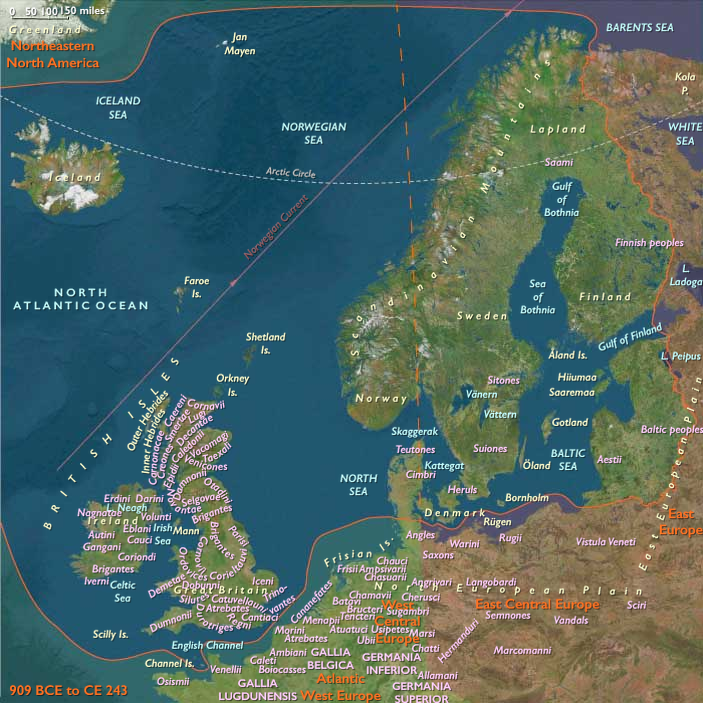
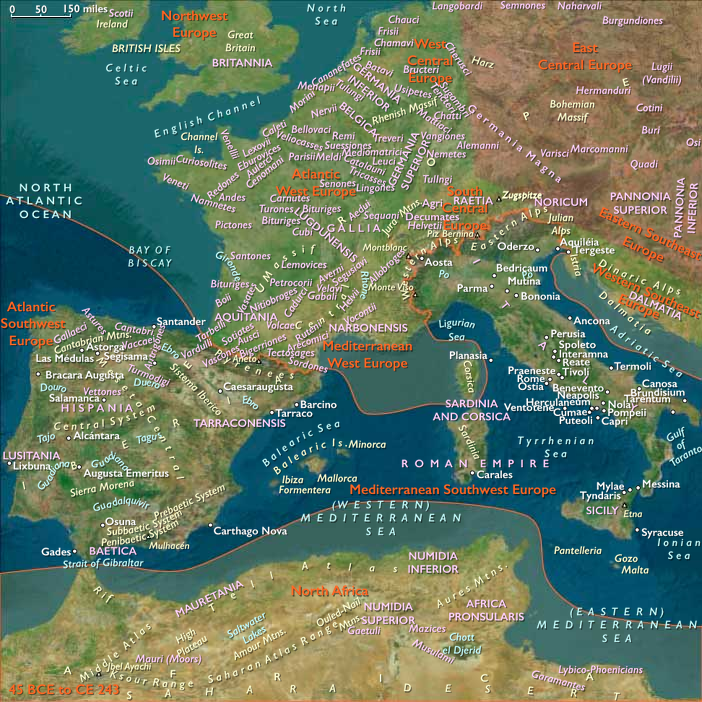
In CE 70, he is praetor, and five years later is sent into Britain to succeed Quintus Petillius Cerialis as governor of that island.
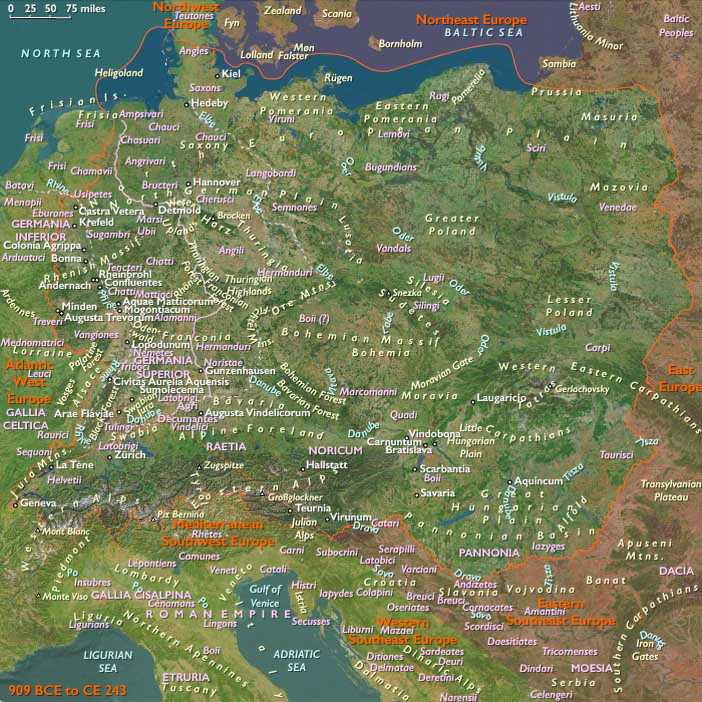
He subdues the Silures and other tribes of Wales hostile to Roman invasion, establishing a new base at Caerleon or Isca Augusta for Legio II Augusta and a network of smaller forts fifteen to twenty kilometers apart for his auxiliary units.
One of these forts would have been Luentinum, which controls the gold mine of Dolaucothi, worked by numerous aqueducts.
He is succeeded by Gnaeus Julius Agricola in 78.
Agricola is the father-in-law of the famous historian Tacitus.
In 95, he is appointed Water Commissioner of the aqueducts (curator aquarum) at Rome by the emperor Nerva, an office only conferred upon persons of very high standing.
He is also a member of the College of Augurs.
He produces an official report on the state of the aqueducts serving the city of Rome towards the end of the 1st century CE.
In this capacity, he follows another distinguished Roman statesman, Agrippa, the friend, ally and son-in-law of Augustus, who organized in 34 BCE a campaign of public repairs and improvements, including renovation of the aqueduct Aqua Marcia and an extension of its pipes to cover more of the city.
Through his actions after being elected in 33 BCE as one of the aediles (officials responsible for Rome's buildings and festivals), the streets were repaired and the sewers were cleaned and renovated.
Agrippa signalized his tenure of office by enlarging and restoring the Cloaca Maxima, the main sewer in Rome, constructing thermae and porticos, and laying out gardens.