Frederick William III of Prussia
king of Prussia; Elector of Brandenburg
Years: 1770 - 1840
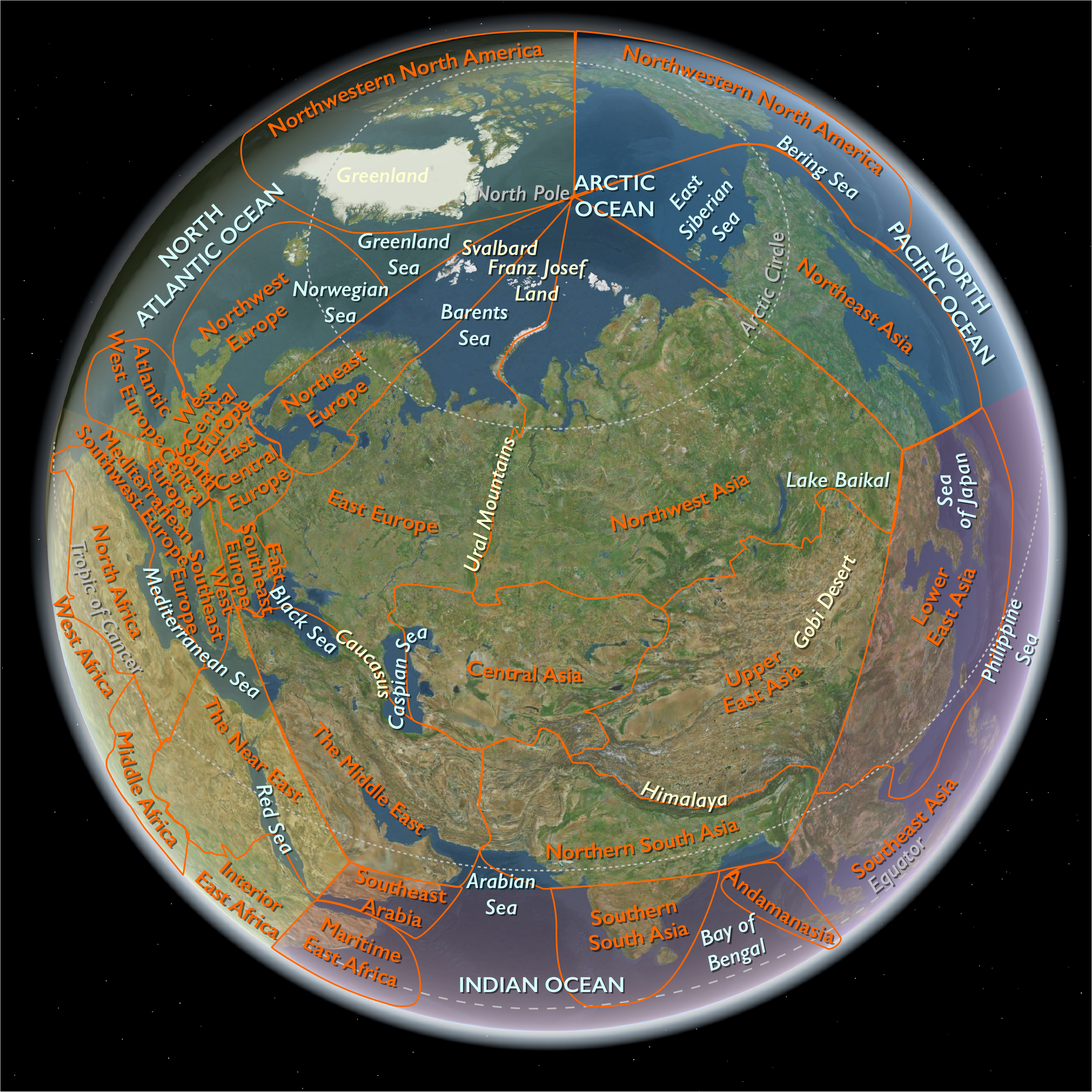
Frederick William III (German: Friedrich Wilhelm III.)
(3 August 1770 – 7 June 1840) was king of Prussia from 1797 to 1840.
He is in personal union the sovereign prince of the Principality of Neuchâtel (1797–1806 and again 1813–1840).
Related Events
Filter results
Showing 10 events out of 102 total
Born in Berlin, the son of Prince Augustus William of Prussia (the second son of King Frederick William I of Prussia) and of Duchess Luise of Brunswick-Wolfenbüttel, his mother's elder sister, Elisabeth, is the wife of Augustus William's brother King Frederick II ("Frederick the Great").
The boy was of an easy-going and pleasure-loving disposition, averse to sustained effort of any kind, and sensual by nature.
His marriage with Elisabeth Christine of Brunswick-Wolfenbüttel, Crown Princess of Prussia, daughter of Charles I, Duke of Brunswick-Lüneburg, contracted July 14, 1765 in Charlottenburg, had been dissolved in 1769.
He then married Frederika Louisa of Hesse-Darmstadt, daughter of Ludwig IX, Landgrave of Hesse-Darmstadt on July 14, 1769 also in Charlottenburg.
Although he will have seven children by his second wife, he has an ongoing relationship with his mistress, Wilhelmine Enke (she will be created Countess Wilhelmine von Lichtenau in 1796), a woman of strong intellect and much ambition, and has five children by her—the first when she was still in her teens.
He is devoted to the arts—Beethoven and Mozart will enjoy his patronage, and his private orchestra has a Europe-wide reputation.
He also is a talented cellist, but an artistic temperament is hardly what is required of a king of Prussia on the eve of the French Revolution, and Frederick the Great, who had employed him in various services (notably in an abortive confidential mission to the court of Russia in 1780), had openly expressed his misgivings as to the character of the prince and his surroundings.
For his part, Frederick William, who has never been properly introduced to diplomacy and the business of rulership, resents his uncle for not taking him seriously.
The misgivings of Frederick II appear justified in retrospect.
Frederick William′s accession to the throne (August 17, 1786) has, indeed, been followed by a series of measures for lightening the burdens of the people, reforming the oppressive French system of tax-collecting introduced by Frederick, and encouraging trade by the diminution of customs dues and the making of roads and canals.
This gives the new king much popularity with the masses; the educated classes are pleased by his removal of Frederick's ban on the German language, with the admission of German writers to the Prussian Academy, and by the active encouragement given to schools and universities.
Frederick William has also terminated his predecessor's state monopolies for coffee and tobacco and the sugar monopoly.
On August 26, 1786 Wöllner had been appointed privy councilor for finance (Geheimer Oberfinanzrath), and on October 2, 1786, had been ennobled.
Though not in name, he had in fact become prime minister; in all internal affairs it is he who decides; and the fiscal and economic reforms of the new reign are the application of his theories.
Bischoffswerder, too, still a simple major, had been called into the king′s counsels; by 1789 he is already an adjutant-general.
The opposition to Wöllner was, indeed, at the outset strong enough to prevent his being entrusted with the department of religion; but this too in time was overcome, and on July 3, 1788 he had been appointed active privy councilor of state and of justice and head of the spiritual department for Lutheran and Catholic affairs.
From this position Wöllner pursues long lasting reforms concerning religion in the Prussian state.
The king has proved eager to aid Wöllner's crusade.
On July 9, 1788 the famous religious edict had been issued, which forbids Evangelical ministers from teaching anything not contained in the letter of their official books, proclaims the necessity of protecting the Christian religion against the "enlighteners" (Aufklärer), and places educational establishments under the supervision of the orthodox clergy.
On December 18, 1788 a new censorship law had been issued, to secure the orthodoxy of all published books.
This forces major Berlin journals like Christoph Friedrich Nicolai's Allgemeine Deutsche Bibliothek and Johann Erich Biester's Berliner Monatsschrift to publish only outside the Prussian borders.
Moreover, people like Immanuel Kant are forbidden to speak in public on the topic of religion.
The army is the very foundation of the Prussian state, a truth that both Frederick William I and Frederick the Great had fully realized; the army had been their first care, and its efficiency had been maintained by their constant personal supervision.
The king, who has no taste for military matters, had put his authority as "Warlord" (Kriegsherr) into commission under a supreme college of war (Oberkriegs-Collegium) under the Duke of Brunswick and General Wichard Joachim Heinrich von Möllendorf.
It is the beginning of the process that will end in 1806 at the disastrous Battle of Jena.
Although the Prussian army will reach its highest peacetime level of manpower under Frederick William (one hundred and eighty-nine thousand infantry and forty-eight thousand cavalry), under his reign the Prussian state treasury incurs a substantial debt and the quality of the troops' training deteriorates.
Under the circumstances, Frederick William′s interventions in European affairs are of little benefit to Prussia.
The Dutch campaign of 1787, entered into for purely family reasons, had indeed been successful, but Prussia had received not even the cost of her intervention.
An attempt to intervene in the war of Russia and Austria against the Ottoman Empire fails to achieve its objective; Prussia does not succeed in obtaining any concessions of territory, and the dismissal of minister Hertzberg (July 5, 1791) marks the final abandonment of the anti-Austrian tradition of Frederick the Great.
Meanwhile, the French Revolution alarms the ruling monarchs of Europe, and in August 1791 Frederick William, at the meeting at Pillnitz Castle, agrees with Emperor Leopold II to join in supporting the cause of King Louis XVI of France.
However, the king's character and the confusion of the Prussian finances cannot sustain effective action in this regard.
Although Wöllner's religious edict has many critics, it is an important measure that, in fact, proves an important stabilizing factor for the Prussian state.
Aimed at protecting the multi-confessional rights enshrined in the 1648 Peace of Westphalia, the provisions of Wöllner's edict are intended to safeguard against religious strife by imposing a system of state sponsored limits.
The edict is also a notable step forward regarding the rights of Jews, Mennonites, and Herrnhut brethren, who now receive full state protection.
Given the confessional divides within Prussian society, primarily between Calvinists and Lutherans but increasingly Catholics as well, such a policy is important for maintaining a stable civil society.
The other monarchies of Europe watch the developments in France with alarm as early as 1791; they consider whether they should intervene, either in support of Louis XVI or to take advantage of the chaos in France.
The key figure is Holy Roman Emperor Leopold II, brother to the French Queen Marie Antoinette, who had initially looked on the Revolution with equanimity, but has become increasingly disturbed as the Revolution becomes more radical, although he still hopes to avoid war.
Leopold and King Frederick William II of Prussia, in consultation with emigrant French nobles, on August 27 issue the Declaration of Pilnitz, which declares the interest of the monarchs of Europe in the well-being of Louis and his family, and threaten vague but severe consequences if anything should befall them.
Although Leopold sees the Pillnitz Declaration as a way of taking action that will enable him to avoid actually doing anything about France, at least for the moment, it is seen in France as a serious threat and is denounced by the revolutionary leaders.
Northeast Europe (1792–1803 CE): Political Turmoil, Defensive Realignments, and Socioeconomic Challenges
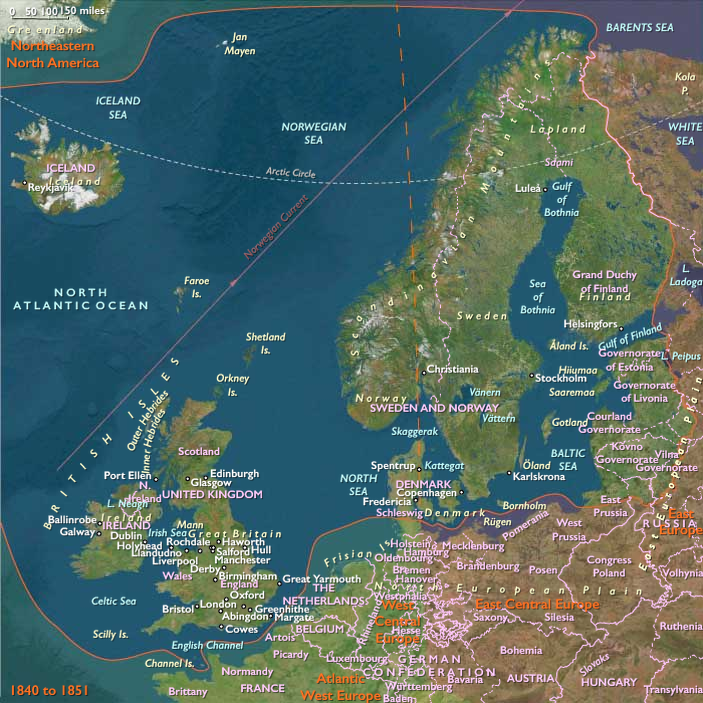
Between 1792 and 1803 CE, Northeast Europe faced significant political upheaval, shifting diplomatic alliances, and intensified socioeconomic pressures resulting from broader European instability caused by the French Revolutionary Wars. Sweden experienced internal turmoil following the assassination of King Gustav III, with Finland enduring particular economic strain under Sweden’s mercantilist policies. Denmark–Norway maintained careful neutrality amidst growing European conflict, while Prussia navigated internal reforms and diplomatic caution. The Baltic territories—Estonia, Latvia, and Lithuania—experienced cautious stability and incremental economic advancement, despite rising regional tensions.
Sweden: Assassination and Internal Instability
The assassination of King Gustav III in 1792 plunged Sweden into political uncertainty. His young successor, Gustav IV Adolf (r. 1792–1809), assumed full control in 1796, following a regency period marked by noble intrigue and governance inefficiencies. Internally, the Swedish nobility regained significant influence, reversing many earlier absolutist reforms, exacerbating governance challenges, and increasing social tensions.
Sweden’s frequent involvement in costly wars resulted in heavy taxation and governmental attempts to augment state revenues through strict economic controls, rooted in mercantilist policies. This economic strategy not only constrained Sweden’s domestic growth but had particularly severe implications for Finland, its eastern province.
Finnish Economic Exploitation and Social Strains under Swedish Rule
Finland, under Swedish governance, endured notable economic exploitation and socioeconomic stress during this period. Sweden’s mercantilist policies systematically directed Finnish economic output—particularly the profitable trade in naval stores such as timber, tar, pitch, and resin—primarily toward the benefit of Sweden itself. Consequently, Finland's economic development was severely hindered, perpetuating dependence and limiting the emergence of a robust indigenous middle class.
Finnish society remained predominantly agrarian, with the peasantry forming its backbone. However, peasants faced heavy taxation and compulsory labor obligations imposed by the Swedish state, despite the absence of formal serfdom. These burdens, coupled with warfare-induced economic hardships, intensified social pressures throughout rural Finland.
Moreover, Sweden’s military engagements facilitated significant land grants to Swedish aristocrats and military officers within Finland, further entrenching the dominance of the Swedish-speaking minority over Finnish political, economic, and social life. While provincial assemblies allowed Finnish peasants to retain a small measure of local political representation, real political and economic power remained concentrated among the Swedish-speaking nobility and elite.
Despite such socioeconomic challenges, agricultural productivity in Finland saw incremental improvement, notably due to the earlier introduction and expanded cultivation of potatoes from the 1730s onward, which provided a stable food supply and helped alleviate some of the hardships associated with warfare and economic exploitation. The agricultural frontier gradually extended northward, settling new stretches of inland wilderness.
Danish–Norwegian Neutrality and Economic Stability
Denmark–Norway, effectively governed since 1784 by Crown Prince Frederick (later Frederick VI) due to King Christian VII’s mental illness, steadfastly adhered to neutrality amidst Europe’s escalating conflicts. This neutrality significantly benefited maritime trade, particularly in Copenhagen, leading to sustained economic prosperity. Internal stability and economic resilience were reinforced by improved agricultural methods, infrastructure investments, and efficient governance, although Denmark–Norway faced growing pressures concerning maritime neutrality.
Prussian Diplomatic Caution and Internal Consolidation
Prussia, under Frederick William II (r. 1786–1797) and subsequently Frederick William III (r. 1797–1840), navigated cautiously, seeking diplomatic neutrality amid Europe’s Revolutionary conflicts. Internally, Prussia continued to prioritize administrative efficiency, economic consolidation, and military readiness, notably around strategically significant Königsberg (Kaliningrad). Prussia’s cautious diplomacy avoided immediate conflict, although external diplomatic pressures gradually intensified.
Stability and Incremental Development in the Baltic Territories
The Baltic territories—Estonia, Latvia, and Lithuania—experienced relative internal stability and modest economic growth, continuing under Baltic-German nobility governance. Major urban centers, especially Riga and Reval (Tallinn), maintained gradual economic development through sustained commerce and prudent administration, despite broader regional uncertainties.
Economic Prosperity and Urban Stability
Throughout Northeast Europe, major urban centers such as Stockholm, Copenhagen, Königsberg, Riga, and Reval sustained relative economic prosperity. Maritime commerce flourished under stable governance and effective merchant networks, enabling these cities to maintain economic resilience despite regional tensions and geopolitical uncertainty.
Cultural Continuity Amidst Political Instability
Despite political upheavals, cultural and intellectual institutions maintained continuity. Sweden’s established cultural institutions, notably the Swedish Academy, continued fostering scholarly and cultural activities. Danish–Norwegian institutions similarly thrived, particularly within Copenhagen’s academic circles. Prussia continued supporting educational and cultural advancement, contributing to sustained intellectual engagement and regional prestige.
Diplomatic Realignments and Pragmatic Neutrality
Diplomatic interactions remained cautiously pragmatic. Sweden’s diplomatic isolation deepened amid internal instability, costly warfare, and strained finances. Denmark–Norway preserved neutrality, though increasingly challenged by maritime disputes. Prussia’s careful neutrality and internal consolidation mitigated immediate conflicts but faced growing external pressures amid shifting European alliances.
Legacy of the Era
The era from 1792 to 1803 CE profoundly influenced Northeast Europe through intensified socioeconomic strains, particularly evident in Finland’s economic exploitation under Swedish mercantilist policies. While agricultural innovations alleviated some hardships, Finnish society faced ongoing burdens due to heavy taxation, compulsory labor, and persistent Swedish dominance. Denmark–Norway’s careful neutrality fostered economic resilience, whereas Prussia maintained cautious diplomatic strategies. Collectively, these developments significantly shaped the region’s geopolitical alignments, internal stability, and socioeconomic trajectories, laying critical groundwork for future historical transformations.
East Central Europe (1792–1803 CE): Partition of Poland, Revolutionary Turmoil, and Napoleonic Reordering
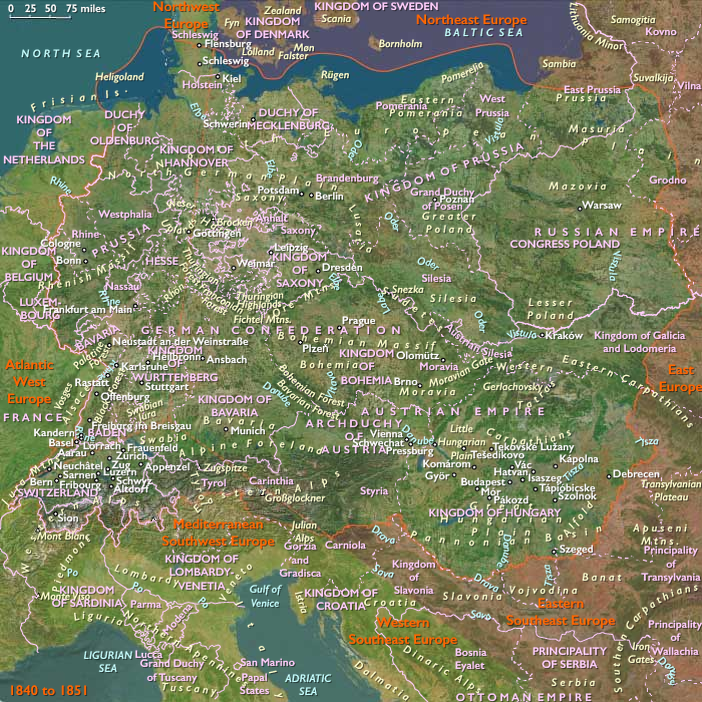
Between 1792 and 1803 CE, East Central Europe—including Poland, Czechia, Slovakia, Hungary, and territories within eastern Germany and Austria east of 10°E and north of the defined boundary—underwent dramatic geopolitical upheaval characterized by the final partitions of Poland, revolutionary turmoil linked to the aftermath of the French Revolution, and significant reshaping of political alliances due to the expanding influence of Napoleon Bonaparte. These developments fundamentally altered the region’s political landscape, decisively ending Polish statehood, challenging Austrian and Prussian dominance, and laying foundations for future nationalist movements.
Political and Military Developments
Final Partitions of Poland (1793, 1795)
-
Facing intense pressure from neighboring powers, the Polish–Lithuanian Commonwealth struggled to maintain sovereignty despite its progressive Constitution of 1791.
-
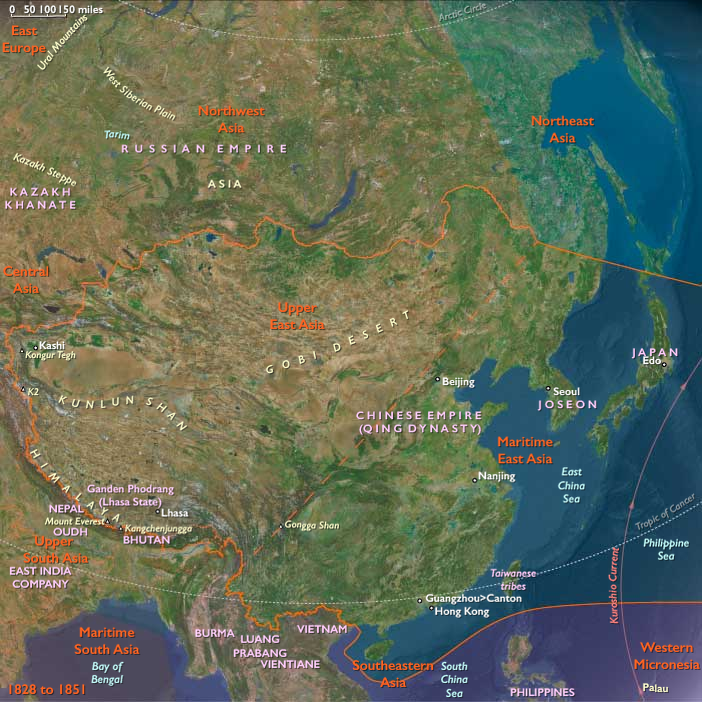
Second Partition (1793): Following the War in Defense of the Constitution (1792), Prussia and Russia annexed significant Polish territories, drastically weakening Polish autonomy.
-
Kościuszko Uprising (1794): Polish national hero Tadeusz Kościuszko led a significant but ultimately unsuccessful insurrection aimed at reclaiming independence, highlighting deepening patriotic sentiments but accelerating Poland’s dissolution.
-
Third Partition (1795): Austria, Prussia, and Russia completely dismantled the Commonwealth, eradicating independent Polish sovereignty for over a century.
Revolutionary Impact and Austrian Instability
-
The ideological turmoil unleashed by the French Revolution (1789) profoundly impacted East Central Europe, particularly within Habsburg Austria:
-
Emperor Francis II (1792–1835), alarmed by revolutionary ideals, adopted conservative policies, restricting political freedoms and tightening administrative control.
-
The region saw widespread social and intellectual ferment as revolutionary and nationalist ideas spread, despite intensified imperial censorship and police surveillance.
-
Prussian Ambitions and Territorial Expansion
-
Prussia, under King Frederick William II (1786–1797) and subsequently Frederick William III (1797–1840), expanded significantly by gaining Polish territories, notably Warsaw, through the partitions.
-
Strengthened economically and militarily, Prussia continued consolidating its eastern provinces, enhancing administrative efficiency, and extending its regional influence.
Napoleonic Reordering Begins
-
The rise of Napoleon profoundly affected East Central European politics:
-
Napoleon’s early victories (1796–1797) against Austria in northern Italy forced the Habsburg Monarchy into disadvantageous peace treaties (Treaty of Campo Formio, 1797), altering regional power balances and provoking extensive military and administrative reforms within Austria.
-
Economic and Technological Developments
Economic Realignments
-
The partitions of Poland shifted regional trade routes and economic structures, integrating Polish territories more deeply into Austrian, Prussian, and Russian economic frameworks.
-
Prussia capitalized economically by further developing agriculture, industry, and trade in newly acquired territories, enhancing prosperity in cities like Warsaw, Poznań (Posen), and Gdańsk (Danzig).
Industrial and Agricultural Progress
-
Industrial growth accelerated, notably in Austrian and Prussian regions, stimulated by modernized agricultural practices and increased demand from growing urban populations.
Cultural and Artistic Developments
Intensified National Identity and Cultural Revival
-
Despite political subjugation, Polish national identity deepened significantly, expressed in literature, music, and art that celebrated Polish history, culture, and struggle for independence.
-
Notable intellectual and cultural figures emerged, including poets and historians who laid the foundations for future nationalist movements in Poland, Bohemia, and Hungary.
Enlightenment and Romantic Influence
-
Enlightenment ideals and early Romanticism profoundly influenced regional intellectual and artistic culture, particularly in Prague, Vienna, and Budapest, fueling demands for greater cultural and political autonomy among the Czech and Hungarian intelligentsia.
Settlement and Urban Development
Urban Integration and Expansion
-
Major urban centers, notably Vienna, Warsaw, Prague, and Budapest, expanded infrastructure and economic activities, benefiting from increased administrative centralization and economic integration resulting from partition-driven reorganization.
Social and Religious Developments
Social Instability and Class Tensions
-
The partitions and revolutionary turmoil heightened social tensions, with increased dissatisfaction among peasants, urban workers, and the growing middle class due to rigid social hierarchies and limited political representation.
Conservative Religious Policies
-
Both Austria and Prussia enacted conservative religious policies aimed at countering revolutionary secularism, reinforcing traditional Catholic (Austria) and Protestant (Prussia) institutions to maintain social control.
Long-Term Consequences and Historical Significance
The period 1792–1803 CE marked a decisive turning point in East Central Europe’s history. The dissolution of Poland profoundly reshaped regional geopolitics, permanently altering political boundaries and intensifying nationalist aspirations. Revolutionary ideas continued spreading, significantly influencing cultural, social, and political developments throughout the region. The emergence of Napoleon Bonaparte as a dominant European figure began a transformative era, setting the stage for major realignments that would define East Central Europe’s trajectory in the early nineteenth century.
Other monarchies in Europe had been watching the developments in France with alarm as early as 1791, and have considered intervening, either in support of Louis XVI or to take advantage of the chaos in France.
The ideological differences between France and the monarchical powers of Europe are compounded by continuing disputes over the status of Imperial estates in Alsace, and the French are becoming concerned about the agitation of émigré nobles abroad, especially in the Austrian Netherlands and the minor states of Germany.
In the end, France, charging Austria with sponsoring counterrevolutionary agitation, declares war on Austria first, with the Assembly voting for war on April 20, 1792, after the presentation of a long list of grievances by Charles François Dumouriez, who had joined the French Revolution following army service under the monarchy and become foreign minister in March.
Louis XVI, hoping for Austrian intervention, vetoes emergency measures.
Leopold had initially looked on the Revolution with equanimity, but has become more and more disturbed as the Revolution becomes more radical, although he still hopes to avoid war.
On August 27, Leopold and King Frederick William II of Prussia, in consultation with emigrant French nobles, had issued the Declaration of Pillnitz, which declared the interest of the monarchs of Europe in the well-being of Louis and his family, and threatened vague but severe consequences if anything should befall them.
Although Leopold sees the Pillnitz Declaration as a non-committal gesture to placate the sentiments of French monarchists and nobles, it is seen in France as a serious threat and is denounced by the revolutionary leaders.
France eventually issues an ultimatum demanding that the Habsburg Monarchy of Austria under Leopold II, who also is Emperor of the Holy Roman Empire, renounce any hostile alliances and withdraw its troops from the French border.
The reply is evasive and the Assembly votes for war on April 20. 1792 against Francis II (who has succeeded Leopold II), after a long list of grievances presented by foreign minister Dumouriez.