Francis II Rákóczi
Prince of Transylvania
Years: 1676 - 1735
Francis II Rákóczi (27 March 1676 in Borsi, Royal Hungary – 8 April 1735 in Tekirdağ, Ottoman Empire) is a Hungarian aristocrat and leader of the Hungarian uprising against the Habsburgs in 1703-11 as the prince (fejedelem) of the Estates Confederated for Liberty of the Kingdom of Hungary.
He is also Prince of Transylvania, an Imperial Prince, and a member of the Order of the Golden Fleece.
Today he is considered a national hero in Hungary.
His name is historically also spelled Rákóczy, in Hungarian: II.
Rákóczi Ferenc, in Slovak: František II.
Rákoci, in German: Franz II.
Rákóczi, in Croatian: Franjo II.
Rakoci.
Related Events
Filter results
Showing 10 events out of 10 total
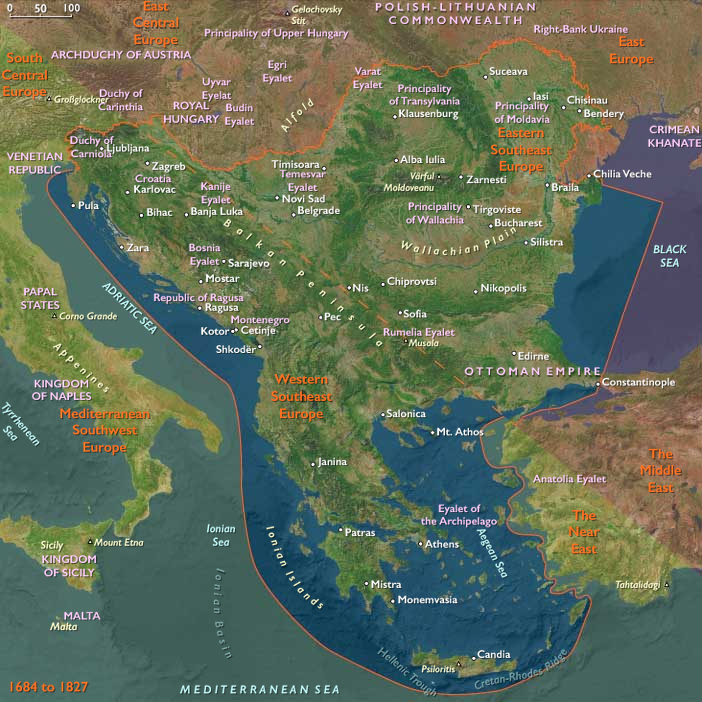
The repression of Protestants and the land seizures embitters the Hungarians, and in 1703 a peasant uprising sparks an eight-year national rebellion aimed at casting off the Habsburg yoke.
Disgruntled Protestants, peasants, and soldiers unite under Ferenc Rakoczi, a Roman Catholic magnate who can hardly speak Hungarian.
Most of Hungary soon supports Rakoczi, and the joint Hungarian-Transylvanian Diet votes to annul the Habsburgs' right to the throne.
Fortunes turns against the rebels, however, when the Habsburgs make peace in the West and turn their full force against Hungary.
The rebellion ends in 1711, when moderate rebel leaders conclude the Treaty of Szatmar, in which the Hungarians gain little except the emperor's agreement to reconvene the Diet and to grant an amnesty for the rebels.
Francis II Rákóczi, deciding to invest his energies in a war of national liberation, he has accepted the request by kuruc forces to head a new uprising in Munkács begun by them.
Another group of about three thousand armed men headed by Tamás Esze had joined him on June 15, 1703, near the Polish city of Lawoczne.
Count Miklós Bercsényi had also arrived, with French funds and six hundred Polish mercenaries.
Most of the Hungarian nobility does not support Rákóczi’s uprising, because they consider it to be no more than a jacquerie, a peasant rebellion.
Rákóczi’s famous call to the nobility of Szabolcs county seems to be in vain.
He does manage to persuade the Hajdús (emancipated peasant warriors) to join his forces, so his forces by late September 1703 control most of Kingdom of Hungary to the east and north of the Danube.
He continues soon after by conquering Transdanubia.
The son of an old noble family and one of the richest landlords in the Kingdom of Hungary, Francis II Rákóczi, was born in 1676 to Francis I Rákóczi, elected ruling prince of Transylvania, and Ilona Zrínyi.
His father had died when Rákóczi was a mere baby, and his mother had married Imre Thököly in 1682.
After Thököly was defeated, Zrínyi had held the castle of Munkács (today Mukacheve in Ukraine) for three years, but was eventually forced to surrender.
Rákóczi has held the title of count (comes perpetuus) of the Comitatus Sarossiensis (in Hungarian Sáros) from 1694.
After the Treaty of Karlowitz, when his stepfather and mother had been sent into exile, Rákóczi had stayed in Vienna under Habsburg supervision.
Remnants of Thököly’s peasant army had started a new uprising in the Hegyalja region of northeastern present-day Hungary, which was part of the property of the Rákóczi family.
After capturing the castles of Tokaj, Sárospatak and Sátoraljaújhely, they had asked Rákóczi to become their leader, but, not being eager to head what had appeared to be a minor peasant rebellion, he had quickly returned to Vienna, where he tried his best to clear his name.
Rákóczi had then befriended Bercsényi, whose property at Ungvár (today Uzhhorod), in Ukraine), lies next to his own.
Bercsényi is a highly educated man, the third richest man in the kingdom (after Rákóczi and Simon Forgách), and is related to most of the Hungarian aristocracy.
As the House of Habsburg is on the verge of dying out, France is looking for allies in its fight against Austrian hegemony.
Consequently, they have established contact with Francis Rákóczi and promised support if he will take up the cause of Hungarian independence.
An Austrian spy had seized this correspondence and brought it to the attention of the Emperor.
As a direct result of this, Rákóczi had been arrested on April 18, 1700, and imprisoned in the fortress of Wiener Neustadt (south of Vienna).
It had become obvious during the preliminary hearings that, just as in the case of his grandfather Péter Zrínyi, the only possible sentence for Francis was death.
With the aid of his pregnant wife Amelia and the prison commander, Rákóczi had managed to escape and flee to Poland.
Here he had met with Bercsényi again, and together they resumed contact with the French court.
Three years later, the War of the Spanish Succession has used a large part of the Austrian forces in the Kingdom of Hungary to temporarily leave the country.
The Austrians feel obliged to enter negotiations with Rákóczi, since they have to fight him on several fronts.
However, the victory of Austrian and British forces against a combined French-Bavarian army in the Battle of Blenheim on August 13, 1704, has provided an advantage not only in the War of the Spanish Succession, but also prevents the union of Rákóczi’s forces with their French-Bavarian allies.
This places Rákóczi into a difficult military and financial situation.
French support for Rákóczi's struggle has gradually diminished, and a larger army is needed to occupy the already-won land.
Supplying the current army with arms and food is beyond his means.
He has tried to solve this problem by creating a new copper-based coinage, which is not easily accepted in Hungary as people are used to silver coins.
Rákóczi nevertheless manages to maintain his military advantage for a while.
A meeting of the Hungarian Diet (consisting of six bishops, thirty-six aristocrats and about a thousand representatives of the lower nobility of twenty-five counties), held near Szécsény (Nógrád county) in September 1705, elects Rákóczi to be the "fejedelem"—(ruling) prince—of the Confederated Estates of the Kingdom of Hungary, to be assisted by a twenty-four-member Senate.
Rákóczi and the Senate are assigned joint responsibility for the conduct of foreign affairs, including peace talks.
Peace talks, encouraged by England and the Netherlands, had started again on October 27, 1705, between the Kuruc leaders and the Emperor.
Military operations continue, however, and both sides vary their strategy according to the military situation.
Kuruc forces led by János Bottyán on December 13 defeat the Austrians at Szentgotthárd.
One stumbling block is the sovereignty over Transylvania—neither side is prepared to give it up.
Rákóczi’s proposed treaty with the French is stalled, so he becomes convinced that only a declaration of independence will make it acceptable for various powers to negotiate with him.
His wife (whom he has not seen in five years, along with their sons József and György) and his sister are both sent in 1706 as peace ambassadors, but Rákóczi rejects their efforts on behalf of the Emperor.
Rákóczi’s army is forced into retreat after 1706.
Another meeting of the Diet held at Ónod (Borsod county) on June 13, 1707, declares the deposition of the House of Habsburg from the Hungarian throne, on Rákóczi’s recommendation, and with Bercsényi’s support, but neither this act, nor the copper currency issued to avoid monetary inflation, are successful.
Louis XIV refuses to enter into treaties with Prince Rákóczi, leaving the Hungarians without allies.
There remains the possibility of an alliance with Imperial Russia, but this does not materialize either.
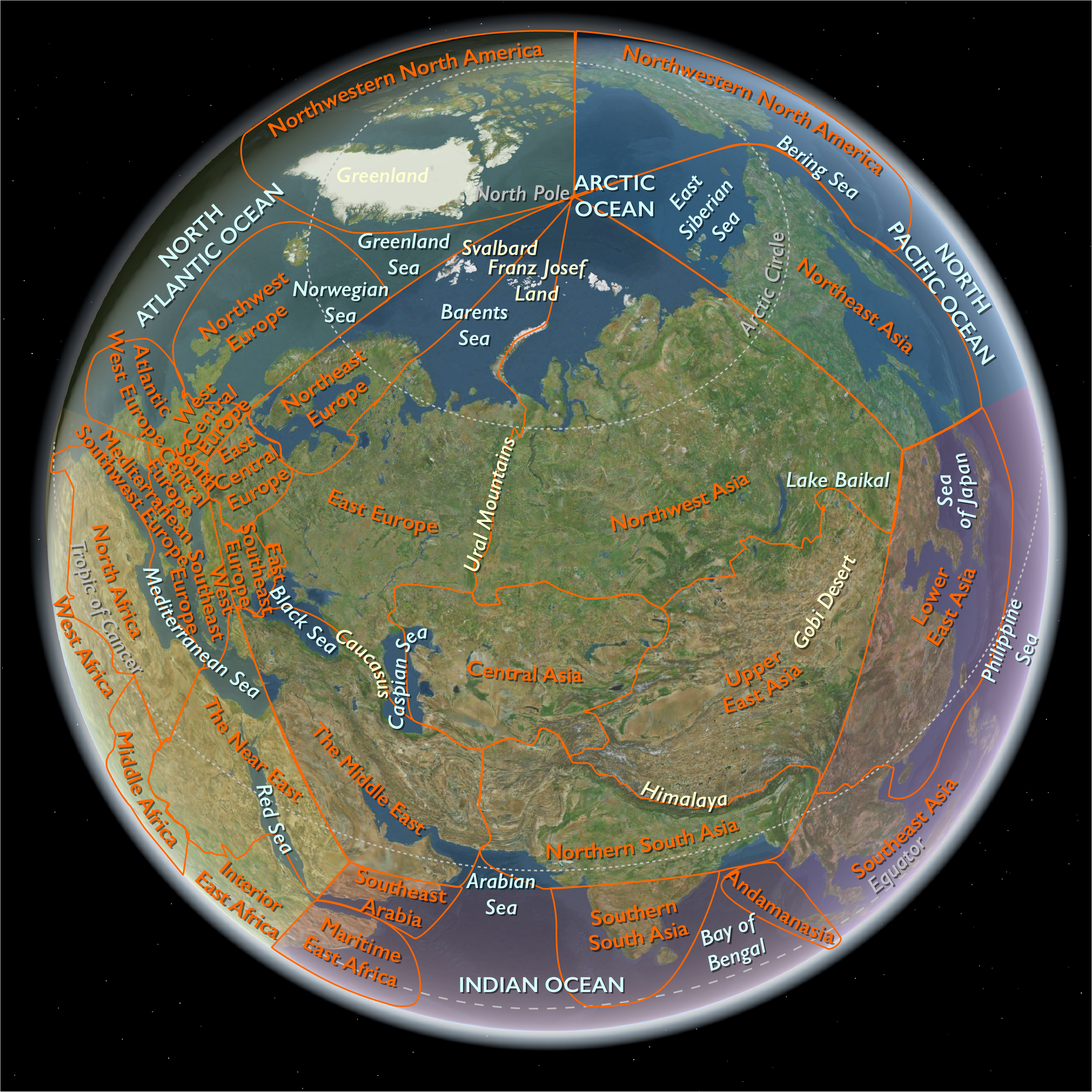
East Central Europe (1708–1719 CE): Swedish Decline, Russian Ascendancy, and Pragmatic Sanction
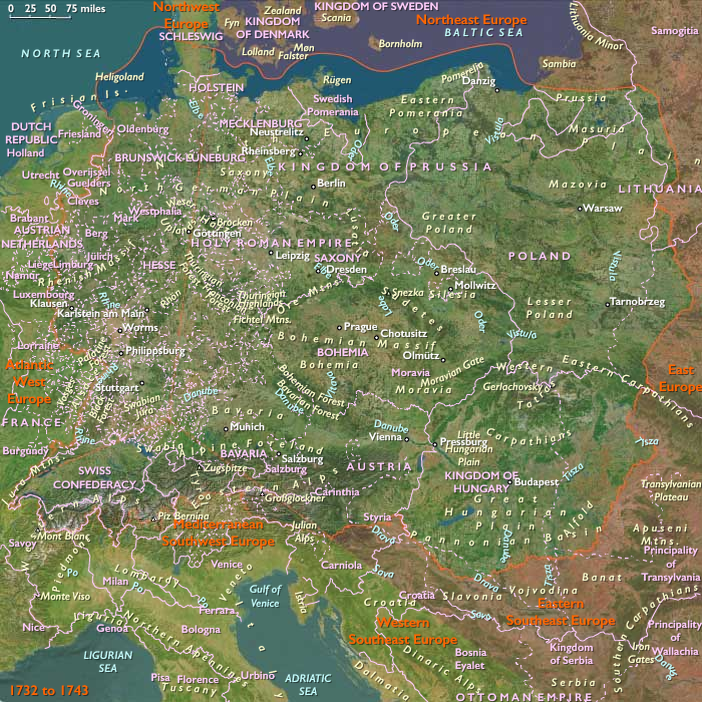
Between 1708 and 1719 CE, East Central Europe—including the territories of modern-day Poland, Czechia, Slovakia, Hungary, and eastern parts of Germany and Austria east of 10°E and north of the previously defined boundary—experienced decisive shifts resulting from the climax of the Great Northern War, further Habsburg consolidation under Emperor Charles VI, and the pivotal dynastic decision embodied in the Pragmatic Sanction of 1713.
Political and Military Developments
Decisive Turn of the Great Northern War (1709–1719)
-
The turning point of the Great Northern War came with the crushing defeat of Sweden's Charles XII by Russian forces under Peter the Great at the Battle of Poltava (1709). This event decisively ended Swedish dominance in the Baltic and drastically shifted regional power dynamics toward Russia.
-
Following Poltava, Saxon-Polish King Augustus II the Strong was restored to power, ending the brief reign of the pro-Swedish king Stanisław Leszczyński, and reaffirming Polish-Lithuanian ties to Saxony and Russia.
Habsburg Consolidation under Charles VI (1711–1719)
-
Charles VI succeeded Joseph I as Holy Roman Emperor (1711–1740), continuing Habsburg consolidation in Hungary and reinforcing imperial administration in Bohemia and the Austrian hereditary lands.
-
He successfully ended the Rákóczi Uprising (1703–1711) with the Treaty of Szatmár (1711), securing Habsburg authority in Hungary by offering amnesty, religious concessions, and the preservation of Hungarian estates' traditional privileges.
Pragmatic Sanction (1713)
-
To secure the Habsburg hereditary lands for his daughter Maria Theresa, Emperor Charles VI issued the Pragmatic Sanction of 1713, ensuring unified succession across Austria, Bohemia, Hungary, and other Habsburg territories. This measure, though initially accepted by many European powers, laid groundwork for future conflict upon his death.
Expansion and Stability of the Kingdom of Prussia
-
Under King Frederick William I (1713–1740), the recently established Kingdom of Prussia experienced significant administrative and military reform, laying foundations for future Prussian military might.
-
Frederick William I increased central control, enhanced state bureaucracy, and developed Europe's most disciplined and effective standing army, profoundly reshaping regional political dynamics.
Economic and Technological Developments
Post-War Economic Recovery and Trade Reorientation
-
The end of large-scale hostilities in Poland-Lithuania, Brandenburg-Prussia, and Hungary allowed significant economic recovery. Agriculture, manufacturing, and commerce rebounded, though trade routes increasingly realigned eastward toward growing Russian markets.
-
Prussia, in particular, benefited significantly from improved infrastructure and administrative reforms under Frederick William I, enhancing agricultural productivity, industry, and trade.
Habsburg Economic and Infrastructure Reforms
-
The Habsburg administration under Charles VI implemented comprehensive economic and administrative reforms, particularly in Hungary and Bohemia. These measures improved taxation, infrastructure, and agricultural output, promoting stability and growth.
Cultural and Artistic Developments
Continued Flourishing of Baroque Culture
-
Baroque culture remained dominant, particularly in Habsburg territories (Vienna, Prague, Budapest), Saxon Dresden, and newly stable Polish-Lithuanian cities like Kraków and Warsaw.
-
Court patronage under Augustus II in Dresden produced some of Europe's most opulent Baroque architecture and cultural patronage, notably in music and the arts.
Educational Expansion and Scientific Inquiry
-
Educational and intellectual institutions expanded significantly, notably in Brandenburg-Prussia, Austria, and Bohemia. These institutions increasingly focused on science, medicine, and modern philosophical inquiry, reflecting early Enlightenment influences from Western Europe.
Settlement and Urban Development
Urban Recovery and Infrastructure Improvements
-
Cities throughout East Central Europe recovered and expanded significantly after wartime disruptions, notably Berlin, Vienna, Prague, Dresden, Leipzig, Warsaw, and Kraków, marked by improved infrastructure, fortified defenses, and urban beautification projects.
-
In Prussia, administrative centralization fostered urban expansion, notably transforming Berlin into a thriving administrative, commercial, and military center.
Social and Religious Developments
Religious Policy and Tolerance in Habsburg Territories
-
Charles VI promoted moderate religious tolerance policies, especially in Hungary post-1711, easing tensions and stabilizing relations with Protestant Hungarian estates, thus significantly improving internal stability and loyalty to the crown.
Aristocratic Authority and Administrative Centralization
-
Aristocratic dominance remained influential throughout Poland-Lithuania, Hungary, and Saxony, although centralizing monarchs in Prussia and Habsburg lands steadily curtailed noble autonomy, advancing state centralization and bureaucratic control.
Long-Term Consequences and Historical Significance
The period 1708–1719 CE decisively reshaped East Central Europe’s political, economic, and cultural landscape. The catastrophic Swedish defeat at Poltava marked a permanent shift of Baltic dominance toward Russia, significantly impacting regional geopolitics. Augustus II's restoration strengthened Polish-Lithuanian connections to Saxony and Russia, though it deepened internal tensions. Habsburg consolidation under Charles VI secured stability in Hungary and Bohemia, while the Pragmatic Sanction significantly influenced future dynastic politics. Prussian military and administrative reforms under Frederick William I laid the foundations for its rise as a dominant European power. Collectively, these events established the conditions for significant transformations in East Central Europe, shaping the geopolitical and cultural order for the remainder of the 18th century.
Guido Starhemberg, a cousin of Ernst Rüdiger von Starhemberg (1638-1701), the famous commander of Vienna during the Turkish siege of 1683, had acted as his ADC during the siege.
Guido had followed his cousin, and later Prince Eugene of Savoy, in battles against the Turks.
Starhemberg fights in the War of the Spanish Succession in Italy and Spain.
He has served between 1706 and 1708 as the commander-in-chief of the imperial army in Hungary, leading the operations against the insurgents of Francis II Rákóczi.
Rákóczi’s horse stumbles at the Battle of Trencsén (Hungarian Trencsén, German Trentschin, Latin Trentsinium, Comitatus Trentsiniensis, today in Slovakia), on August 3, 1708, and he falls to the ground, which knocks him unconscious.
The Kuruc forces think him dead and flee, resulting in a defeat that is fatal for the uprising.
Numerous Kuruc leaders transfer their allegiance to the Emperor, hoping for clemency.
Rákóczi’s forces become restricted to the area around Munkács and Szabolcs county.
The Treaty of Szatmár (or the Peace of Szatmár) is signed at Szatmár (now Satu Mare, Romania) on April 30, 1711 between Holy Roman Emperor Charles VI, Hungarian Commander-in-Chief Sándor Károlyi and Imperial Field Marshal János Pálffy.
Based on the terms of the accord, Charles promises to maintain the integrity of both Transylvanian and Hungarian estates.
Moreover, the accord officially ends the Kuruc Rebellion led by Francis II Rákóczi.
The impact of the treaty is evident on May 1, 1711, when twelve thousand former advocates of Rákóczi swear allegiance to the Habsburg dynasty in the fields outside of Majtény in Szatmár.